
The Art of Mindful Travel Journaling: Capturing Memories Beyond Photos
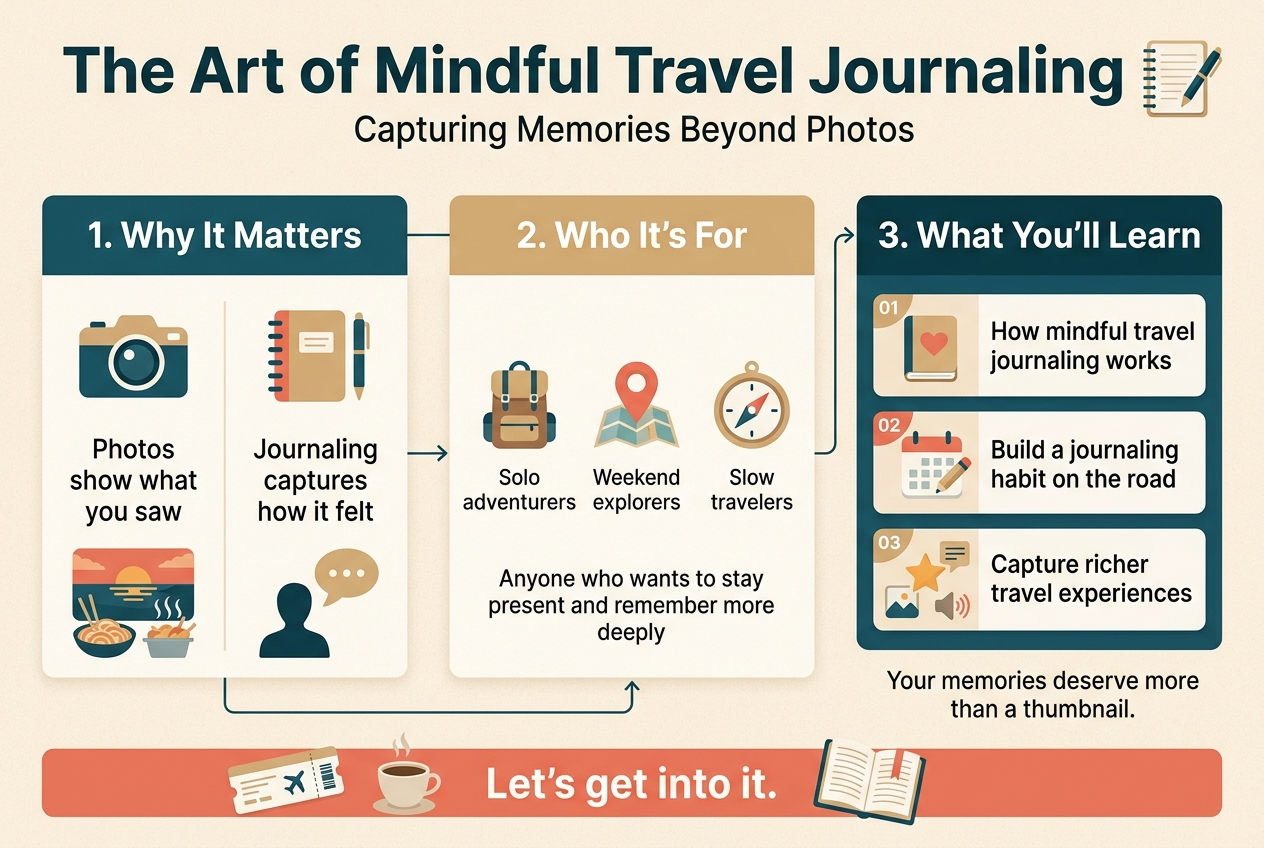
You’ve got hundreds of photos from your last trip, but somehow they still don’t capture how it actually felt to be there. The smell of that street food market. The exact thought you had watching the sun set over the water. The conversation with a stranger that shifted something in you.
That’s exactly what mindful travel journaling is for — and if you’re someone who wants to remember your travels more deeply, not just document them, you’re in the right place.
This guide is for travelers who feel photos alone don’t tell the full story. Solo adventurers, weekend explorers, slow travelers — anyone who wants to stay present while moving through the world and walk away with something more meaningful than a camera roll.
Here’s what you’ll find inside:
- How mindful travel journaling actually works and why it hits differently compared to scrolling back through Instagram six months later
- Practical ways to build a journaling habit on the road without it feeling like homework after a long day of exploring
- Techniques to capture richer, more vivid travel experiences so your entries feel alive every time you read them back
Your memories deserve more than a thumbnail. Let’s get into it.
Understanding Mindful Travel Journaling
How Mindful Journaling Differs from Traditional Travel Diaries
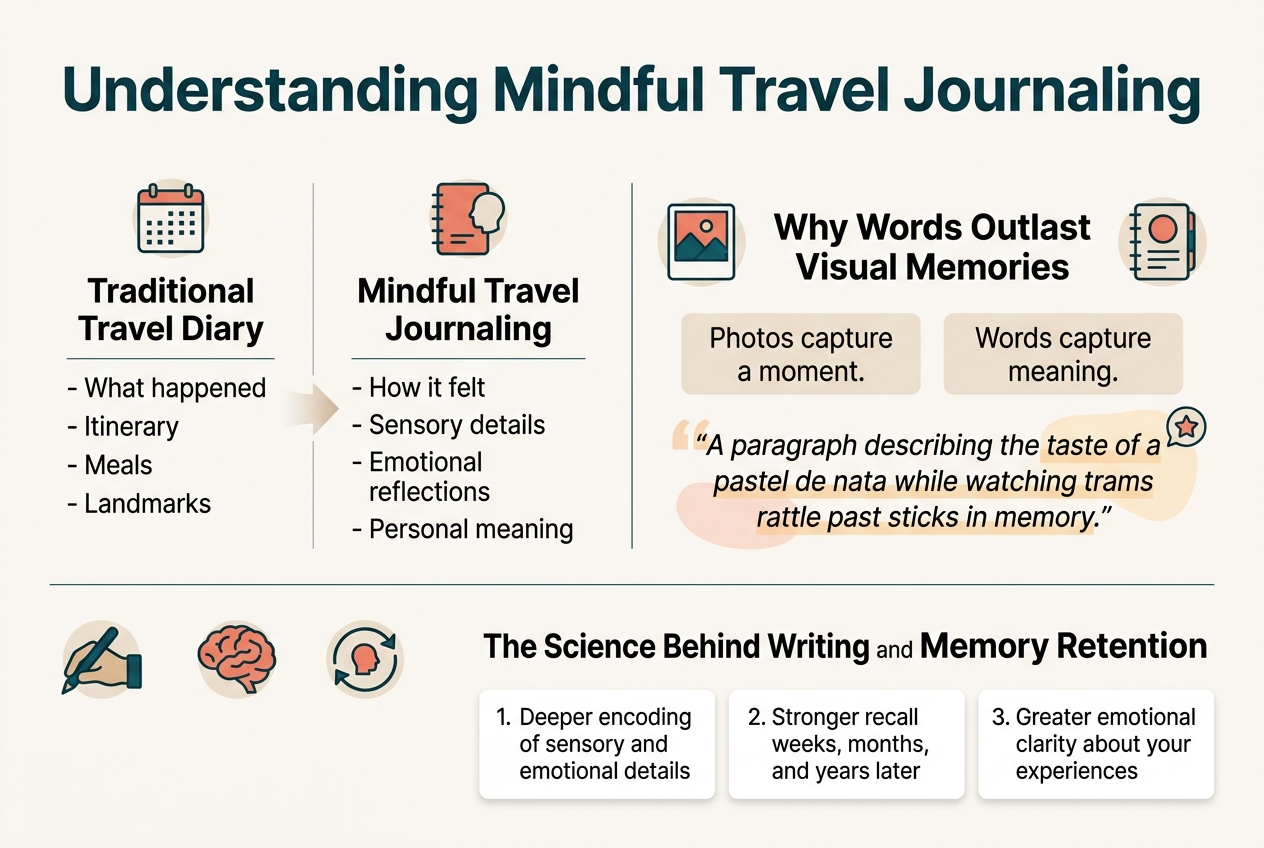
A traditional travel diary logs what happened — the itinerary, the meals, the landmarks. Mindful travel journaling asks you to go deeper. It pulls your attention to how a place felt under your skin: the weight of humid air in a Bangkok market, or the unexpected loneliness of standing at a famous monument surrounded by strangers.
You’re not just recording events — you’re processing them.
Why Words and Reflections Outlast Visual Memories
Photos capture a moment. Words capture meaning. Three years from now, a photo of a Lisbon street might blur into dozens of others. But a paragraph describing the taste of a pastel de nata while watching trams rattle past? That sticks.
Your written reflections create emotional anchors that photos simply can’t replicate.
The Science Behind Writing and Memory Retention
Research consistently shows that handwriting strengthens memory encoding more than any other method. When you describe an experience in your own words, your brain actively reconstructs and consolidates it — making retrieval sharper and more vivid over time.
Key benefits include:
- Deeper encoding of sensory and emotional details
- Stronger recall weeks, months, and years later
- Greater emotional clarity about your experiences
Choosing the Right Journal for Your Travel Style
Comparing Formats: Notebooks, Bullet Journals, and Digital Options
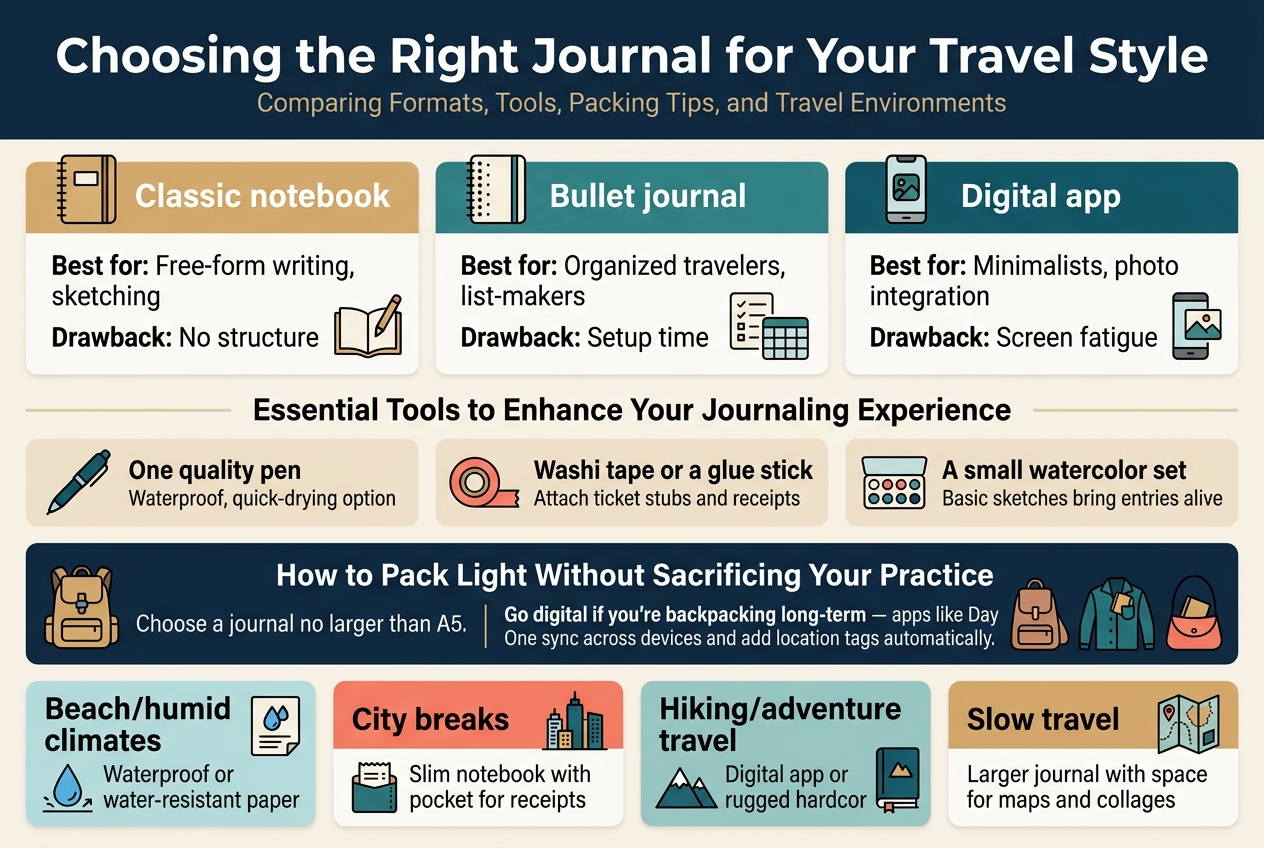
| Format | Best For | Drawback |
|---|---|---|
| Classic notebook | Free-form writing, sketching | No structure |
| Bullet journal | Organized travelers, list-makers | Setup time |
| Digital app | Minimalists, photo integration | Screen fatigue |
Your personality drives this choice. If you love spontaneity, a blank notebook gives you total freedom. If you need structure, bullet journaling keeps your entries organized and searchable.
Essential Tools to Enhance Your Journaling Experience
Pack only what you’ll actually reach for:
- One quality pen — a waterproof, quick-drying option saves smudged pages
- Washi tape or a glue stick — perfect for attaching ticket stubs and receipts
- A small watercolor set — even basic sketches bring entries alive
How to Pack Light Without Sacrificing Your Practice
Choose a journal no larger than A5. It fits in your day bag, your coat pocket, even a small purse. Go digital if you’re backpacking long-term — apps like Day One sync across devices and add location tags automatically.
Matching Your Journal Choice to Different Travel Environments
- Beach/humid climates: Waterproof or water-resistant paper
- City breaks: Slim notebook with pocket for receipts
- Hiking/adventure travel: Digital app or rugged hardcover
- Slow travel: Larger journal with space for maps and collages
Building a Consistent Journaling Habit on the Road
Setting a Daily Routine That Fits Any Travel Schedule
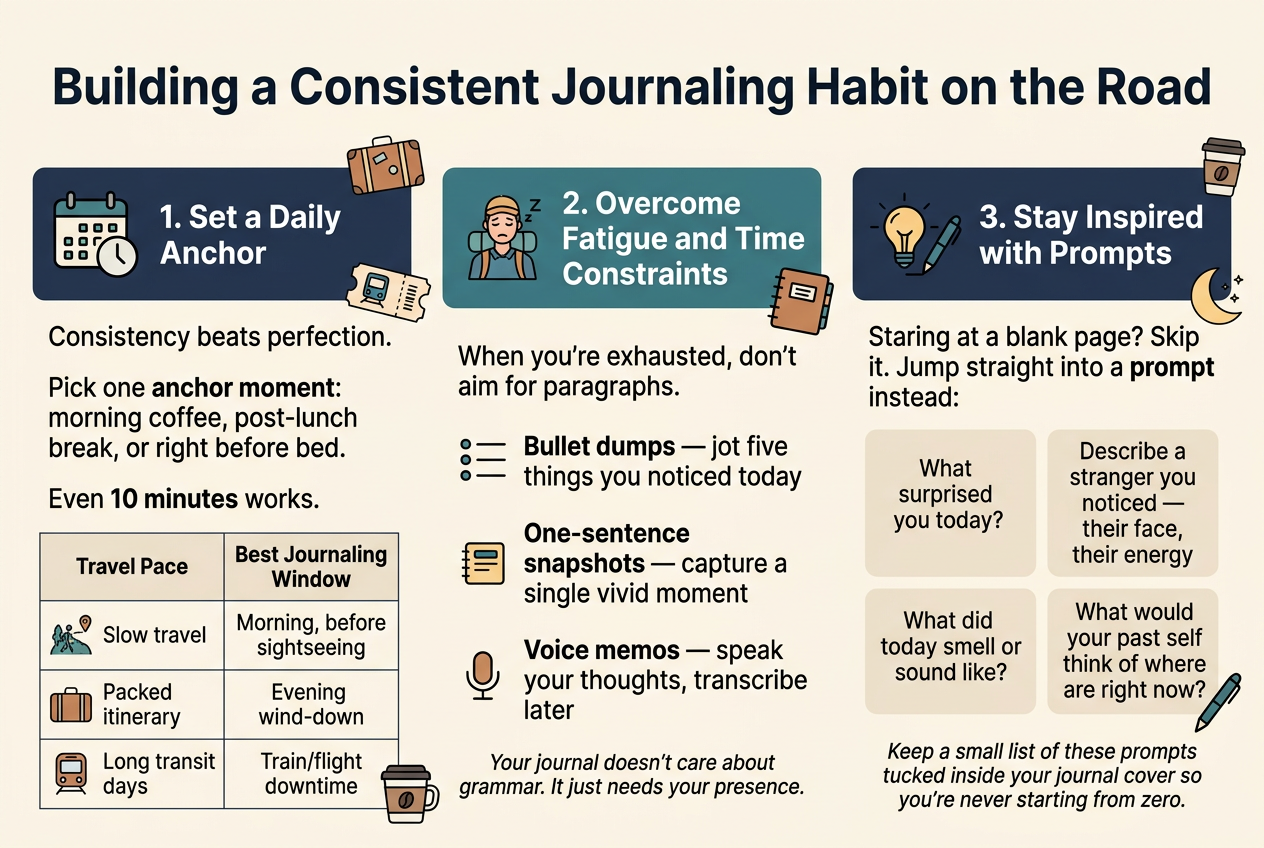
Consistency beats perfection every time. Pick one anchor moment in your day — morning coffee, a post-lunch break, or right before bed — and protect it for journaling. Even 10 minutes works.
| Travel Pace | Best Journaling Window |
|---|---|
| Slow travel | Morning, before sightseeing |
| Packed itinerary | Evening wind-down |
| Long transit days | Train/flight downtime |
Overcoming Common Barriers Like Fatigue and Time Constraints
When you’re exhausted, don’t aim for paragraphs. Try these quick alternatives:
- Bullet dumps — jot five things you noticed today
- One-sentence snapshots — capture a single vivid moment
- Voice memos — speak your thoughts, transcribe later
Your journal doesn’t care about grammar. It just needs your presence.
Using Prompts to Stay Inspired and Overcome Writer’s Block
Staring at a blank page? Skip it. Jump straight into a prompt instead:
- What surprised you today?
- Describe a stranger you noticed — their face, their energy
- What did today smell or sound like?
- What would your past self think of where you are right now?
Keep a small list of these prompts tucked inside your journal cover so you’re never starting from zero.
Powerful Techniques to Capture Richer Travel Experiences
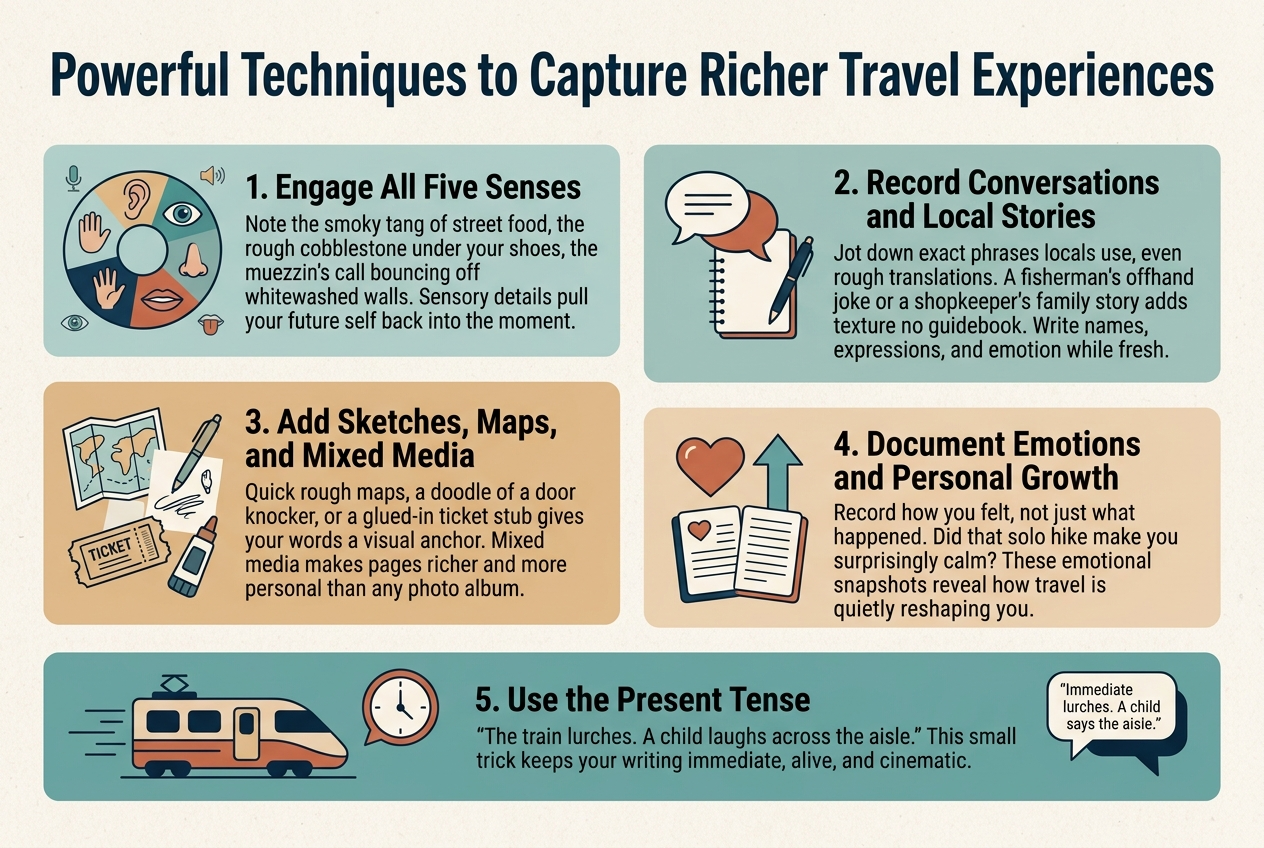
Engaging All Five Senses in Your Written Descriptions
Go beyond what you see. Note the smoky tang of street food, the rough cobblestone under your shoes, the muezzin’s call bouncing off whitewashed walls. Sensory details pull your future self right back into the moment.
Recording Conversations and Local Stories for Authentic Depth
Jot down exact phrases locals use, even rough translations. A fisherman’s offhand joke or a shopkeeper’s family story adds texture no guidebook captures. Write names, expressions, and the emotion behind the words while they’re still fresh.
Sketching, Maps, and Mixed Media to Complement Your Writing
You don’t need artistic talent. Quick rough maps of a neighborhood, a doodle of a door knocker, or a glued-in ticket stub gives your words a visual anchor. Mixed media makes pages richer and more personal than any photo album.
Documenting Emotions and Personal Growth Alongside Events
Record how you felt, not just what happened. Did that solo hike make you surprisingly calm? Write it down. These emotional snapshots reveal how travel is quietly reshaping you.
Using the Present Tense to Recreate Vivid In-the-Moment Detail
Switch to present tense mid-entry: “The train lurches. A child laughs across the aisle.” This small trick keeps your writing immediate, alive, and genuinely cinematic.
Transforming Your Journal Entries Into Lasting Keepsakes
Organizing and Reviewing Entries to Uncover Meaningful Patterns
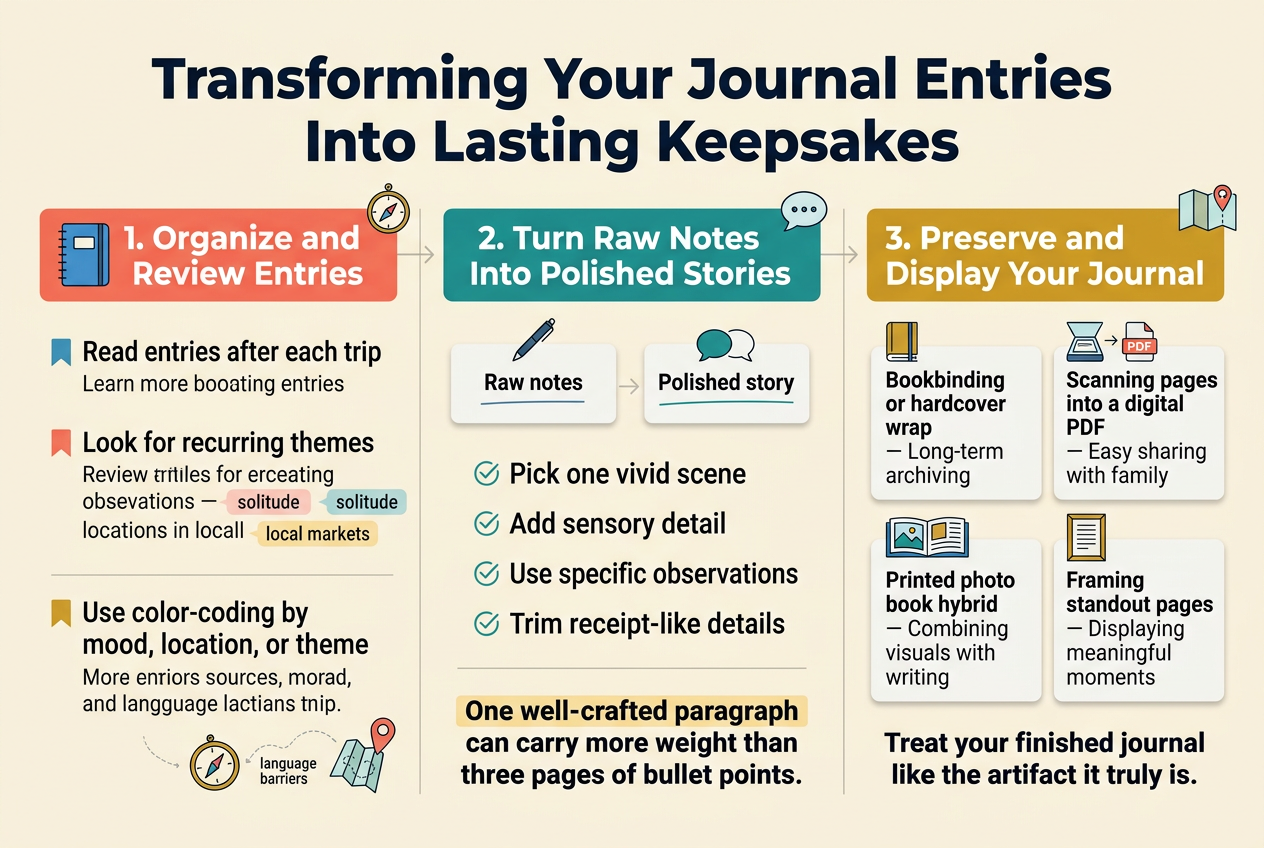
Set aside time after each trip to read your entries from start to finish. You’ll often spot recurring themes — a craving for solitude, a love of local markets, or anxiety around language barriers — that reveal something deeper about who you are as a traveler.
Try color-coding entries by mood, location, or theme to spot those patterns faster.
Turning Raw Notes Into Polished Travel Stories Worth Sharing
Your rushed, messy field notes are raw material, not finished work. To polish them:
- Pick one vivid scene and rebuild it with sensory detail
- Replace vague words like “amazing” with specific observations
- Add dialogue or overheard conversations you jotted down
- Trim anything that reads like a receipt rather than an experience
Even a single well-crafted paragraph carries more weight than three pages of bullet points.
Creative Ways to Preserve and Display Your Finished Journals
Your journal deserves more than a drawer. Consider these options:
| Format | Best For |
|---|---|
| Bookbinding or hardcover wrap | Long-term archiving |
| Scanning pages into a digital PDF | Easy sharing with family |
| Creating a printed photo book hybrid | Combining visuals with writing |
| Framing standout pages | Displaying meaningful moments |
Treat your finished journal like the artifact it truly is.
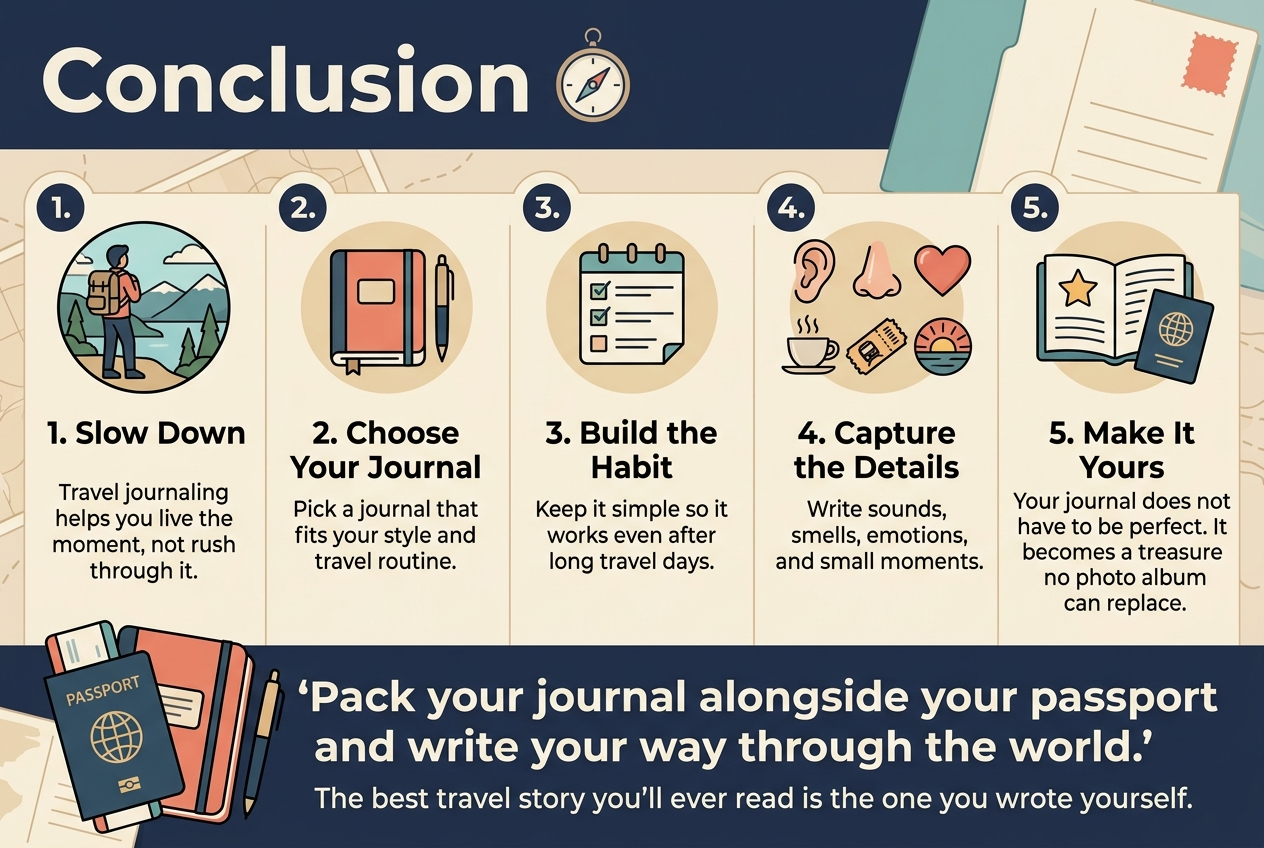
Travel journaling is so much more than putting pen to paper — it’s about slowing down and actually living your experiences instead of just rushing through them. From choosing the right journal for your style to building a simple habit that sticks even after a long travel day, every step makes your memories more vivid and meaningful. The techniques you use to capture sounds, smells, emotions, and small details turn ordinary moments into stories worth revisiting for years to come.
Your journal doesn’t have to be perfect — it just has to be yours. When you shape those raw entries into something you can look back on, you create a treasure no photo album can replace. So grab your journal, pack it alongside your passport, and start writing your way through the world. The best travel story you’ll ever read is the one you wrote yourself.
✨ Subscribe to The Zen Journal for mindful travel tips, yoga flows, and wellness inspiration delivered weekly ✨