
The Desk Yoga Sequence That Fights Office Fatigue
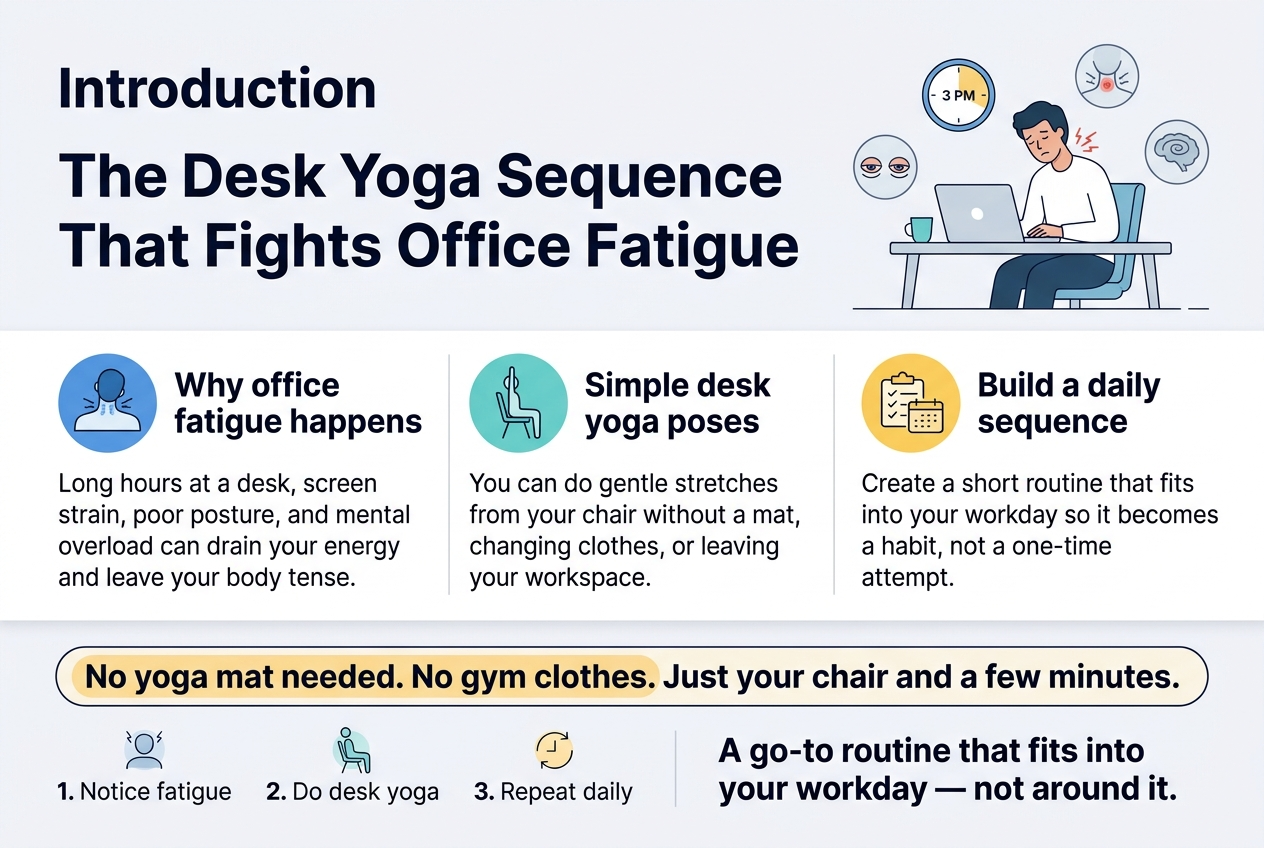
If you’ve ever hit that 3 PM wall where your neck aches, your eyes feel heavy, and your brain just stops cooperating — you’re not alone. Office fatigue is real, and it sneaks up on you fast when you’re stuck at a desk for hours.
This guide is for you if you work a desk job, spend long hours in front of a screen, or just feel wiped out by the time your workday ends. No yoga mat needed. No gym clothes. Just your chair and a few minutes.
Here’s what you’ll walk away with:
- Why office fatigue happens and what it’s actually doing to your body and energy levels
- Simple desk yoga poses you can do without leaving your seat or looking weird in front of your coworkers
- How to build a daily desk yoga sequence that sticks, so you’re not just trying it once and forgetting about it
By the end, you’ll have a go-to routine that fits into your workday — not around it.
Understanding Office Fatigue and Why It Drains You
The Physical Toll of Sitting for Long Hours
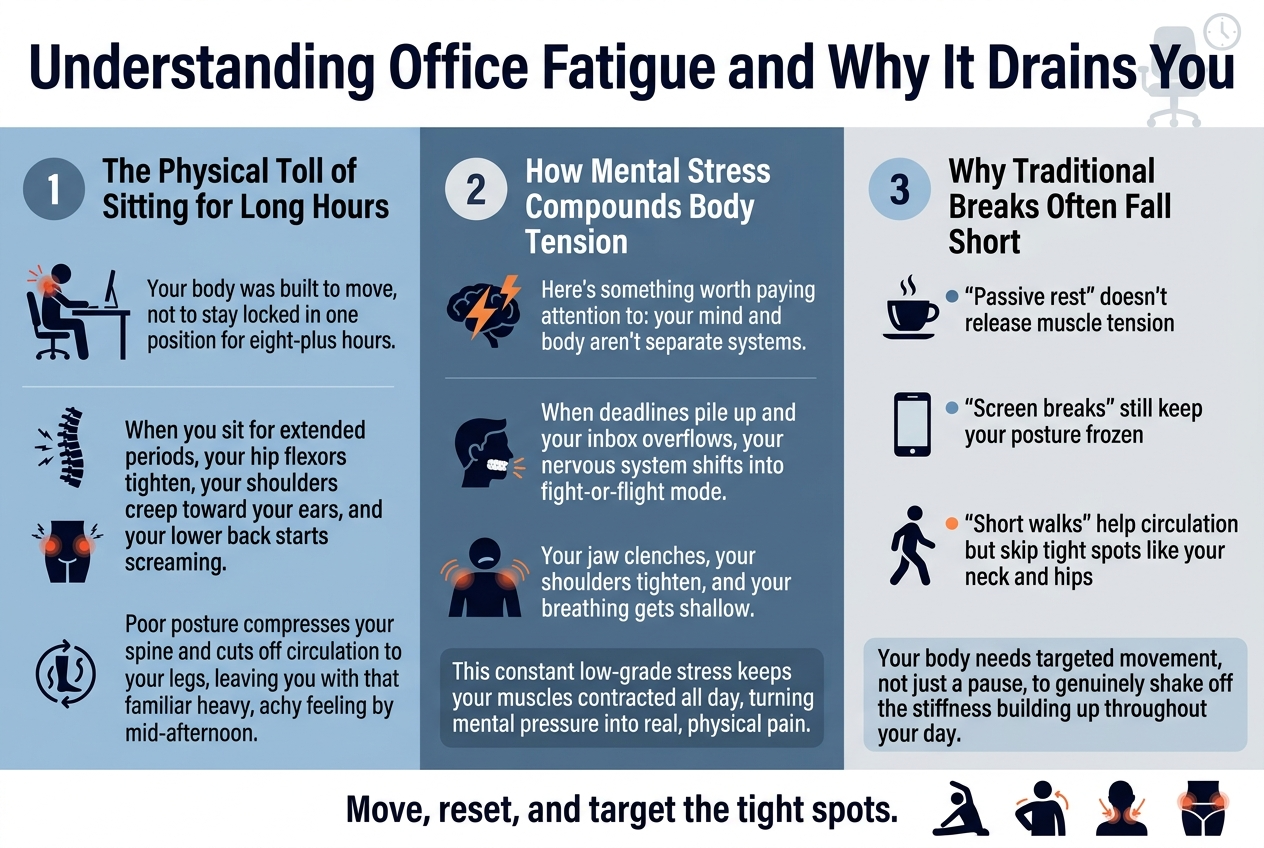
Your body was built to move, not to stay locked in one position for eight-plus hours. When you sit for extended periods, your hip flexors tighten, your shoulders creep toward your ears, and your lower back starts screaming. Poor posture compresses your spine and cuts off circulation to your legs, leaving you with that familiar heavy, achy feeling by mid-afternoon.
How Mental Stress Compounds Body Tension
Here’s something worth paying attention to: your mind and body aren’t separate systems. When deadlines pile up and your inbox overflows, your nervous system shifts into fight-or-flight mode. Your jaw clenches, your shoulders tighten, and your breathing gets shallow. This constant low-grade stress keeps your muscles contracted all day, turning mental pressure into real, physical pain.
Why Traditional Breaks Often Fall Short
You’d think taking a coffee break or scrolling your phone would reset things — but it rarely does. Here’s why:
- Passive rest doesn’t release muscle tension
- Screen breaks still keep your posture frozen
- Short walks help circulation but skip tight spots like your neck and hips
Your body needs targeted movement, not just a pause, to genuinely shake off the stiffness building up throughout your day.
Why Desk Yoga Is the Perfect Office Solution
No Equipment or Extra Space Required
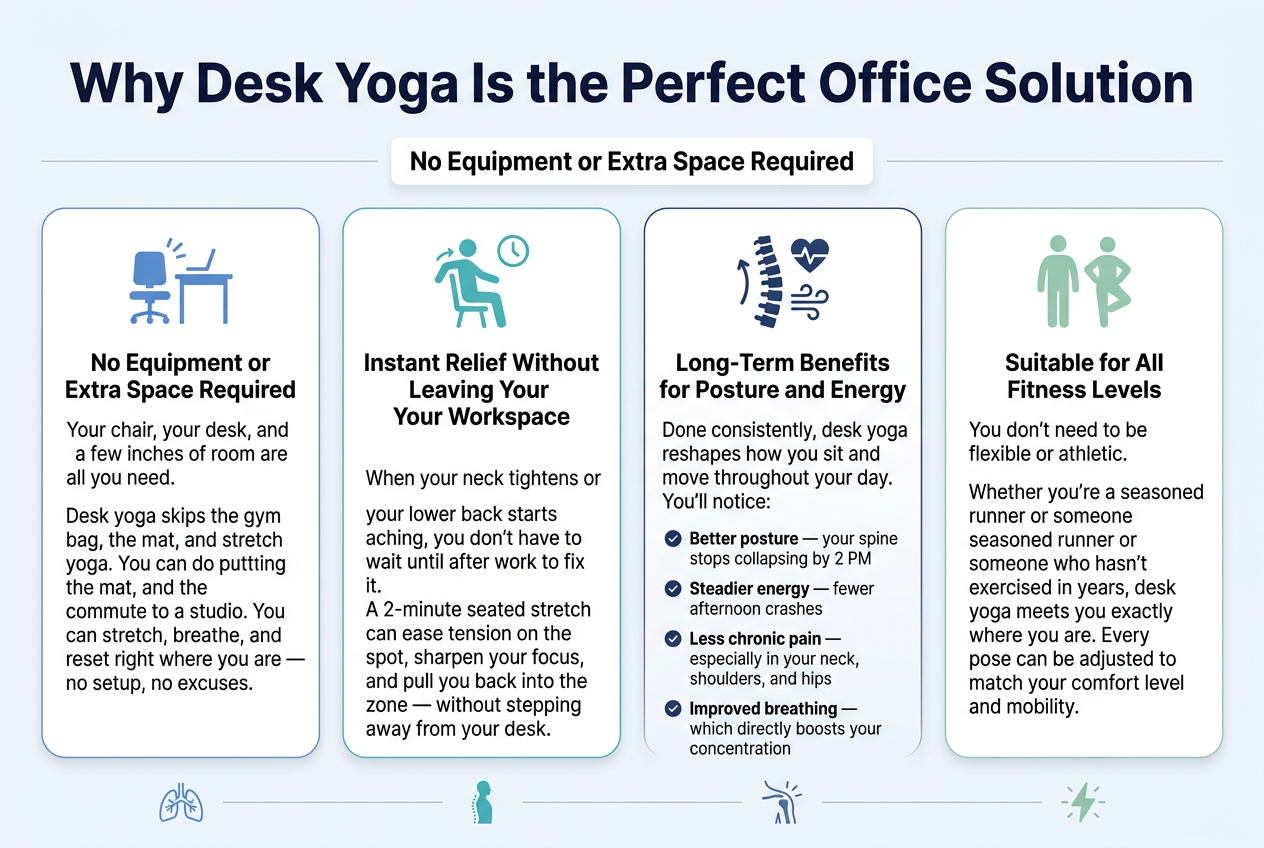
Your chair, your desk, and a few inches of room are all you need. Desk yoga skips the gym bag, the mat, and the commute to a studio. You can stretch, breathe, and reset right where you are — no setup, no excuses.
Instant Relief Without Leaving Your Workspace
When your neck tightens or your lower back starts aching, you don’t have to wait until after work to fix it. A 2-minute seated stretch can ease tension on the spot, sharpen your focus, and pull you back into the zone — without stepping away from your desk.
Long-Term Benefits for Posture and Energy
Done consistently, desk yoga reshapes how you sit and move throughout your day. You’ll notice:
- Better posture — your spine stops collapsing by 2 PM
- Steadier energy — fewer afternoon crashes
- Less chronic pain — especially in your neck, shoulders, and hips
- Improved breathing — which directly boosts your concentration
Suitable for All Fitness Levels
You don’t need to be flexible or athletic. Whether you’re a seasoned runner or haven’t exercised in years, desk yoga meets you where you are. You can adjust every pose to match your comfort level and mobility.
Essential Desk Yoga Poses to Relieve Tension
Seated Spinal Twist to Release Back Stiffness
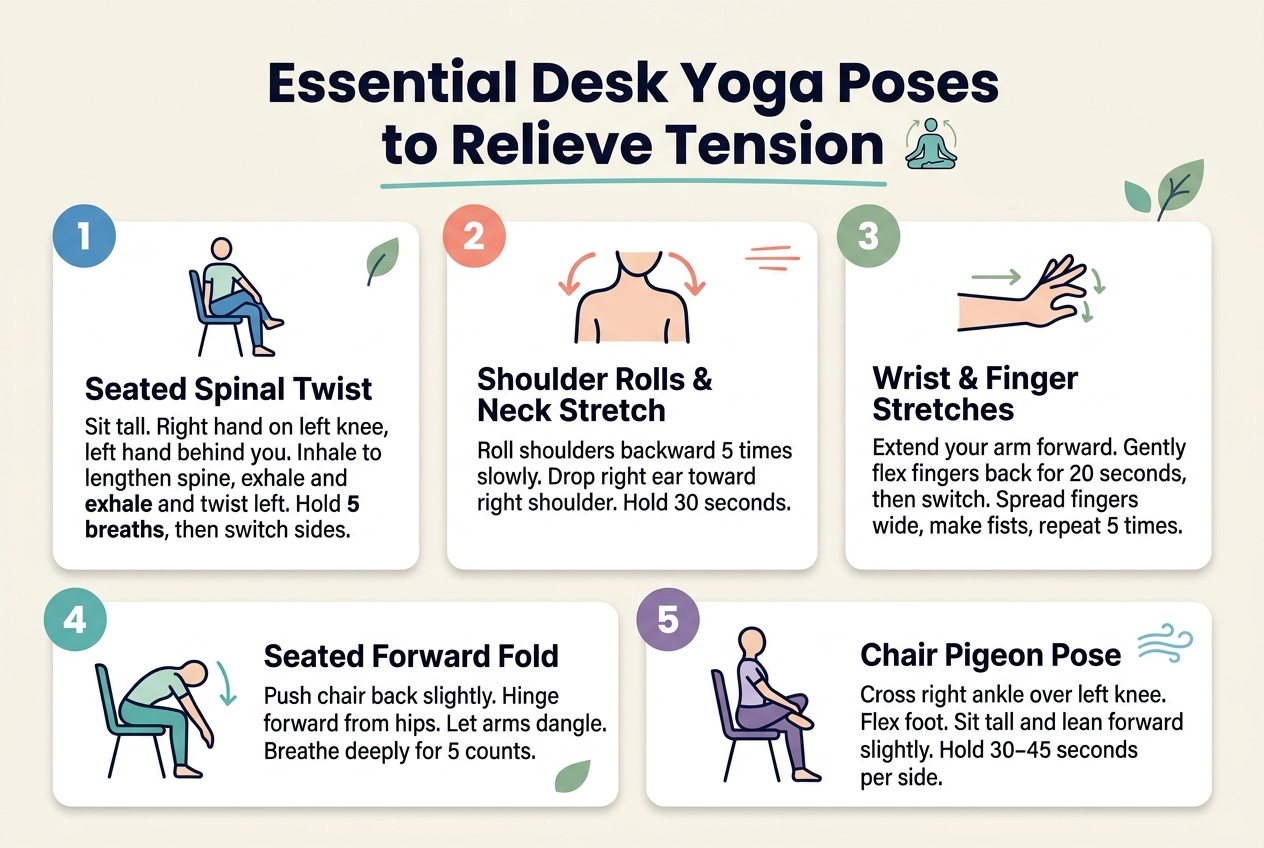
Sit tall, place your right hand on your left knee, and your left hand behind you on the chair. Inhale to lengthen your spine, then exhale and gently twist left. Hold for 5 breaths, then switch sides. This move decompresses your vertebrae and instantly undoes hours of slouching.
Shoulder Rolls and Neck Stretches for Upper Body Relief
Roll your shoulders back slowly 5 times, feeling your chest open up. Then drop your right ear toward your right shoulder and hold for 30 seconds. Together, these two moves melt tension that builds from hunching over your keyboard all day.
Wrist and Finger Stretches to Combat Screen Fatigue
Extend your arm forward, flex your fingers back gently with your opposite hand, hold for 20 seconds, then switch. Spread your fingers wide, make fists, and repeat 5 times. Your wrists take more strain than you’d think—this keeps them healthy and pain-free.
Seated Forward Fold to Calm the Nervous System
Push your chair back slightly, hinge forward from your hips, and let your arms dangle toward the floor. Breathe deeply for 5 counts. This triggers your parasympathetic nervous system, quickly shifting your body out of stress mode.
Chair Pigeon Pose to Open Tight Hips
Cross your right ankle over your left knee, flex your foot, and sit tall. Lean forward slightly for a deeper stretch. Hold 30–45 seconds per side. Tight hips are a silent energy drain — opening them restores circulation and reduces lower-back aching fast.
If you liked this post and often feel drained during long workdays, you’ll love our guide — Wellness: A Gentle Path to a Healthier, Happier You
Building Your Daily Desk Yoga Sequence
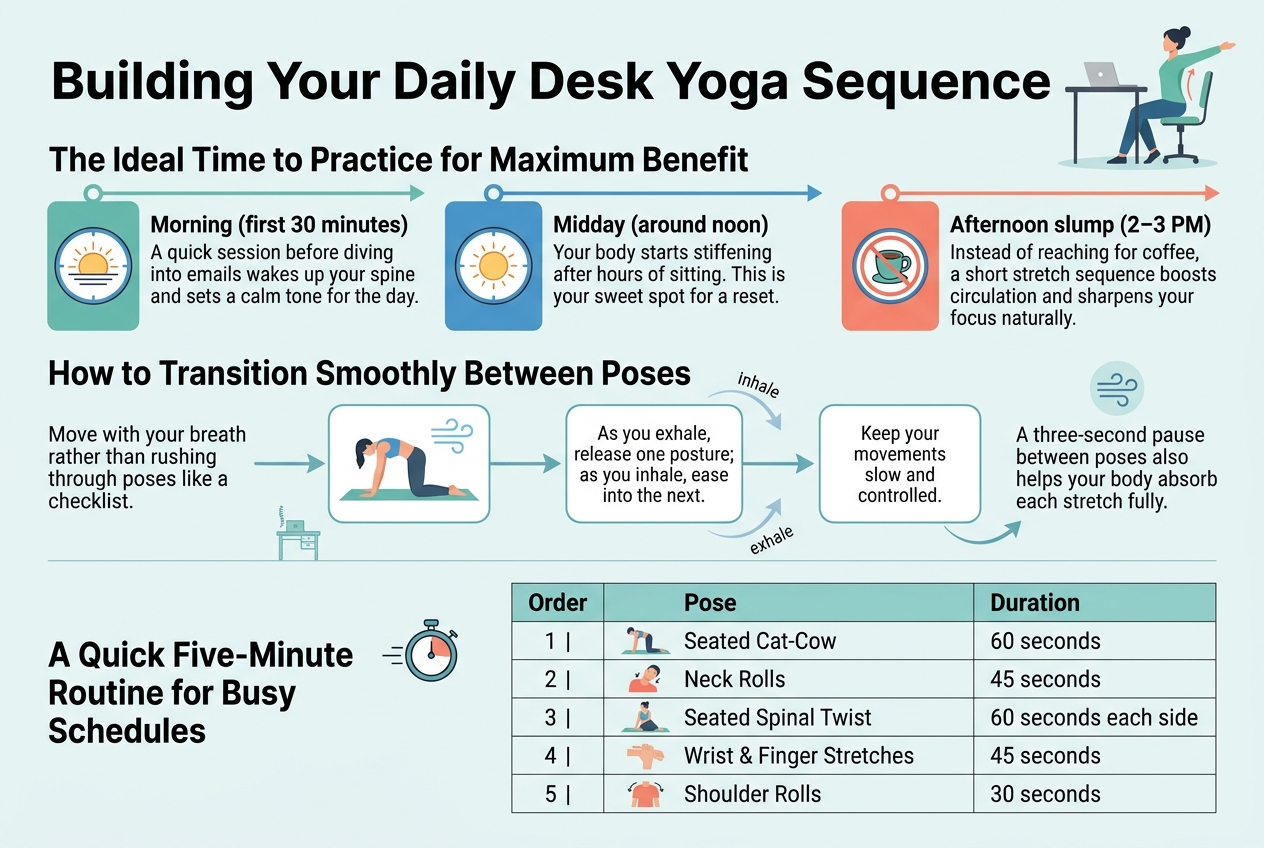
The Ideal Time to Practice for Maximum Benefit
Timing your desk yoga makes a real difference. Try these windows:
- Morning (first 30 minutes): A quick session before diving into emails wakes up your spine and sets a calm tone for the day.
- Midday (around noon): Your body starts stiffening after hours of sitting. This is your sweet spot for a reset.
- Afternoon slump (2–3 PM): Instead of reaching for coffee, a short stretch sequence boosts circulation and sharpens your focus naturally.
How to Transition Smoothly Between Poses
Move with your breath rather than rushing through poses like a checklist. As you exhale, release one posture; as you inhale, ease into the next. Keep your movements slow and controlled — your nervous system responds better to gentle transitions than sudden shifts. A three-second pause between poses also helps your body absorb each stretch fully.
A Quick Five-Minute Routine for Busy Schedules
| Order | Pose | Duration |
|---|---|---|
| 1 | Seated Cat-Cow | 60 seconds |
| 2 | Neck Rolls | 45 seconds |
| 3 | Seated Spinal Twist | 60 seconds each side |
| 4 | Wrist & Finger Stretches | 45 seconds |
| 5 | Shoulder Rolls | 30 seconds |
Tips to Make Desk Yoga a Lasting Habit
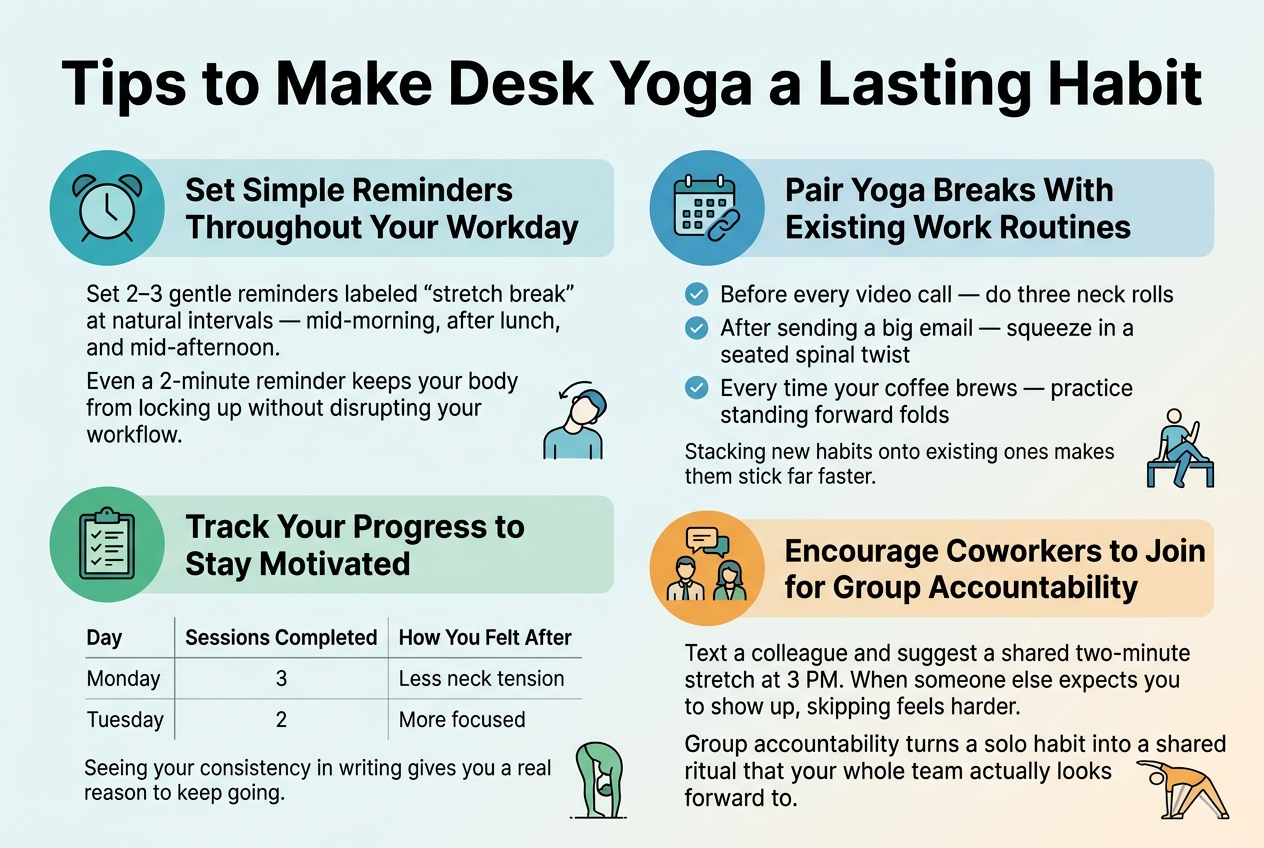
Set Simple Reminders Throughout Your Workday
Your phone’s alarm feature is your best friend here. Set two or three gentle reminders labeled “stretch break” at natural intervals — mid-morning, after lunch, and mid-afternoon. Even a two-minute reminder keeps your body from locking up without disrupting your workflow.
Pair Yoga Breaks With Existing Work Routines
Attach your desk yoga to things you already do automatically:
- Before every video call — do three neck rolls
- After sending a big email — squeeze in a seated spinal twist
- Every time your coffee brews — practice standing forward folds
Stacking new habits onto existing ones makes them stick far faster.
Track Your Progress to Stay Motivated
Keep a simple weekly log using this quick format:
| Day | Sessions Completed | How You Felt After |
|---|---|---|
| Monday | 3 | Less neck tension |
| Tuesday | 2 | More focused |
Seeing your consistency in writing gives you a real reason to keep going.
Encourage Coworkers to Join for Group Accountability
Text a colleague and suggest a shared two-minute stretch at 3 PM. When someone else expects you to show up, skipping feels harder. Group accountability turns a solo habit into a shared ritual that your whole team actually looks forward to.
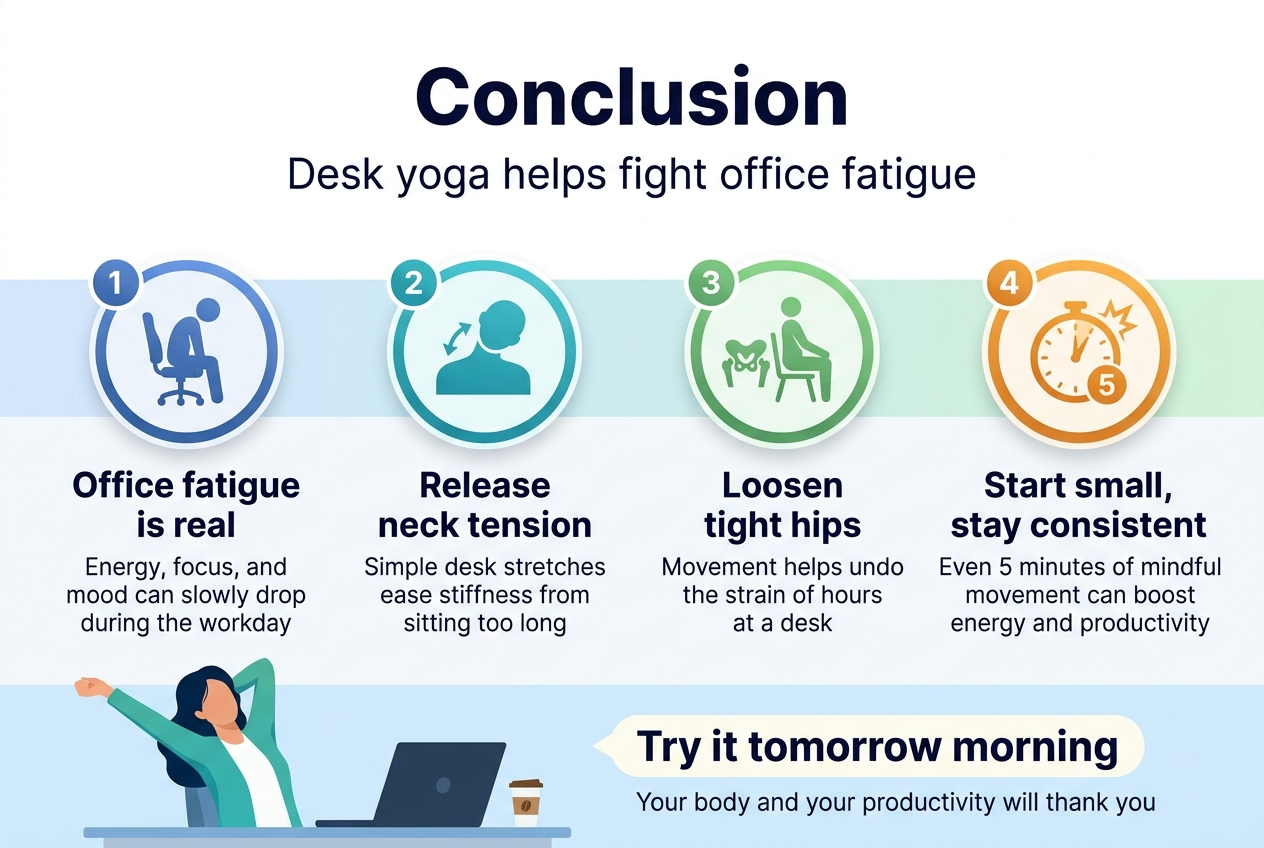
Office fatigue is real, and it can quietly chip away at your energy, focus, and mood throughout the day. The good news is that you don’t need a gym membership or a yoga mat to fight back. A few simple stretches and movements at your desk can make a huge difference in how you feel by 5 PM. From releasing neck tension to loosening tight hips, these poses help undo the damage sitting for hours tends to cause.
The key is making desk yoga a regular part of your workday rather than something you try once and forget. Start small, stay consistent, and build a short sequence that fits naturally into your routine. Even five minutes of mindful movement can shift your energy and help you show up more focused and less worn out. Your body will thank you, and honestly, so will your productivity. Try it tomorrow morning and see how different your day feels.
✨ Enjoyed this post? Subscribe to The Zen Journal for more mindful living tips, simple wellness routines, and ways to stay balanced at work and beyond. 🌸