
The Silent Wellness Killer: How Phone Anxiety Hijacks Your Nervous System
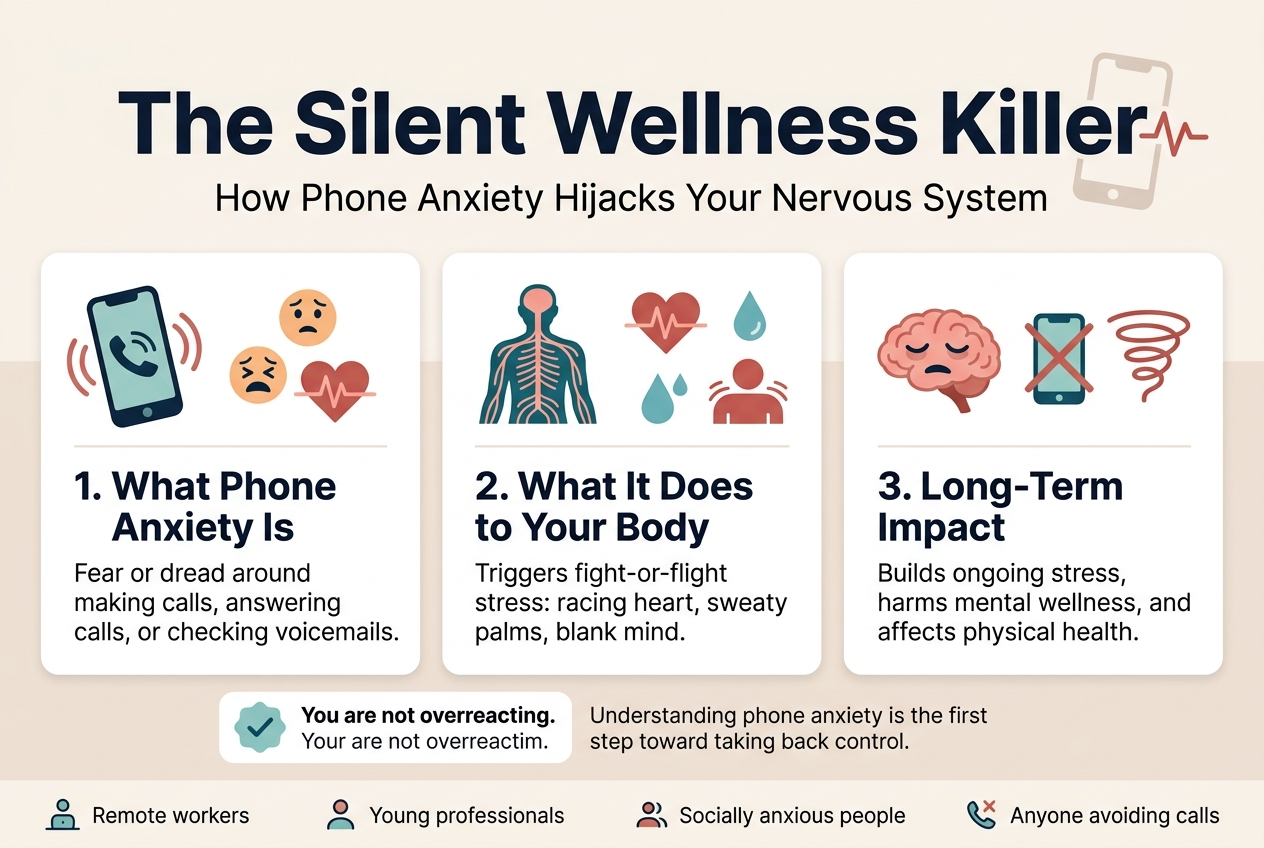
You pick up your phone to make a simple call, and suddenly your heart races, your palms sweat, and your mind goes completely blank. Sound familiar? You’re not alone — and no, you’re not overreacting.
Phone anxiety is quietly affecting millions of people, and most don’t even realize it has a name. If you dread making calls, avoid voicemails like they’re a tax audit, or feel your chest tighten every time your phone rings, this is written for you — the remote worker, the young professional, the socially anxious person who’s been brushing this off as “just a quirk.”
Here’s what we’ll dig into together:
- What phone anxiety actually is and why it’s showing up more than ever
- What it does to your body — specifically how it triggers your nervous system into full-on stress mode
- The real damage it causes to your mental and physical wellness over time, plus practical ways to start taking back control
This isn’t about judgment. It’s about understanding something that’s been messing with your health quietly, in the background — and finally doing something about it.
Understanding Phone Anxiety and Why It Is More Common Than You Think
The Difference Between Normal Phone Discomfort and True Phone Anxiety
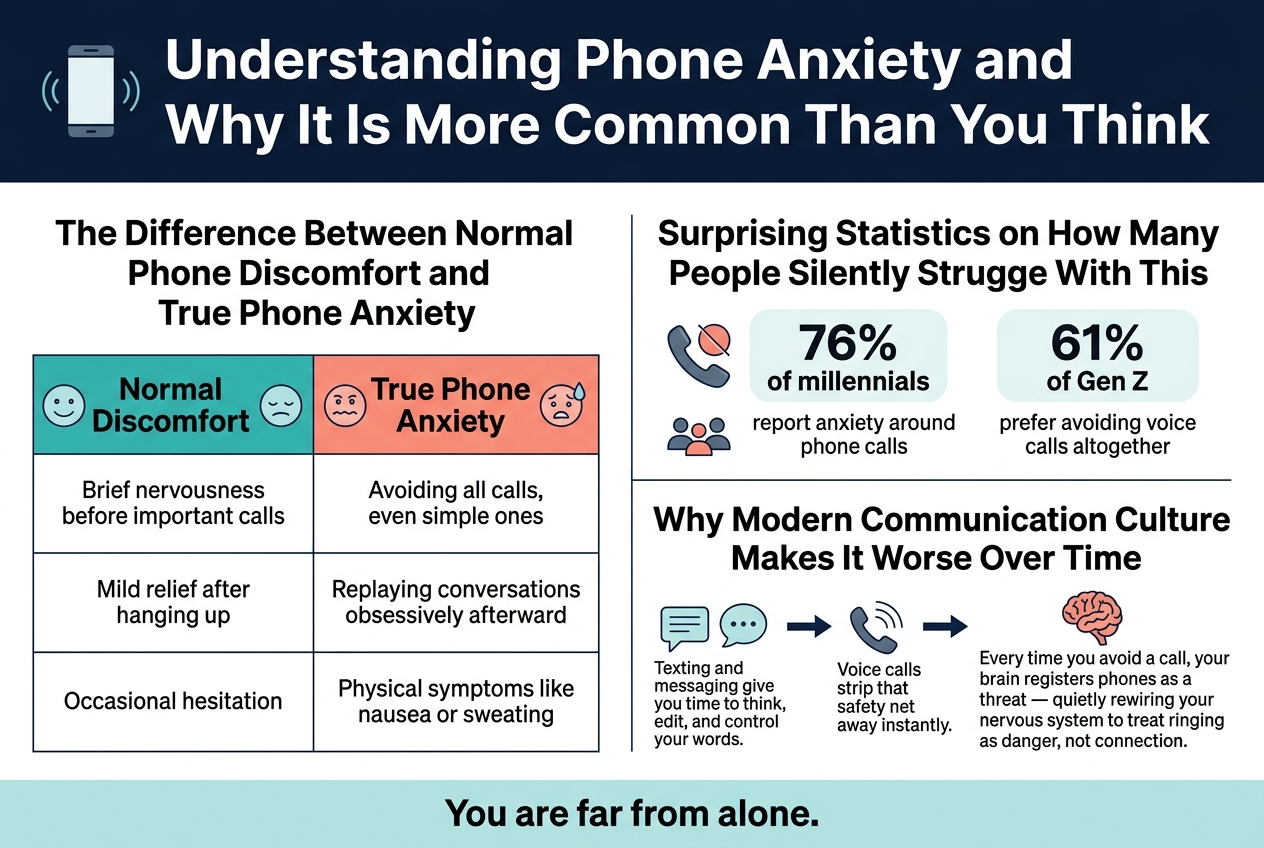
Feeling slightly awkward before a difficult call is completely normal. True phone anxiety is different — it’s when your body physically reacts before you even dial. Your heart races, you delay calls for hours, or you let voicemails pile up because listening feels overwhelming.
| Normal Discomfort | True Phone Anxiety |
|---|---|
| Brief nervousness before important calls | Avoiding all calls, even simple ones |
| Mild relief after hanging up | Replaying conversations obsessively afterward |
| Occasional hesitation | Physical symptoms like nausea or sweating |
Surprising Statistics on How Many People Silently Struggle With This
You are far from alone. Research shows that nearly 76% of millennials report anxiety around phone calls, and roughly 61% of Gen Z prefer avoiding voice calls altogether. Many people quietly manage this daily without ever naming it as anxiety.
Why Modern Communication Culture Makes It Worse Over Time
Your communication habits have dramatically shifted. Texting and messaging give you time to think, edit, and control your words. Voice calls strip that safety net away instantly.
Every time you avoid a call, your brain registers phones as a threat — quietly rewiring your nervous system to treat ringing as danger, not connection.
The Science Behind How Phone Anxiety Hijacks Your Nervous System
How Your Brain Misreads an Incoming Call as a Threat
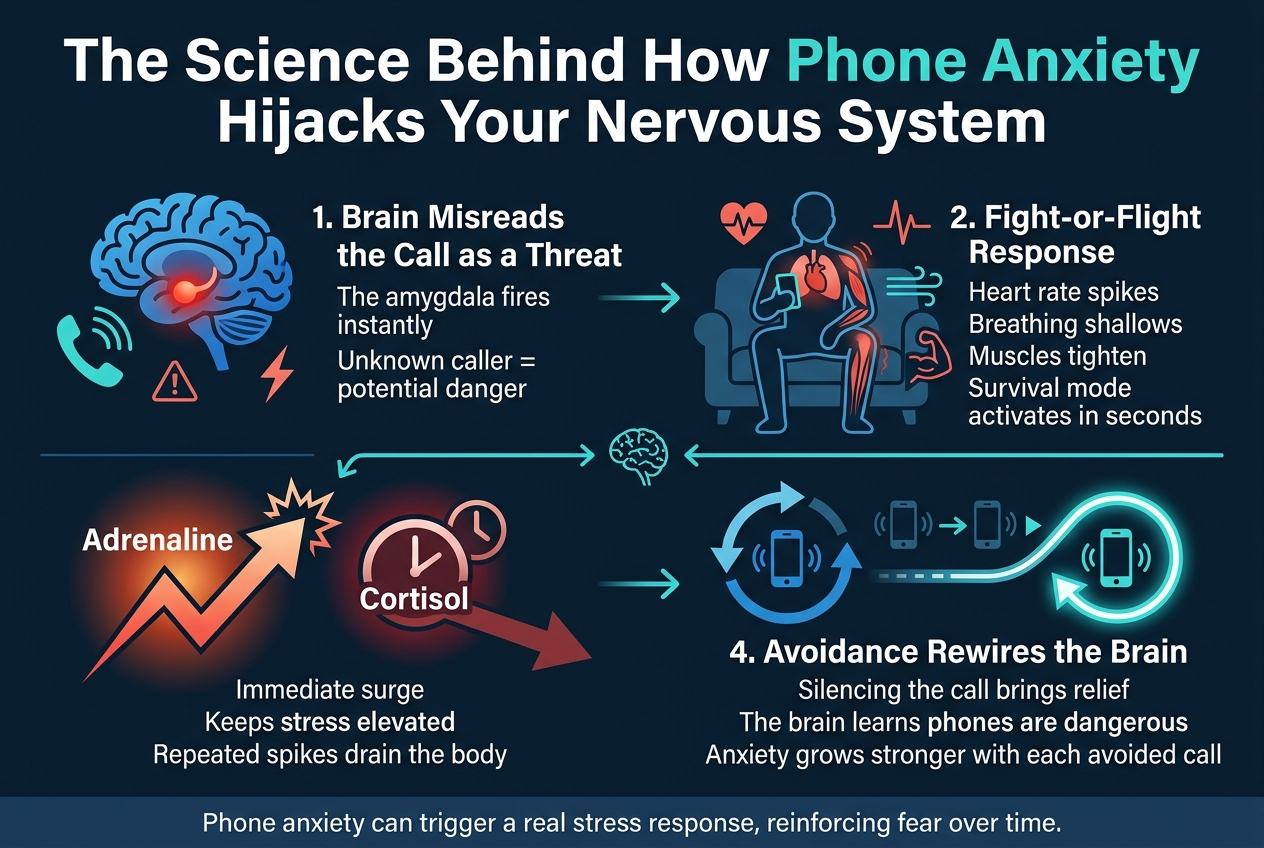
Your brain’s amygdala — the alarm system buried deep inside your skull — doesn’t always know the difference between a ringing phone and a growling predator. When your phone lights up unexpectedly, your amygdala fires instantly, tagging that unknown caller as a potential danger before your rational mind even catches up.
The Fight-or-Flight Response Triggered by Phone-Related Stress
Once that alarm fires, your nervous system shifts into full survival mode. Your heart rate spikes, your breathing shallows, and your muscles tighten — all within seconds. Your body is literally preparing to run or fight, even though you’re just sitting on your couch.
The Role of Cortisol and Adrenaline in Escalating Your Anxiety
- Adrenaline surges immediately, sharpening your senses but also flooding you with dread
- Cortisol follows, keeping your stress levels elevated long after the call ends
- Over time, repeated spikes wear your body down, leaving you feeling chronically drained
Why Repeated Phone Avoidance Rewires Your Brain for More Fear
Every time you silence that call, your brain registers avoidance as relief — and rewards it. That reward teaches your neural pathways that phones are dangerous, making your anxiety grow stronger and harder to shake with each avoided call.
The Hidden Ways Phone Anxiety Damages Your Overall Wellness
Physical Symptoms You May Be Dismissing as Something Else
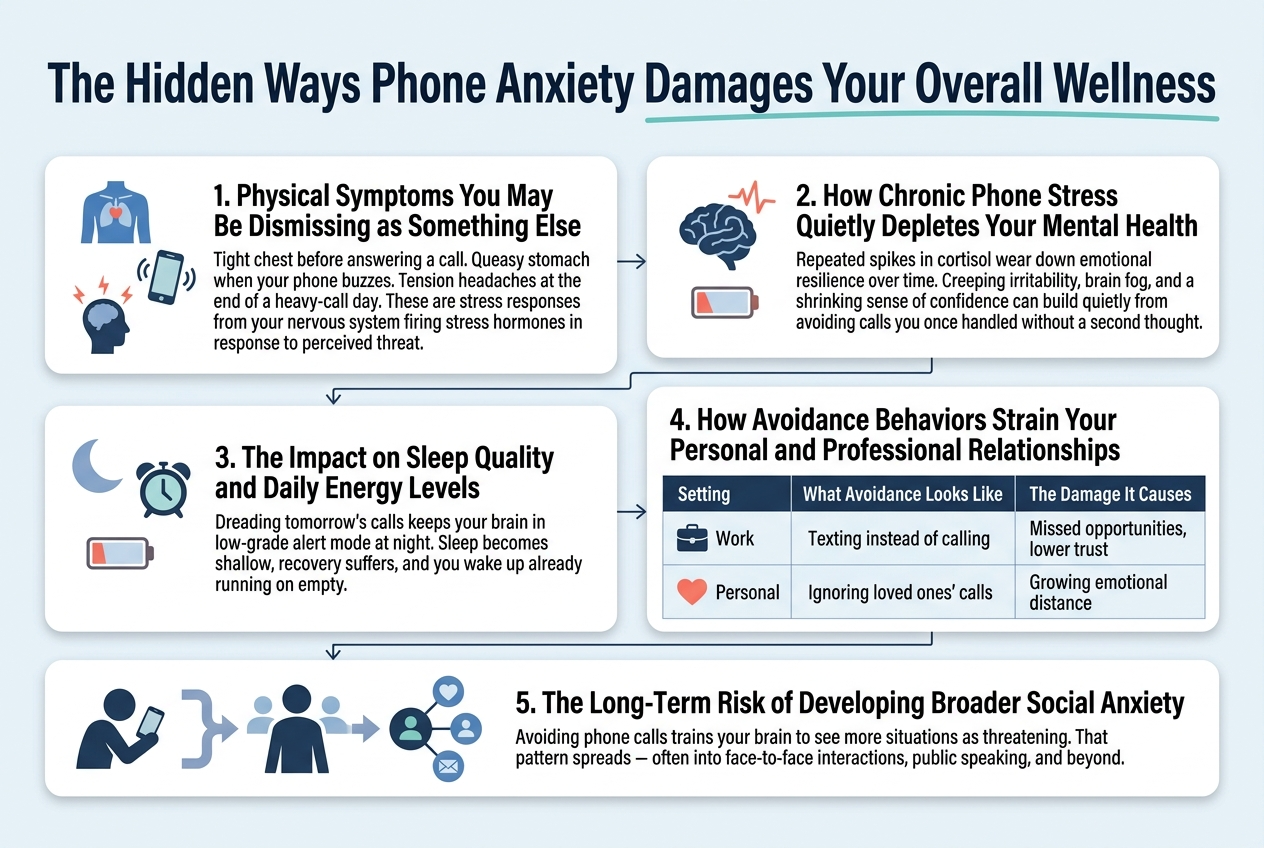
Your body keeps score. That tight chest before answering a call, the queasy stomach when your phone buzzes, or the tension headaches at the end of a heavy-call day — these aren’t random. They’re your nervous system firing stress hormones in response to perceived threat.
How Chronic Phone Stress Quietly Depletes Your Mental Health
Repeated cortisol spikes wear down your emotional resilience over time. You may notice creeping irritability, brain fog, or a shrinking sense of confidence — all quietly fueled by avoiding calls you once handled without a second thought.
The Impact on Sleep Quality and Daily Energy Levels
Dreading tomorrow’s calls keeps your brain in low-grade alert mode at night. Your sleep becomes shallow, recovery suffers, and you wake up already running on empty.
How Avoidance Behaviors Strain Your Personal and Professional Relationships
| Setting | What Avoidance Looks Like | The Damage It Causes |
|---|---|---|
| Work | Texting instead of calling | Missed opportunities, lower trust |
| Personal | Ignoring loved ones’ calls | Growing emotional distance |
The Long-Term Risk of Developing Broader Social Anxiety
Avoiding phone calls trains your brain to see more situations as threatening. That pattern spreads — often into face-to-face interactions, public speaking, and beyond.
Spot the Warning Signs Before They Escalate
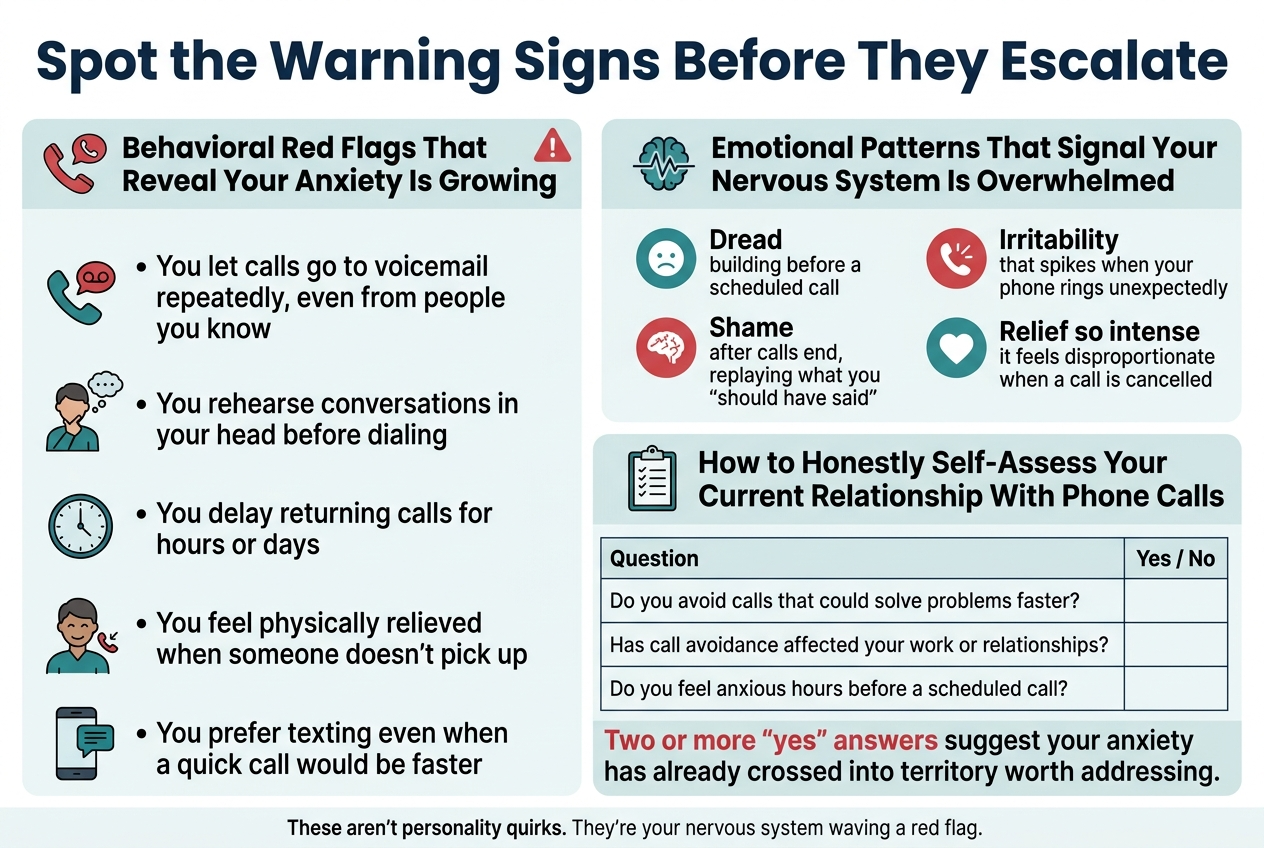
Behavioral Red Flags That Reveal Your Anxiety Is Growing
Watch for these patterns in your daily behavior:
- You let calls go to voicemail repeatedly, even from people you know
- You rehearse conversations in your head before dialing
- You delay returning calls for hours or days
- You feel physically relieved when someone doesn’t pick up
- You prefer texting even when a quick call would be faster
Emotional Patterns That Signal Your Nervous System Is Overwhelmed
Your emotions tell the real story. If your nervous system is struggling, you’ll notice:
- Dread building before a scheduled call
- Irritability that spikes when your phone rings unexpectedly
- Shame after calls end, replaying what you “should have said”
- Relief so intense it feels disproportionate when a call is canceled
These aren’t personality quirks. They’re your nervous system waving a red flag.
How to Honestly Self-Assess Your Current Relationship With Phone Calls
Ask yourself these questions without judgment:
| Question | Yes / No |
|---|---|
| Do you avoid calls that could solve problems faster? | |
| Has call avoidance affected your work or relationships? | |
| Do you feel anxious hours before a scheduled call? |
Two or more “yes” answers suggest your anxiety has already crossed into territory worth addressing.
Proven Strategies to Reclaim Control Over Your Nervous System
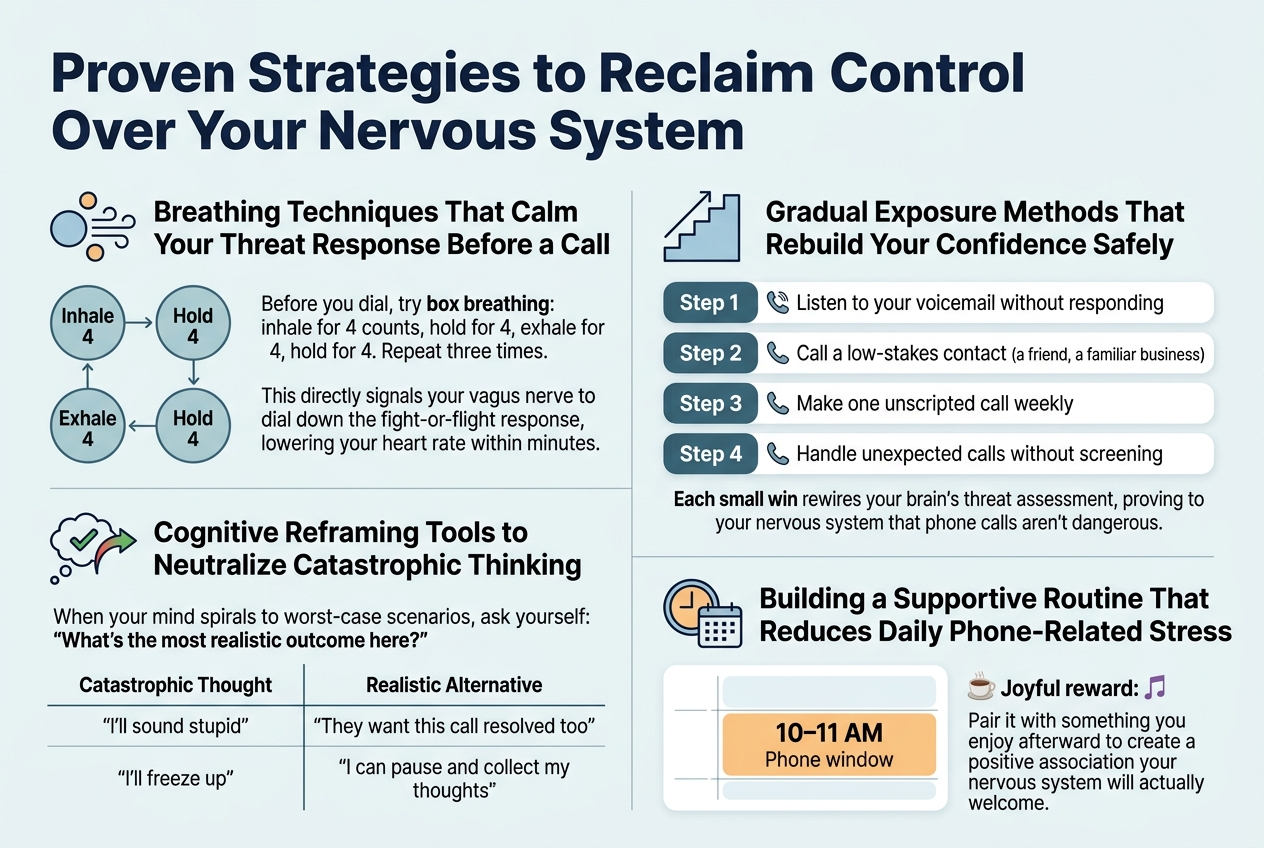
Breathing Techniques That Calm Your Threat Response Before a Call
Before you dial, try box breathing: inhale for 4 counts, hold for 4, exhale for 4, hold for 4. Repeat three times. This directly signals your vagus nerve to dial down the fight-or-flight response, lowering your heart rate within minutes.
Gradual Exposure Methods That Rebuild Your Confidence Safely
Work up a personal exposure ladder:
- Step 1: Listen to your voicemail without responding
- Step 2: Call a low-stakes contact (a friend, a familiar business)
- Step 3: Make one unscripted call weekly
- Step 4: Handle unexpected calls without screening
Each small win rewires your brain’s threat assessment, proving to your nervous system that phone calls aren’t dangerous.
Cognitive Reframing Tools to Neutralize Catastrophic Thinking
When your mind spirals to worst-case scenarios, ask yourself: “What’s the most realistic outcome here?” Keep a quick mental checklist:
| Catastrophic Thought | Realistic Alternative |
|---|---|
| “I’ll sound stupid” | “They want this call resolved too” |
| “I’ll freeze up” | “I can pause and collect my thoughts” |
Building a Supportive Routine That Reduces Daily Phone-Related Stress
Designate a specific “phone window” each day — maybe 10–11 AM — so calls don’t ambush you randomly. Pair it with something you enjoy afterward to create a positive association your nervous system will actually welcome.
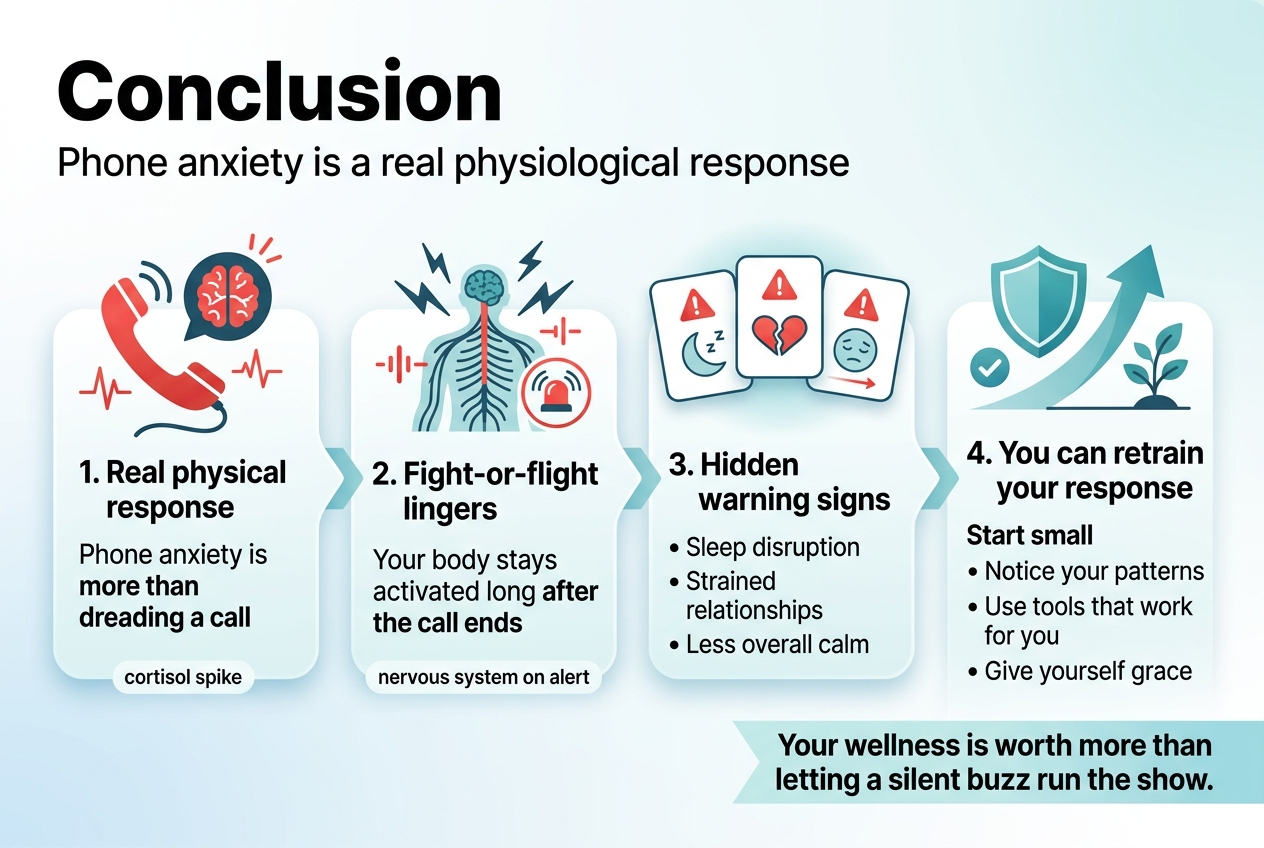
Phone anxiety is more than just dreading a call — it’s a real, physiological response that puts your nervous system through the wringer every time your phone rings. From cortisol spikes to staying stuck in fight-or-flight long after the call ends, the toll it takes on your mental and physical wellness adds up fast. The warning signs are easy to brush off at first, but left unchecked, they quietly chip away at your sleep, your relationships, and your overall sense of calm.
The good news is that you’re not stuck feeling this way. With the right strategies and a little self-awareness, you can start retraining your nervous system and take back control of how you respond to your phone. Start small — notice your patterns, use the tools that work for you, and give yourself grace through the process. Your wellness is worth more than letting a silent buzz run the show.
✨ Join The Zen Journal community — get fresh yoga and wellness insights straight to your inbox ✨