
The 20-Minute Wind-Down Ritual That Actually Fixes Your Sleep
The 20-Minute Wind-Down Ritual That Actually Fixes Your Sleep
I used to lie in bed staring at the ceiling for an hour, replaying my to-do list like a broken record. Sound familiar? If you’re someone who falls into bed exhausted but can’t actually fall asleep, this is for me — and honestly, for you too. This 20‑Minute Wind‑Down Ritual changed how I sleep — and it can do the same for you.
This isn’t another “drink chamomile tea and hope for the best” kind of post. I’ve put together a real, practical sleep wind-down routine that takes just 20 minutes and actually improves your sleep quality.
Here’s what I’m covering:
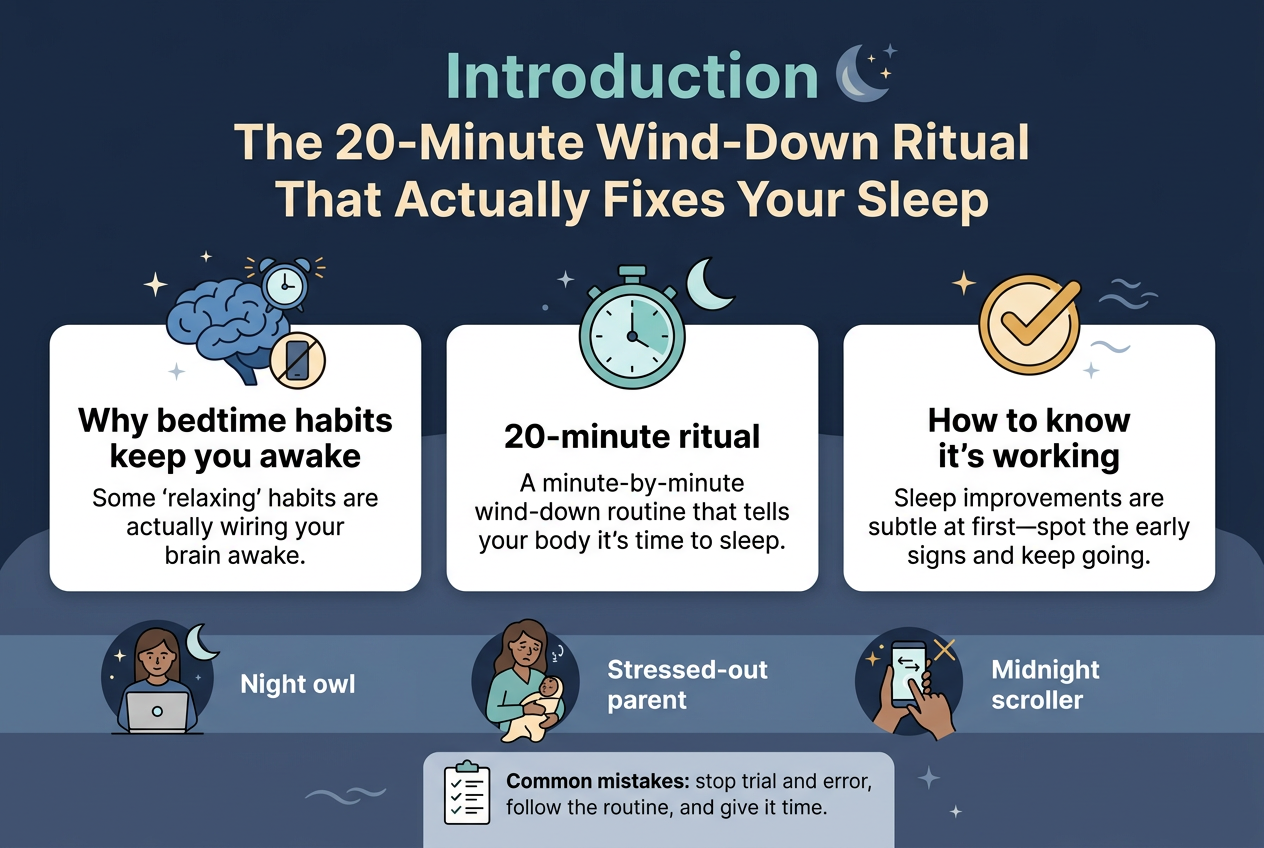
- Why your current bedtime habits might be the exact reason you can’t sleep — some of what you think is relaxing is actually wiring your brain awake
- A minute-by-minute breakdown of the 20-minute wind-down ritual so you know exactly what to do and when
- How to spot the signs it’s working — because good sleep improvements are subtle at first, and I don’t want you to quit too early
Whether you’re a night owl, a stressed-out parent, or someone who just scrolls their phone until midnight, this routine can fit into your real life. I’ll also walk through the common mistakes I made early on so you can skip the trial and error.
Let’s get into it.
Why Your Current Bedtime Routine Is Keeping You Awake
How Stimulating Activities Trick Your Brain Into Staying Alert
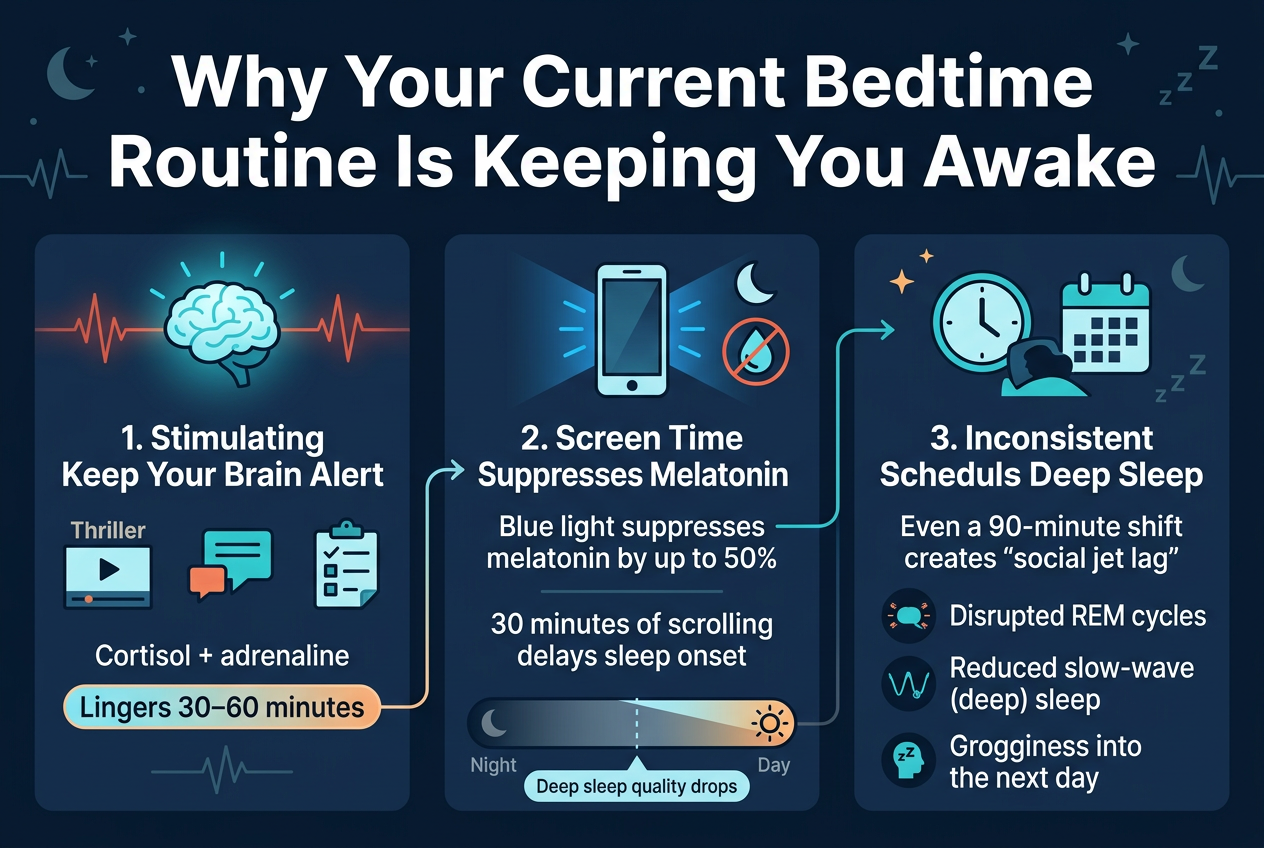
My brain doesn’t know the difference between “fun excitement” and “danger excitement.” When I watch a thriller, argue on social media, or even tackle my to-do list before bed, my nervous system releases cortisol and adrenaline—the same chemicals that kept my ancestors running from predators. That chemical cocktail doesn’t switch off the moment I close my laptop. It lingers for 30–60 minutes, making sleep feel impossible.
The Hidden Impact of Screen Time on Melatonin Production
Here’s what gets me every time — blue light from my phone suppresses melatonin by up to 50%. Melatonin is my body’s natural “it’s dark, sleep now” signal. When I scroll for just 30 minutes before bed, I’m essentially telling my brain it’s still afternoon. My sleep onset gets delayed, and the quality of my deep sleep drops noticeably.
Why an Inconsistent Schedule Sabotages Deep Sleep
My circadian rhythm runs like an internal clock — and I’m the one constantly resetting it. When my bedtime shifts by even 90 minutes on weekends, I create what scientists call “social jet lag.”
- Disrupted REM cycles
- Reduced slow-wave (deep) sleep
- Grogginess that bleeds into the next day
The Science Behind the 20‑Minute Wind‑Down Ritual
How Your Nervous System Shifts From Alert to Rest Mode
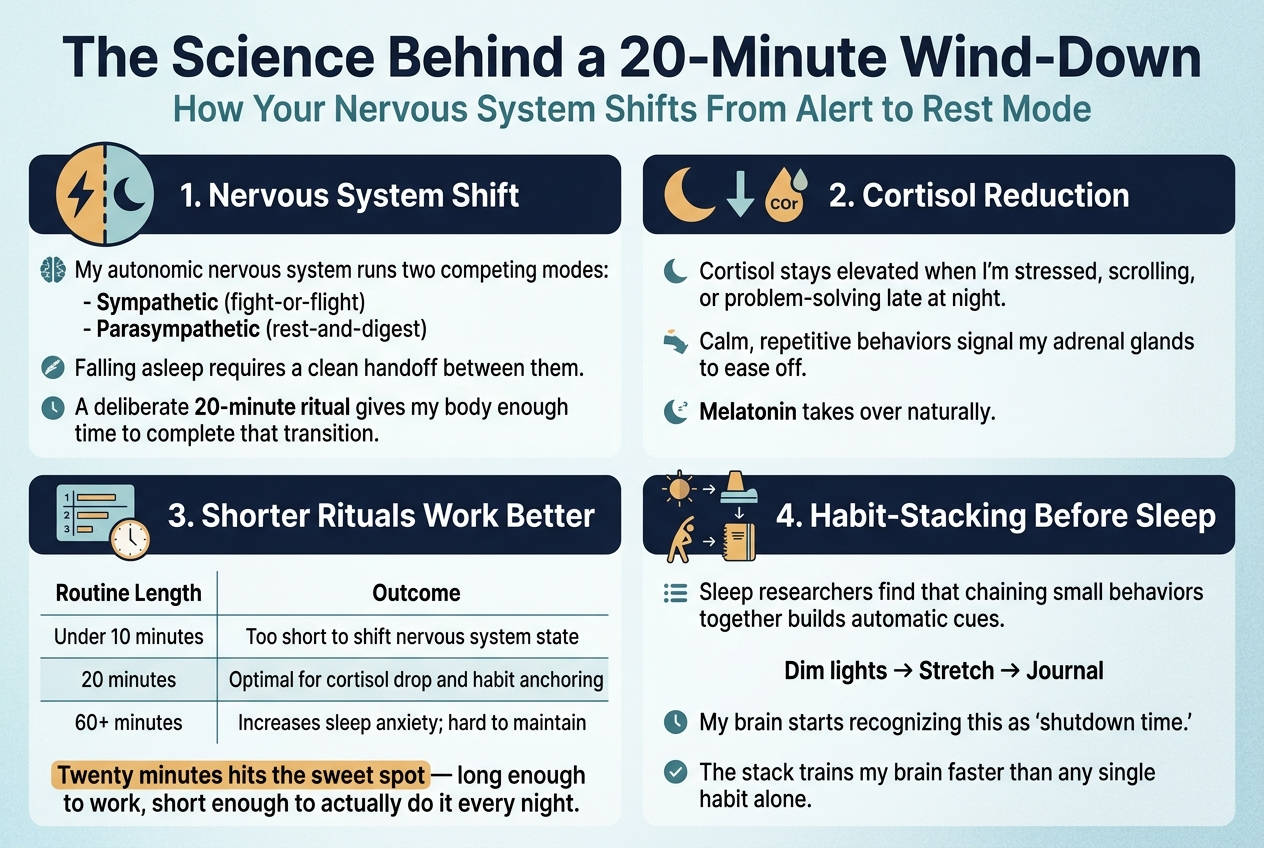
My autonomic nervous system runs two competing modes — sympathetic (fight-or-flight) and parasympathetic (rest-and-digest). Falling asleep requires a clean handoff between them. A deliberate 20-minute ritual gives my body enough time to complete that transition without forcing it.
The Role of Cortisol Reduction in Falling Asleep Faster
Cortisol doesn’t just spike in the morning — it stays elevated when I’m stressed, scrolling, or problem-solving late at night. Dropping into calm, repetitive behaviors signals my adrenal glands to ease off, letting melatonin take over naturally.
Why Shorter Rituals Outperform Lengthy Bedtime Routines
| Routine Length | Outcome |
|---|---|
| Under 10 minutes | Too short to shift nervous system state |
| 20 minutes | Optimal for cortisol drop and habit anchoring |
| 60+ minutes | Increases sleep anxiety; hard to maintain |
A bloated routine becomes another task I dread. Twenty minutes hits the sweet spot — long enough to work, short enough to actually do it every night.
What Research Says About Habit-Stacking Before Sleep
Sleep researchers find that chaining small behaviors together — like dimming lights, then stretching, then journaling — builds automatic cues my brain starts recognizing as “shutdown time.” The stack trains my brain faster than any single habit alone.
Add a short, natural link in your article — for example:
“According to the Sleep Foundation, consistent bedtime routines help regulate your circadian rhythm.”
Minute‑by‑Minute Breakdown of the 20‑Minute Wind Down Ritual
Minutes 1 to 7: Dim Your Environment and Calm Your Senses
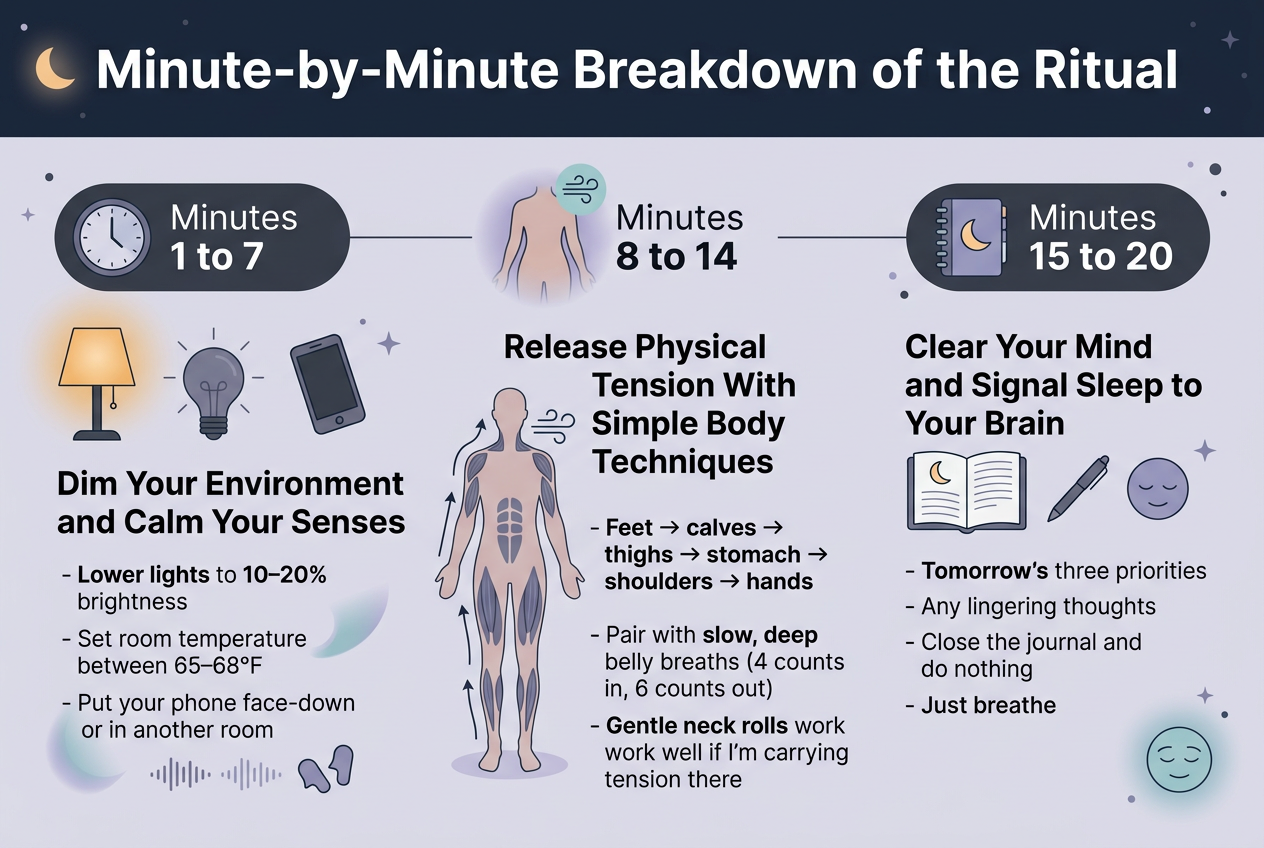
I start by cutting harsh overhead lights and switching to warm, low lamps. Bright light suppresses melatonin, so I treat this like flipping a biological switch. I also silence notifications and, if needed, use earplugs or soft white noise.
- Lower lights to 10–20% brightness
- Set room temperature between 65–68°F
- Put your phone face-down or in another room
Minutes 8 to 14: Release Physical Tension With Simple Body Techniques
My go-to here is progressive muscle relaxation — I tense each muscle group for five seconds, then release. I start at my feet and work upward. It sounds almost too simple, but the contrast between tension and release genuinely melts the day’s stress out of my body.
- Feet → calves → thighs → stomach → shoulders → hands
- Pair with slow, deep belly breaths (4 counts in, 6 counts out)
- Gentle neck rolls work well if I’m carrying tension there
Minutes 15 to 20: Clear Your Mind and Signal Sleep to Your Brain
I spend these final minutes writing a short brain dump — tomorrow’s three priorities, any lingering thoughts. Getting them on paper stops my mind from cycling through them. Then I close my journal and do nothing. Just breathe.
“If you’re exploring deeper ways to calm your mind and body before bed, you’ll love my guide on Why Meditation in Movement is the Future of Mindfulness.”
Customizing the Ritual to Fit Your Lifestyle
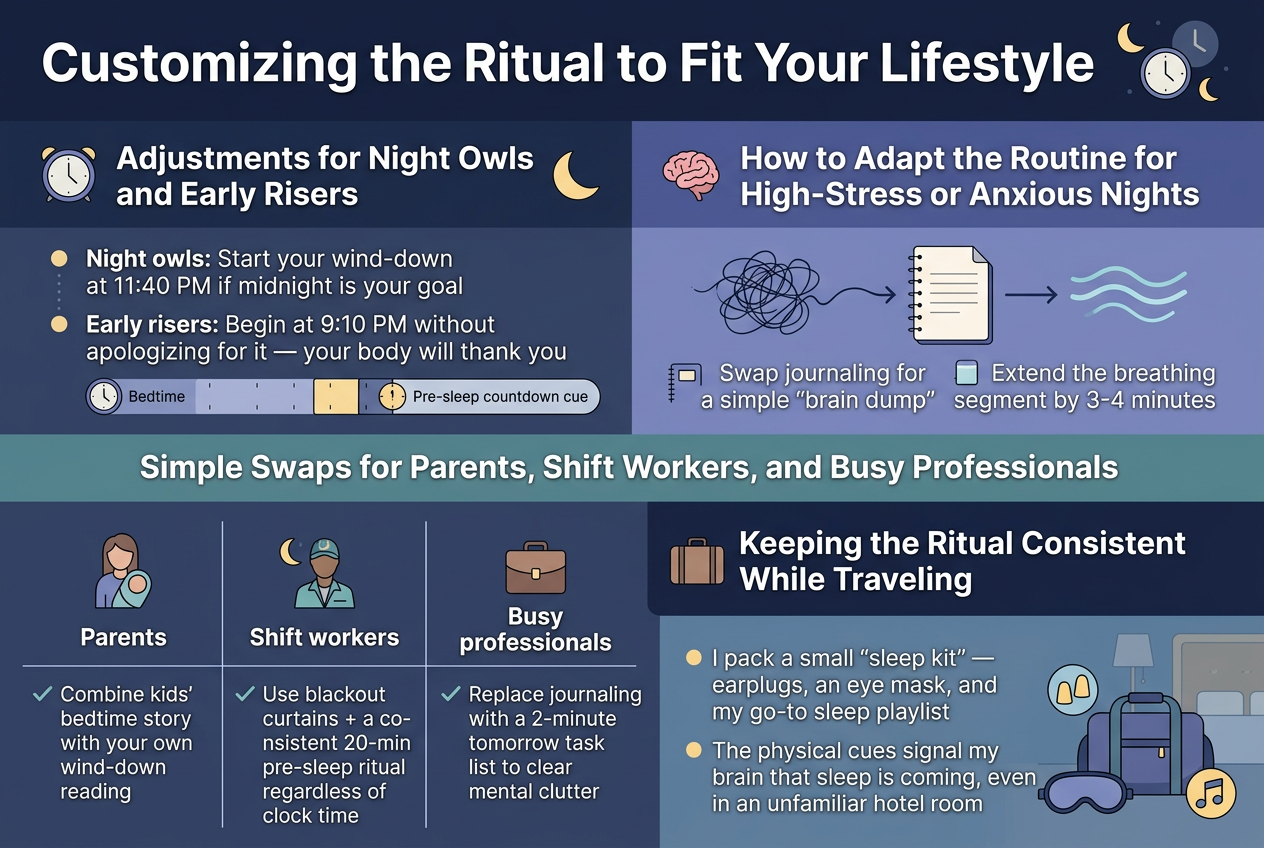
Adjustments for Night Owls and Early Risers
My ritual doesn’t care what time you go to bed — it just needs to happen consistently 20 minutes before your target sleep time.
- Night owls: Start your wind-down at 11:40 PM if midnight is your goal
- Early risers: Begin at 9:10 PM without apologizing for it — your body will thank you
How to Adapt the Routine for High-Stress or Anxious Nights
On rough nights, I swap the journaling portion for a simple “brain dump” — everything swirling in my head goes onto paper, no organizing required. I also extend the breathing segment by 3-4 minutes. Anxious nights need more nervous system calming, not less.
Simple Swaps for Parents, Shift Workers, and Busy Professionals
| Group | Best Adjustment |
|---|---|
| Parents | Combine kids’ bedtime story with your own wind-down reading |
| Shift workers | Use blackout curtains + a consistent 20-min pre-sleep ritual regardless of clock time |
| Busy professionals | Replace journaling with a 2-minute tomorrow task list to clear mental clutter |
Keeping the Ritual Consistent While Traveling
I pack a small “sleep kit” — earplugs, an eye mask, and my go-to sleep playlist. The physical cues signal my brain that sleep is coming, even in an unfamiliar hotel room.
Mistakes That Undermine Your Wind-Down Efforts
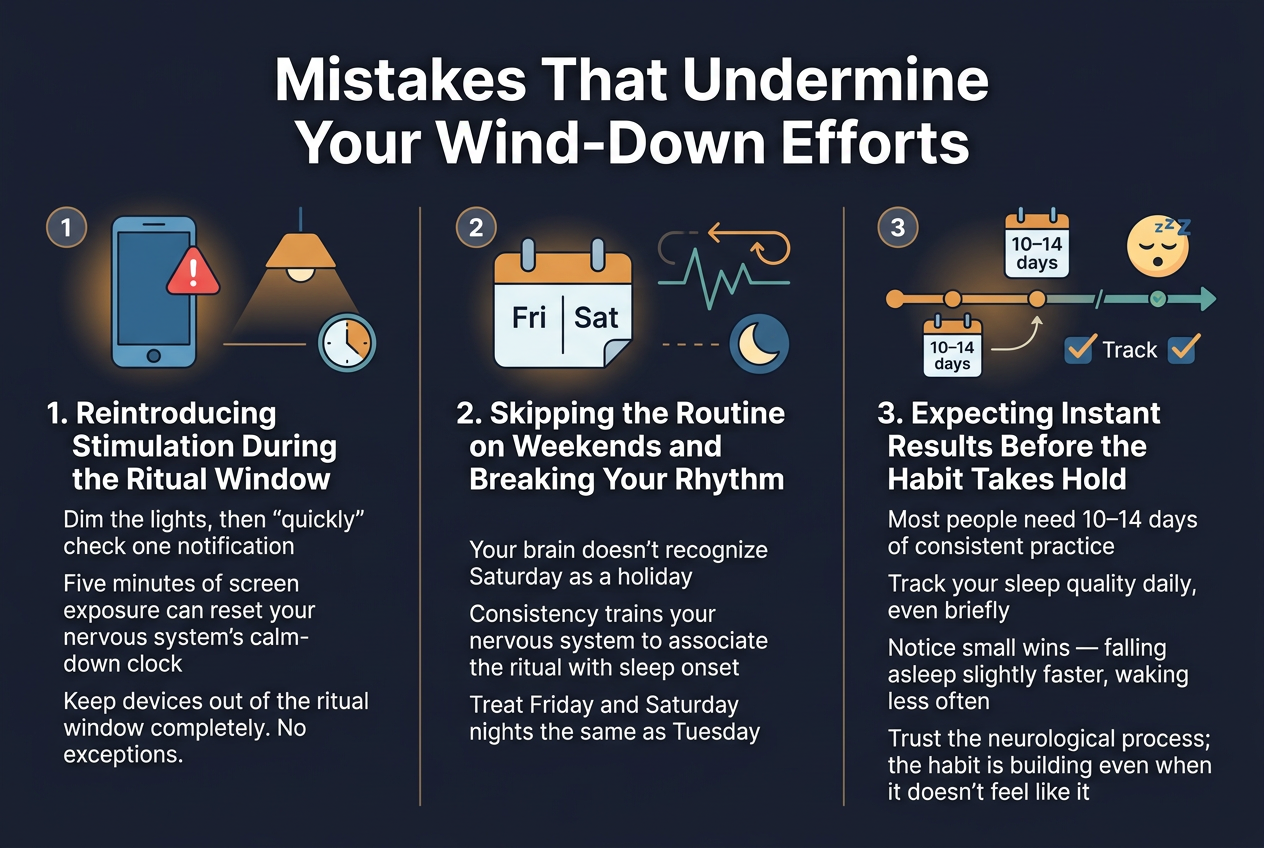
Reintroducing Stimulation During the Ritual Window
This is the mistake I see most often — and I’ve made it myself. You dim the lights, then “quickly” check one notification. Suddenly you’re reading a heated comment thread and your cortisol is spiking again. Even five minutes of screen exposure can reset your nervous system’s calm-down clock. Keep devices completely out of the ritual window. No exceptions.
Skipping the Routine on Weekends and Breaking Your Rhythm
I get it — weekends feel like earned freedom. But your brain doesn’t recognize Saturday as a holiday. When I skip my wind-down two nights in a row, Monday sleep is wrecked. Consistency is what trains your nervous system to associate the ritual with sleep onset. Treat Friday and Saturday nights like Tuesday. The payoff is worth it.
Expecting Instant Results Before the Habit Takes Hold
I wish I could promise you’ll sleep like a baby on night one. You won’t. Most people need 10–14 days of consistent practice before the ritual starts triggering a genuine drowsy response. Here’s what actually helped me stay patient:
- Track your sleep quality daily, even briefly
- Notice small wins — falling asleep slightly faster, waking less often
- Trust the neurological process; the habit is building even when it doesn’t feel like it
Signs the Ritual Is Actually Working
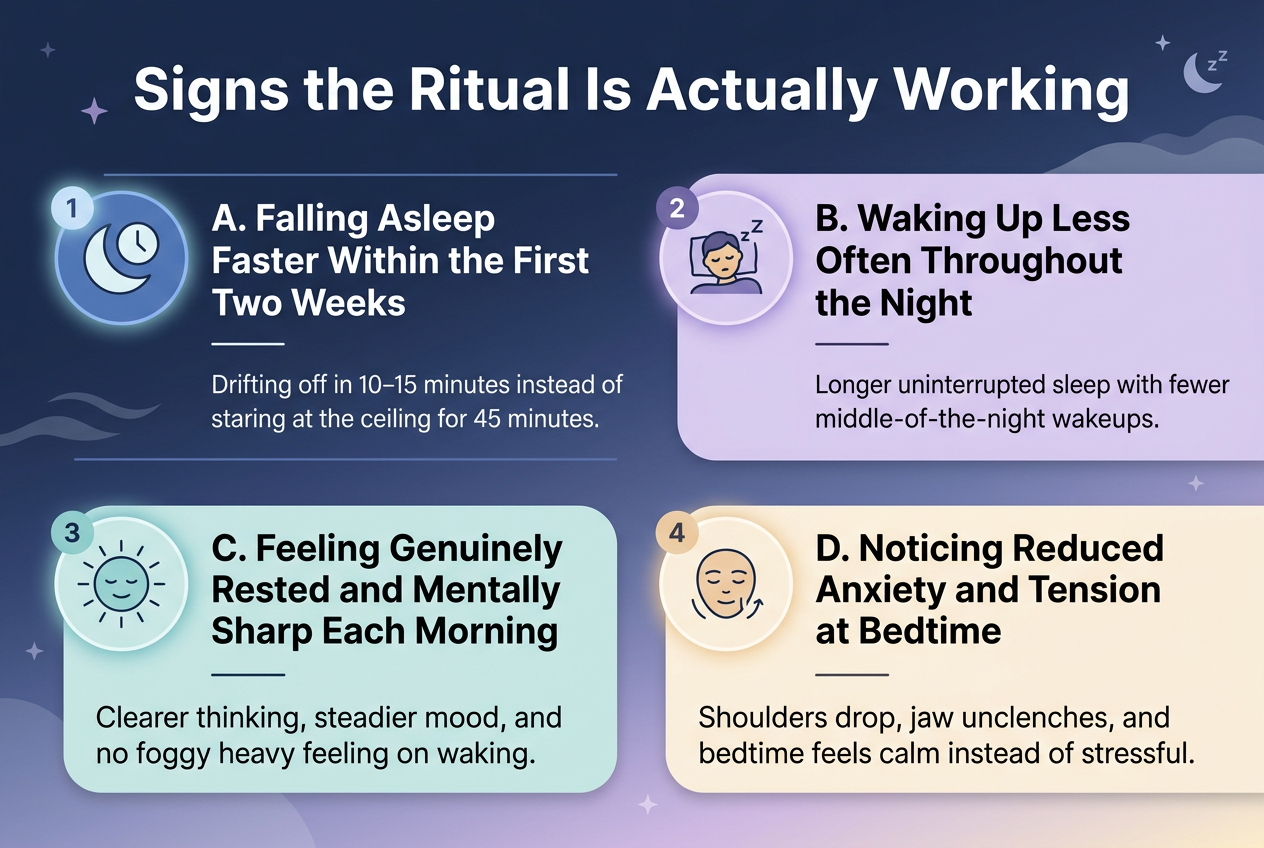
A. Falling Asleep Faster Within the First Two Weeks
I notice this one first — instead of staring at the ceiling for 45 minutes, I’m drifting off within 10-15 minutes. My body starts recognizing the ritual as a sleep cue, and that transition from wakefulness to sleep becomes smoother almost immediately.
B. Waking Up Less Often Throughout the Night
Before the ritual, I’d wake up two or three times, mind already racing. Now, I sleep in longer, uninterrupted stretches. My nervous system settles properly before bed, so I’m not fighting shallow, fragmented sleep all night.
C. Feeling Genuinely Rested and Mentally Sharp Each Morning
This is the big payoff. I wake up without that heavy, foggy feeling dragging me down. My thinking is clearer, my mood is steadier, and I’m not immediately reaching for coffee just to function. Real rest actually shows up in my days.
D. Noticing Reduced Anxiety and Tension at Bedtime
Bedtime used to feel like a battle. Now I notice my shoulders dropping, my jaw unclenching, and my thoughts quieting as I move through the ritual. That dread around sleep simply stops showing up — and that alone makes the whole thing worth it.
“If you’re building a calmer evening routine, explore my guide on Yoga Hack for Sleep – Beat Stress Naturally in Just 7 Days.”
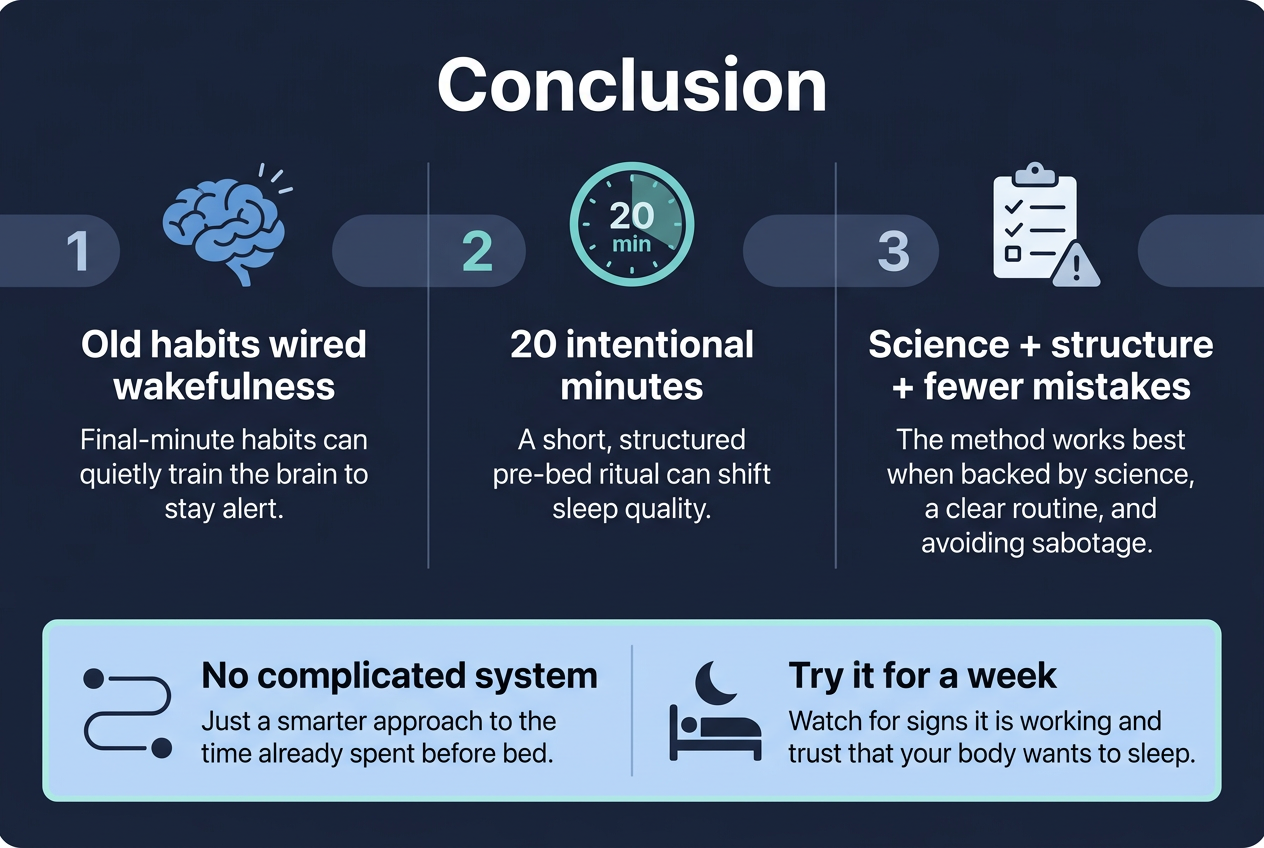
Sleep has always felt like something that should come naturally, but I learned the hard way that what I do in those final minutes before bed makes all the difference. From understanding why my old habits were quietly wiring my brain for wakefulness, to discovering how just 20 intentional minutes can completely shift my sleep quality — the pieces finally started making sense. The science backed it up, the minute-by-minute structure gave me something real to follow, and knowing what mistakes to avoid kept me from sabotaging my own progress.
The best part? I didn’t need a complicated system or a complete lifestyle overhaul. I just needed a smarter approach to the time I was already spending before bed. If you’ve been lying awake wondering why sleep feels so hard to catch, try this ritual honestly for a week. Pay attention to the signs that it’s working — and trust that your body actually wants to sleep. You just have to stop getting in its way.
✨ Join The Zen Journal community — get fresh yoga and wellness insights straight to your inbox ✨