
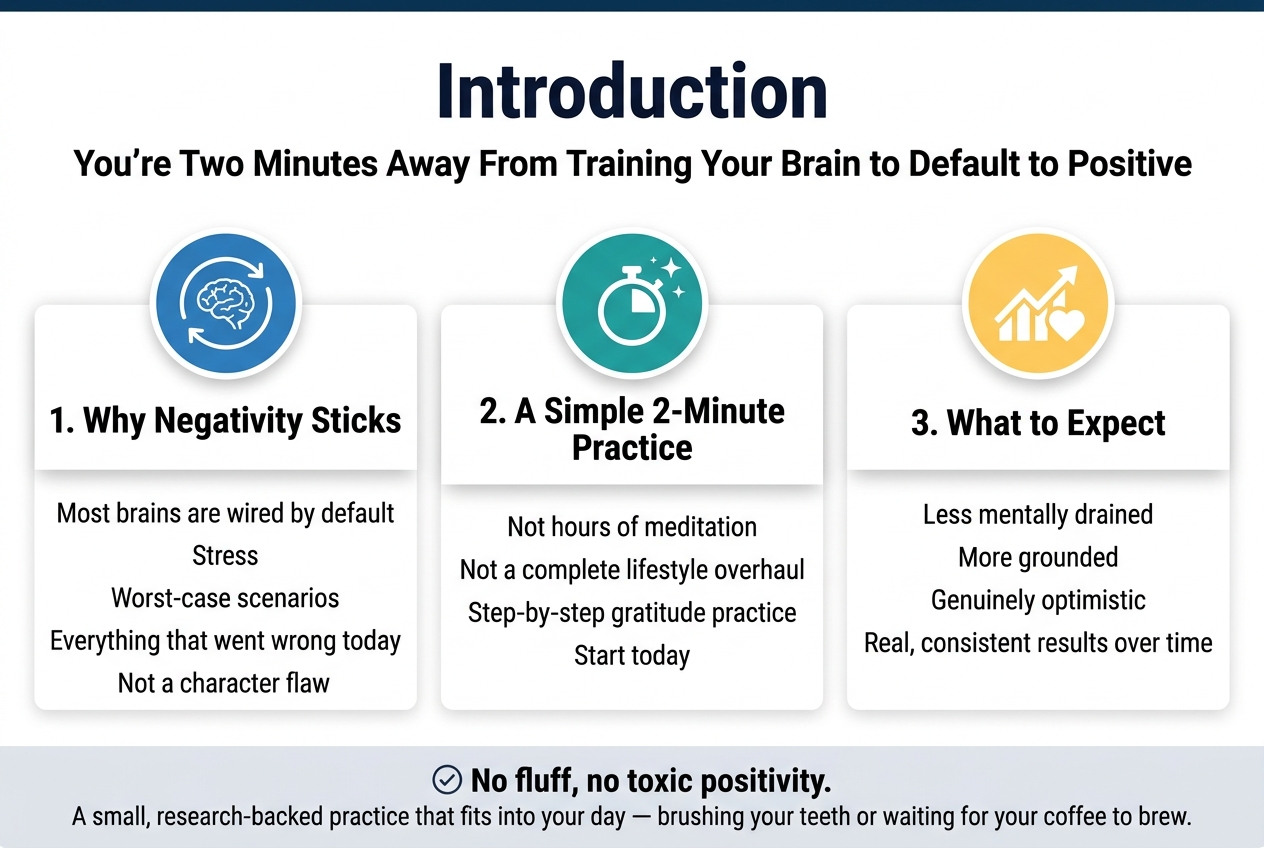
You’re Two Minutes Away From Training Your Brain to Default to Positive
There have been seasons in my life when it felt easier to focus on what was missing or uncertain than on what was going well. During those times, gratitude sometimes felt like the last thing on my mind. Yet I found that taking just a couple of minutes each day to notice small things I appreciated helped create a sense of balance. It didn’t erase stressful situations, but it stopped them from becoming the whole story. Over time, that small shift changed how I approached both good days and difficult ones.
This post is for you if you want to feel less mentally drained, more grounded, and genuinely optimistic—but you’ve tried journaling or positive thinking before, and it felt hollow or forced.
Here’s what you’ll walk away with:
- Why your brain gets stuck in negativity and what the science of gratitude brain rewiring actually says about breaking that pattern
- A simple, specific 2-minute gratitude practice you can start today — not a vague “just be thankful” suggestion, but a step-by-step method that works
- What real, consistent results look like so you know what to expect as you build the habit over time
No fluff, no toxic positivity. Just a small, research-backed practice that fits into your day whether you’re brushing your teeth or waiting for your coffee to brew.
The Science Behind Gratitude and Brain Rewiring
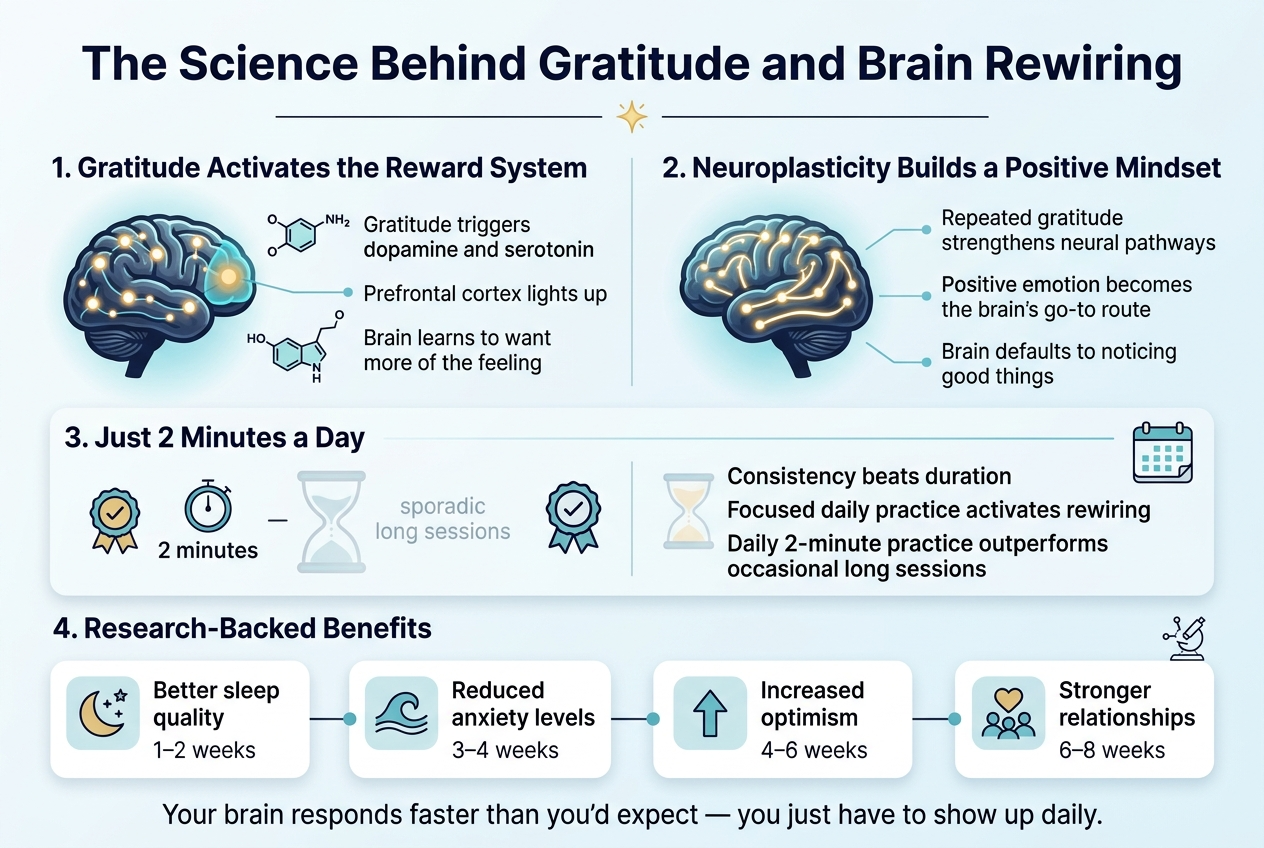
How Gratitude Activates the Brain’s Reward System
When you feel genuine gratitude, your brain releases dopamine and serotonin — the same chemicals triggered by rewarding experiences. Your prefrontal cortex lights up, and your brain essentially learns to want more of that feeling.
The Role of Neuroplasticity in Building a Positive Mindset
Your brain physically changes based on what you repeatedly think and feel. Every time you practice gratitude, you strengthen neural pathways connected to positive emotion. Over time, your brain defaults to noticing good things — not because you forced it, but because those pathways became your brain’s go-to route.
Why Just 2 Minutes Is Enough to Trigger Lasting Change
Consistency beats duration every time. A focused 2-minute practice done daily repeatedly activates your reward system, which is what actually drives rewiring. Sporadic hour-long sessions don’t come close to matching that effect.
Research-Backed Benefits of a Consistent Gratitude Practice
Studies consistently show that regular gratitude practice delivers real, measurable results:
| Benefit | Timeline |
|---|---|
| Better sleep quality | 1–2 weeks |
| Reduced anxiety levels | 3–4 weeks |
| Increased optimism | 4–6 weeks |
| Stronger relationships | 6–8 weeks |
Your brain responds faster than you’d expect — you just have to show up daily.
Signs Your Brain Is Stuck in a Negativity Bias
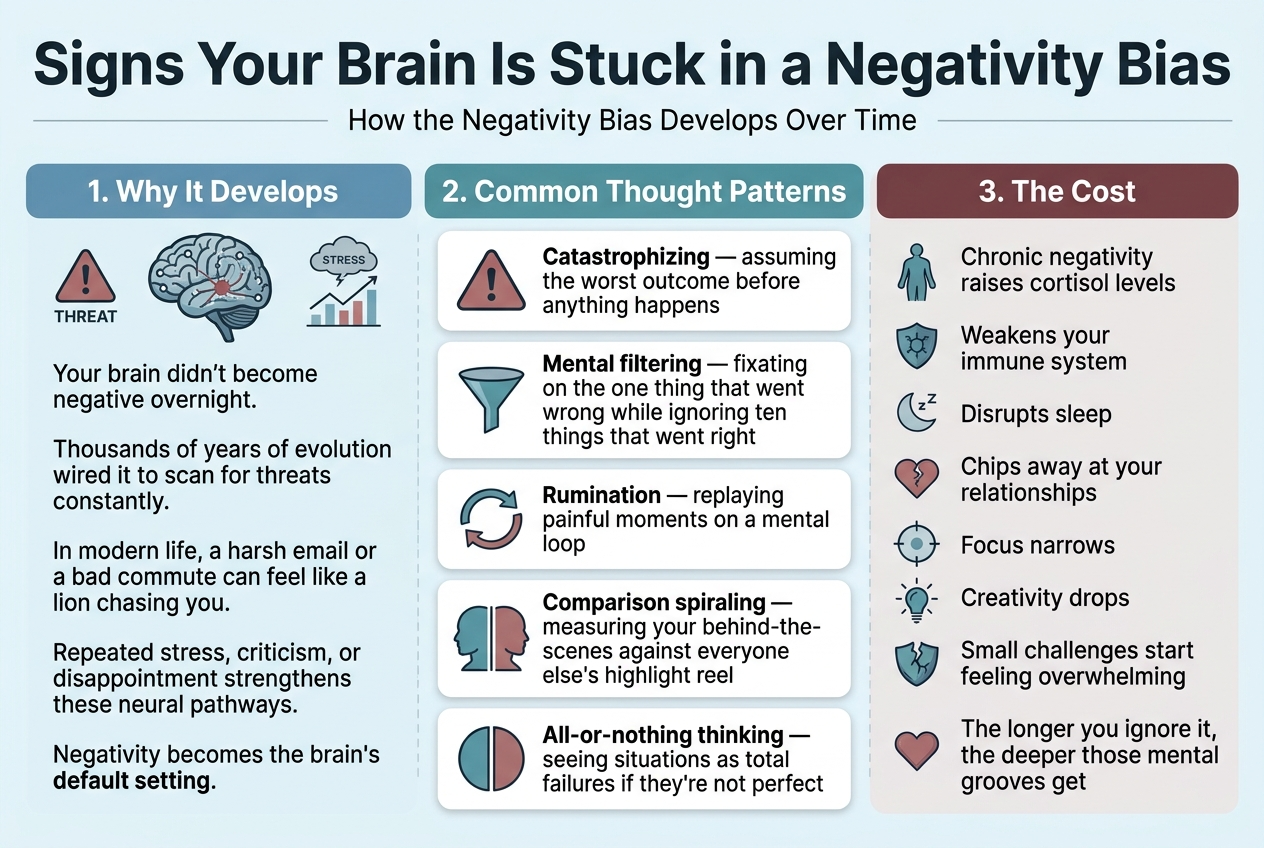
How the Negativity Bias Develops Over Time
Your brain didn’t become negative overnight. Thousands of years of evolution wired it to constantly scan for threats —it was a survival tool. But in modern life, that same wiring treats a harsh email or a bad commute like a lion chasing you. Over time, repeated stress, criticism, or disappointment strengthens these neural pathways, making negativity your brain’s default setting.
Common Thought Patterns That Keep You Feeling Stressed and Drained
Watch out for these mental habits that signal your brain is stuck:
- Catastrophizing — assuming the worst outcome before anything happens
- Mental filtering — fixating on the one thing that went wrong while ignoring ten things that went right
- Rumination — replaying painful moments on a mental loop
- Comparison spiraling — measuring your behind-the-scenes against everyone else’s highlight reel
- All-or-nothing thinking — seeing situations as total failures if they’re not perfect
The Cost of Ignoring Your Mental Well-Being
Staying in this pattern isn’t harmless. Chronic negativity raises cortisol levels, weakens your immune system, disrupts sleep, and chips away at your relationships. Your focus narrows, creativity drops, and even small challenges start feeling overwhelming. The longer you ignore it, the deeper those mental grooves get.
The Exact 2-Minute Gratitude Practice Explained
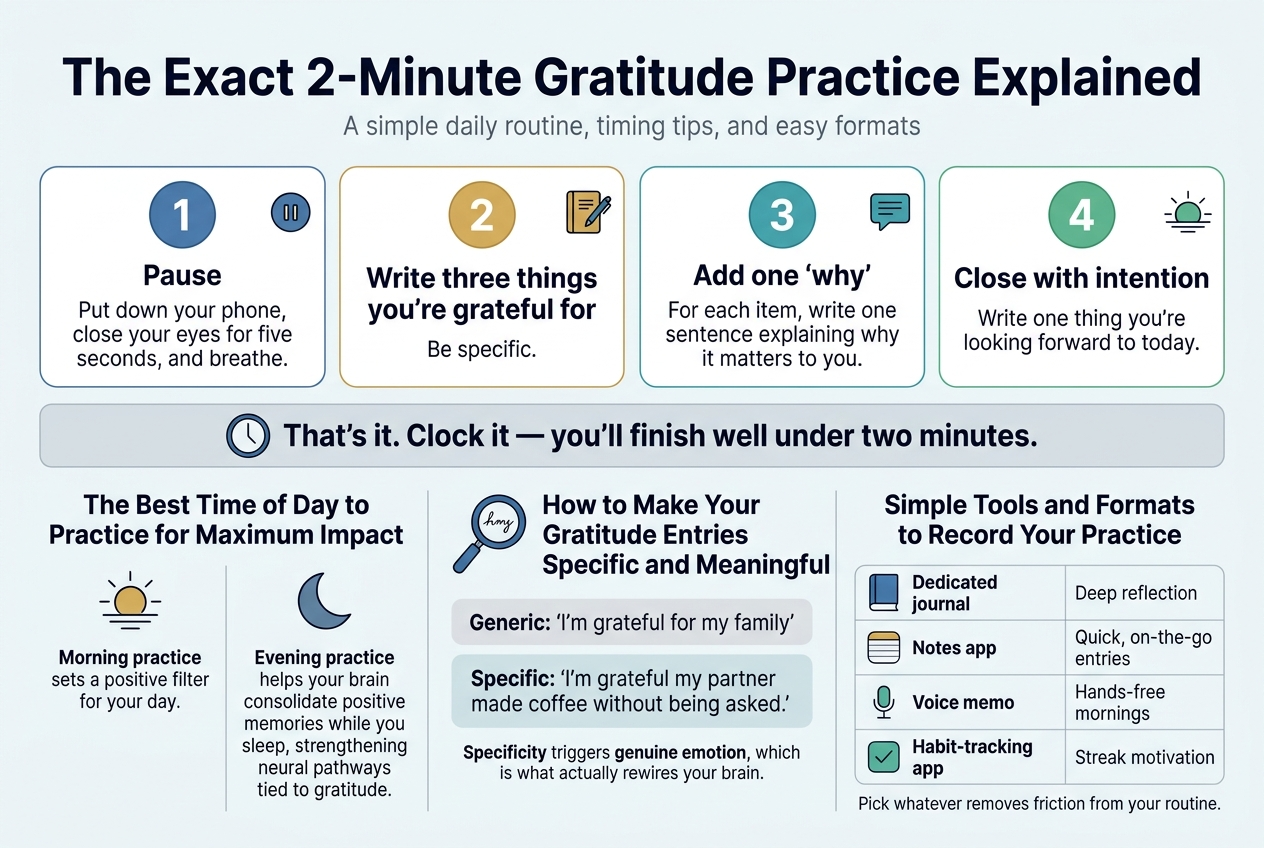
Step-by-Step Breakdown of the Daily Routine
Here’s your two-minute framework — simple, structured, and powerful:
- Pause — Put down your phone, close your eyes for five seconds, and breathe.
- Write three things you’re grateful for — Be specific (more on this below).
- Add one “why” — For each item, write one sentence explaining why it matters to you.
- Close with intention — Write one thing you’re looking forward to today.
That’s it. Clock it — you’ll finish well under two minutes.
The Best Time of Day to Practice for Maximum Impact
Your brain is most receptive first thing in the morning or right before sleep. Morning practice sets a positive filter for your day. Evening practice helps your brain consolidate positive memories while you sleep, strengthening neural pathways tied to gratitude.
How to Make Your Gratitude Entries Specific and Meaningful
Generic entries like “I’m grateful for my family” lose their punch fast. Instead, try: “I’m grateful my partner made coffee without being asked.” Specificity triggers genuine emotion, which is what actually rewires your brain.
Simple Tools and Formats to Record Your Practice
| Format | Best For |
|---|---|
| Dedicated journal | Deep reflection |
| Notes app | Quick, on-the-go entries |
| Voice memo | Hands-free mornings |
| Habit-tracking app | Streak motivation |
Pick whatever removes friction from your routine.
Why This Practice Works Better Than Generic Positive Thinking
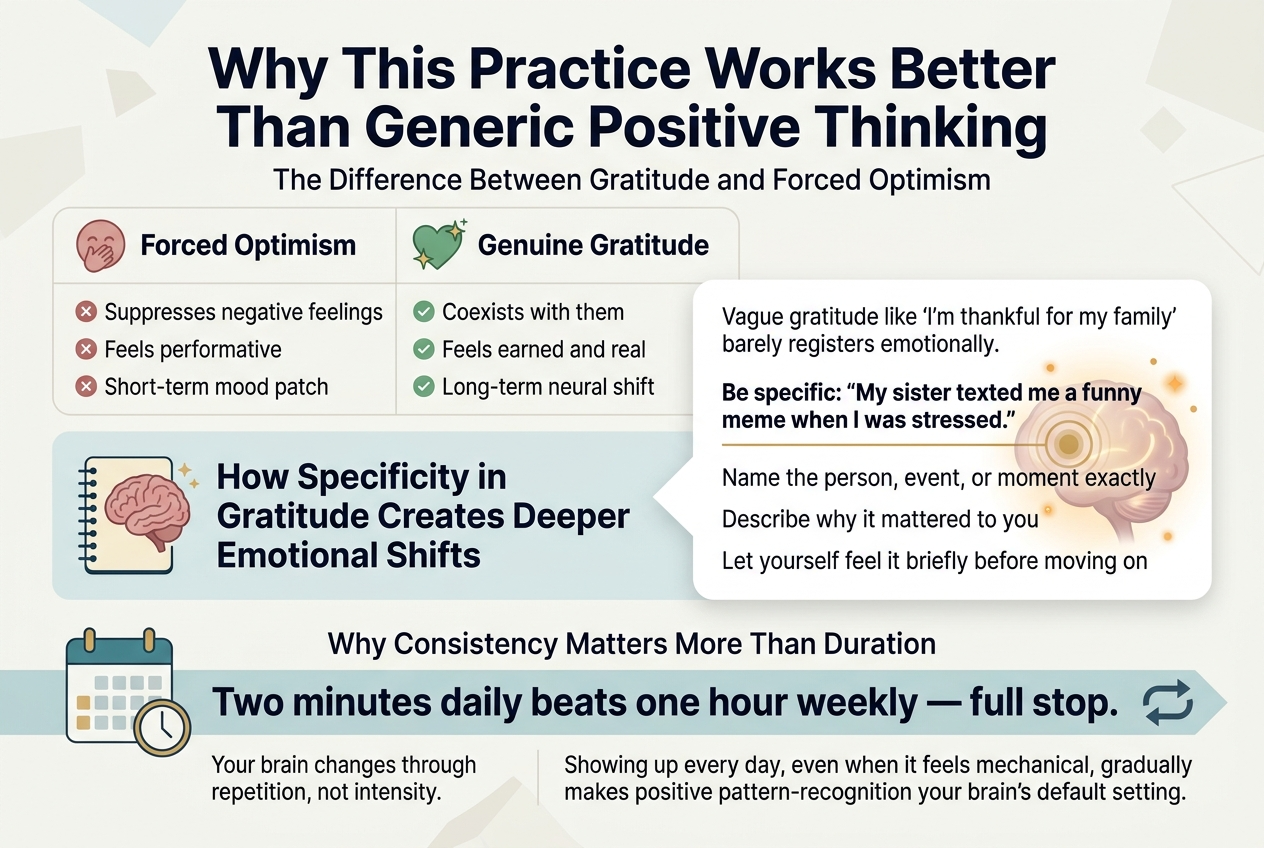
The Difference Between Gratitude and Forced Optimism
Telling yourself “everything is fine” when it isn’t doesn’t fool your brain — it actually creates internal resistance. Gratitude works differently. You’re not denying reality; you’re training your attention to also notice what’s genuinely good alongside what’s hard. That honesty is what makes it neurologically effective.
| Forced Optimism | Genuine Gratitude |
|---|---|
| Suppresses negative feelings | Coexists with them |
| Feels performative | Feels earned and real |
| Short-term mood patch | Long-term neural shift |
How Specificity in Gratitude Creates Deeper Emotional Shifts
Vague gratitude like “I’m thankful for my family” barely registers emotionally. Your brain needs detail to generate a real response. When you write “My sister texted me a funny meme when I was stressed,” your brain relives the warmth of that moment. That specificity activates your limbic system more powerfully, creating a stronger emotional imprint.
- Name the person, event, or moment exactly
- Describe why it mattered to you
- Let yourself feel it briefly before moving on
Why Consistency Matters More Than Duration
Two minutes daily beats one hour weekly — full stop. Your brain changes through repetition, not intensity. Showing up every day, even when it feels mechanical, gradually makes positive pattern-recognition your brain’s default setting.
How to Build the Habit and Make It Stick
Anchoring Your Practice to an Existing Daily Routine
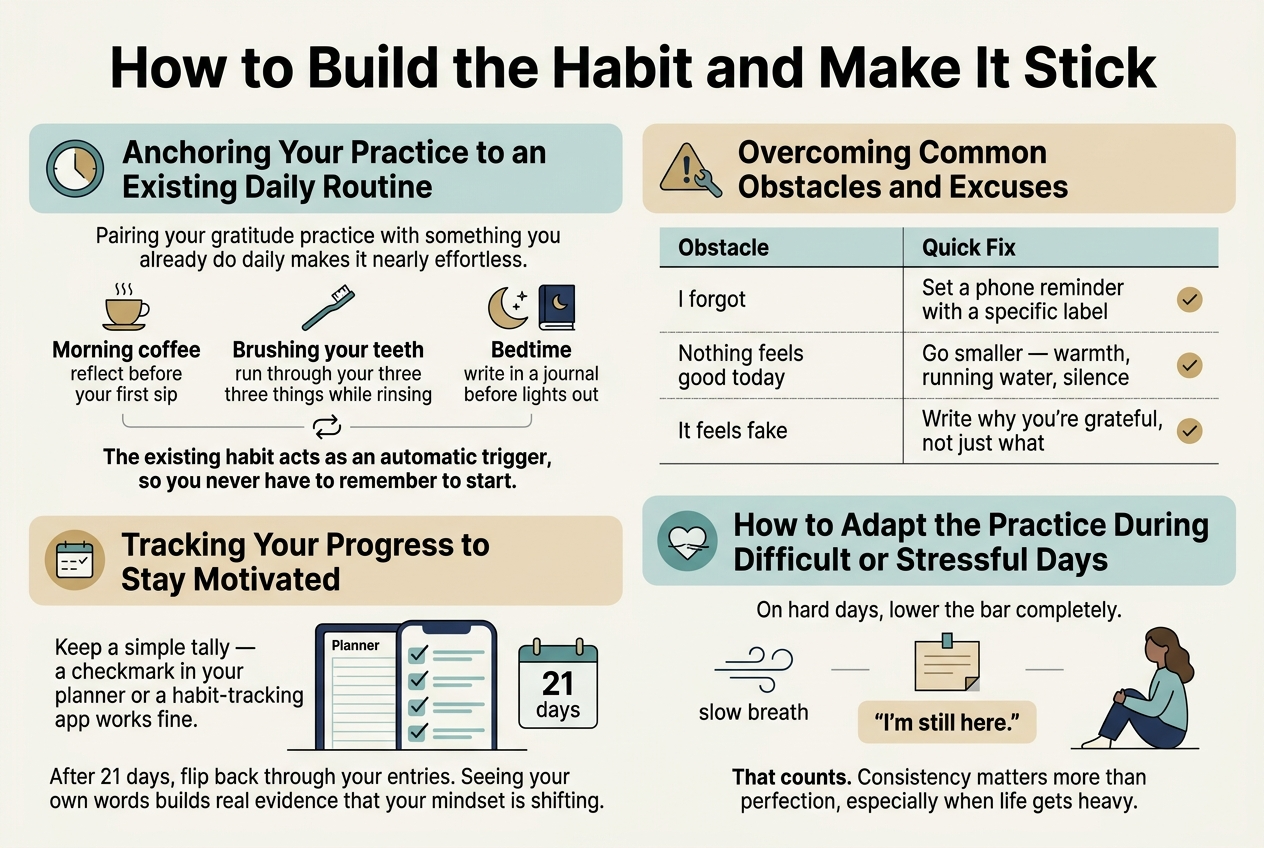
Pairing your gratitude practice with something you already do daily makes it nearly effortless. Try attaching it to:
- Morning coffee – reflect before your first sip
- Brushing your teeth – run through your three things while rinsing
- Bedtime – write in a journal before lights out
The existing habit acts as an automatic trigger, so you never have to remember to start.
Overcoming Common Obstacles and Excuses
| Obstacle | Quick Fix |
|---|---|
| “I forgot” | Set a phone reminder with a specific label |
| “Nothing feels good today” | Go smaller — warmth, running water, silence |
| “It feels fake” | Write why you’re grateful, not just what |
Tracking Your Progress to Stay Motivated
Keep a simple tally — a checkmark in your planner or a habit-tracking app works fine. After 21 days, flip back through your entries. Seeing your own words builds real evidence that your mindset is shifting.
How to Adapt the Practice During Difficult or Stressful Days
On hard days, lower the bar completely. Your two minutes might just be one slow breath and one honest thought — “I’m still here.” That counts. Consistency matters more than perfection, especially when life gets heavy.
Real Results You Can Expect Over Time
Short-Term Mood Improvements You Will Notice Within Days
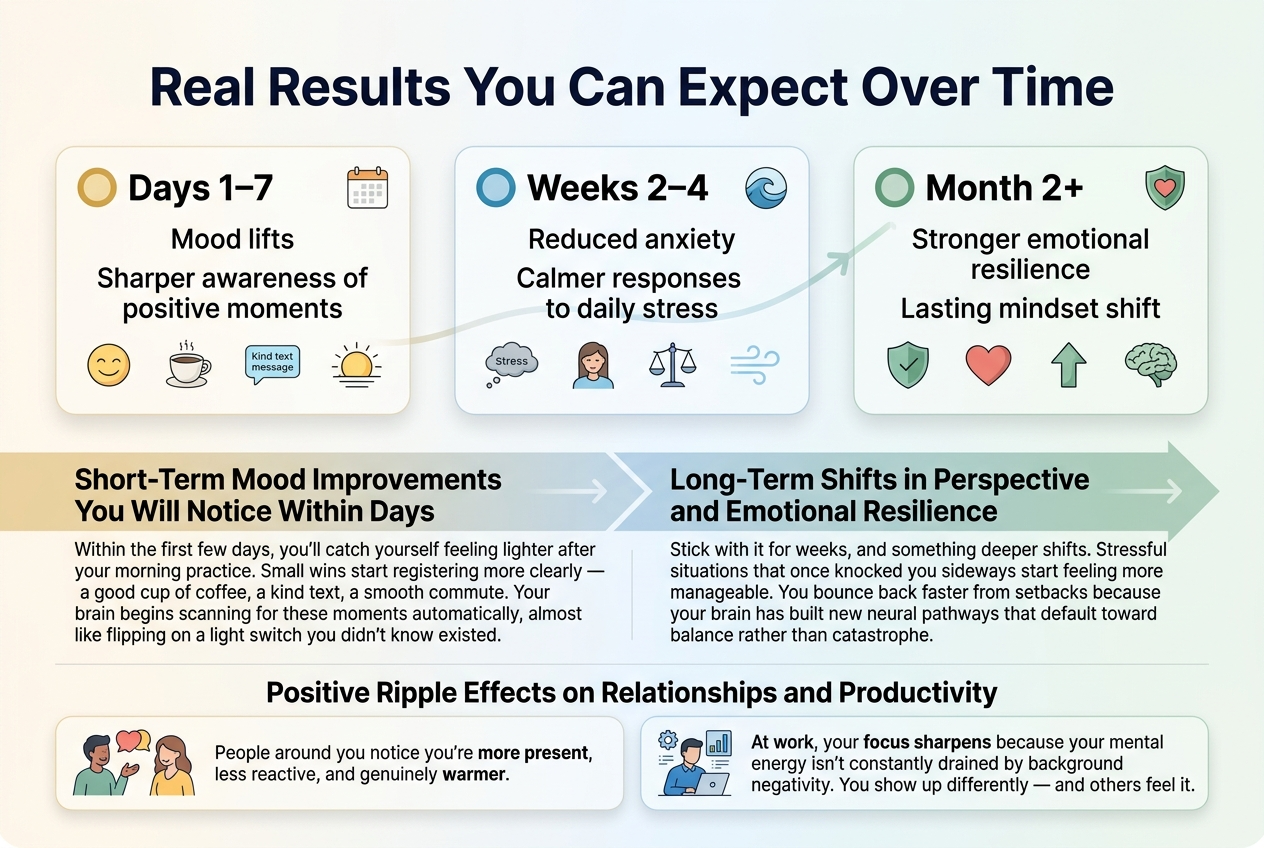
Within the first few days, you’ll catch yourself feeling lighter after your morning practice. Small wins start registering more clearly — a good cup of coffee, a kind text, a smooth commute. Your brain begins scanning for these moments automatically, almost like flipping on a light switch you didn’t know existed.
Long-Term Shifts in Perspective and Emotional Resilience
Stick with it for weeks, and something deeper shifts. Stressful situations that once knocked you sideways start feeling more manageable. You bounce back faster from setbacks because your brain has built new neural pathways that default toward balance rather than catastrophe.
| Timeline | What Changes |
|---|---|
| Days 1–7 | Mood lifts, sharper awareness of positive moments |
| Weeks 2–4 | Reduced anxiety, calmer responses to daily stress |
| Month 2+ | Stronger emotional resilience, lasting mindset shift |
Positive Ripple Effects on Relationships and Productivity
Your gratitude practice doesn’t stay private for long. People around you notice you’re more present, less reactive, and genuinely warmer. At work, your focus sharpens because your mental energy isn’t constantly drained by background negativity. You show up differently — and others feel it.
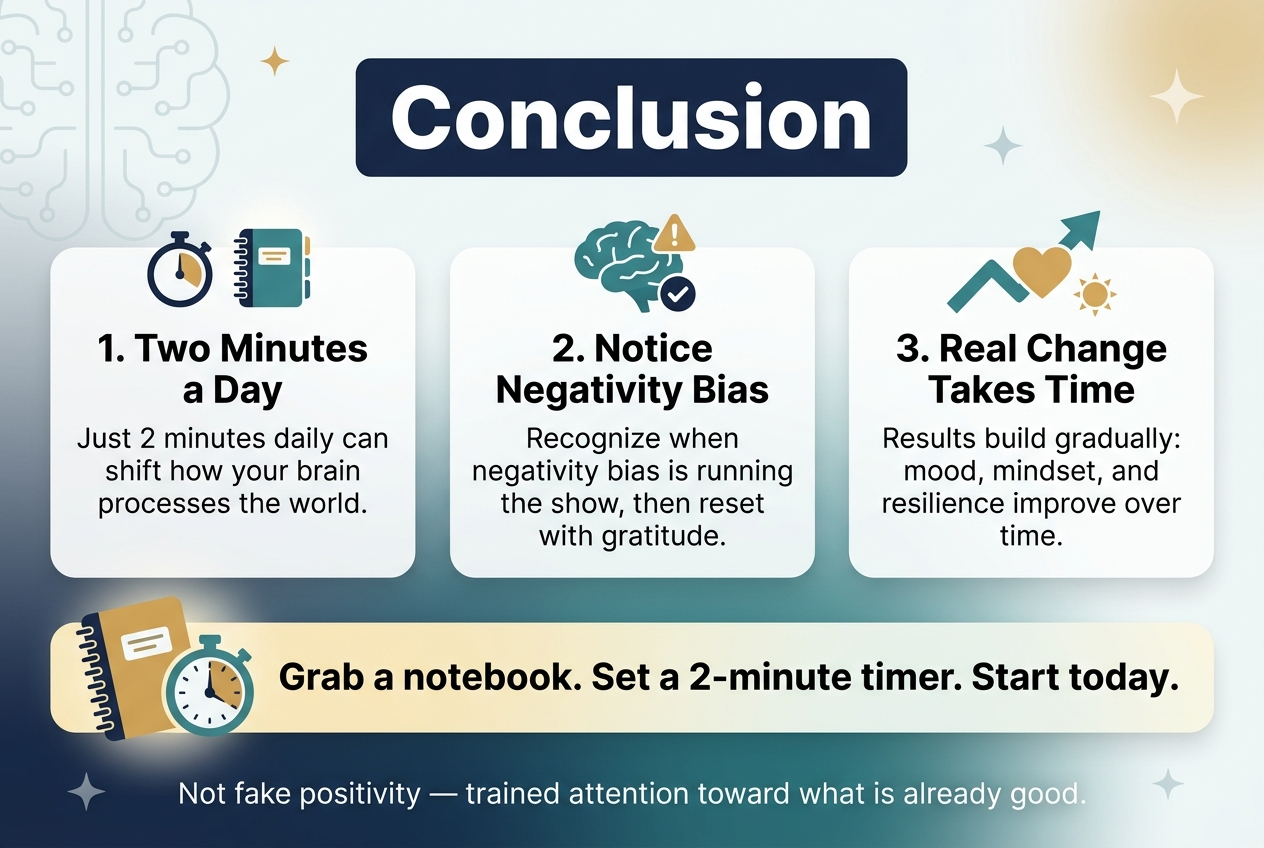
Just two minutes a day can genuinely shift the way your brain processes the world around you. By understanding why negativity bias happens, recognizing when it’s running the show, and committing to this simple gratitude practice, you’re giving your mind a real chance to reset. It’s not about forcing fake positivity or pretending life is perfect — it’s about training your brain to notice what’s already good, consistently and intentionally.
The results won’t show up overnight, but stick with it and you’ll start to notice the difference — in your mood, your mindset, and even how you handle tough days. So grab a notebook, set a two-minute timer, and start today. Your brain is more flexible than you think, and this tiny habit might just be the thing that changes everything.
✨ Join The Zen Journal community — get fresh yoga and wellness insights straight to your inbox ✨