
I read When Things Fall Apart by Pema Chödrön recently, during a particularly challenging period in my life. I was dealing with uncertainty and searching for stability. I was not looking for quick solutions or motivational advice. I picked it up because I needed a different perspective on discomfort, change, and not knowing what comes next.
Chödrön’s calm and compassionate approach felt like exactly what I needed at the time. In this review, I share what the book is about, the teachings that stayed with me, some ways to bring them into everyday life, and where I found them hard.
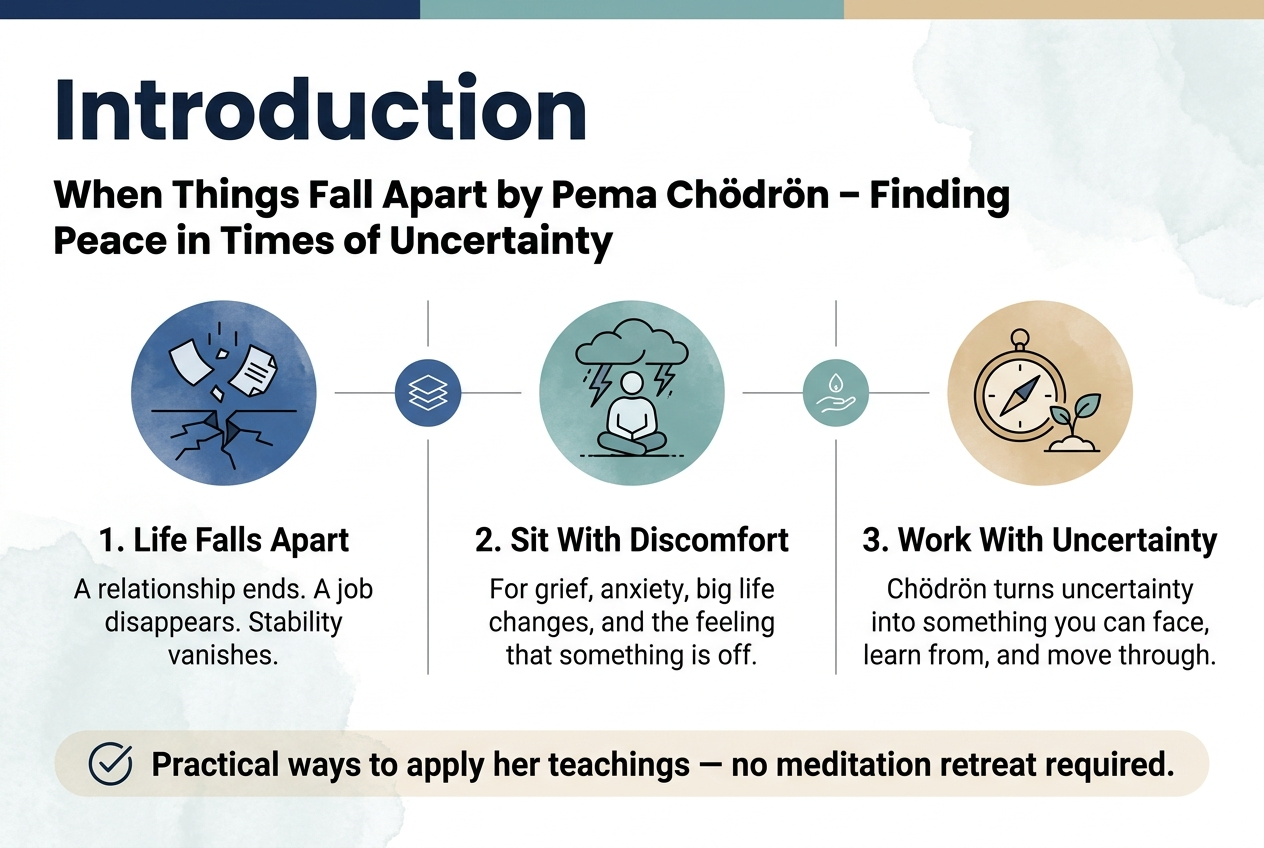
Life has a way of pulling the rug out from under you when you least expect it. A relationship ends, a job disappears, or everything you thought was stable suddenly isn’t. If you’re in the middle of one of those moments right now, Pema Chödrön’s When Things Fall Apart might be exactly what you need.
This book is for you if you’re tired of running from discomfort and ready to sit with it—and come out the other side feeling more grounded. It speaks directly to anyone going through grief, anxiety, big life changes, or just that low-level feeling that something isn’t right.
In this post, you’ll get a clear breakdown of the core message behind When Things Fall Apart, including how Chödrön flips the idea of uncertainty on its head and turns it into something you can actually work with. You’ll also walk away with practical ways to bring her teachings into your everyday life — no meditation retreat required.
What the Book Is About
Pema Chödrön is a Buddhist nun and teacher, and this book was first published in the 1990s. Her core message is simple: difficult periods are not interruptions to life; they are part of it. Pain, fear, and uncertainty are not signs that something has gone wrong with you. They are part of being human.
Instead of running from discomfort, she invites us to meet it with curiosity and kindness. You don’t need to be Buddhist to read it, and you don’t need any background in meditation.
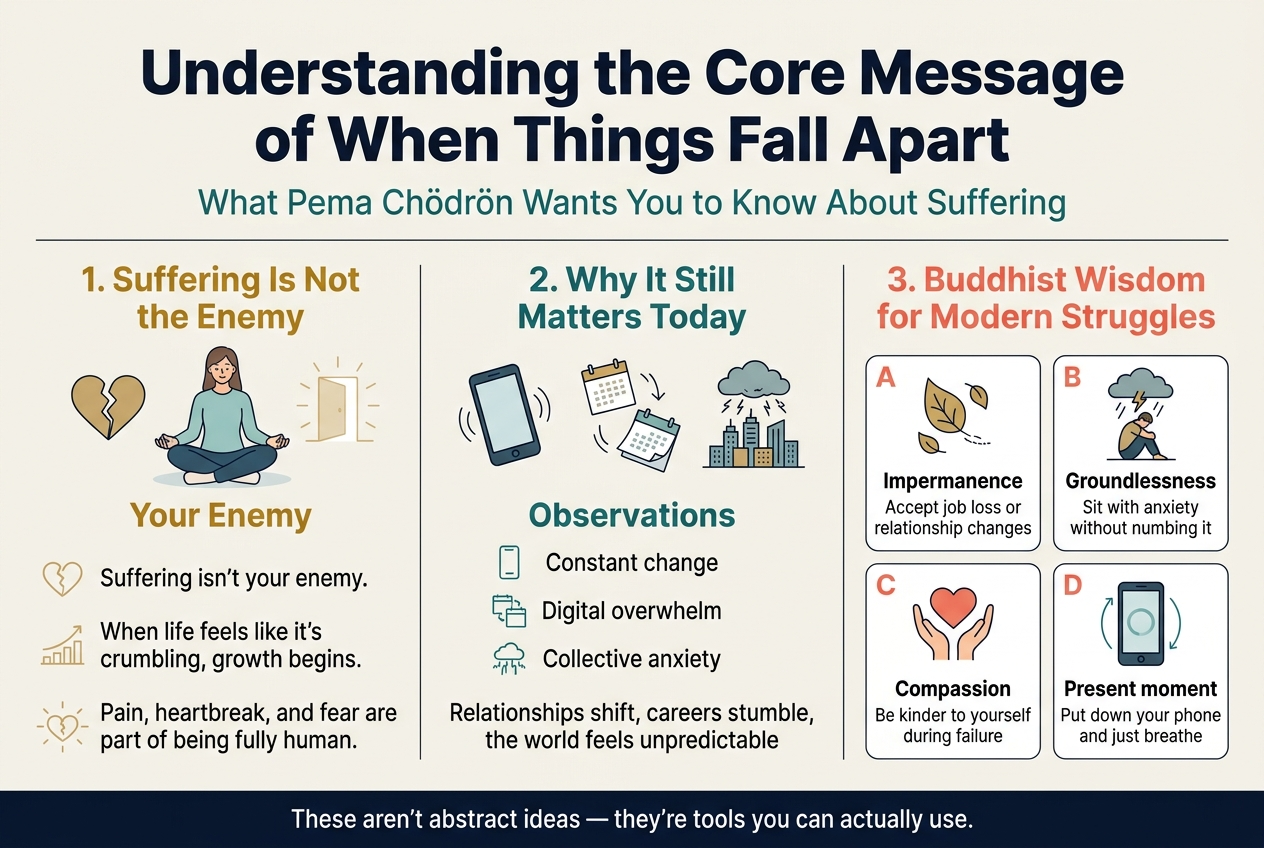
Here is how a few of the book’s ideas can map onto everyday life:
| Idea | In everyday life |
|---|---|
| Impermanence | Accepting job loss or relationship changes |
| Groundlessness | Sitting with anxiety without numbing it |
| Compassion | Being kinder to yourself during failure |
| Present moment | Putting down your phone and just breathing |
These aren’t abstract ideas — they’re tools you can actually use.
Embracing Uncertainty as a Path to Inner Freedom
Letting Go of the Need for Control
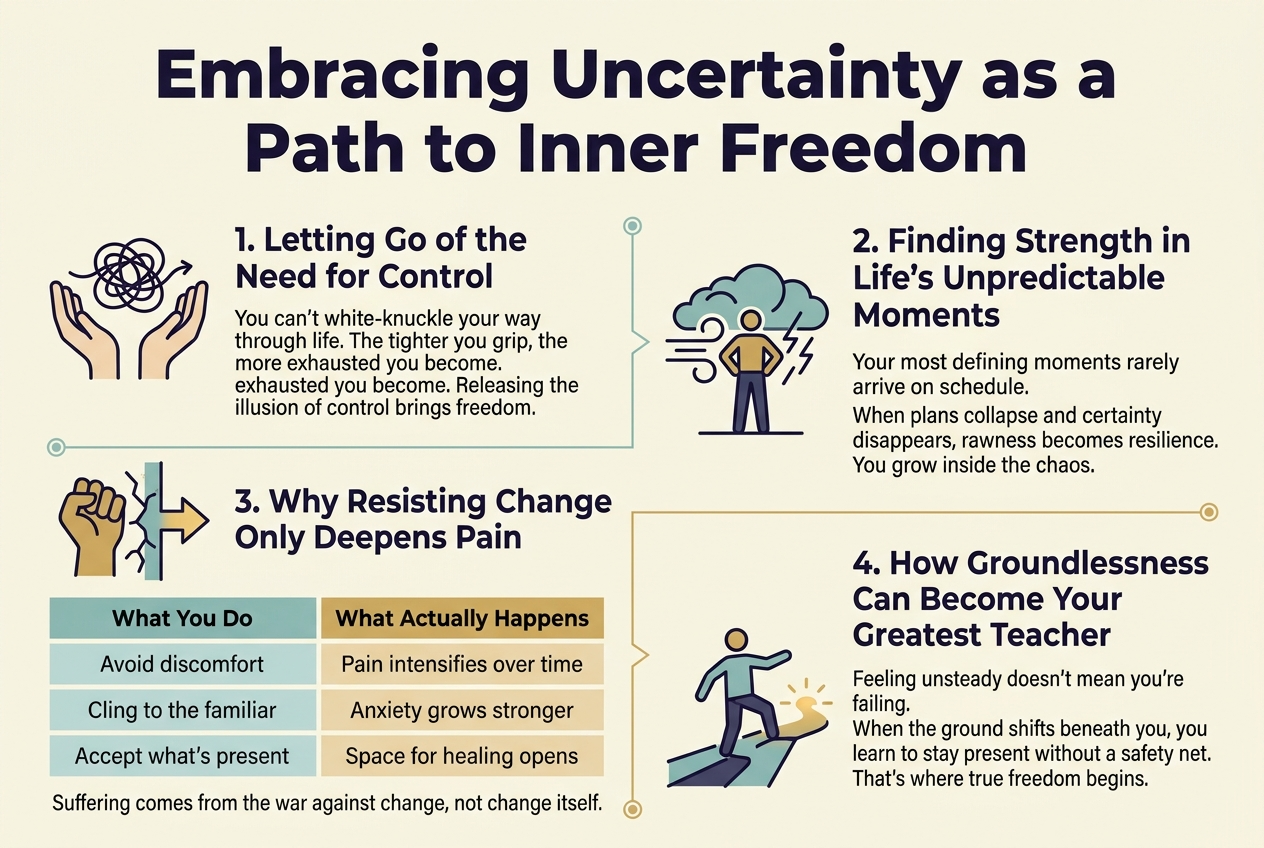
You can’t white-knuckle your way through life. The tighter you grip, the more exhausted you become. Pema Chödrön invites you to try something radically different — releasing the illusion that control was ever really yours to begin with.
Finding Strength in Life’s Unpredictable Moments
Your most defining moments rarely arrive on schedule. When plans collapse and certainty disappears, something honest surfaces in you. That rawness isn’t weakness — it’s where real resilience actually lives. You grow not despite the chaos, but inside it.
Why Resisting Change Only Deepens Pain
| What You Do | What Actually Happens |
|---|---|
| Avoid discomfort | Pain intensifies over time |
| Cling to the familiar | Anxiety grows stronger |
| Accept what’s present | Space for healing opens |
Chödrön makes it clear — your suffering isn’t caused by change itself, but by your war against it. Dropping that fight doesn’t mean giving up; it means choosing peace over punishment.
How Groundlessness Can Become Your Greatest Teacher
Feeling unsteady doesn’t mean you’re failing. When the ground shifts beneath you, you’re being taught something comfort never could: how to stay present without needing a safety net. That’s where your true freedom begins.
Key Teachings That Stayed With Me
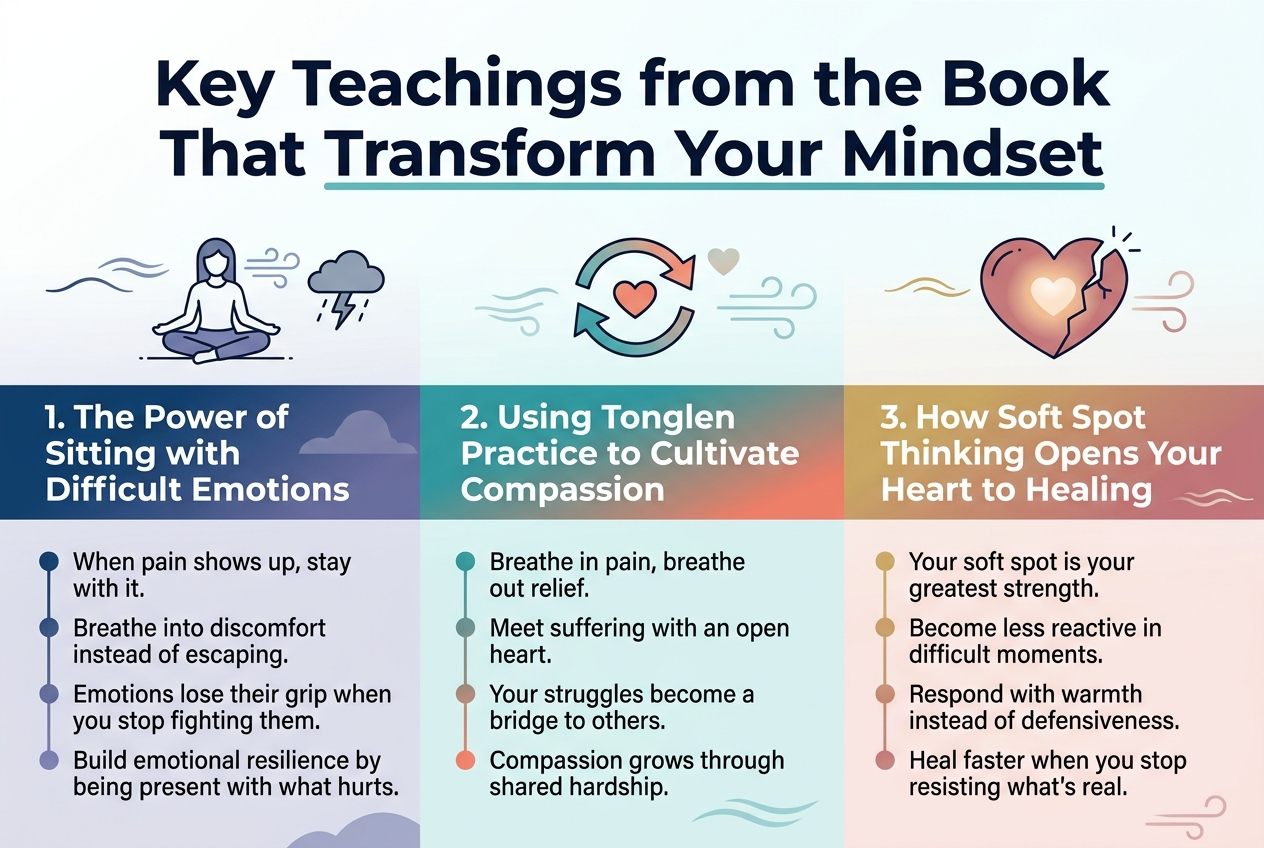
Staying with difficult emotions. Chödrön encourages us to stay with discomfort rather than escape it. This is not about suffering more. Many people find that feelings seem less overwhelming when they stop fighting them.
Tonglen. This is a meditation practice in which you breathe in pain and breathe out relief, for yourself and others. It feels backward at first. Chödrön suggests it can help us see our own struggles as something shared with others.
The “soft spot.” She writes about the tender, vulnerable place most of us spend years protecting. Rather than armoring ourselves against it, she suggests that staying open can help us respond with more warmth and less defensiveness.
Groundlessness. Feeling unsteady does not mean you are failing. The book’s message is that not knowing what comes next is part of the path, not a problem to solve right away.
Practical Ways to Apply Pema Chödrön’s Lessons Daily
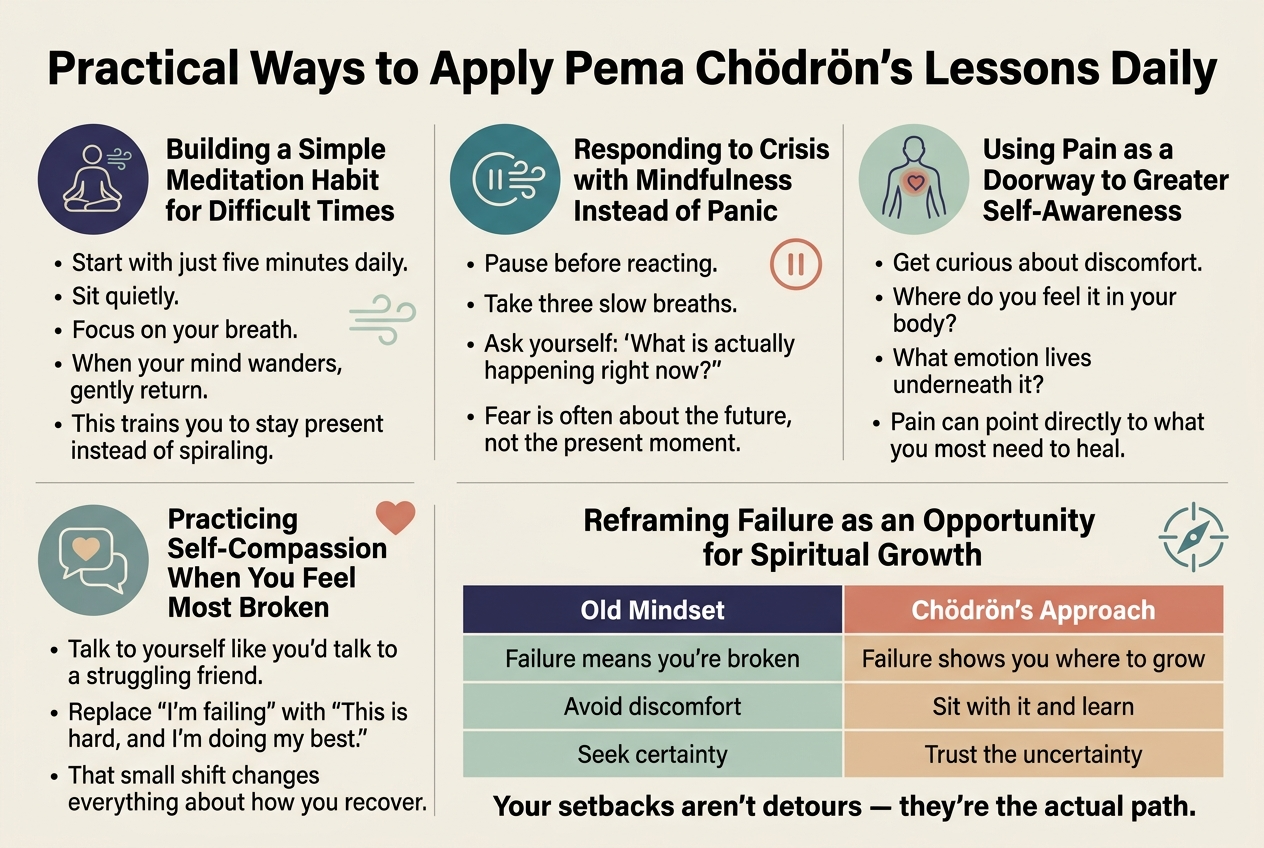
A Few Ideas You Can Try
You do not need a meditation retreat to bring these teachings into your day:
Speak to yourself kindly. Try replacing “I’m failing” with “This is hard, and I’m doing my best.”
Start small. Sit quietly for five minutes, focus on your breath, and when your mind wanders, gently return to it.
Pause before reacting. Take three slow breaths and ask yourself, “What is actually happening right now?”
Get curious about discomfort. Where do you feel it in your body? What emotion sits underneath it?
Who Will Benefit Most from Reading This Book
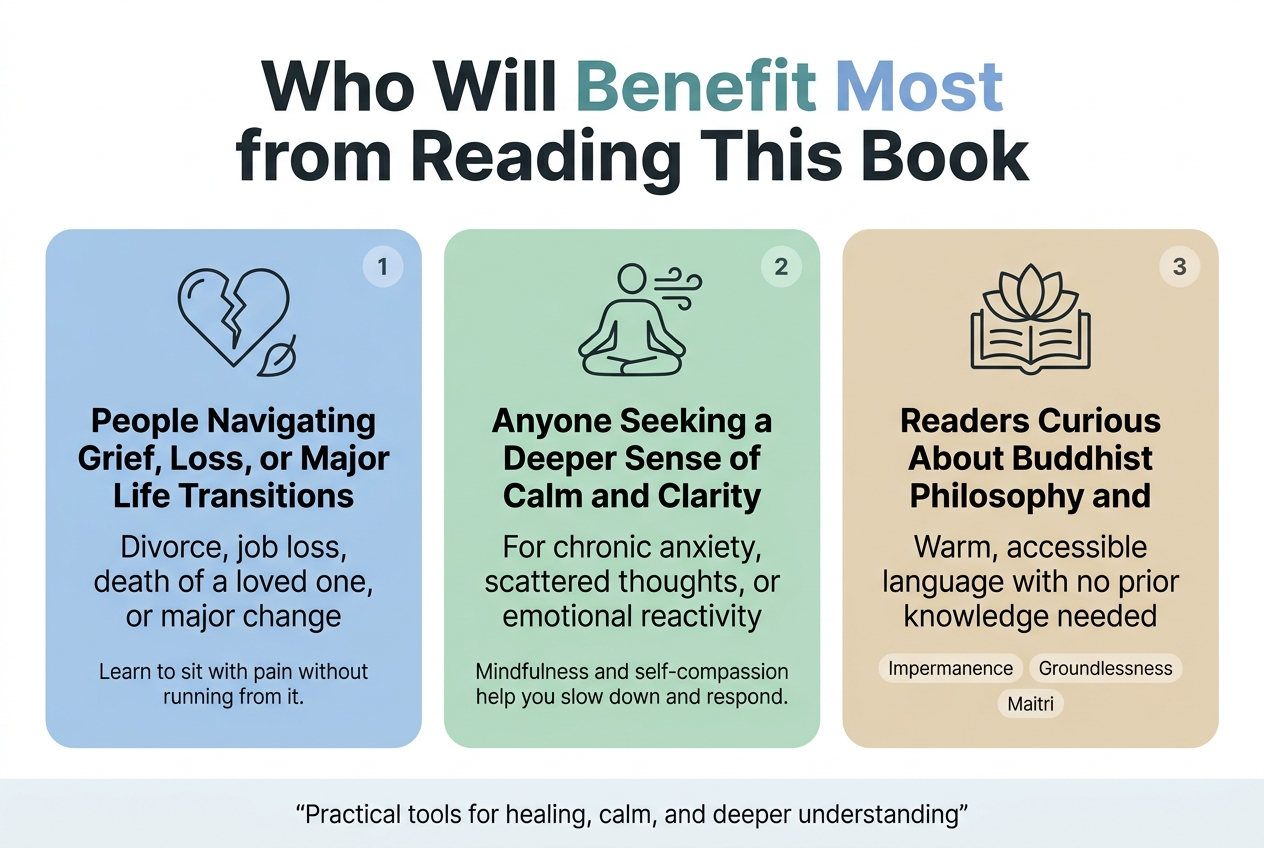
People Navigating Grief, Loss, or Major Life Transitions
If your world has recently been turned upside down — a divorce, job loss, death of a loved one, or any major change — this book speaks directly to you. Pema Chödrön doesn’t offer false comfort or quick fixes. Instead, she teaches you how to sit with pain without running from it, which is exactly what real healing requires.
Anyone Seeking a Deeper Sense of Calm and Clarity
You don’t need to be in crisis to benefit here. If you feel chronically anxious, scattered, or emotionally reactive, this book helps you build a steadier inner foundation. The teachings on mindfulness and self-compassion give you practical tools to slow down, breathe, and respond to life rather than just react.
Readers Curious About Buddhist Philosophy and Practice
If you’ve always been drawn to Buddhist ideas but felt intimidated by dense texts, this is your entry point. Pema writes in warm, accessible language — no prior knowledge needed. You’ll walk away with a genuine understanding of concepts like:
- Impermanence — why nothing lasts and why that’s actually freeing
- Groundlessness — learning to feel okay without solid ground
- Maitri — developing kindness toward yourself first
My Personal Take on When Things Fall Apart
The message I keep returning to. Difficult periods are not interruptions to life; they are part of life. The book reminded me that vulnerability, fear, and uncertainty are shared human experiences, not personal failures. That perspective helped me approach challenges with a little more self-compassion.
What I found hard. Some of the teachings require a level of acceptance that I personally found challenging. As someone who naturally looks for solutions and action steps, I occasionally struggled with the idea of sitting with uncertainty rather than immediately trying to resolve it.
Who I would recommend it to. People going through grief, loss, a big life change, or a stretch of uncertainty, and anyone curious about Buddhist ideas who finds dense texts intimidating. The writing is warm and accessible, and no prior knowledge is needed.
A note on difficult times. This is a book, not therapy. Sitting with hard feelings does not mean facing them alone. If you are grieving or in crisis, or if low mood or anxiety is affecting your daily life, please also speak to your doctor or a qualified counselor. In the UK, you can call Samaritans free at any time on 116 123. If you ever feel unable to keep yourself safe, contact emergency services right away.
What I Valued Most
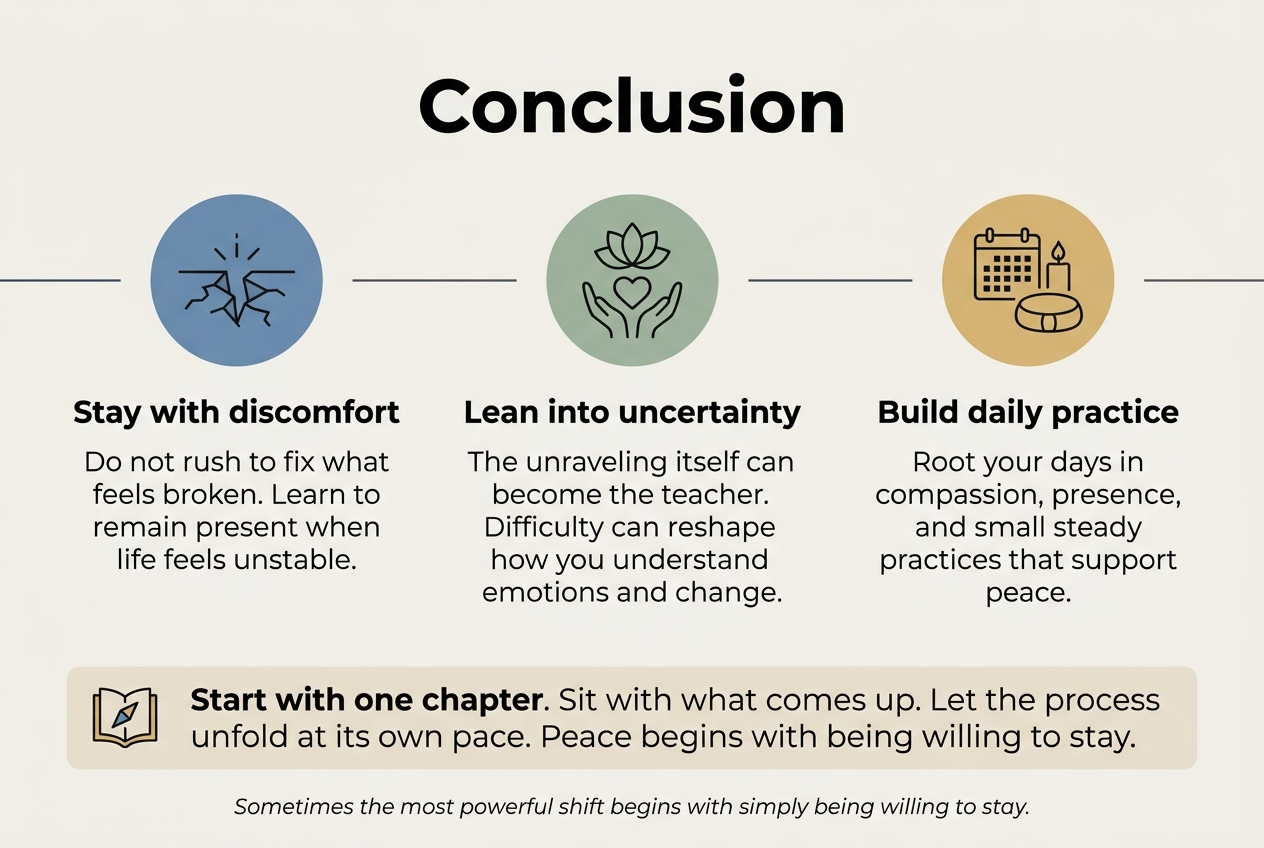
What I valued most about When Things Fall Apart was not that it solved my problems. It did not. What it offered was something quieter: permission to stop fighting every uncomfortable feeling, and to trust that uncertainty itself can be a teacher. For someone going through a difficult chapter, that was a message I needed to hear.
If you pick it up, start with just one chapter and let it unfold at its own pace.
✨ Subscribe to The Zen Journal for soulful book reviews, mindful travel stories, and wellness inspiration delivered weekly.✨