
After long days spent working at a desk, I’ve occasionally found myself dealing with that familiar tightness around my forehead, neck, or shoulders that slowly develops into a headache. While it’s tempting to look for a quick fix, I’ve found that gentle movement often helps more than I expect. A few simple yoga stretches can release built-up tension, help me reset mentally, and sometimes stop a headache from becoming something much worse. That’s exactly why I wanted to put together this guide.
If you’ve ever sat at your desk with that familiar tightening across your forehead or the back of your neck, you already know how fast a headache can derail your whole day. The good news? You don’t always need to reach for a pill bottle first.
Yoga for headaches is a simple, natural way to release the muscle tension that triggers most common headaches — and it works for you even if you’ve never rolled out a yoga mat before. This guide is for anyone dealing with stress headaches, tension headaches, or that tight, achy feeling that shows up after too many hours hunched over a screen.
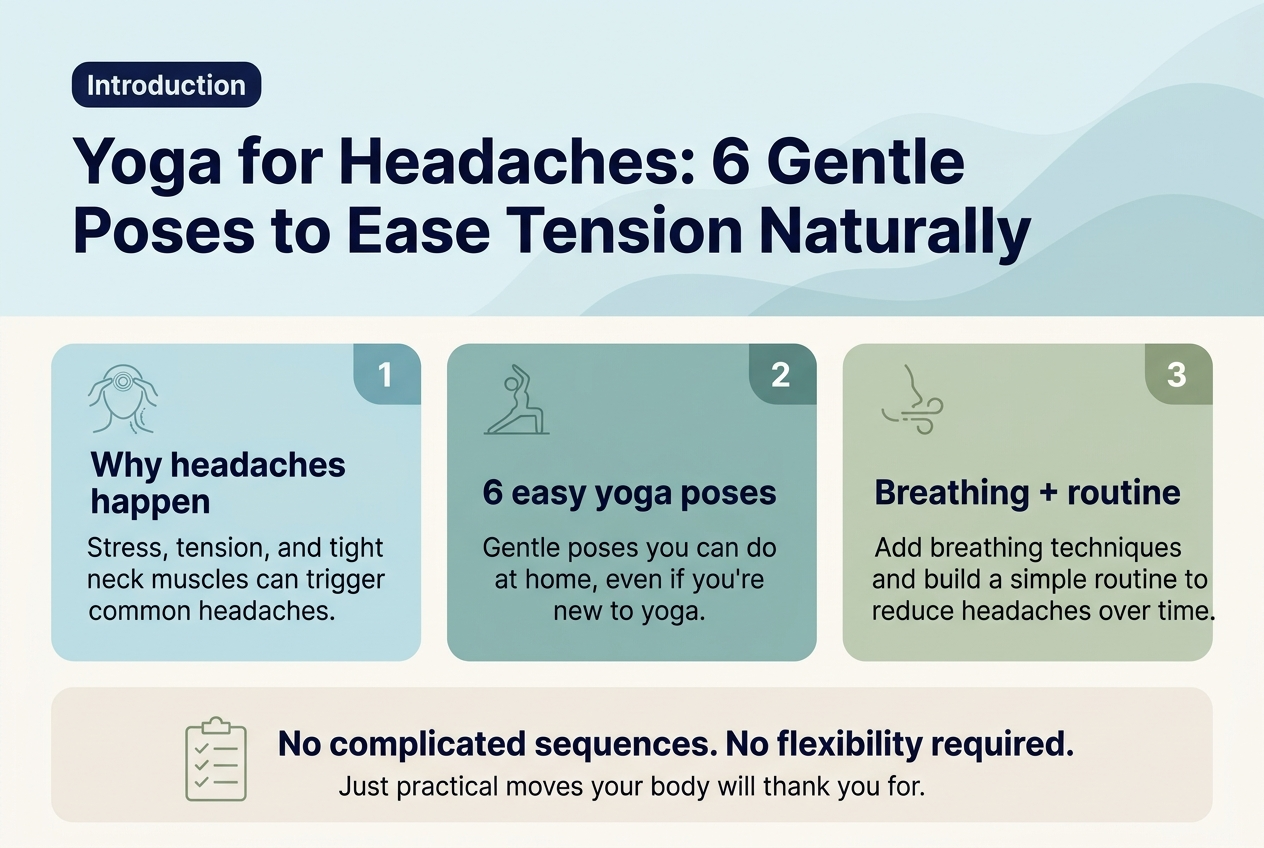
Here’s what you’ll walk away with:
- A clear understanding of why headaches happen and how gentle movement actually addresses the root cause
- Six easy yoga poses you can do at home, plus breathing techniques to make them work even better
- Tips on building a simple routine so headaches become less frequent over time — not just something you manage in the moment
No complicated sequences, no flexibility required. Just practical moves your body will thank you for.
Understanding How Headaches Form and Why Yoga Helps
Common Types of Headaches Yoga Can Effectively Address
Yoga works best for these headache types:
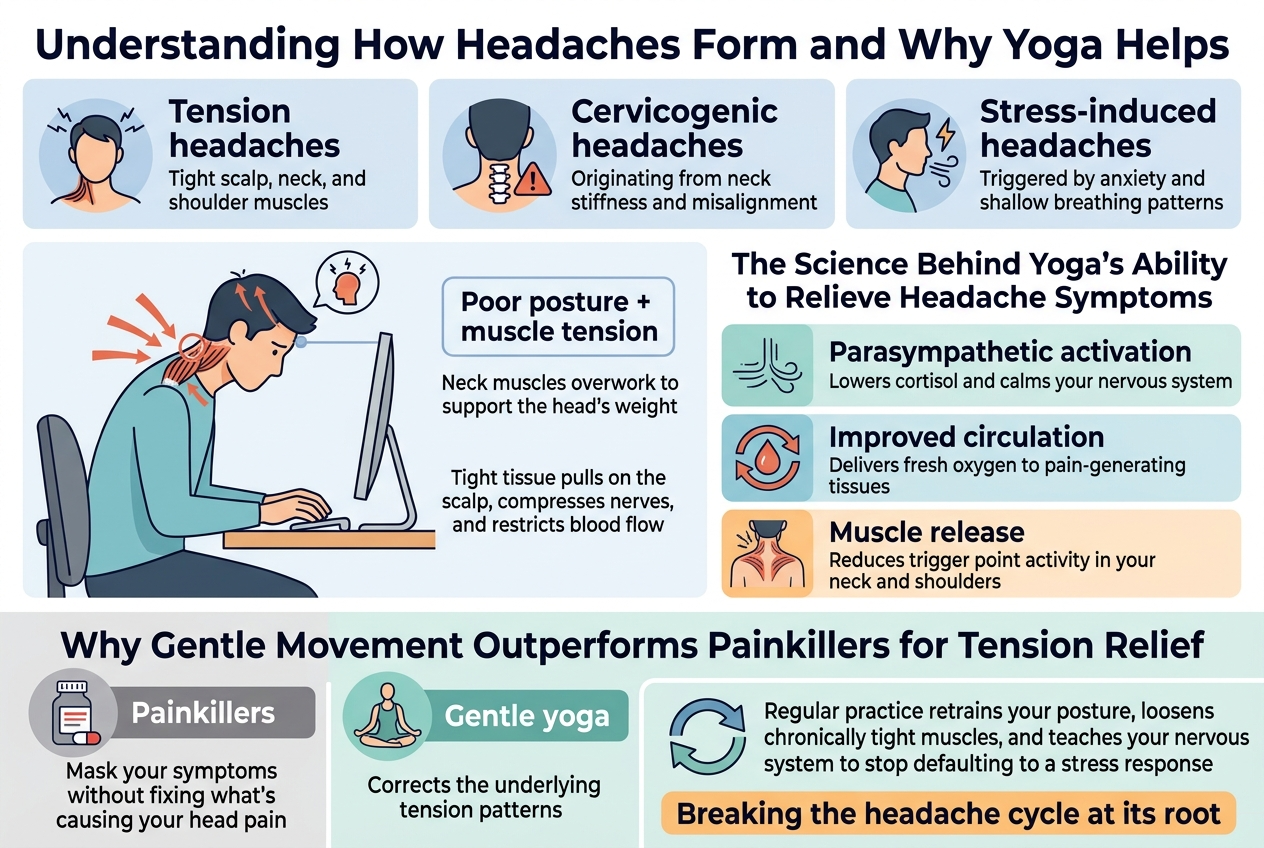
- Tension headaches – the most common, caused by tight scalp, neck, and shoulder muscles
- Cervicogenic headaches – originating from neck stiffness and misalignment
- Stress-induced headaches – triggered by anxiety and shallow breathing patterns
How Muscle Tension and Poor Posture Trigger Head Pain
This is something I’ve noticed personally after spending extended periods working at a screen. On days when my posture slips or I skip movement breaks, tension tends to build in my shoulders and neck long before I notice a headache developing.
When you hunch over a screen for hours, your neck muscles overwork to support your head’s weight. This creates tight bands of tissue that pull on your scalp, compressing nerves and restricting blood flow—the classic tension headache recipe.
The Science Behind Yoga’s Ability to Relieve Headache Symptoms
Yoga targets headaches through three measurable pathways:
| Mechanism | What Happens in Your Body |
|---|---|
| Parasympathetic activation | Lowers cortisol and calms your nervous system |
| Improved circulation | Delivers fresh oxygen to pain-generating tissues |
| Muscle release | Reduces trigger point activity in your neck and shoulders |
Why Gentle Movement Outperforms Painkillers for Tension Relief
Painkillers mask your symptoms without fixing what’s causing your head pain. Gentle yoga actually corrects the underlying tension patterns. Regular practice retrains your posture, loosens chronically tight muscles, and teaches your nervous system to stop defaulting to a stress response — breaking the headache cycle at its root.
Essential Preparation Before Starting Your Yoga Practice
Setting Up a Calm and Comfortable Space for Pain Relief
Your environment directly affects how well yoga works for headache relief. Before you begin:
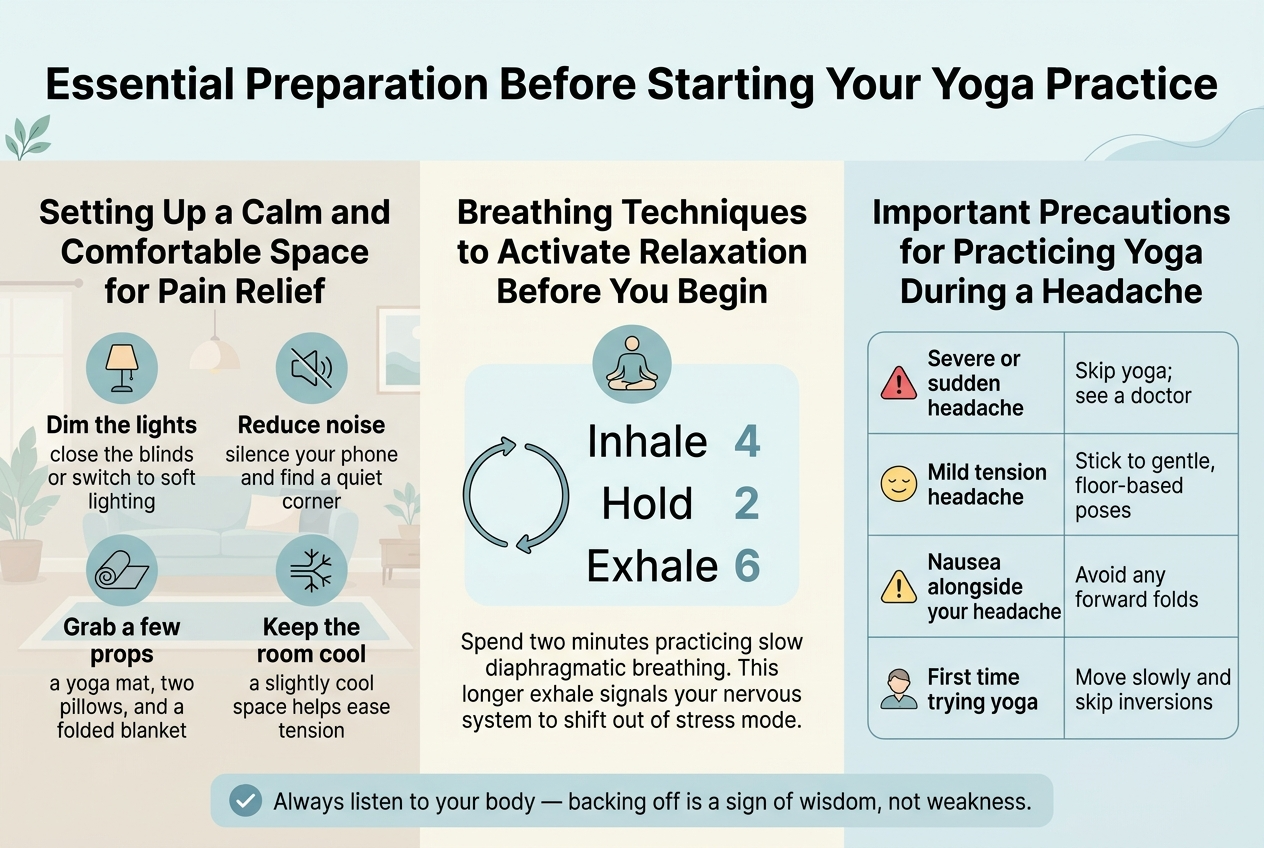
- Dim the lights – bright light worsens most headaches, so close the blinds or switch to soft lighting
- Reduce noise – silence your phone and find a quiet corner; even soft background noise can amplify pain
- Grab a few props – a yoga mat, two pillows, and a folded blanket give your body the support it needs
- Keep the room cool – a slightly cool space helps ease tension and keeps you comfortable throughout
Breathing Techniques to Activate Relaxation Before You Begin
Before moving into any pose, spend two minutes practicing slow diaphragmatic breathing. Inhale through your nose for four counts, hold for two, and exhale for six. This longer exhale signals your nervous system to shift out of stress mode, making every pose more effective.
Important Precautions for Practicing Yoga During a Headache
| Situation | What to Do |
|---|---|
| Severe or sudden headache | Skip yoga; see a doctor |
| Mild tension headache | Stick to gentle, floor-based poses |
| Nausea alongside your headache | Avoid any forward folds |
| First time trying yoga | Move slowly and skip inversions |
Always listen to your body — backing off is a sign of wisdom, not weakness.
The 6 Gentle Yoga Poses to Ease Headache Tension
Child’s Pose to Release Neck and Shoulder Tightness
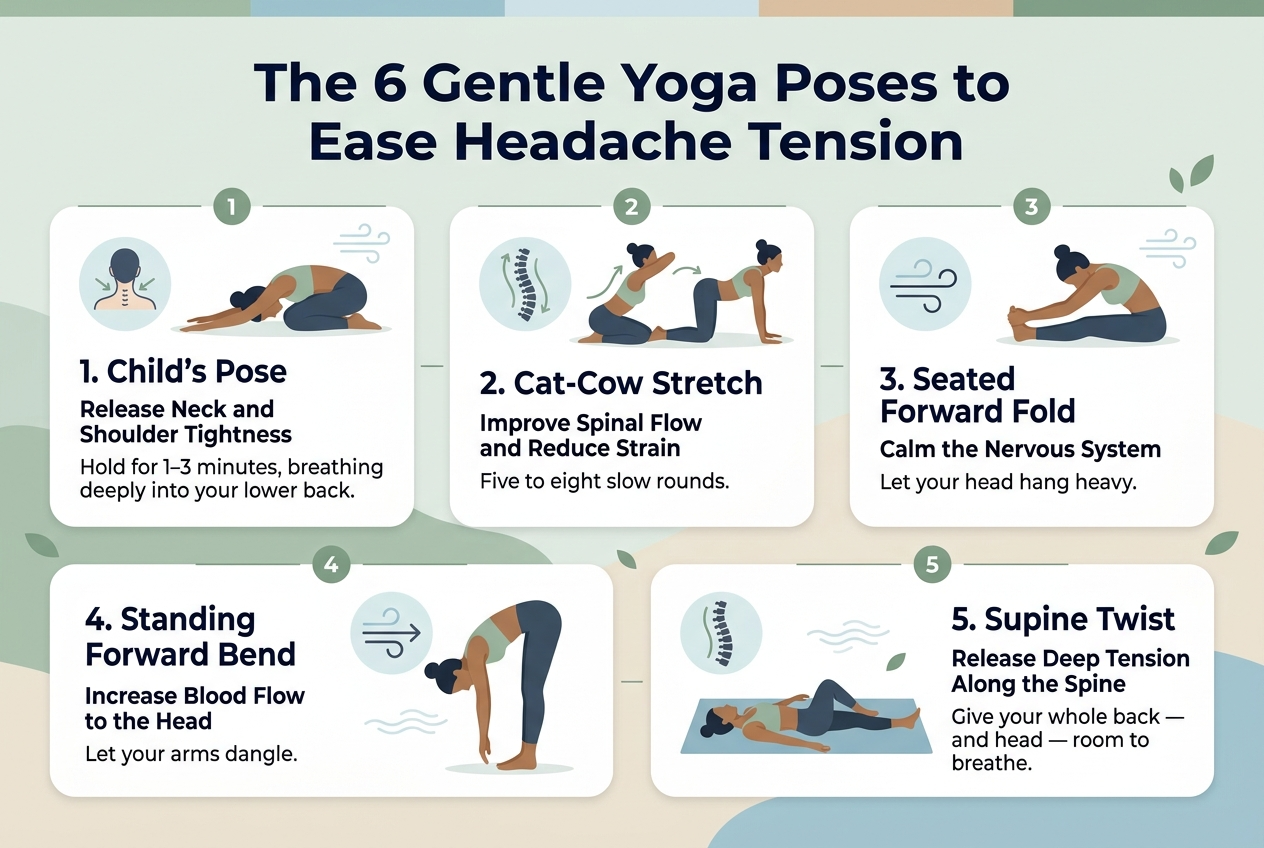
Sink into Child’s Pose by kneeling, sitting back on your heels, and stretching your arms forward on the mat. Hold for 1–3 minutes, breathing deeply into your lower back. This position gently decompresses your cervical spine and melts tension from your shoulders — two common headache triggers.
Cat-Cow Stretch to Improve Spinal Flow and Reduce Strain
Move through Cat-Cow slowly, syncing each breath with movement. As you arch (Cow) and round (Cat) your spine, you restore circulation along the vertebrae and loosen tight muscles connecting your neck to your upper back. Five to eight slow rounds work beautifully.
Seated Forward Fold to Calm the Nervous System
Sitting with legs extended, hinge forward from your hips and let your head hang heavy. Your nervous system shifts into a calmer state, reducing the stress response that often drives tension headaches.
Standing Forward Bend to Increase Blood Flow to the Head
Stand, fold forward, and let your arms dangle. This inversion gently encourages fresh circulation toward your head and relieves compression in your cervical spine.
Supine Twist to Release Deep Tension Along the Spine
Lying on your back, draw one knee across your body and extend your arms wide. This pose targets deep spinal muscles and unwinds the tension stored along your thoracic region, giving your whole back — and head — room to breathe.
Breathing and Mindfulness Techniques to Boost Headache Relief
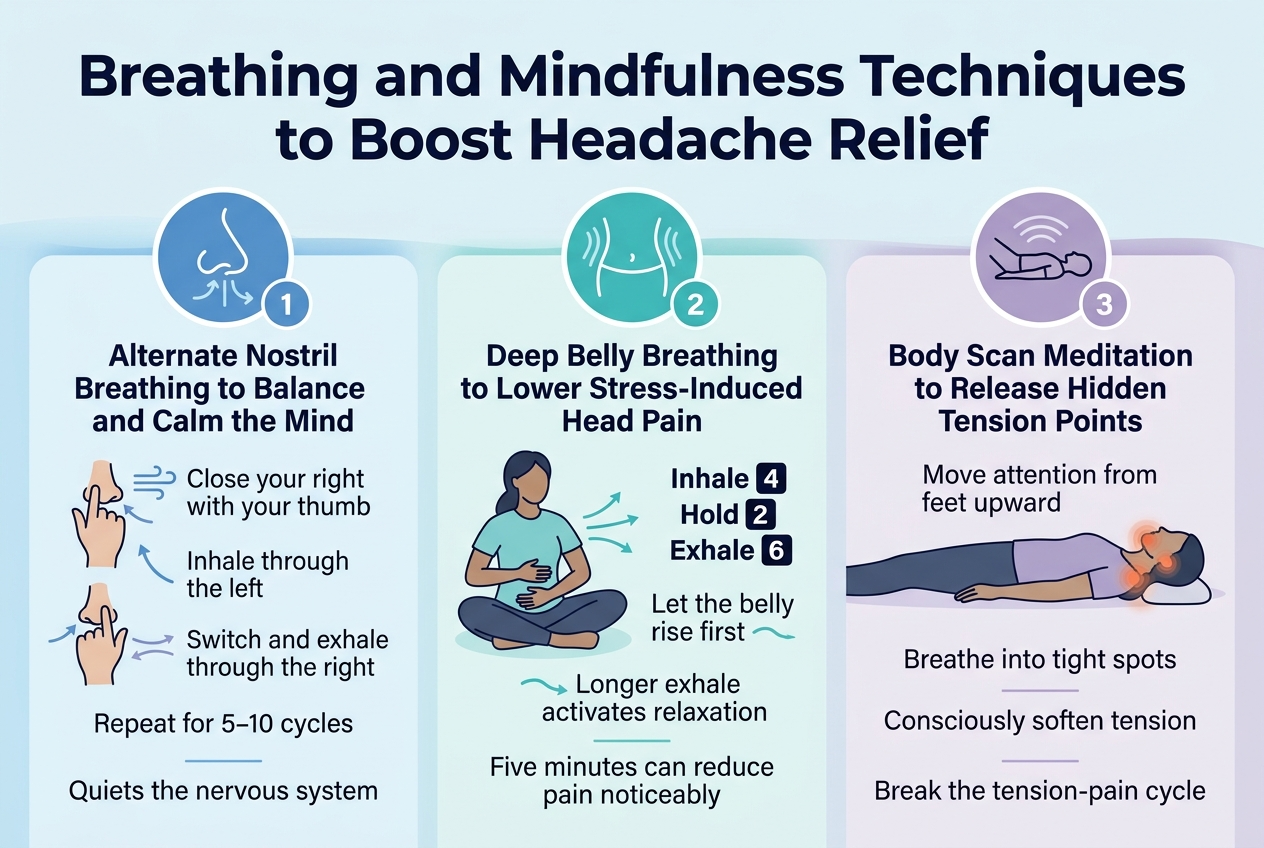
Alternate Nostril Breathing to Balance and Calm the Mind
This technique, called Nadi Shodhana, directly quiets your nervous system. Close your right nostril with your thumb, inhale through the left, then switch and exhale through the right. Repeat for 5–10 cycles. You’ll notice your racing thoughts slow down, which can quickly reduce headache intensity.
Deep Belly Breathing to Lower Stress-Induced Head Pain
Shallow chest breathing keeps your body in a stress state, which tightens muscles around your neck and skull. Place one hand on your belly and breathe so it rises first. Try this rhythm:
- Inhale for 4 counts
- Hold for 2 counts
- Exhale for 6 counts
The longer exhale activates your parasympathetic nervous system, telling your body it’s safe to relax. Even five minutes shifts your pain levels noticeably.
Body Scan Meditation to Release Hidden Tension Points
You’re often holding tension in places you don’t realize — your jaw, shoulders, or the base of your skull. Lie down, close your eyes, and slowly move your attention from your feet upward. When you spot a tight spot, breathe into it and consciously soften it. This breaks the tension-pain cycle your headache feeds on.
Building a Consistent Yoga Routine for Long-Term Headache Prevention
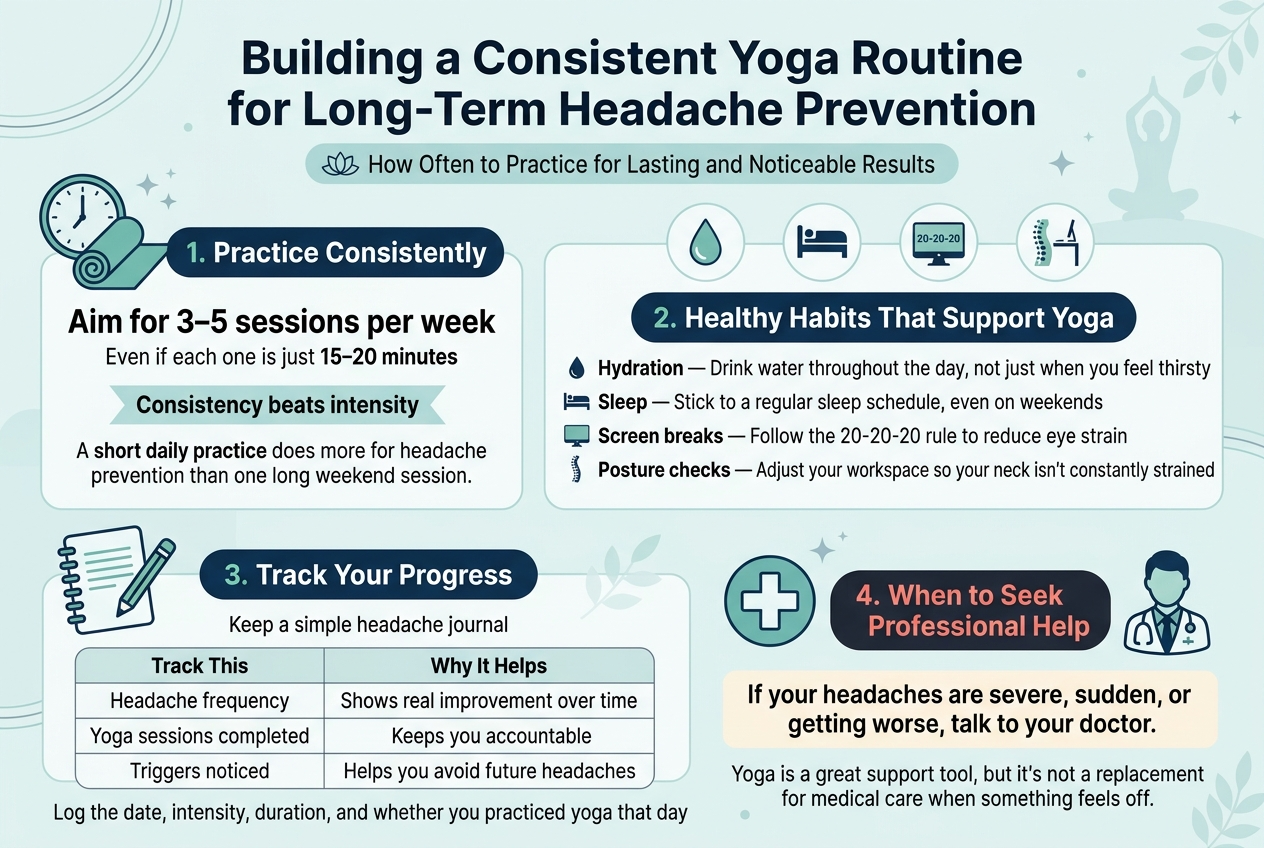
How Often to Practice for Lasting and Noticeable Results
Aim for 3–5 sessions per week, even if each one is just 15–20 minutes. Consistency beats intensity every time. A short daily practice does more for headache prevention than one long weekend session.
Combining Yoga with Healthy Lifestyle Habits for Fewer Headaches
Your yoga practice works best when it’s part of a bigger picture. Pair it with these habits:
- Hydration – Drink water throughout the day, not just when you feel thirsty
- Sleep – Stick to a regular sleep schedule, even on weekends
- Screen breaks – Follow the 20-20-20 rule to reduce eye strain
- Posture checks – Adjust your workspace so your neck isn’t constantly strained
Tracking Your Progress to Stay Motivated and Headache-Free
Keep a simple headache journal. Log the date, intensity, duration, and whether you practiced yoga that day. After a few weeks, you’ll start spotting patterns that show what’s actually working for you.
| Track This | Why It Helps |
|---|---|
| Headache frequency | Shows real improvement over time |
| Yoga sessions completed | Keeps you accountable |
| Triggers noticed | Helps you avoid future headaches |
When to Seek Professional Help Alongside Your Yoga Practice
If your headaches are severe, sudden, or getting worse, talk to your doctor. Yoga is a great support tool, but it’s not a replacement for medical care when something feels off.
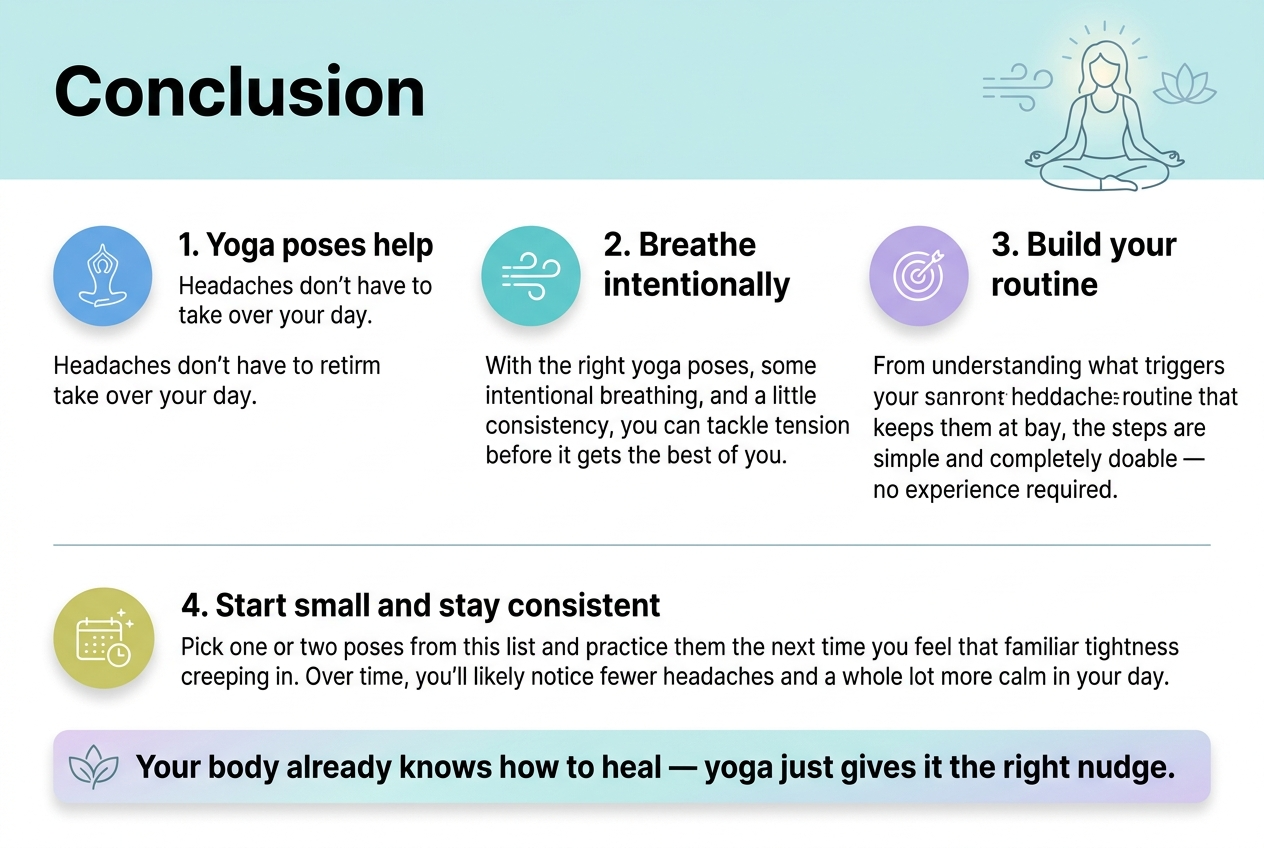
Headaches don’t have to take over your day. With the right yoga poses, some intentional breathing, and a little consistency, you have everything you need to tackle tension before it gets the best of you. From understanding what triggers your headaches to building a routine that keeps them at bay, the steps are simple and completely doable — no experience required.
What I appreciate most about these poses is that they don’t require a full yoga practice or much extra time. Even a few minutes of gentle movement can create enough space in the body to interrupt the tension cycle before it takes over the rest of the day.
Start small. Pick one or two poses from this list and practice them the next time you feel that familiar tightness creeping in. Over time, as the routine becomes second nature, you’ll likely notice fewer headaches and a whole lot more calm in your day. Your body already knows how to heal — yoga just gives it the right nudge.
✨ Join The Zen Journal community — get fresh yoga and wellness insights straight to your inbox ✨