
Spring Equinox Travel: Pilgrimage Sites Across the UK That Celebrate Renewal
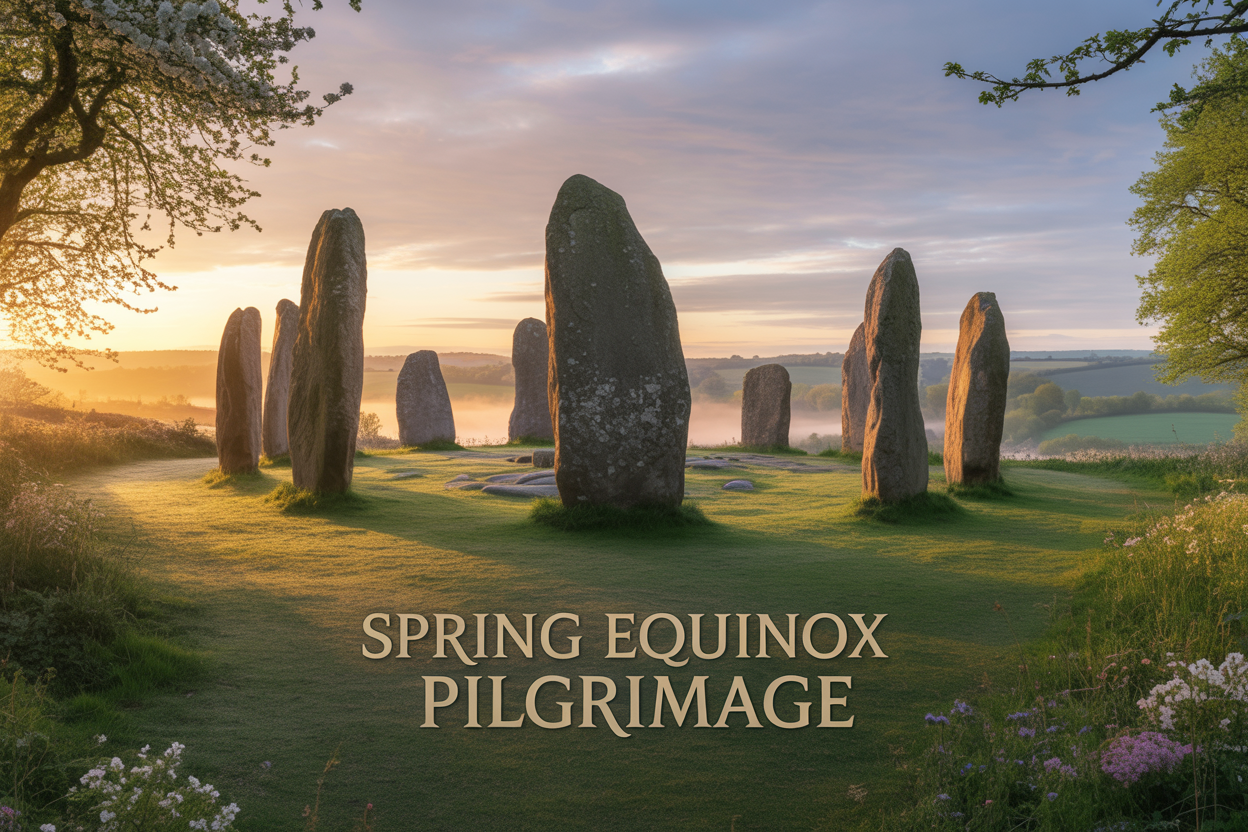
As spring arrives and daylight balances perfectly with darkness, you might feel called to mark this powerful moment of renewal at sacred sites across the UK. Spring equinox travel to Britain’s ancient pilgrimage destinations offers spiritual seekers, nature lovers, and history enthusiasts a chance to connect with centuries-old traditions that celebrate rebirth and fresh beginnings.
Your journey can take you to prehistoric stone circles where druids once gathered to honor the changing seasons, their massive stones still aligned with celestial movements. You’ll also discover medieval churches and cathedrals that built spring renewal ceremonies into their sacred calendar, creating spaces where ancient wisdom meets Christian tradition. Celtic holy wells and natural spring sites provide another layer to your pilgrimage, where flowing waters have drawn visitors seeking healing and spiritual cleansing for thousands of years.
Each location holds its own energy and history, ready to help you create meaningful rituals that mark your personal renewal alongside nature’s awakening.
Understanding Spring Equinox Significance for Spiritual Journeys
Ancient Celtic traditions that mark the balance of light and darkness
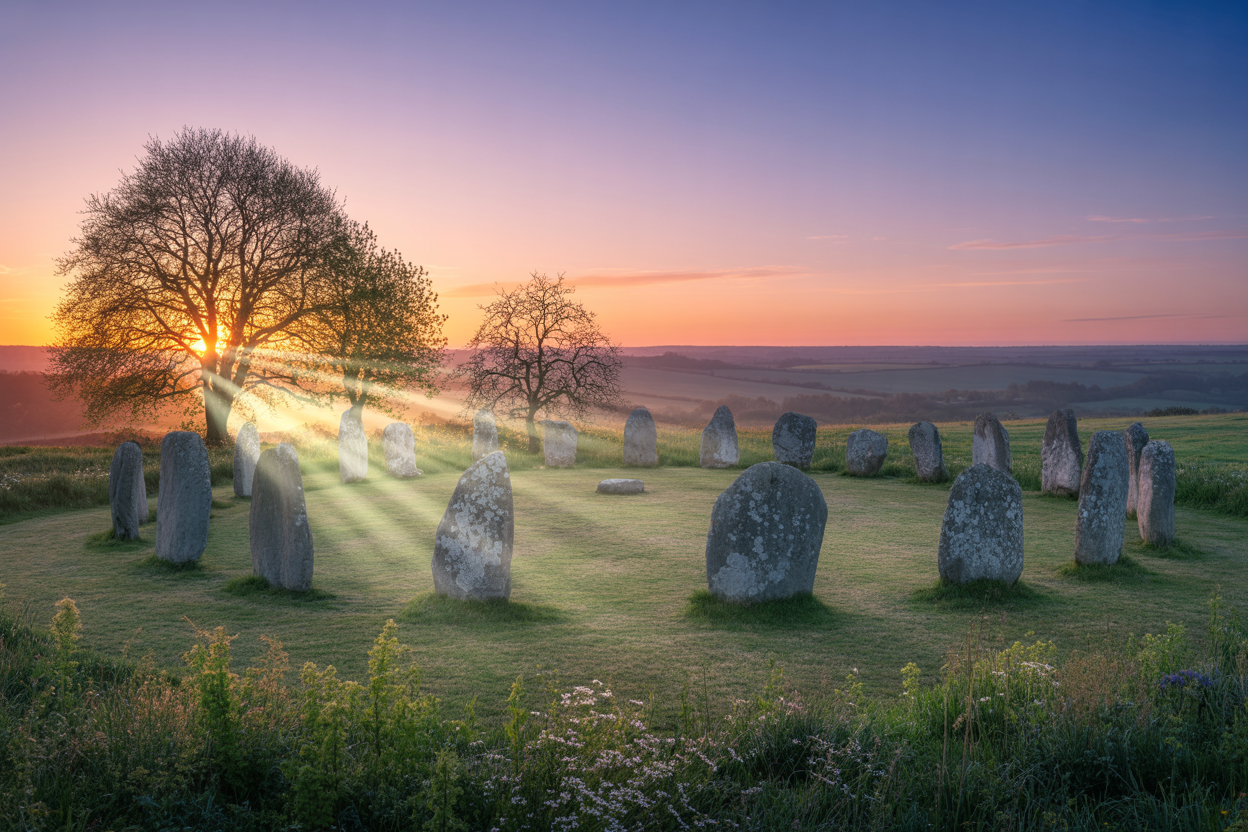
Your Celtic ancestors understood something profound about the spring equinox that modern spirituality is rediscovering. They called this sacred time Ostara, recognizing it as the moment when day and night stand in perfect harmony before light begins its triumphant march toward summer. You’ll find their wisdom woven throughout the British landscape, from ancient stone circles aligned to capture the equinox sunrise to burial chambers that honor this celestial balance.
When you walk these sacred paths, you’re following footsteps laid down over 4,000 years ago. The Celts saw the equinox as a gateway between worlds – a time when the veil between physical and spiritual realms grew thin. Your pilgrimage during this season connects you to their understanding that renewal isn’t just about nature awakening, but about your own spiritual rebirth. They celebrated with fire ceremonies, planted seeds blessed under the equinox moon, and made offerings to ensure the return of abundance.
The druids particularly honored this balance, viewing it as a cosmic reminder that all life depends on opposing forces working together. As you stand at these ancient sites during the equinox, you’re participating in humanity’s oldest form of worship – acknowledging your place within the greater cycles of existence.
Connection between seasonal renewal and personal transformation
Your inner landscape mirrors the awakening happening all around you during the spring equinox. Just as the earth shakes off winter’s grip and pushes new growth through thawed soil, you too can use this powerful energy to break through personal barriers that have held you back. The equinox offers you a natural reset button – a chance to align your intentions with nature’s own momentum toward growth and expansion.
When you embark on a pilgrimage during this season, you’re doing more than sightseeing. You’re engaging in a practice that deliberately connects your personal journey with the earth’s renewal cycle. Each step you take on these sacred paths becomes a metaphor for moving forward in your own life. The challenges you face while walking mirror the obstacles you’re ready to overcome in your daily existence.
Your Celtic forebears understood this connection intimately. They knew that transformation requires both the darkness of reflection and the light of action – just like the equinox balance itself. As you visit these ancient sites, you’re tapping into thousands of years of human wisdom about timing personal change with natural rhythms. The energy you feel at stone circles and holy wells isn’t just atmospheric – it’s the accumulated power of countless pilgrims who’ve sought renewal in these same spaces.
Historical importance of equinox celebrations in British culture
British culture has woven equinox celebrations into its fabric for millennia, creating a rich tapestry of traditions you can still experience today. Long before Christianity arrived, your ancestors marked this time with elaborate festivals that celebrated fertility, balance, and the promise of abundant harvests. These weren’t simple seasonal acknowledgments – they were sophisticated spiritual practices that recognized the equinox as a pivotal moment in the cosmic cycle.
Medieval Britain transformed these ancient celebrations but never abandoned them. You’ll discover how Christian churches strategically built upon existing sacred sites, incorporating equinox alignments into their architecture while layering new meanings onto old traditions. Easter’s timing, forever linked to the spring equinox, represents this cultural blending perfectly. Your pilgrimage sites often reflect this layering – stone circles topped with medieval crosses, holy wells blessed by both druids and saints.
The Renaissance and Enlightenment periods saw renewed interest in Britain’s astronomical heritage. Scholars began documenting the sophisticated knowledge your ancestors possessed about celestial movements and seasonal cycles. Victorian romantics rediscovered these ancient sites, sparking the modern pilgrimage movement you’re part of today. Throughout British history, times of social upheaval have consistently driven people back to these equinox sites, seeking stability in the eternal rhythm of seasonal change.
Modern relevance of ancient pilgrimage practices
Your contemporary world desperately needs what ancient pilgrimage practices offer – a way to slow down, reconnect, and find meaning beyond material pursuits. The spring equinox pilgrimage tradition you’re exploring provides something your digital age often lacks: physical engagement with sacred space, time for deep reflection, and connection to rhythms older than civilization itself.
Modern psychology validates what your ancestors knew intuitively – that ritual movement through landscape creates profound shifts in consciousness. When you walk these ancient paths, you’re engaging in what researchers now call “embodied spirituality.” Your pilgrimage isn’t just exercise or tourism; it’s a therapeutic practice that integrates body, mind, and spirit in ways that sitting meditation or therapy sessions can’t replicate.
The environmental crisis makes these practices even more relevant. Your equinox pilgrimage reconnects you to natural cycles that industrial society has obscured. Standing at Avebury as dawn breaks on the equinox, feeling the sun’s rays align with stones placed by people who lived in harmony with seasonal rhythms, you experience firsthand what you’ve lost – and what you might regain.
Social media may connect you virtually to millions, but it can’t provide the deep communion you experience at sacred sites during the equinox. Here, surrounded by others who’ve also felt called to this ancient practice, you discover a community that transcends age, background, and belief system. Your shared pilgrimage creates bonds forged by common purpose and mutual respect for something greater than individual concerns.
Sacred Stone Circles and Prehistoric Sites for Equinox Worship
Stonehenge’s astronomical alignment and sunrise ceremonies
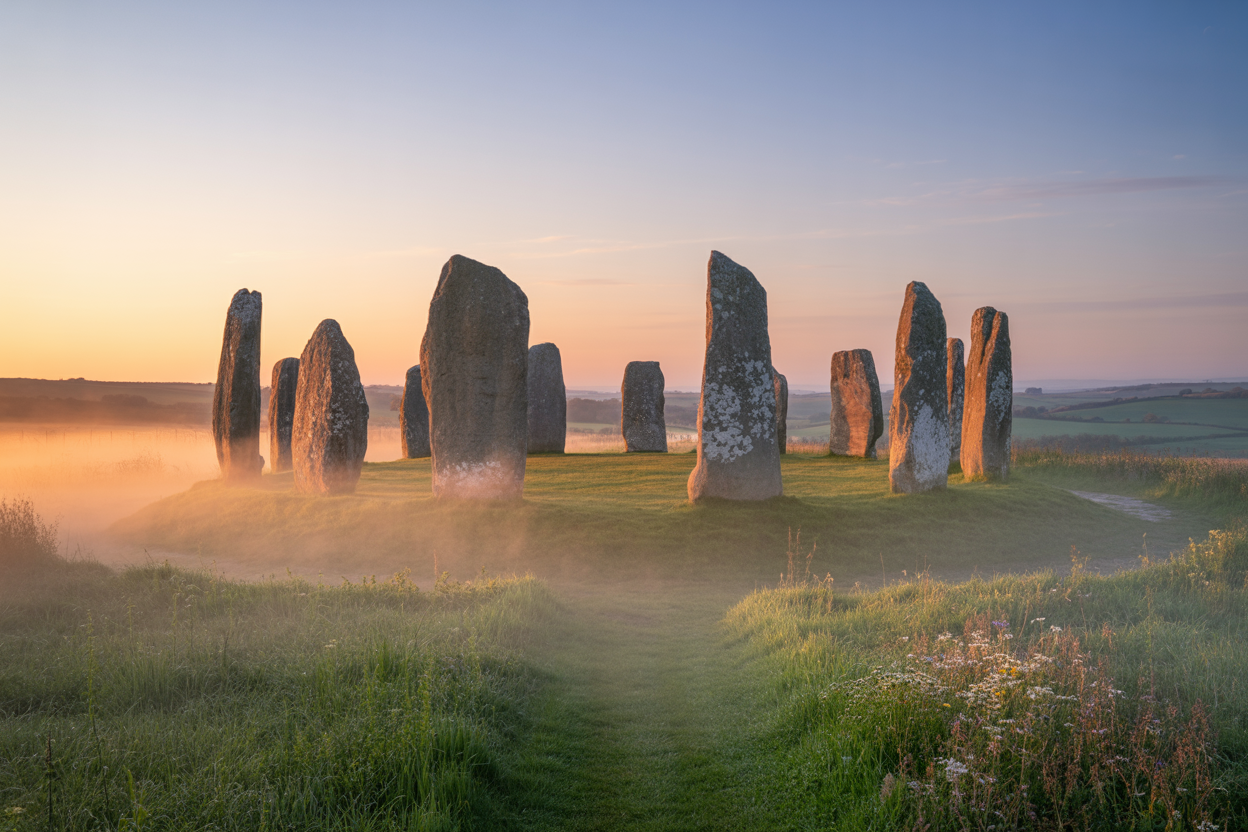
Your journey to Stonehenge during the spring equinox offers something truly magical. The ancient architects positioned these massive sarsen stones with incredible precision, creating perfect frames for the equinox sunrise. When you arrive in the early morning darkness, you’ll join thousands of modern pilgrims who gather to witness this 5,000-year-old astronomical calendar in action.
You’ll want to arrive at least an hour before dawn to secure a good viewing spot. The energy builds as darkness slowly gives way to light, and you’ll feel the anticipation of fellow travelers around you. As the sun rises, it aligns perfectly between the stone archways, creating a breathtaking moment where ancient wisdom meets natural wonder.
The experience goes beyond just watching the sunrise. You’ll find yourself connecting with generations of people who stood in this exact spot, marking the changing seasons. Many visitors bring drums, sing, or simply stand in silent reverence. The acoustics within the stone circle amplify sounds in fascinating ways, creating an almost otherworldly atmosphere.
During equinox celebrations, English Heritage often allows closer access to the stones than during regular visits. You can touch these ancient monoliths and feel their weathered surfaces, imagining the countless hands that shaped and moved them across Salisbury Plain thousands of years ago.
Avebury’s powerful energy fields and walking meditations
Your experience at Avebury differs dramatically from Stonehenge’s controlled environment. Here, you can walk freely among the stones, creating your own intimate connection with these Neolithic giants. The village of Avebury sits right inside the stone circle, making this sacred site feel alive and integrated with daily life.
You’ll discover that Avebury’s energy feels more accessible and gentle compared to Stonehenge’s intense focus. The stones vary dramatically in size and shape, each seemingly possessing its own personality. Many visitors report feeling distinct energy signatures from different stones, and you might find yourself drawn to particular monuments during your visit.
Walking meditation works beautifully here. You can follow the circular path around the entire monument, which takes about 45 minutes at a contemplative pace. Start at the southern entrance and move clockwise, pausing at stones that call to your attention. Place your hands on their surfaces and take time to absorb their ancient presence.
The nearby Silbury Hill adds another dimension to your pilgrimage. This massive artificial mound, Europe’s largest prehistoric structure, creates a powerful landscape of sacred geometry. You can climb West Kennet Long Barrow for panoramic views of the entire complex, giving you a perspective on how our ancestors designed this remarkable sacred landscape.
Callanish Stones in Scotland for Celtic renewal rituals
Your pilgrimage to the Callanish Stones on the Isle of Lewis transports you into Scotland’s mystical Celtic heritage. These 5,000-year-old stones form a distinctive cross shape that aligns with both solar and lunar cycles, making them perfect for equinox observations. The remote location on Lewis adds to their spiritual power – you’ll often have the site nearly to yourself.
The approach to Callanish builds anticipation beautifully. You’ll see the stones silhouetted against the dramatic Hebridean landscape long before you reach them. The central circle contains 13 standing stones, with four stone rows extending outward like the arms of a Celtic cross. This unique layout creates multiple spaces for different types of spiritual practice.
Celtic renewal traditions work particularly well at Callanish. You can walk the cross pattern, starting from the north and moving through each arm while setting intentions for the coming season. The stones frame views of the surrounding lochs and hills, connecting you deeply with the natural world that Celtic spirituality celebrates.
Local folklore adds rich layers to your experience. The stones are said to be ancient giants turned to stone, and many visitors report unusual experiences here – from unexplained lights to profound moments of clarity. Whether you connect with these stories or not, you’ll feel the undeniable power of this remote sacred site where sky, stone, and water create perfect harmony.
Medieval Churches and Cathedrals with Spring Renewal Traditions
Canterbury Cathedral’s pilgrim paths and healing services
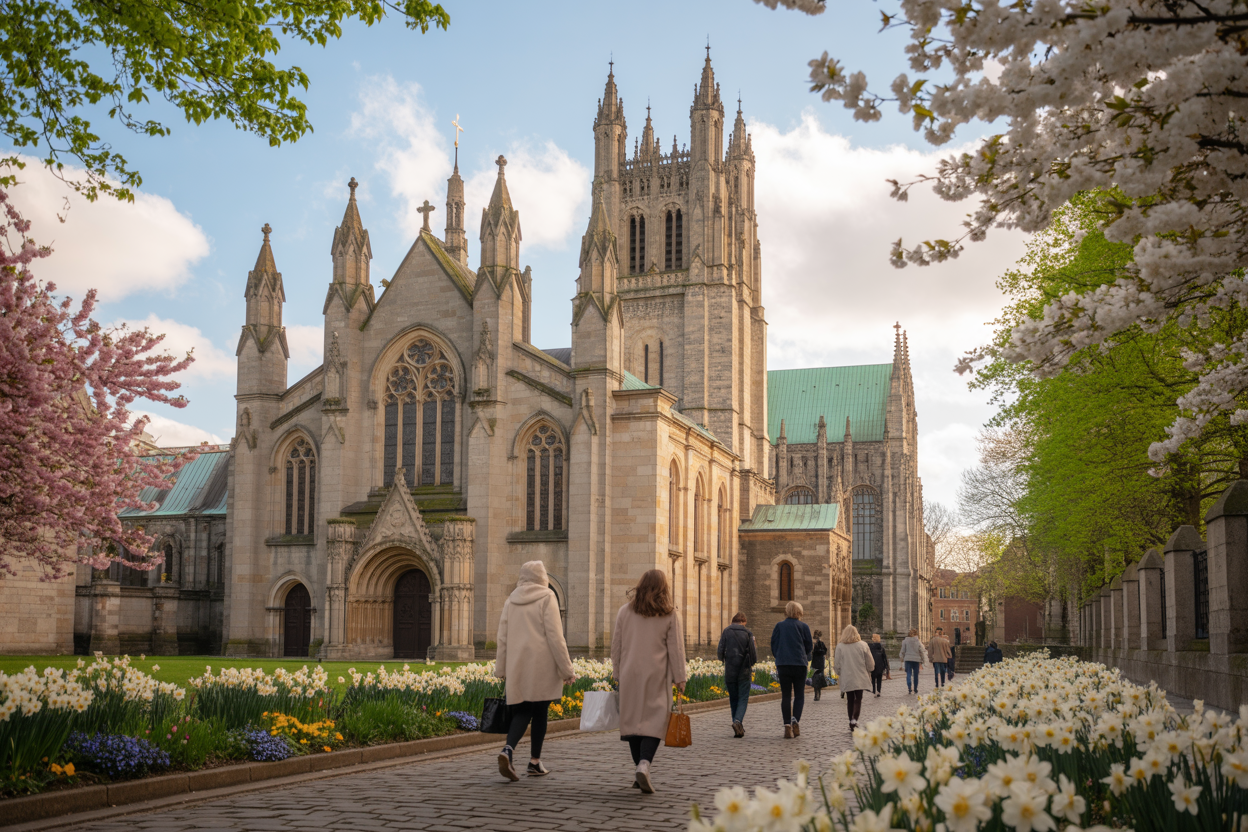
Your journey to Canterbury Cathedral places you at the heart of England’s most famous pilgrimage destination, where thousands have sought spiritual renewal since the 12th century. You’ll discover that the spring equinox brings special significance here, as the cathedral hosts healing services that align with themes of rebirth and transformation. Walking the ancient pilgrim paths that lead to Thomas Becket’s shrine, you can participate in the same rituals that have drawn seekers for over 800 years.
You’ll find that the cathedral’s bell tower rings out special prayers during the equinox period, and you can join evening services that focus on letting go of winter’s burdens. The crypt offers a particularly powerful space for reflection, where you can light candles for new beginnings. Don’t miss the opportunity to walk the labyrinth in the cathedral grounds, designed specifically for meditative prayer during seasonal transitions.
Glastonbury Abbey’s mystical legends and spiritual rebirth
At Glastonbury Abbey, you’ll encounter one of Britain’s most mystical pilgrimage sites, where legends of King Arthur and the Holy Grail create an atmosphere perfect for spring renewal ceremonies. Your visit during the equinox allows you to tap into the abbey’s reputation as the “cradle of English Christianity” while exploring its connections to ancient Celtic traditions.
You can participate in dawn services held among the abbey ruins, where the rising sun illuminates the ancient stones in ways that connect you to centuries of spiritual seekers. The Lady Chapel, though now roofless, provides a sacred space for meditation focused on new growth and personal transformation. Local guides often share stories of miraculous healings and spiritual awakenings that have occurred here during spring celebrations.
The nearby Chalice Well offers you access to waters believed to have healing properties, perfect for blessing ceremonies you might create for your own renewal journey. You’ll find that the abbey’s peaceful grounds encourage quiet contemplation, making it an ideal spot for journaling about your intentions for the coming season.
Durham Cathedral’s ancient prayers for new beginnings
Your pilgrimage to Durham Cathedral reveals a magnificent Norman structure that has hosted spring renewal ceremonies since 1093. You’ll be amazed by the cathedral’s powerful architecture, designed to inspire awe and spiritual transformation. The massive pillars and soaring arches create an atmosphere that naturally draws your thoughts toward themes of strength and new beginnings.
During the spring equinox period, you can join special services that incorporate ancient prayers for renewal, some dating back to medieval manuscripts preserved in the cathedral’s library. The shrine of St. Cuthbert provides a focal point for your personal prayers, as pilgrims have sought his intercession for new life and healing for over 1,000 years.
You’ll want to visit the Galilee Chapel, where the tomb of the Venerable Bede reminds you of the scholarly traditions that have flourished here. The cathedral’s position on a hill overlooking the River Wear creates a natural sense of elevation that enhances your spiritual experience. Evening prayer services during equinox week often include readings specifically chosen to reflect themes of balance, growth, and spiritual awakening.
Wells Cathedral’s sacred architecture and seasonal blessings
Wells Cathedral welcomes you with its stunning west front, featuring over 300 carved figures that seem to come alive during the changing light of spring days. Your visit here reveals unique architectural features like the famous scissor arches and the medieval astronomical clock, which marks the passage of seasons with remarkable precision.
You can time your visit to witness the clock’s hourly performance, where medieval knights joust as bells chime, creating a perfect moment for reflection on the cyclical nature of time and renewal. The cathedral’s Chapter House, with its soaring central pillar branching into stone ribs like a great tree, provides an ideal setting for meditation on growth and new life.
During spring equinox celebrations, you’ll find that the cathedral offers special blessing services for gardeners, farmers, and anyone seeking to connect with nature’s renewal. The Bishop’s Palace gardens, accessible via guided tours, showcase early-spring flowers and offer peaceful walking paths for practicing contemplative prayer.
| Cathedral Feature | Best Time for Equinox Visit | Spiritual Focus |
|---|---|---|
| West Front Carvings | Golden hour (sunset) | Divine storytelling |
| Astronomical Clock | Hourly performances | Time’s sacred nature |
| Chapter House | Morning light | Growth and expansion |
| Palace Gardens | Mid-afternoon | Nature’s renewal |
You’ll discover that Wells Cathedral’s unique position among medieval buildings creates an intimate atmosphere that smaller crowds make especially peaceful for personal reflection and prayer during the equinox season.
Celtic Holy Wells and Natural Spring Sites
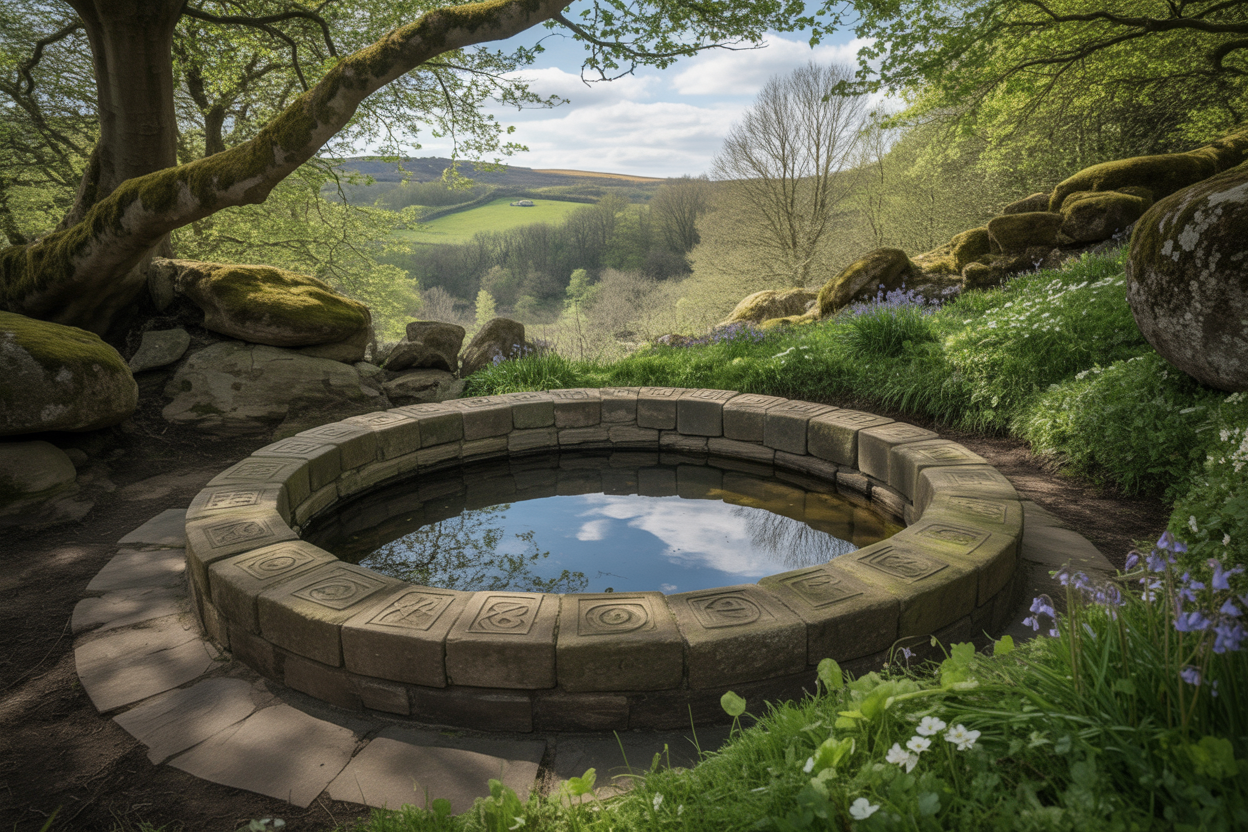
Chalice Well in Glastonbury for purification ceremonies
Your journey to Chalice Well brings you to one of Britain’s most mystical water sources, where iron-rich waters have flowed continuously for over two thousand years. The distinctive red-stained stones tell the story of this sacred spring, often called the Red Spring or Blood Spring. You’ll find yourself drawn to the well’s legendary connections to the Holy Grail and Joseph of Arimathea, making it a powerful location for spring equinox renewal.
The terraced gardens surrounding the well create a natural amphitheater perfect for personal purification rituals. You can drink directly from the lion’s head spout, feeling the metallic tang that locals believe carries healing properties. Many visitors bring bottles to fill with the sacred water, taking home liquid blessings for ongoing spiritual practice.
During your spring equinox visit, you’ll want to sit quietly beside the wellhead cover, adorned with the vesica piscis symbol, which represents the intersection of heaven and earth. The constant sound of flowing water helps you enter a meditative state where you can release winter’s accumulated burdens and set intentions for the growing season ahead.
St. Winefride’s Well in Wales for healing and renewal
Holywell in North Wales offers you one of Europe’s most enduring pilgrimage destinations at St. Winefride’s Well. You’ll discover a site where healing waters have drawn seekers for over 1,300 years, making it Britain’s Lourdes. The spring produces an astounding 21 tons of water per minute, creating a powerful energy that you can feel the moment you arrive.
Your pilgrimage experience here involves more than simply visiting – you can participate in the traditional three circuits around the well, following in the footsteps of countless pilgrims before you. The star-shaped pool allows for full immersion if you choose, though many visitors content themselves with cupping the sacred water in their hands or touching it to specific areas needing healing.
The Gothic chapel built around the well provides shelter while maintaining the sacred atmosphere. You’ll notice crutches and walking aids left by previous visitors, a testament to the well’s reputation for physical healing. However, your spring equinox visit might focus more on emotional and spiritual renewal, washing away old patterns and emerging refreshed for the year’s new growth.
Sacred springs across Cornwall for blessing rituals
Cornwall’s landscape holds dozens of sacred springs, each offering you unique opportunities for spring equinox celebrations. Your exploration might begin at Madron Well, where colorful ribbons and offerings from previous visitors create a living tapestry of hopes and prayers. The nearby baptistry ruins add historical depth to your spiritual experience.
St. Keyne’s Well near Liskeard presents an intriguing legend about marital harmony, but its significance at the spring equinox lies in its representation of balanced relationships with nature. You can perform simple blessing rituals here, using the well water to consecrate natural objects you’ve gathered during your travels in Cornwall.
The holy well at St. Cleer offers you a more secluded experience, tucked away in a quiet valley where you can connect deeply with Cornwall’s Celtic heritage. Many of these Cornish springs sit near ancient stone circles or Celtic crosses, creating powerful energy combinations perfect for equinox work.
| Well Location | Special Features | Best Ritual Times |
|---|---|---|
| Madron Well | Clootie tree, healing reputation | Early morning |
| St. Keyne’s Well | Four sacred trees, relationship blessings | Midday |
| St. Cleer’s Well | Secluded valley, Celtic crosses nearby | Sunset |
Your Cornwall spring journey works best when you visit multiple wells, creating a circuit of renewal that mirrors the sun’s journey across the equinox sky.
Planning Your Spring Equinox Pilgrimage Journey
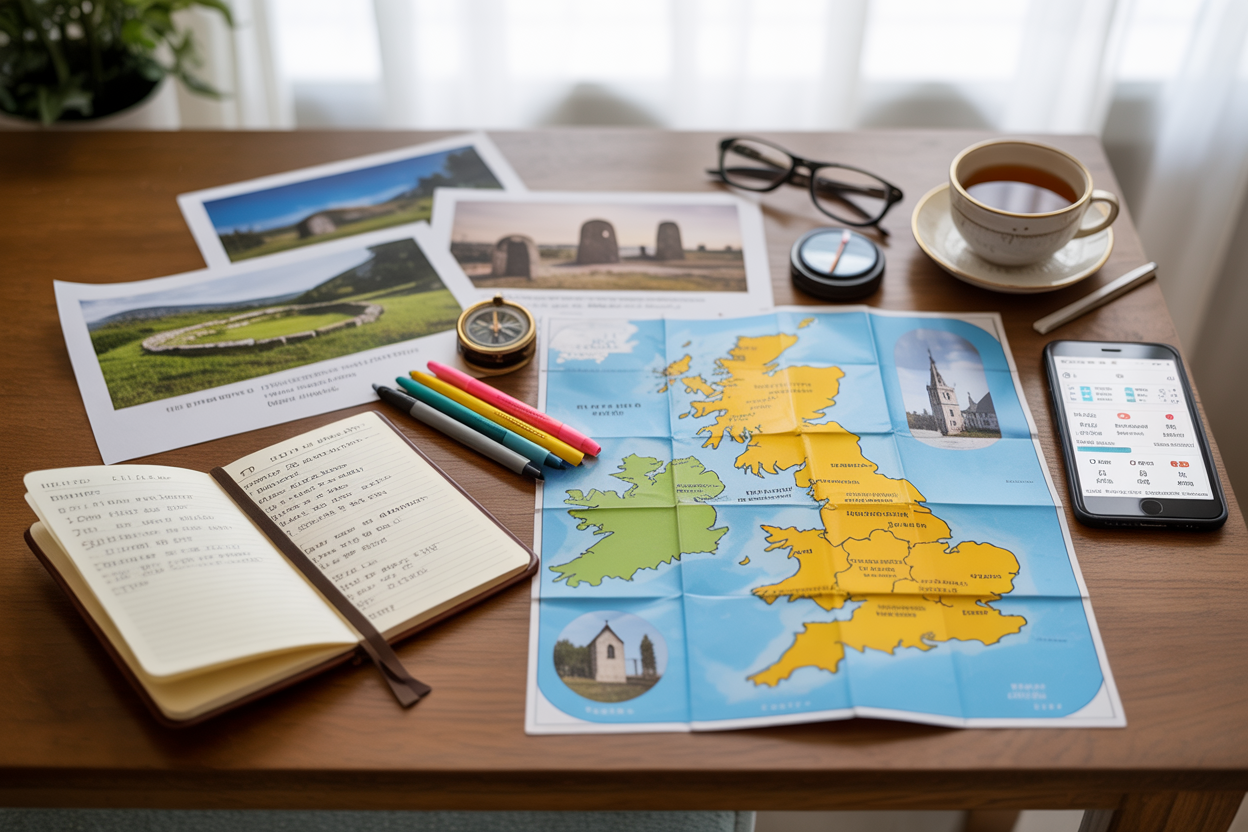
Best travel dates around March 20th for optimal energy
Your timing around the spring equinox can make all the difference in your spiritual experience. The actual equinox falls on March 20th or 21st each year, but the powerful energy window extends from March 17th through March 24th. You’ll find the most potent spiritual atmosphere during the three days before and after the exact equinox moment.
If you want to witness the precise astronomical alignment at stone circles like Stonehenge, check the exact equinox time for the current year and arrive at least an hour before dawn. The energy peaks at sunrise on the equinox day itself, when light and darkness are in perfect balance.
Consider planning a multi-day journey spanning this entire week. You’ll experience the building energy before the equinox, the peak moment itself, and the settling energy afterward. Many pilgrims report that their most profound spiritual insights come during this extended window rather than on the exact day.
Weather patterns in late March can be unpredictable across the UK, so build flexibility into your travel dates. If storms threaten your planned equinox-day visit, having buffer days lets you adapt while still capturing the season’s spiritual energy.
Essential items to pack for spiritual and practical needs
Your packing list should balance spiritual tools with practical outdoor gear. Start with your personal spiritual essentials: crystals, prayer beads, journals, or any items that help you connect with sacred energy. Pack these in a dedicated bag or pouch that you can easily access at each site.
Weather protection tops your practical list. March weather shifts quickly, so layer your clothing and bring waterproof outer shells. Comfortable, sturdy walking shoes with good grip are essential since many sacred sites require walking on uneven, potentially muddy terrain.
Essential Spiritual Items:
- Personal meditation tools or crystals
- Journal and waterproof pen
- Small offerings (flowers, stones, eco-friendly items)
- Compass for directional awareness
- A camera or a phone for documenting your journey
Practical Necessities:
- Layered clothing for changing weather
- Waterproof jacket and pants
- Sturdy hiking boots
- Headlamp or flashlight for dawn visits
- Thermos for hot drinks
- Energy snacks
- First aid basics
- Portable phone charger
Don’t forget to research any site-specific restrictions before you pack. Some locations prohibit certain items or activities, so check ahead to avoid disappointment.
Accommodation options near sacred sites
Your accommodation choice shapes your entire pilgrimage experience. Booking early becomes crucial for March travel, as the spring equinox draws both spiritual seekers and regular tourists to these historic areas.
Bed-and-breakfasts near sacred sites often offer the most authentic local experience. Your hosts frequently know hidden histories and can suggest optimal visiting times when crowds thin out. Many B&B owners have lived near these sites for generations and share fascinating local perspectives you won’t find in guidebooks.
Accommodation Types by Location:
| Site Type | Best Options | Benefits |
|---|---|---|
| Stone Circles | Local B&Bs, Farm stays | Early access, local knowledge |
| Cathedrals | Historic inns, City hotels | Walking distance, cultural context |
| Holy Wells | Country cottages, Rural B&Bs | Peaceful settings, nature connection |
| Remote Sites | Camping, Youth hostels | Budget-friendly, adventure spirit |
Camping near sacred sites offers the deepest connection to the land’s energy, especially if you can secure spots within walking distance. However, March weather makes this challenging, so ensure you have proper cold-weather camping gear.
Book accommodations that offer early check-in or late arrival policies. Your spiritual schedule may not align with standard hotel hours, especially if you’re chasing sunrise ceremonies at stone circles.
Transportation methods for accessing remote locations
Getting to remote sacred sites requires strategic planning, as many locations are deliberately far from modern transportation networks. Your vehicle choice and backup transportation options can make or break your pilgrimage experience.
Renting a car gives you maximum flexibility for reaching isolated stone circles and holy wells. Choose a vehicle with good clearance and all-weather tires, as many sacred sites are reached via narrow country lanes that may be muddy or rutted in March.
Transportation Strategy by Site Access:
- Easy Access Sites: Regular bus services work well for major cathedrals and popular stone circles
- Moderate Access: Combine train travel to nearby towns with local taxi services or short car rentals
- Remote Locations: Car rental essential, consider 4WD for challenging terrain
Public transportation can serve as the backbone of your journey, connecting major cities and towns. From these hubs, you’ll often need taxis, local buses, or short-term car rentals for the final push to sacred sites. Download offline maps before you travel, as phone signals can be spotty near remote locations.
Consider joining organized pilgrimage groups if you prefer not to drive. These groups often access sites that would be difficult to reach independently and provide a spiritual context you might miss traveling alone.
Respectful practices when visiting holy places
Your behavior at sacred sites reflects not only on you but on all spiritual seekers who follow. Each location carries centuries or millennia of spiritual significance, demanding reverence and mindful conduct.
Arrive early to avoid crowds and create space for quiet reflection. Popular sites like Stonehenge can become chaotic with tour groups, but dawn and dusk visits offer more intimate experiences. Respect any barriers or roped-off areas – they exist to protect both you and the ancient structures.
Sacred Site Etiquette:
- Speak quietly or maintain silence in holy spaces
- Ask permission before photographing other visitors
- Leave no trace – pack out all trash
- Don’t touch ancient stones or structures unless explicitly permitted
- Keep personal rituals simple and non-disruptive
- Respect local customs and posted guidelines
At holy wells and natural springs, avoid using soap or shampoo in the water sources. Many pilgrims drink from these springs, and chemical contamination spoils the experience for others. If you want to make offerings, choose biodegradable items like flowers or grain that won’t harm the environment.
Photography requires sensitivity, especially when other people are engaged in prayer or meditation. Some visitors prefer privacy during their spiritual practices, so observe before photographing and respect anyone’s request for space.
Remember that you’re often visiting sites that remain active places of worship. Local congregations may be holding services at churches and cathedrals, so check schedules and dress appropriately if you plan to attend or visit during religious services.
Creating Meaningful Rituals at Each Sacred Location
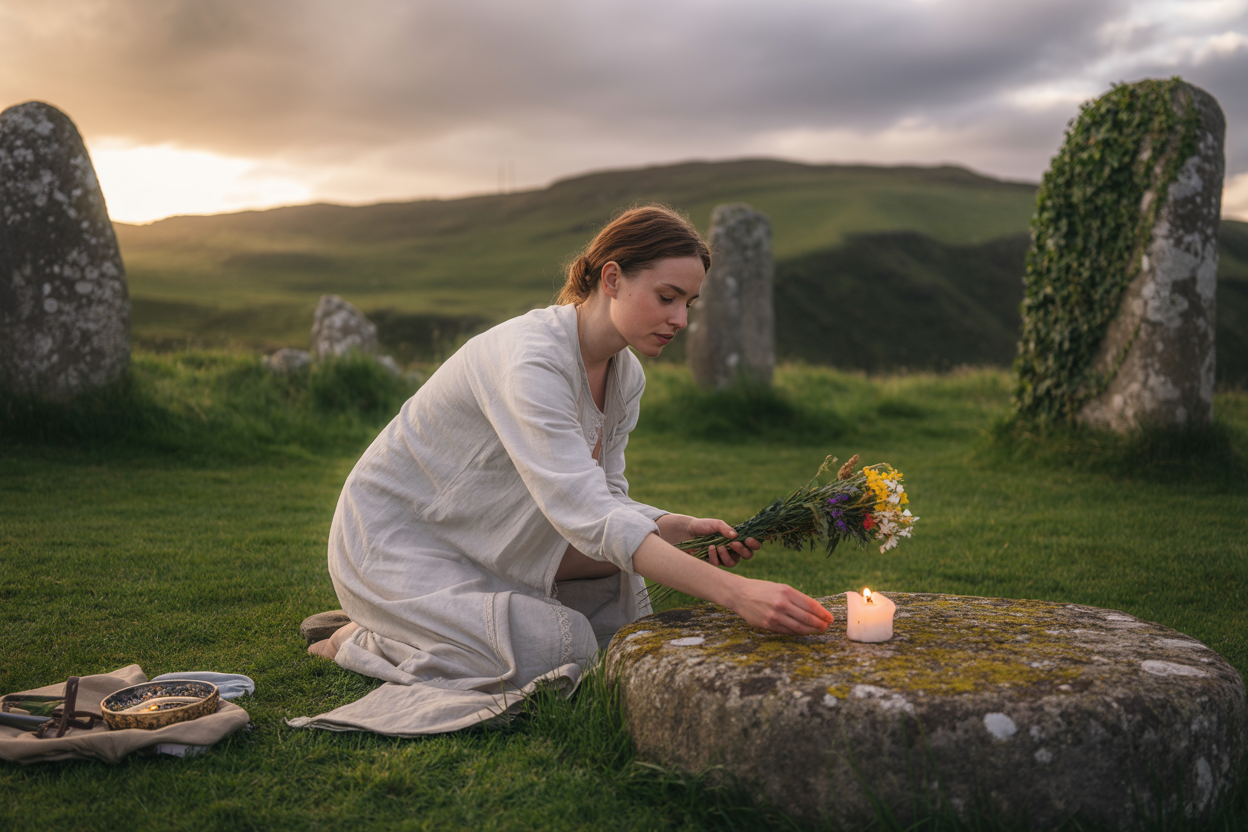
Simple ceremonies to honor the spring awakening
Your ceremony doesn’t need elaborate props or complex rituals to be powerful. Start by arriving at your chosen sacred site just before sunrise, when the energy feels most alive and receptive. Bring a small offering that connects you to the season—fresh flowers, a handful of seeds, or even a cup of spring water you’ve collected along your journey.
Begin with a moment of silence, letting yourself feel the pulse of awakening life around you. Place your offering at the base of a stone, beside a holy well, or within the sacred space of a circle. As you do this, speak your intentions aloud. You might say something like, “I offer this gift in gratitude for the returning light and ask for guidance as I embrace new beginnings in my own life.”
Walk clockwise around the sacred space three times, pausing at each cardinal direction to acknowledge the elements. Face east for new beginnings, south for growth and passion, west for release and letting go, and north for grounding and wisdom. At each stop, take three deep breaths and feel how the ancient stones or holy ground beneath your feet holds centuries of similar ceremonies.
End your ritual by sitting quietly in the center of the space, hands pressed to the earth. Feel the connection between your heartbeat and the awakening pulse of spring all around you.
Meditation techniques for connecting with ancient energies
Stone circles and sacred sites hold energetic imprints from thousands of years of human interaction. You can tap into these layers of spiritual history through focused meditation practices that open your awareness to the subtle energies present.
Try the “rooting and reaching” technique when you arrive at a prehistoric site. Sit with your back against one of the standing stones, feet flat on the ground. Close your eyes and imagine roots growing from the base of your spine, extending deep into the earth below. Feel yourself drawing up the ancient wisdom stored in the land. Then visualize golden branches extending from the crown of your head, reaching toward the sky and connecting with the cosmic energies the stones were designed to channel.
For holy wells and water sites, use sound meditation. Sit beside the flowing water and match your breathing to the rhythm of the spring. After several minutes, begin to hum softly, letting the vibration resonate through your chest. The combination of water sounds and your own voice creates a powerful harmonic that many pilgrims report helps them access deeper states of awareness.
At medieval churches and cathedrals, the “cathedral breathing” method. These spaces were designed with sacred geometry that naturally amplifies meditation. Find a seat facing the altar and breathe in slowly while gazing up at the vaulted ceiling, then breathe out while looking down at the floor. This up-and-down visual pattern helps align your energy with the building’s sacred architecture.
Journaling prompts for documenting your spiritual journey
Your journal becomes a sacred container for the insights and transformations you experience at each site. Pack a dedicated notebook for your pilgrimage—something that feels special enough to hold your spiritual discoveries.
At each location, start with these grounding questions: “What do I notice first about this place that I didn’t expect?” and “How does my body feel different here than it did an hour ago?” These simple observations often reveal subtle energetic shifts that your conscious mind might miss.
After your ceremonies and meditations, explore deeper with prompts like: “What old pattern or belief am I ready to release with this spring awakening?” and “What new aspect of myself wants to emerge in the coming season?” Write without editing or censoring—let your hand move across the page and see what wisdom flows through you.
Document the practical details too. Record the weather, the time of day, who else was present, and any unusual sounds or sights. These seemingly mundane details often become meaningful later when you review your journey. You might notice patterns—perhaps you always felt most connected during afternoon visits, or certain types of clouds appeared at pivotal moments.
Create a simple rating system for each site’s impact on you. Rate the energy level from 1-10, the clarity of any insights received, and how much the location called to you personally. This helps you identify which types of sacred spaces resonate most deeply with your spiritual path.
End each journal entry by writing three words that capture the essence of your experience at that site. These become powerful anchors you can return to long after your pilgrimage ends.
Your journey to these sacred UK sites during the spring equinox connects you to thousands of years of spiritual tradition and renewal. From ancient stone circles where druids once gathered to holy wells that have blessed travelers for centuries, each location offers you a chance to pause and reflect on the natural cycles of rebirth happening all around you. The medieval churches and cathedrals add another layer of meaning, showing how different faiths have celebrated spring’s return through the ages.
Planning your pilgrimage thoughtfully and creating personal rituals at each stop transforms a simple trip into something much deeper. You’ll find that witnessing the sunrise at Stonehenge or lighting a candle at a Celtic well becomes more than just checking off tourist attractions – these moments become part of your own story of growth and renewal. Take time to prepare your heart and mind before you go, and you’ll discover that these ancient places still have the power to speak to modern souls seeking connection and fresh starts.
For more soulful stories and mindful living insights, explore The Zen Blog — your space for travel reflections, wellness tips, and everyday calm.
✨ Subscribe to The Zen Journal for mindful travel tips, yoga flows, and wellness inspiration delivered weekly ✨