
Mantra Meditation Decoded: Choosing & Using Mantras That Actually Resonate With You
Mantra Meditation Decoded: Choosing & Using Mantras That Actually Resonate With You
You’ve probably heard about mantra meditation and wondered if those repetitive words and sounds could really make a difference in your life. Maybe you’ve tried it before but felt like you were just going through the motions, or you got overwhelmed by all the Sanskrit phrases floating around meditation apps and books.
This guide is for anyone who wants to cut through the confusion and find a mantra practice that actually works for them. You don’t need years of meditation experience or perfect pronunciation – you just need to know what you’re looking for and how to find it.
We’ll start by breaking down the real science behind why mantras work, so you understand what’s happening in your brain when you repeat these sacred sounds. Then we’ll walk through how to identify your personal meditation goals, because the mantra that helps you sleep better might be completely different from one that boosts your focus during stressful workdays.
You’ll also discover the key differences between various types of mantras and learn a simple testing process to find the ones that truly connect with you – not just the ones that sound impressive or look good on Instagram.
Understanding the Science Behind Mantra Meditation
How repetitive sounds affect your brainwaves and nervous system
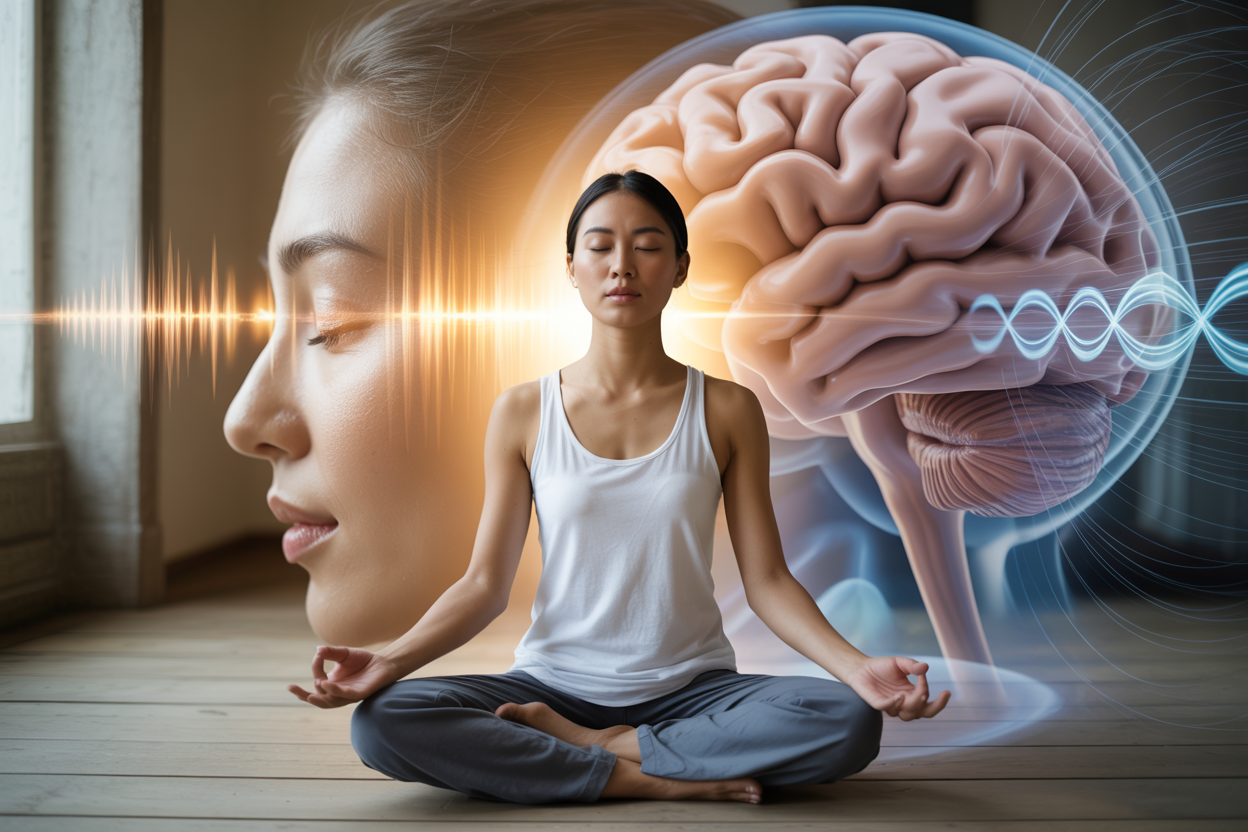
When you chant a mantra, your brain doesn’t just hear the sounds—it transforms them into measurable changes in your neural activity. Your brainwaves shift from the typical beta state of daily thinking (13-30 Hz) into alpha waves (8-12 Hz), which signal relaxation and focused attention. With consistent practice, you can even access theta waves (4-8 Hz), the same frequency your brain produces during deep meditation and REM sleep.
Your nervous system responds to these repetitive sounds by activating the parasympathetic branch—your body’s “rest and digest” mode. This triggers a cascade of physiological changes: your heart rate slows, blood pressure drops, and stress hormones like cortisol decrease. The vagus nerve, which connects your brain to major organs, becomes more active during mantra repetition, creating that sense of calm you feel spreading through your body.
Research shows that the rhythmic vibrations of mantras stimulate the release of endorphins and GABA, your brain’s natural relaxation chemicals. Your breathing naturally synchronizes with the mantra’s rhythm, creating a feedback loop that deepens the meditative state. This isn’t just wishful thinking—EEG studies consistently show these brainwave changes occurring within minutes of starting mantra practice.
The psychological mechanisms that make mantras effective for focus
Your mind has a natural tendency to wander, jumping from thought to thought like a restless monkey. Mantras work by giving your attention a single focal point, creating what psychologists call “sustained attention.” When you repeat a mantra, you’re training your brain’s executive attention network—the same neural circuits responsible for concentration and impulse control.
The repetitive nature of mantras engages your brain’s pattern recognition system, which finds comfort in predictable rhythms. This predictability helps quiet the default mode network, the brain region responsible for self-referential thinking and mental chatter. Instead of getting lost in random thoughts about your day or future worries, your mind learns to anchor itself in the present moment through the mantra’s consistent rhythm.
Mantras also create what researchers call “cognitive absorption”—a state where your awareness becomes so focused on one thing that everything else fades into the background. This absorption isn’t forced concentration; it’s a natural settling that happens when your mind finds something genuinely engaging to focus on. The more you practice, the easier it becomes to slip into this absorbed state, building your overall capacity for sustained attention in daily life.
Why do certain syllables create deeper meditative states than others
Not all sounds are created equal when it comes to meditation. Certain syllables contain specific vibrational frequencies that resonate with different parts of your body and brain. The classic “OM” sound, for example, contains three distinct vibrations: “A” resonates in your chest, “U” in your throat, and “M” in your head, creating a full-body experience that helps integrate your physical and mental awareness.
Sanskrit syllables like “AH,” “HUM,” and “RAM” were specifically chosen by ancient practitioners based on their acoustic properties. These sounds create resonance patterns that stimulate the vagus nerve more effectively than random words or phrases. When you pronounce these syllables correctly, the vibrations massage internal organs and activate pressure points in your mouth and throat that connect to your nervous system.
The length and shape of different sounds also matter for your meditation experience. Longer vowel sounds like “AAAA” or “OOOO” naturally slow your breathing and heart rate, while shorter consonants like “M” or “NG” create internal vibrations that help focus your attention inward. Syllables with nasal sounds engage your sinuses and create vibrations in your skull, which many practitioners find deeply calming.
Your personal response to different sounds depends partly on your vocal anatomy, breathing patterns, and even cultural background. What creates a profound meditative state for one person might feel awkward or distracting for another, which is why experimenting with various syllables and finding your personal resonance is so important for developing an effective practice.
Identifying Your Personal Meditation Goals and Needs

Assessing Whether You Seek Stress Relief, Spiritual Growth, or Mental Clarity
Your meditation goals shape everything about your mantra practice, so getting clear on what you’re after makes all the difference. If you’re dealing with daily stress and anxiety, you’ll want mantras that calm your nervous system and ground you in the present moment. Think soothing sounds like “Om Gam Ganapataye Namaha” or simple phrases like “I am at peace.” These work because they engage your parasympathetic nervous system and create a sense of safety.
When spiritual growth is your focus, you’re looking for mantras that connect you to something larger than yourself. Traditional Sanskrit mantras like “Om Namah Shivaya” or “Gate Gate Paragate Parasamgate Bodhi Svaha” carry centuries of spiritual energy and can deepen your connection to universal consciousness. You might also gravitate toward mantras from your own spiritual tradition or ones that invoke divine qualities you want to cultivate.
For mental clarity and focus, choose mantras that sharpen your concentration without overwhelming your mind. Single-syllable sounds like “So Hum” (I am) or “Om” work beautifully here. You can also try counting mantras or using mantras with clear, precise pronunciation that demands attention.
Your goals aren’t mutually exclusive either. You might start seeking stress relief and discover spiritual dimensions opening up, or begin with spiritual intentions and find incredible mental clarity emerging naturally.
Determining Your Current Meditation Experience Level
Your experience level dramatically affects which mantras will serve you best. As a beginner, you need mantras that feel accessible and don’t create more mental chatter. Start with simple, repetitive sounds or phrases in your native language. “Let go” or “Peace” can be incredibly powerful without requiring you to learn new pronunciations or meanings.
If you’re completely new to meditation, avoid complex Sanskrit mantras initially. Your mind is already working hard to establish the habit of sitting still and focusing. Adding unfamiliar sounds or meanings can create frustration instead of peace. Stick with mantras that feel natural and easy to remember.
Intermediate practitioners often benefit from exploring traditional mantras with deeper meanings. You’ve developed enough concentration to handle more complex sounds and can appreciate the layers of meaning in classical mantras. This is when mantras like “Lokah Samastah Sukhino Bhavantu” (may all beings be happy and free) become accessible and meaningful.
Advanced practitioners may work with seed mantras (bija mantras) such as “Lam,” “Vam,” or “Ram,” which correspond to different energy centers. You might also explore mantras in different languages or create personalized mantras that reflect your deepest intentions and understanding.
Remember, there’s no rush to advance to “harder” mantras. Some of the most experienced meditators return to simple mantras because they’ve discovered profound depths in apparent simplicity.
Recognizing Your Natural Tendencies Toward Sound, Silence, or Movement
Your natural temperament plays a huge role in mantra selection. Some people are naturally drawn to rich, vibrant sounds that fill their awareness completely. If you love music, sing, or naturally hum throughout the day, you’ll likely thrive with melodic mantras or those with strong vibrational qualities, such as “Om Mani Padme Hum.”
Others prefer gentler approaches to sound. You may find loud or complex sounds overwhelming. In this case, whispered mantras or silent mental repetition are more effective. You can start with audible repetition and gradually let the mantra become quieter until it’s just a gentle mental rhythm.
If you’re naturally fidgety or prefer movement-based activities, consider walking meditation with mantras or using mala beads (prayer beads). The physical action of moving the beads gives your body something to do while your mind focuses on the mantra. This combination often works brilliantly for people who struggle with sitting meditation.
Notice how you naturally process information, too. Visual learners might benefit from mantras with rich imagery or symbolic meaning. Auditory learners often prefer mantras with beautiful sounds or rhythmic qualities. Kinesthetic learners often value the physical vibration of chanting or the tactile experience of using beads.
Pay attention to your energy levels throughout the day. Morning people might prefer energizing mantras, while evening types might gravitate toward calming, introspective ones.
Understanding How Your Lifestyle Affects Mantra Selection
Your daily routine and living situation significantly impact which mantras will actually work for you. If you live in a small apartment with thin walls or have roommates, chanting loudly isn’t practical. Silent mantras or very quiet whispered ones become your best friends. You can still get all the benefits without disturbing others or feeling self-conscious.
Your schedule matters too. If you’re constantly rushing between commitments, you need mantras that can travel with you. Simple phrases that don’t require specific postures or props work best. “This too shall pass” or “I am enough” can be repeated during commutes, while walking between meetings, or during brief moments of waiting.
Parents with young children often find success using mantras they can practice during other activities. Washing dishes while silently repeating “Om” or folding laundry with a gentle mantra can transform mundane tasks into mindful moments. The key is choosing mantras that don’t require your full attention until you can carve out dedicated practice time.
Consider your work environment, too. High-stress jobs may call for calming, grounding mantras, while creative work may benefit from mantras that inspire and foster flow. If you work in a noisy environment, you might prefer mantras with strong rhythmic qualities that can cut through external distractions.
Your cultural background and family situation also play roles. If Sanskrit mantras feel foreign or uncomfortable due to religious concerns, stick with mantras from your own tradition or secular affirmations. Your practice needs to feel authentic and sustainable in your real life, not an idealized version of how you think meditation should look.
Exploring Different Types of Mantras and Their Unique Benefits

Traditional Sanskrit Mantras and Their Ancient Wisdom
Sanskrit mantras carry thousands of years of spiritual tradition and vibrational power. When you choose a Sanskrit mantra like “Om Namah Shivaya” or “So Hum,” you’re tapping into sounds that have been refined through generations of practitioners. These sacred syllables create specific energetic frequencies that can shift your consciousness in profound ways.
“Om Mani Padme Hum” brings compassion and wisdom, while “Gayatri Mantra” connects you to universal light and clarity. Sanskrit mantras work on multiple levels – the meaning, the sound vibration, and the ancient intention embedded within them. You don’t need to understand Sanskrit perfectly to benefit; your sincere repetition activates their transformative power.
Modern English Affirmations for Contemporary Practitioners
English affirmations speak directly to your logical mind while still creating meditative focus. Phrases like “I am peace” or “Love flows through me” give you immediate understanding of what you’re cultivating. Your brain processes meaning, while repetition creates a meditative state.
These contemporary mantras address modern concerns – stress relief, self-confidence, or emotional healing. You can craft affirmations that target your specific challenges: “I release what no longer serves me” for letting go, or “I trust my inner wisdom” for decision-making clarity. The familiarity of your native language makes these mantras accessible and personally meaningful.
Single-Syllable Sounds Versus Longer Phrases
Single-syllable mantras like “Om,” “Ah,” or “So” create deep, sustained vibrations that resonate throughout your body. These simple sounds are easier to maintain during longer meditation sessions and naturally synchronize with your breath. Your mind has less to process, enabling deeper concentration.
Longer phrases offer more complex meanings and intentions. A mantra like “I am grateful for this present moment” gives your mind more content to engage with while still providing meditative focus. Choose single syllables when you want pure vibrational experience, and longer phrases when you need more mental engagement or specific intention-setting.
Silent Mental Repetition Compared to Vocalized Chanting
Silent repetition keeps your practice internal and private, perfect for busy environments or when you need subtle meditation. Your mental voice becomes the vehicle for the mantra, creating inner stillness without external sound. This method develops strong concentration and works well for beginners who feel self-conscious about chanting.
Vocalized chanting adds the power of sound vibration, breath control, and physical resonance. When you chant aloud, your vocal cords, chest, and head create sympathetic vibrations that enhance the mantra’s effects. Group chanting amplifies this energy further. Experiment with both approaches – whispered chanting offers a middle ground between silent and full voice.
Personalized Mantras Based on Your Individual Vibration
Your personal mantra emerges from your unique spiritual fingerprint. Pay attention to words, sounds, or phrases that consistently bring you peace or energy. Sometimes a simple word like “flow,” “breathe,” or “trust” becomes your perfect mantra because it addresses your core needs.
Create personalized mantras by combining your name with positive qualities: “Sarah embodies peace” or “Michael radiates love.” Notice what sounds feel good in your mouth and resonate in your body. Your intuition guides you toward mantras that match your energetic signature. Trust what feels authentic rather than choosing something that sounds impressive but doesn’t connect with your inner truth.
Testing and Selecting Mantras That Truly Connect With You
Simple techniques for trying out different mantras safely
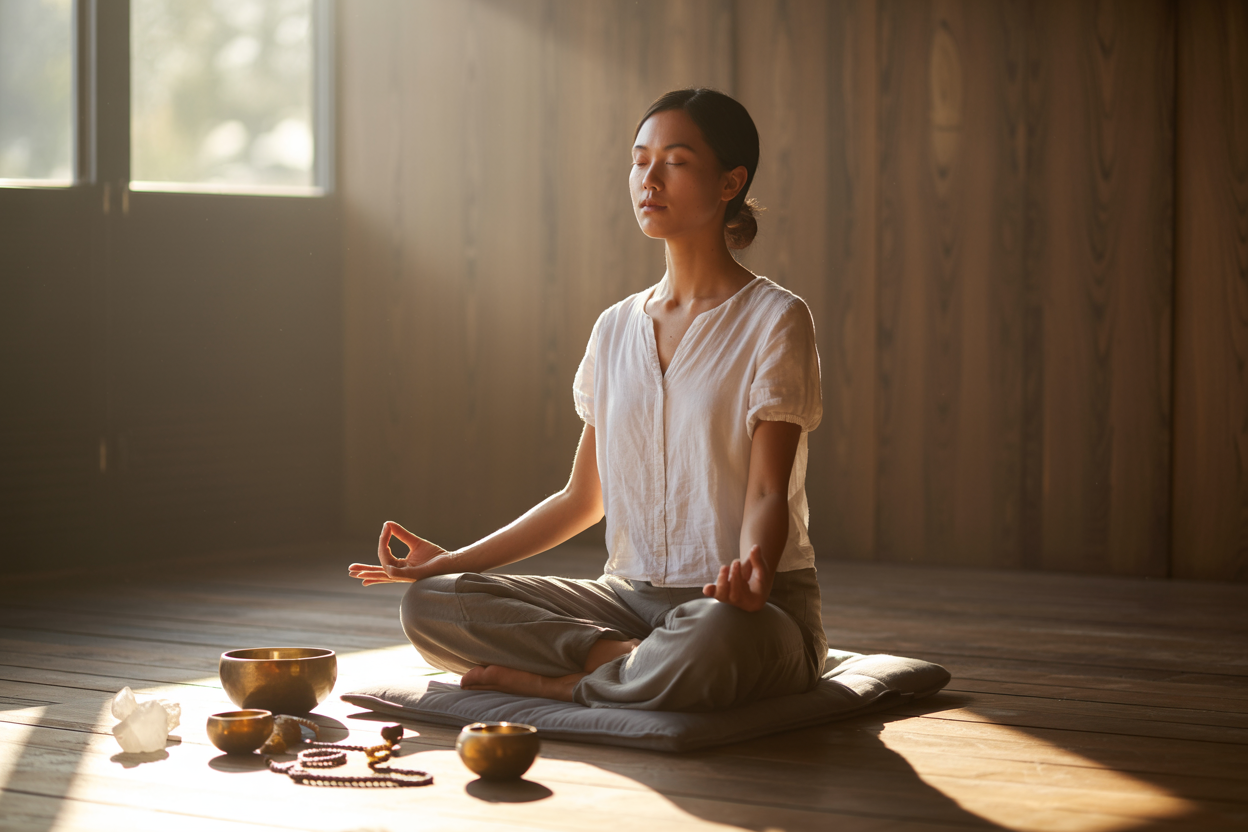
Start your mantra exploration with short 5-10 minute sessions. This gives you enough time to experience how each mantra feels without overwhelming yourself. Choose a quiet moment when you won’t be interrupted, and sit comfortably with your eyes closed.
Begin by silently repeating your chosen mantra at a natural pace. Don’t force the rhythm – let it flow with your breathing. Try the same mantra for at least three sessions before moving on. This allows you to move past initial unfamiliarity and experience its stronger effects.
Keep a simple meditation journal where you jot down how each mantra made you feel. Note your energy levels, mood changes, and any physical sensations you experienced during and after practice. This serves as a valuable reference as you compare options.
Test traditional Sanskrit mantras, such as “Om Mani Padme Hum,” alongside personal affirmations, such as “I am at peace.” You might also experiment with single-syllable sounds like “Om” or “Ah.” Each category offers different energetic qualities, so sampling from various types helps you discover your preferences.
Always approach new mantras with curiosity rather than expectation. Some will feel immediately comfortable, while others might seem awkward at first. This is completely normal – your mind needs time to adjust to new vibrational patterns.
Recognizing the physical and emotional signs of resonance
When you’ve found a mantra that truly connects with you, your body will tell you. You’ll notice a natural settling sensation, as if tension is melting away from your shoulders, jaw, and chest. Your breathing becomes deeper and more rhythmic without conscious effort.
Monitor subtle energy shifts during practice. A resonant mantra often creates a gentle warmth or tingling sensation, particularly around your heart center or the top of your head. Some people describe feeling slightly lighter or more expansive, as if their physical boundaries have softened.
Emotionally, the right mantra brings a sense of coming home. You might experience unexpected waves of calm, joy, or even emotional release through tears. Don’t be alarmed if buried feelings surface – this often signals that the mantra is working at a deeper level.
Notice how you feel in the hours following your practice. A well-matched mantra typically leaves you feeling more centered and resilient to daily stressors. You might find yourself naturally returning to the mantra throughout your day, especially during challenging moments.
| Physical Signs | Emotional Signs |
|---|---|
| Relaxed muscles and joints | Sense of inner calm |
| Deeper, slower breathing | Increased emotional stability |
| Warm, tingling sensations | Feeling of connection or unity |
| Reduced physical tension | Natural joy or contentment |
Avoiding mantras that feel forced or uncomfortable
Trust your instincts when a mantra doesn’t feel right. Forcing yourself to use a mantra that creates agitation or discomfort can actually increase stress rather than reduce it. If you feel more anxious, restless, or emotionally unsettled during practice, consider it a clear signal to try something else.
Some mantras might feel too culturally foreign or spiritually misaligned with your beliefs. There’s no shame in acknowledging this. Your meditation practice should feel authentic to who you are, not like you’re playing a role that doesn’t fit.
Watch for physical signs of resistance, too. If your body tenses up, your breathing becomes shallow, or you experience headaches during practice, your system is telling you this particular mantra isn’t a good match. These symptoms suggest energetic incompatibility rather than typical beginner challenges.
Avoid mantras recommended by others if they don’t resonate with your personal experience. What works beautifully for your friend or teacher might not suit your unique energy and personality. Your meditation practice is deeply personal – honor your own responses over external recommendations.
Remember that timing matters too. A mantra that feels wrong today might resonate perfectly six months from now as you grow and change. Keep an open mind, but always prioritize your current comfort and well-being over any perceived obligation to make a particular practice work.
Mastering Effective Mantra Meditation Techniques
Proper breathing patterns to enhance mantra power
Your breath is the secret ingredient that transforms your mantra from simple words into a powerful meditation tool. When you synchronize your breathing with your chosen mantra, you create a natural rhythm that deepens your practice and amplifies the vibrations throughout your body.
Start by taking three deep, cleansing breaths before you begin repeating your mantra. This signals to your nervous system that you’re entering a meditative state. Once you’re settled, match your mantra to your natural breath cycle. If you’re using a longer mantra like “Om Mani Padme Hum,” speak the first half on your inhale and complete it on your exhale. For shorter mantras like “So Hum,” inhale on “So” and exhale on “Hum.”
Don’t force your breathing into an unnatural pattern. Your body knows what it needs, so let your breath guide the pace of your mantra rather than the other way around. Some practitioners find that mental repetition works better with their breathing rhythm than vocal repetition, especially during longer sessions.
Pay attention to the pause between breaths – this space often holds the deepest stillness and is where many people experience profound moments of clarity during their practice.
Optimal sitting positions and environmental setup
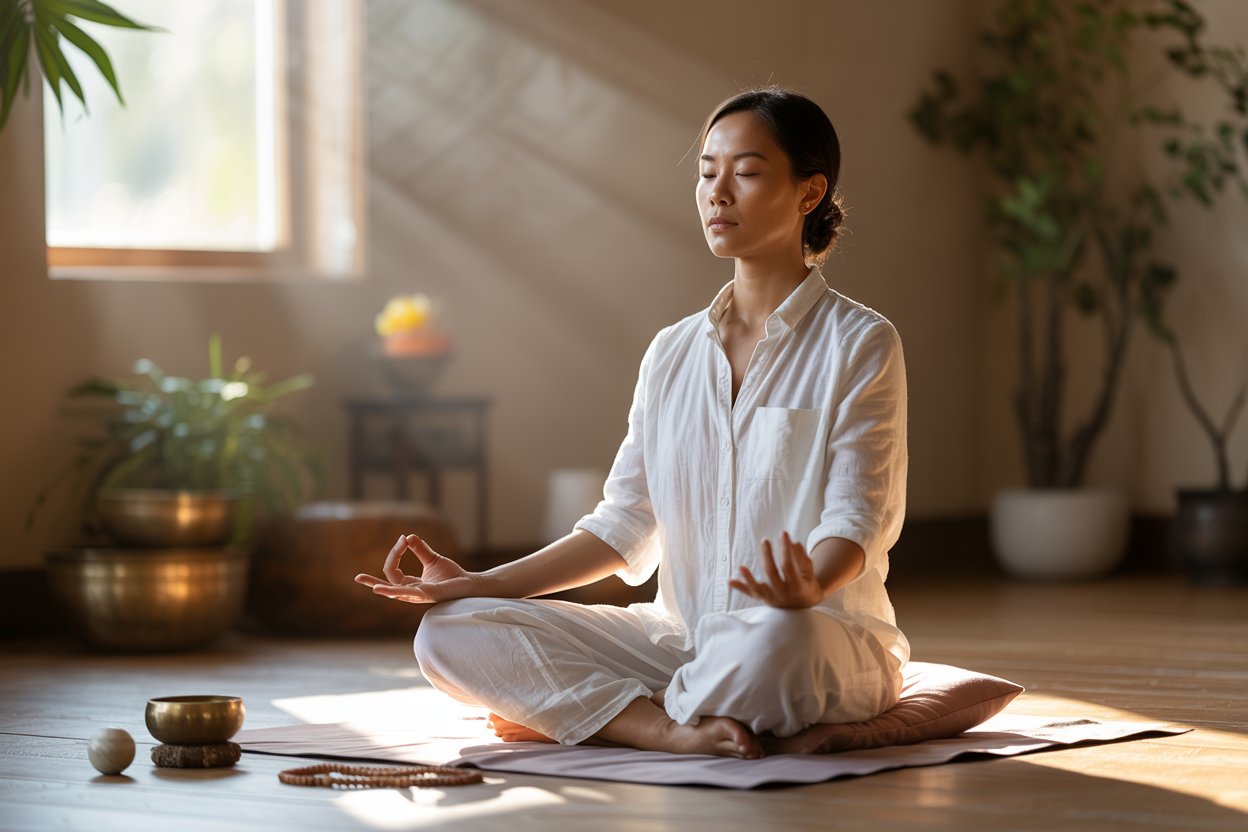
Your physical comfort directly impacts your ability to maintain focus during mantra meditation. You don’t need to contort yourself into complicated poses to meditate effectively. The key is finding a position you can maintain comfortably for your entire session without fidgeting or pain.
Best Sitting Options:
- Chair sitting: Keep both feet flat on the floor, spine straight but not rigid, hands resting on your thighs
- Cushion on floor: Cross-legged position with a meditation cushion or folded blanket under your hips for elevation
- Bench or meditation stool: Kneeling position with support takes pressure off your legs and back
- Against a wall: If you need back support, sit with your spine against a wall
Your environment plays a crucial role in maintaining your practice. Choose a space where you won’t be interrupted and can return to consistently. This doesn’t have to be elaborate – a corner of your bedroom works just as well as a dedicated meditation room.
Environmental checklist:
- Temperature comfortable enough that you won’t be distracted
- Minimal noise or consistent background sounds (like a fan)
- Soft lighting or natural light
- Phone on silent and out of reach
- Any meaningful objects that help you feel grounded (crystals, photos, candles)
Timing your sessions for maximum impact
The timing of your mantra meditation can make the difference between a scattered session and a deeply transformative experience. Your brain naturally cycles through different states of alertness throughout the day, and tapping into the right windows amplifies your results.
Peak meditation times:
- Early morning (5-7 AM): Your mind is naturally quiet, fewer distractions exist, and you set a positive tone for your day
- Transition periods: Right after waking up or before sleep, when your brain is in alpha or theta states
- Late evening (8-10 PM): Helps process the day’s experiences and prepares you for restful sleep
Start with sessions that fit your current schedule. Five to ten minutes of consistent daily practice beats sporadic hour-long sessions. You can gradually increase duration as your concentration improves and the habit becomes automatic.
Track what times work best for your schedule and energy levels. Some people are natural early birds who thrive with dawn meditation, while others find their sweet spot in the evening after work stress has settled.
Duration guidelines:
- Beginners: 5-10 minutes daily
- Intermediate: 15-20 minutes daily
- Advanced: 30+ minutes daily
Combining mantras with visualization for deeper results
When you blend mantra repetition with visualization, you engage multiple senses and create a more immersive meditation experience. This combination activates different areas of your brain simultaneously, often leading to deeper states of concentration and insight.
Start simple with your visualizations. As you repeat your mantra, imagine golden light flowing through your body with each repetition, or picture yourself in a peaceful natural setting like a forest or by the ocean. The key is choosing imagery that feels authentic and calming to you rather than forcing complex visualizations that become distracting.
Effective visualization techniques:
- Color meditation: Visualize your mantra as different colored light entering and filling your body
- Nature scenes: Place yourself in natural environments while repeating your mantra
- Sacred geometry: Imagine symbols, lotus flowers, or mandala patterns expanding and contracting with your breath
- Chakra work: Focus your mantra on specific energy centers while visualizing their associated colors and qualities
The visualization should support your mantra, not compete with it for attention. If you find yourself getting lost in complex imagery, return to simpler visualizations or focus solely on the mantra until you build stronger concentration skills.
Some days your visualizations will be vivid and clear, other days they’ll be fuzzy or fleeting. Both experiences are completely normal and valuable parts of your practice. The goal isn’t to create perfect mental movies but to use imagery as another anchor for your wandering mind.
Troubleshooting Common Mantra Meditation Challenges

Dealing with mental distractions and wandering thoughts
Your mind will wander during mantra meditation—this isn’t failure, it’s completely normal. When you notice your thoughts drifting to your grocery list, work deadlines, or random memories, simply acknowledge them without judgment and gently return your attention to your mantra. Think of these moments as opportunities to strengthen your awareness muscle rather than mistakes to fix.
Try the “noting” technique when distractions arise. Mentally label wandering thoughts as “thinking” or “planning” before redirecting your focus back to your mantra. This creates a gentle buffer between you and the distraction without creating resistance or frustration.
If your mind feels particularly restless, you can experiment with different anchoring methods:
- Counting repetitions: Count each mantra repetition up to 10, then start over
- Breath coordination: Sync your mantra with your natural breathing rhythm
- Body awareness: Feel the vibrations of your mantra in your chest or throat
- Visual focus: Keep your eyes slightly open with a soft gaze on a single point
Some days your mind will be busier than others, and that’s perfectly fine. On scattered days, shorter sessions with more frequent returns to your mantra can be more effective than forcing yourself through longer periods of struggle.
Overcoming self-consciousness about chanting aloud
Many people feel awkward or embarrassed when first chanting mantras out loud, especially if you live with others or have thin walls. This self-consciousness often stems from unfamiliarity with your voice in this context or from concern about what others might think.
Start by practicing silently or in a whisper until you feel comfortable with the mantra. Once you feel confident with the words and rhythm, gradually increase your volume in private. You might begin by humming the mantra’s melody before adding the actual words.
Create a supportive environment for vocal practice:
- Choose optimal timing: Find quiet moments when you’re less likely to be interrupted
- Use background sounds: Soft music or nature sounds can mask your voice if you’re worried about neighbors
- Practice in your car: Your vehicle provides a private, soundproof space perfect for vocal mantra work
- Start with shorter sessions: Five minutes of comfortable chanting beats thirty minutes of self-conscious mumbling
Remember that your voice doesn’t need to sound perfect or melodious. Mantras work through intention and repetition, not vocal quality. Even experienced practitioners sometimes crack or stumble over words—it’s part of the human experience, not something that diminishes the practice’s effectiveness.
If you live in a situation where vocal chanting truly isn’t practical, mental repetition and whispered mantras are completely valid alternatives that offer significant benefits.
Adapting your practice when mantras stop feeling effective
Your relationship with mantras will naturally evolve over time. A mantra that once felt powerful and resonating might suddenly feel flat or mechanical. This shift doesn’t mean you’re doing something wrong—it often indicates that you’ve grown beyond that particular practice or need a different approach.
When your current mantra loses its spark, take a step back and reassess your needs. Has your life situation changed? Are you facing new challenges or entering a different phase of personal growth? Your mantra should align with where you are now, not where you were when you first chose it.
Signs it might be time for a change:
- Mechanical repetition: You’re going through the motions without feeling connected
- Resistance: You find yourself avoiding meditation or cutting sessions short
- Lack of resonance: The mantra no longer evokes any emotional or physical response
- Changed goals: Your meditation objectives have shifted significantly
Before completely abandoning a mantra, try refreshing your approach:
| Refresh Strategy | Description |
|---|---|
| Change your posture | Sit, stand, walk, or lie down differently |
| Modify the rhythm | Speed up, slow down, or add pauses |
| Adjust the volume | Whisper, speak normally, or chant loudly |
| Try different times | Practice morning instead of evening, or vice versa |
| Shorten sessions | Sometimes less is more when reigniting connection |
If these adjustments don’t restore your connection, give yourself permission to explore new mantras. You might return to an old favorite that feels fresh again, or discover something completely different that speaks to your current state. This flexibility keeps your practice alive and meaningful rather than forcing you to repeat yourself.
Trust your intuition about when change is needed. Your meditation practice should feel nourishing and supportive, not like another item to check off your daily to-do list.
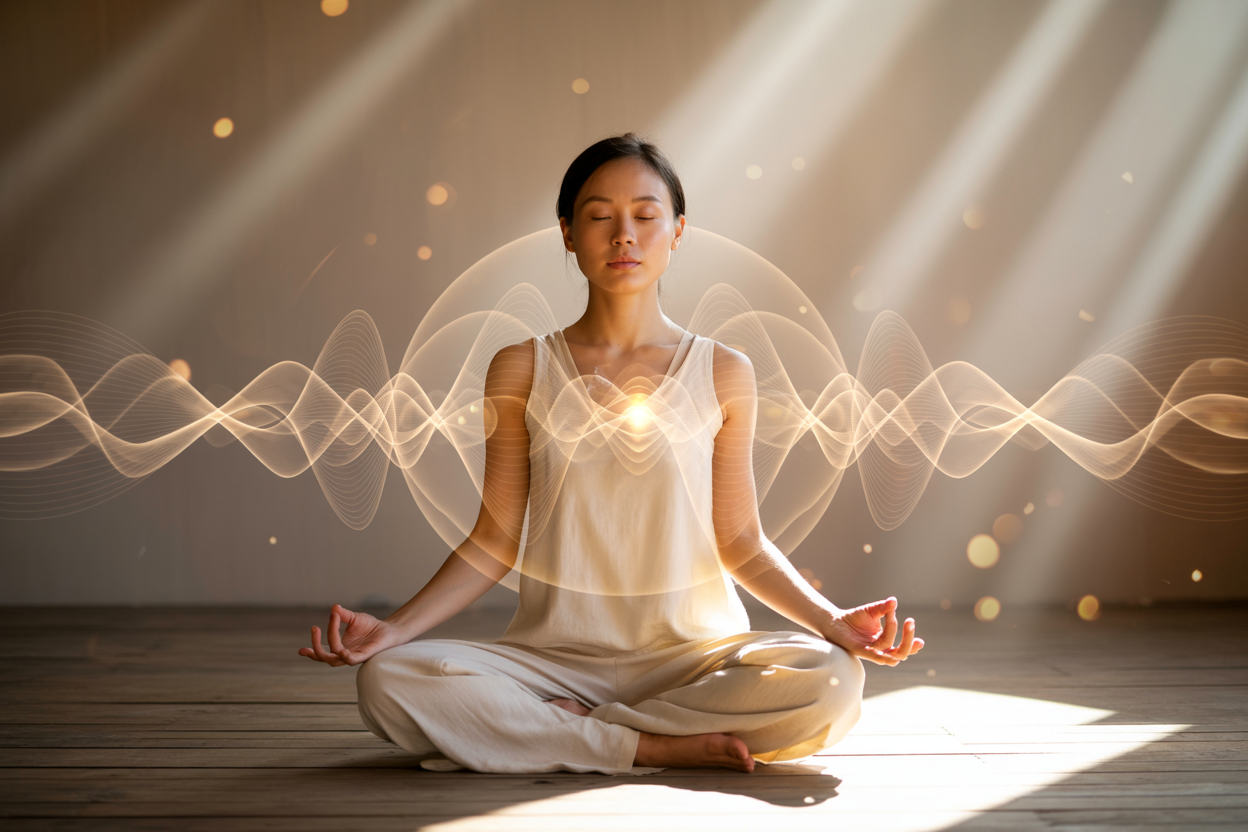
Finding the right mantra isn’t just about picking something that sounds nice – it’s about discovering what actually works for your unique mind and meditation goals. You’ve learned how the science supports mantra practice, identified your personal needs, explored different types of mantras, and mastered techniques to make your practice effective. The real magic happens when you take time to test different mantras and pay attention to how they make you feel, rather than forcing yourself to use something that doesn’t click.
Your mantra meditation journey is personal, and what resonates with you might change as you grow and evolve. Don’t get stuck thinking you have to use the same mantra forever or that there’s only one “right” way to practice. Start with the techniques you’ve learned here, be patient with yourself as you work through common challenges, and remember that consistency matters more than perfection. Give yourself permission to experiment, adjust, and find the mantras that truly support your meditation practice and overall well-being.
✨ Looking for more ways to bring calm into your routine? Visit my YOGA BLOG for accessible practices and soulful guidance designed to support mindful living.
✨ Join The Zen Journal community — get fresh yoga and wellness insights straight to your inbox ✨