
Man’s Search for Meaning – Book Review
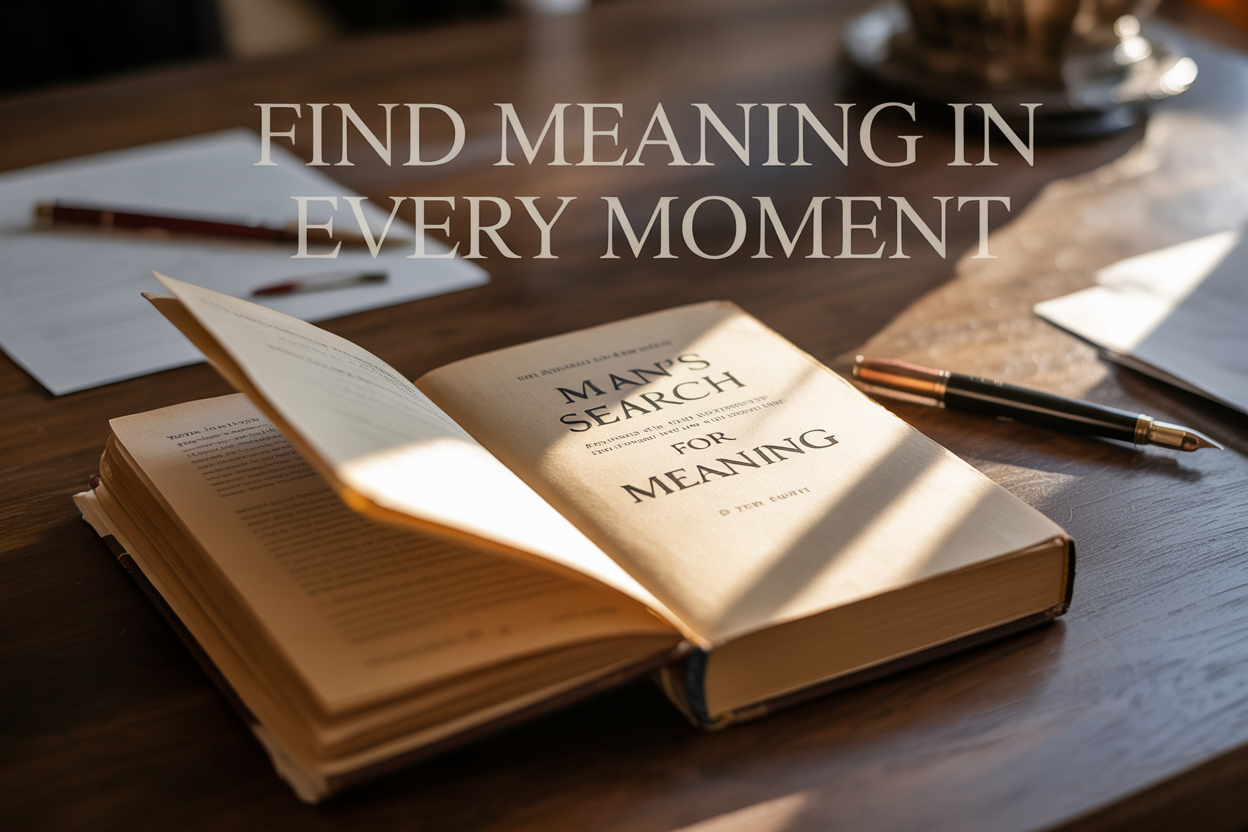
Viktor Frankl’s Life-Changing Philosophy for Modern Life
Welcome to the Man’s Search for Meaning book review — Viktor Frankl’s life‑changing philosophy on resilience, suffering, and purpose. This timeless classic blends psychology and lived experience, offering readers a roadmap to finding meaning even in the darkest times. In this review, I’ll explore the key lessons, mindful reflections, and why Frankl’s work continues to inspire generations.
If you’re facing personal challenges, feeling lost, or searching for a deeper purpose, Frankl’s philosophy offers guidance that remains remarkably relevant today. Unlike many self-help ideas that focus on happiness or positive thinking, Frankl’s message goes deeper: we cannot always control what happens to us, but we can always choose our response—and in that choice lies our freedom and meaning.
This review explores:
- How Frankl’s insights can help us navigate modern stress, uncertainty, and emotional struggle
- How the Holocaust shaped Frankl’s understanding of human psychology
- Why meaning—not happiness—is the key to fulfillment
- What logotherapy is and how it transforms the way we approach life
🎥 Prefer to watch instead of read?
Here’s a SHORT VIDEO reflection on Man’s Search for Meaning by Viktor Frankl.
📖This post contains affiliate links. If you purchase through them, I may earn a small commission at no extra cost to you. I only recommend books and resources I genuinely believe will add value to your mindful journey.
Frankl’s Holocaust Experience and Its Lasting Lessons

A Psychotherapist Inside Auschwitz
Before World War II, Viktor Frankl was a respected psychologist in Vienna. When he and his family were deported to Auschwitz and later Dachau, he entered the camps not only as a prisoner but with the mind of a therapist. This combination—extreme suffering plus professional insight—became the foundation of a groundbreaking understanding of human resilience.
Within days of liberation, Frankl wrote the entire manuscript for Man’s Search for Meaning. The observations he had been silently gathering through imprisonment, starvation, illness, and loss were transformed into a philosophy that continues to influence psychology, leadership, and personal development worldwide.
What He Observed in the Camps
Inside the camps, Frankl noticed something extraordinary: even when everyone faced the same brutal conditions, people responded differently. Some succumbed to despair. Others became cruel to survive. Yet some—remarkably—chose kindness and compassion despite their suffering.
Frankl wrote famously of prisoners who:
“walked through the huts comforting others, giving away their last piece of bread.”
This revealed his most important discovery:
The Last Human Freedom
Frankl observed that the guards could take almost everything—home, work, identity, freedom, even family—but one thing remained untouched:
The freedom to choose one’s attitude in any situation.
Even in the worst imaginable circumstances, people could choose to respond with dignity or despair. This insight became the core of his later therapeutic approach.
Why Purpose Matters for Survival
Frankl noticed a strong pattern:
Prisoners who had something meaningful to live for survived longer.
Sometimes it was a loved one waiting for them, sometimes an unfinished creative project, sometimes faith or a personal mission. When someone lost all hope in the future, Frankl wrote, they quickly lost the will to survive.
Purpose, he concluded, is not a luxury—it is a lifeline.
A Nuanced View of Human Nature
Frankl’s training also helped him observe the complexity of human behaviour. He saw cruelty among prisoners and moments of compassion among guards. These details reminded him that no group is purely good or evil. Human beings always retain the capacity to choose who they become.
Frankl’s Core Philosophy: Meaning in Any Situation

At the heart of Man’s Search for Meaning is a simple yet profound idea:
We cannot always control what happens to us, but we can always control our response.
Frankl believed that all humans operate in three dimensions:
- Physical
- Psychological
- Spiritual (or noological) — the realm of meaning
Animals respond mainly through physical and psychological conditioning, but humans have an additional capacity: we can transcend our circumstances by choosing how we interpret them.
The Power of Attitude
Frankl famously described the crucial moment of choice:
“Between stimulus and response, there is a space. In that space is our power to choose our response.”
This small internal space is where freedom lives—whether the stressor is grief, failure, financial pressure, uncertainty, or trauma.
Why You Should Not Pursue Meaning Directly
One of Frankl’s most counterintuitive insights is that meaning cannot be found by force:
- You cannot will yourself to become meaningful.
- You cannot demand happiness.
- You cannot order yourself to “find purpose.”
Instead, meaning emerges naturally when you dedicate yourself to something more important than personal happiness.
Frankl identified three pathways to meaning:
- Creative values – what you give to the world (work, contribution, creativity)
- Experiential values – what you take from the world (love, beauty, nature, art)
- Attitudinal values – how you face suffering that cannot be avoided
The third—how we respond to suffering—became the most transformative.
Happiness vs Purpose
Frankl argued that:
- Happiness is a byproduct, not a target.
- Purpose is the foundation for authentic well-being.
Happiness is emotional and temporary. Purpose is steady and deeply fulfilling.
You can’t buy purpose. You discover it through the responsibilities, relationships, and challenges life gives you.
Freedom of Response Even in Hopeless Situations

Frankl’s philosophy is empowering because it gives even the most overwhelmed person a sense of control.
What Can Never Be Taken From You
You might lose:
- your job
- your health
- your relationships
- your plans
- your sense of stability
But you never lose the freedom to decide how you interpret those events.
How This Helps in Real Life
You can’t control:
- whether a relationship ends
- whether a company restructures
- whether illness strikes
- whether the economy shifts
But you can control:
your internal narrative, your emotional response, and the meaning you assign to events.
Frankl makes clear:
Strength doesn’t always come from the situation—it comes from the stance you take toward it.
Why the American Pursuit of Happiness Fails

Frankl criticized the American tendency to chase happiness directly. He compared forced happiness to forced laughter—unnatural and hollow.
Why “Be Happy” Doesn’t Work
Modern culture constantly commands us:
- “Think positive!”
- “Choose happiness!”
- “Open happiness!”
- “Live your best life!”
Frankl argued that these commands create emotional pressure. When people expect happiness on demand, they experience the opposite: emptiness, boredom, and anxiety.
He called this state the “existential vacuum.”
Meaning Before Happiness
Frankl believed:
- People don’t need instructions to “be happy.”
- They need reasons to feel joy.
- Meaning provides those reasons.
Happiness emerges naturally when you forget yourself in service, love, or creation.
Why Americans Feel Empty Despite Material Success
According to Frankl, people often fill the vacuum with:
- addictions
- materialism
- power obsessions
- entertainment
- endless self-help
But without purpose, these pleasures provide only temporary relief.
Meaning, not pleasure, sustains us long-term.
✨If you’d like to read Man’s Search for Meaning yourself, you can find it here on Amazon
Logotherapy – Frankl’s Meaning-Centred Therapy

A Radical Alternative to Freud and Adler
Freud believed humans are driven by pleasure.
Adler believed we are driven by power.
Frankl disagreed.
He believed humans are driven first and foremost by the will to meaning.
Three Principles of Logotherapy
- Freedom of Will
Humans can choose their attitude regardless of circumstances. - Will to Meaning
The primary human motivation is to find purpose. - Meaning in Life
Every moment offers potential meaning.
How Logotherapy Works
Logotherapy focuses on the future and on responsibility, rather than the past.
Its core techniques include:
1. Dereflection
Shifting attention away from yourself and toward something meaningful.
(Useful for anxiety and obsession.)
2. Paradoxical Intention
Doing the opposite of your fear to reduce its power.
(Effective for phobias, insomnia, and chronic worry.)
3. Socratic Dialogue
Exploring a client’s own values and beliefs to uncover meaning.
(Rather than offering advice, the therapist helps clients discover their own answers.)
Where Logotherapy Has Been Effective
Logotherapy has been successfully applied in:
- trauma recovery (including PTSD in veterans)
- chronic or terminal illness (especially cancer patients)
- addiction treatment
- depression and anxiety
- grief and loss
- existential crises
- couples and family therapy
- rehabilitation programs
Studies show it increases:
- sense of meaning in life
- resilience
- emotional wellbeing
- motivation
- hope
Frankl believed therapy should not eliminate tension, but create meaningful tension—the pull between who we are and who we could become.
How Frankl’s Lessons Apply to Modern Life

Frankl’s ideas are timeless, but especially relevant today.
In a world full of stress, uncertainty, social comparison, and information overload, we often feel overwhelmed or directionless.
Here’s how his philosophy helps:
1. When Life Feels Uncertain
Frankl teaches that we don’t need certainty—we need purpose.
Uncertainty becomes less frightening when life feels meaningful.
2. When You Feel Stuck or Lost
Meaning can be found in small responsibilities:
- caring for a child
- supporting a partner
- helping a friend
- committing to a project
- showing up for work
Purpose does not need to be grand; it needs to be genuine.
3. When You’re Suffering
Frankl’s insight is not that suffering is good, but that:
Suffering without meaning destroys, while suffering with meaning strengthens.
This doesn’t mean romanticizing pain.
It means asking:
“What attitude helps me handle this most humanly and courageously?”
4. When Happiness Feels Out of Reach
Frankl reframes the question:
Instead of “How can I be happy?”
ask:
“What can I do that feels meaningful today?”
Happiness then becomes a side-effect of engaged living.
5. When You’re Comparing Yourself to Others
Frankl reminds us that purpose is individual.
Meaning is different for each person.
No one can answer life’s question for you.
Your life is asking you something unique.
Conclusion: Why This Book Still Changes Lives

Man’s Search for Meaning is not just a Holocaust memoir or a psychology text. It is a guide to living a purposeful, resilient, and courageous life.
Frankl teaches us:
- We have more control over our reaction than we think
- Purpose strengthens us more than pleasure ever can
- Happiness comes from meaning, not the other way around
- Every situation, even suffering, has potential meaning
- Freedom is not the absence of constraints but the ability to choose our stance
Frankl’s message is both humbling and empowering:
Life will ask us challenging questions, but we have the capacity to answer them meaningfully.
This book continues to resonate because everyone—at some point—faces suffering, confusion, or loss. Frankl offers a path through these experiences, rooted not in optimism but in purpose.
If you read this book with an open heart, it will change the way you see your struggles, your choices, and your life itself.
Discover more reflections in our 📚Book Corner, and explore inspiring reads under 🛍️Zen Essentials for mindful living.
Subscribe to The Zen Journal for soulful book reviews, mindful travel stories, and wellness inspiration delivered weekly.