
Digital Detox Destinations: Where to Go When You Need to Unplug (Best WiFi-Free Zones)

Your smartphone buzzes every 12 minutes, your laptop never closes, and you can’t remember the last time you sat in silence without reaching for a screen. Sound familiar? You’re not alone in feeling overwhelmed by constant digital noise.
This guide is for busy professionals, stressed parents, and anyone who craves genuine peace away from notifications and endless scrolling. Digital detox destinations offer the perfect escape when you need to truly unplug and reconnect with yourself.
We’ll explore remote mountain retreats and secluded island getaways where WiFi simply doesn’t exist, plus desert sanctuaries and forest hideaways that naturally block digital signals. You’ll also discover what to expect during your screen-free adventure and get practical tips to prepare for a successful digital detox trip that actually sticks.
Why Digital Detoxes Are Essential for Your Mental and Physical Health

Break Free from Screen Addiction and Constant Notifications
Your smartphone buzzes an average of 80 times per day, creating a Pavlovian response that keeps your brain in a constant state of alert. Each notification triggers a small hit of dopamine, the same neurotransmitter involved in addiction cycles. When you disconnect from digital devices, you give your brain the chance to reset these reward pathways and regain control over your attention.
The constant stream of emails, social media updates, and news alerts has trained your mind to expect immediate stimulation. Without regular digital breaks, you develop what researchers call “continuous partial attention” – a state where you’re always slightly distracted and never fully present. A digital detox allows your neural pathways to reorganize, helping you rediscover the ability to focus deeply on single tasks without the urge to check your phone.
Reduce Stress and Anxiety Caused by Information Overload
Your brain wasn’t designed to process the overwhelming amount of information you encounter daily through digital channels. The average person consumes five times as much information today as in 1986, yet their cognitive processing power hasn’t kept pace with this increase. This mismatch creates chronic stress as your mind struggles to filter, prioritize, and respond to an endless stream of data.
Digital information overload triggers your fight-or-flight response repeatedly throughout the day. Every breaking news alert, work email, or social media controversy triggers your sympathetic nervous system, flooding your body with stress hormones such as cortisol and adrenaline. Over time, this chronic activation leads to anxiety disorders, decision fatigue, and emotional exhaustion.
When you step away from digital inputs, you allow your stress response system to downregulate. Your cortisol levels naturally decrease, your heart rate variability improves, and your parasympathetic nervous system – responsible for rest and recovery – can finally take over. This biological reset is crucial for long-term mental health and resilience.
Improve Sleep Quality and Reset Your Circadian Rhythm
Blue light from screens disrupts your body’s natural melatonin production, the hormone that regulates sleep-wake cycles. When you use devices within two hours of bedtime, you’re essentially telling your brain it’s still daytime, making it difficult to fall asleep and reducing the quality of your rest even when you do drift off.
Your circadian rhythm – your internal biological clock – relies on natural light cues to function properly. Constant exposure to artificial light from screens confuses this system, leading to irregular sleep patterns, daytime fatigue, and mood disturbances. A digital detox in natural environments helps recalibrate your circadian rhythm by exposing you to the lighting of sunrise and sunset without the interference of screens.
Better sleep quality during a digital detox creates a positive feedback loop. As your sleep improves, your cognitive function, emotional regulation, and physical recovery all enhance, making you less dependent on digital stimulation for entertainment and mood regulation.
Reconnect with Real-World Experiences and Relationships
Digital communication has replaced many face-to-face interactions, reducing your ability to read non-verbal cues, practice empathy, and form deep emotional connections. When you communicate primarily through screens, you miss the subtle facial expressions, body language, and vocal tones that create meaningful human bonds.
Without digital distractions, you become more present in conversations and activities. You notice details in your environment that you normally miss while scrolling through feeds. This heightened awareness enhances your appreciation for simple pleasures – the texture of tree bark, the sound of birds, the taste of food – experiences that digital media can never replicate.
Real-world experiences also offer opportunities for personal growth that virtual environments cannot. Physical challenges, spontaneous conversations with strangers, and unplanned discoveries help you develop confidence, social skills, and adaptability that serve you long after your digital detox ends.
Mountain Retreats That Guarantee Complete Digital Disconnection
Remote Cabin Rentals in National Parks with No Cell Service
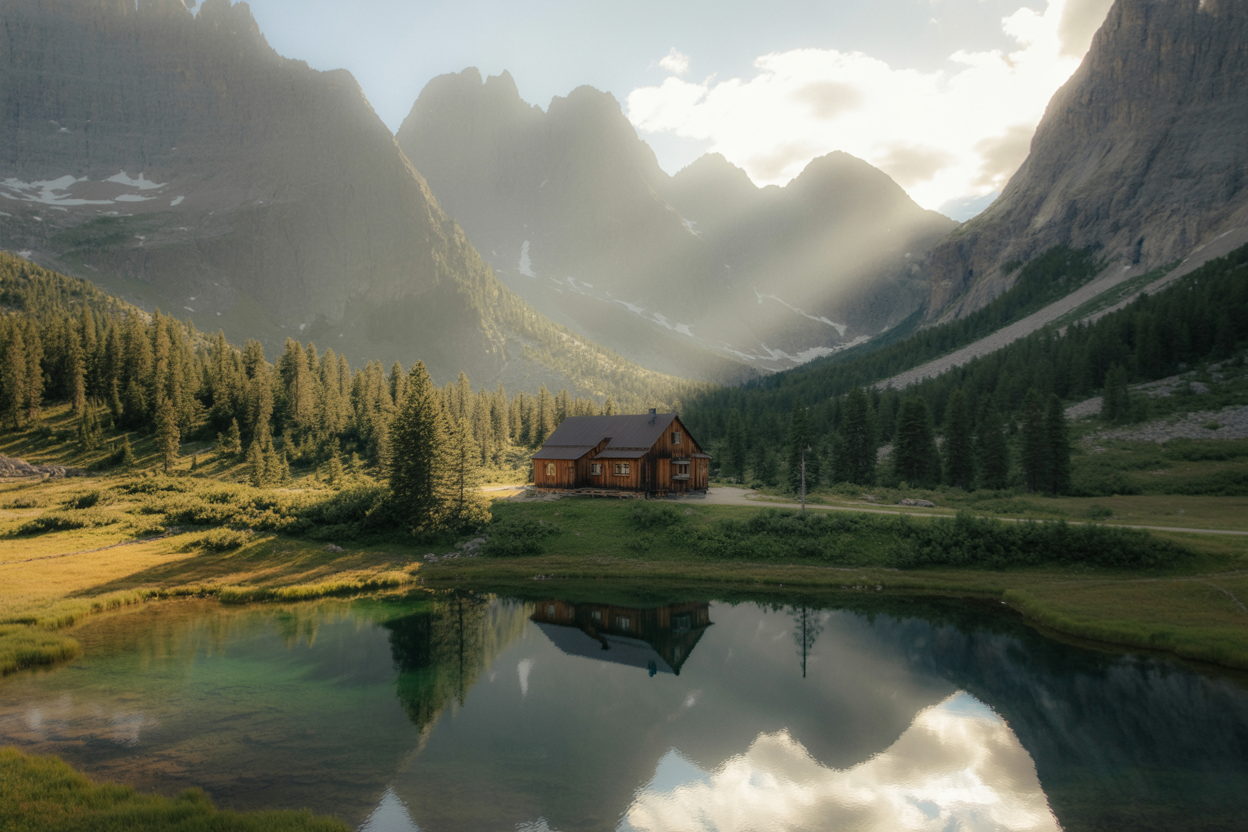
Your best bet for guaranteed disconnection lies in remote cabins nestled deep within America’s most isolated national parks. Glacier National Park in Montana offers backcountry cabins where you’ll find yourself miles from the nearest cell tower, surrounded by pristine wilderness that makes technology feel completely irrelevant. These rustic accommodations come equipped with only the basics – running water, simple furnishings, and wood-burning stoves that become your evening entertainment.
Yellowstone’s remote cabin rentals push you even further off the grid. You’ll discover properties tucked away in corners of the park where even park rangers rely on satellite phones for emergency communication. The Buffalo Fork area offers particularly isolated options where your biggest worry becomes whether you remembered to pack enough firewood, not checking your Instagram feed.
For the ultimate digital blackout, consider cabins in Alaska’s Denali National Park. Here, you’re not just disconnected – you’re completely removed from civilization. These rental properties often require bush plane access, and once you’re there, your phone becomes nothing more than a paperweight with a camera. The silence is so profound that you’ll rediscover sounds you forgot existed: your own breathing, the crackle of a fire, and the whisper of wind through spruce trees.
Wilderness Lodges That Prohibit Electronic Devices
Several mountain lodges have made digital disconnection their core philosophy, going beyond poor reception to actively prohibiting electronic devices. The Dunton Hot Springs resort in Colorado confiscates all devices upon arrival and stores them in individual lockers until your departure. You’ll trade your smartphone for horseback rides, natural hot spring soaks, and conversations that extend long into the evening without a single notification interrupting the flow.
Ranch at Rock Creek in Montana takes this concept even further by creating device-free zones throughout its property. While phones are allowed in guest rooms, all common areas – including the dining room, library, and outdoor spaces – remain strictly electronics-free. You’ll find yourself genuinely engaging with fellow guests, rediscovering the lost art of making eye contact during conversations.
Triple Creek Ranch in Darby, Montana, has a unique “digital sunset” policy requiring all electronic devices to be turned off at 6 PM daily. Staff members use gentle yet firm guidance to encourage you to embrace evening activities such as stargazing, storytelling around fire pits, and early bedtimes aligned with your circadian rhythms. The result? You’ll wake up more refreshed than you have in years.
Hiking Destinations Where Nature Forces You to Unplug
Some mountain destinations make the choice to unplug for you through sheer geographic isolation. The John Muir Trail in California’s Sierra Nevada mountains stretches 211 miles through wilderness where cell service simply doesn’t exist. You’ll spend weeks walking through landscapes so remote that even emergency satellite beacons become your only connection to the outside world.
Olympic National Park’s Hoh River Trail takes you deep into temperate rainforest, where ancient trees create a natural Faraday cage, blocking any stray signals that might penetrate this far into the wilderness. The thick canopy and misty environment make electronic devices feel not just useless, but almost disrespectful to the primordial atmosphere surrounding you.
Wind River Range in Wyoming offers some of the most remote hiking in the lower 48 states. You’ll trek through cirques and over mountain passes where the nearest road lies dozens of miles away. The combination of elevation, geography, and isolation creates dead zones so complete that you’ll forget what it feels like to have that phantom vibration in your pocket. Instead, your attention shifts to reading weather patterns in cloud formations and finding your way using landmarks that have guided travelers for thousands of years.
Peaceful Island Getaways Without Internet Infrastructure

Undeveloped Caribbean Islands with Limited Connectivity
You’ll discover some of the most pristine digital detox opportunities in the Caribbean’s lesser-known islands, where infrastructure development has been deliberately kept minimal. Places like Anegada in the British Virgin Islands offer stretches of coastline where cell towers simply don’t exist, and the few accommodations available operate on solar power with no WiFi promises. Your days here revolve around conch fishing, flamingo watching, and beach combing rather than scrolling through feeds.
The Tobago Cays in St. Vincent and the Grenadines present another excellent option for your disconnected getaway. These uninhabited islands have no permanent structures beyond basic camping facilities, meaning you’ll sleep under star-filled skies without the glow of screens anywhere in sight. Local boat operators can arrange multi-day stays where your biggest decision involves choosing between snorkeling spots or afternoon nap locations.
Consider booking a stay on one of Belize’s outer atolls, where accommodations consist of simple cabanas with no electrical outlets. Your entertainment comes from watching nurse sharks glide through crystal-clear waters and listening to waves crash against coral barriers. These locations pride themselves on offering experiences that smartphones simply can’t capture or enhance.
Remote Pacific Atolls Perfect for Digital Minimalists
Your Pacific digital detox adventure awaits on islands so remote that satellite internet would cost more than most people’s annual salaries to install. The Marshall Islands offer several uninhabited atolls where you can arrange stays through local guides, sleeping in traditional structures and living off coconuts and fresh fish. These locations sit thousands of miles from major population centers, making digital connectivity practically impossible.
French Polynesia’s lesser-visited atolls provide incredible opportunities for your tech-free escape. Beyond the tourist-heavy islands like Tahiti, you’ll find places where the closest internet connection requires a several-hour boat journey. Your daily routine shifts to tide schedules and weather patterns rather than notification alerts and meeting reminders.
The Cook Islands’ northern atolls offer perhaps the most authentic disconnected experience you can find. Here, local families welcome visitors into their traditional lifestyle, where time is governed by fishing seasons and community gatherings. You’ll participate in daily activities like pearl diving, traditional cooking, and storytelling sessions that have remained unchanged for generations.
Secluded Mediterranean Islands That Prioritize Simplicity
Your Mediterranean digital detox doesn’t require traveling to remote Pacific locations when islands like Formentera’s quieter corners still maintain areas of deliberate technological minimalism. Small family-run guesthouses in the interior hills operate without WiFi, focusing instead on providing homemade meals, local wine, and sunset viewing opportunities that require your full attention.
The Greek island of Folegandros offers accommodation options where owners have chosen to keep their establishments internet-free. Your days unfold around traditional activities such as olive harvesting, cliff-top hiking, and participation in local festivals, where community connection takes precedence over digital communication. The island’s dramatic landscape demands your physical presence rather than virtual documentation.
Croatia’s smaller Adriatic islands, particularly those accessible only by local fishing boats, maintain lifestyles largely unaffected by digital infrastructure. You can arrange stays with local families who offer simple rooms and shared meals, where conversation flows around kitchen tables rather than through chat applications. These experiences connect you with traditional Mediterranean rhythms that have sustained island communities for centuries.
Desert Sanctuaries Where Technology Can’t Follow
Off-Grid Desert Camps and Glamping Sites
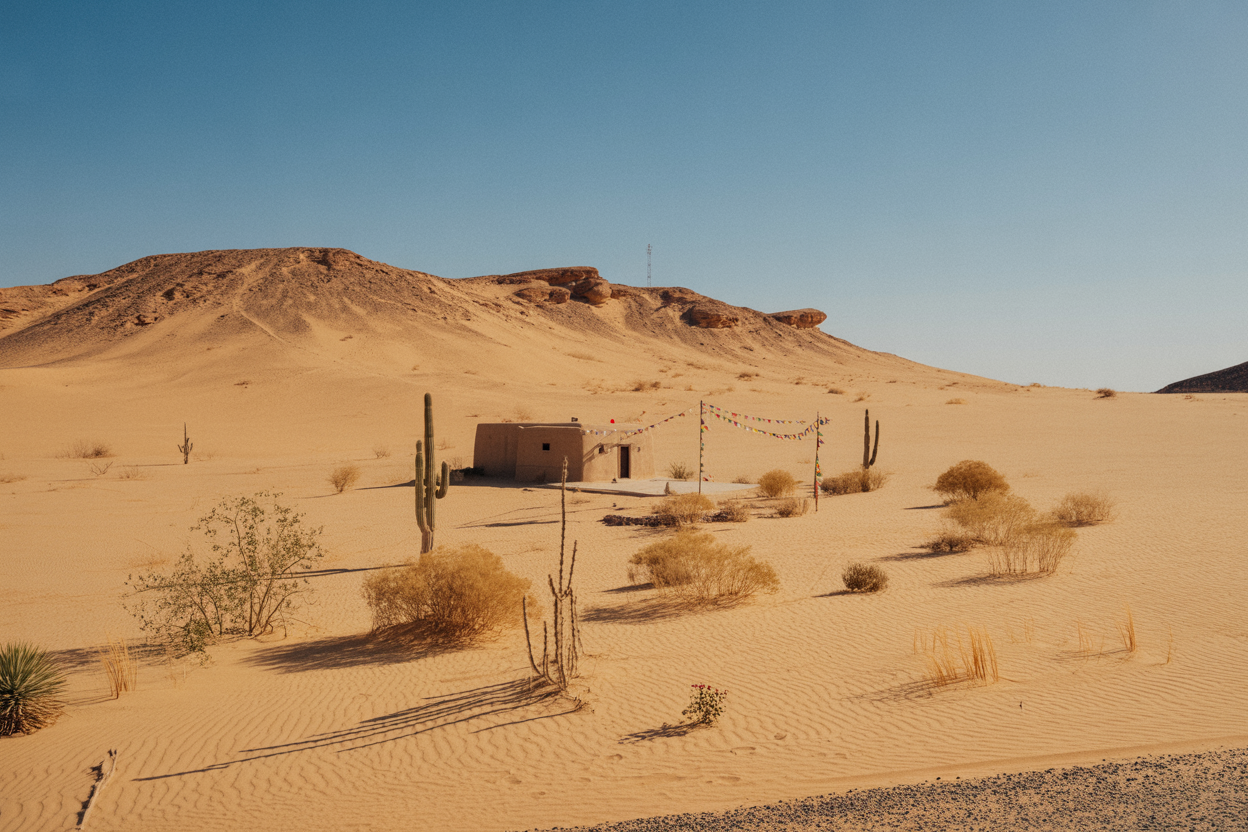
You’ll discover that desert camping takes on a whole new meaning when you’re completely cut off from the digital world. These remote outposts exist in places where cell towers fear to venture, and WiFi is nothing but a distant memory. Your best bet is heading to sites like those scattered across Nevada’s Black Rock Desert or Utah’s remote canyonlands, where the nearest internet connection might be hundreds of miles away.
Desert glamping sites offer you the perfect blend of comfort and disconnection. Picture yourself in a canvas tent equipped with solar lighting and a comfortable bed, surrounded by nothing but endless sand dunes and star-filled skies. Places like the Sahara Desert camps in Morocco or Australia’s Great Victoria Desert provide exactly this experience – luxury accommodations where your biggest technological challenge becomes lighting the camp stove.
These locations are well-suited for digital detoxes because the harsh environment naturally creates barriers to connectivity. Your phone becomes useful only as a camera or flashlight, while the vast emptiness around you forces your mind to slow down and appreciate the present moment. Many of these camps operate on solar power and offer basic amenities, ensuring you’re comfortable while remaining fully unplugged from the digital chaos of everyday life.
Monastery Retreats in Arid Landscapes
Desert monasteries offer you something truly special – centuries-old wisdom combined with natural digital isolation. These sacred spaces, such as those in Egypt’s Eastern Desert or the monasteries scattered across Arizona’s Sonoran Desert, have thrived for generations without modern technology. You’ll find that these communities embrace simplicity and silence as core values, making them perfect partners in your digital detox journey.
When you stay at these retreats, you’re not just avoiding technology by accident – you’re actively choosing to live according to ancient rhythms that prioritize contemplation and inner peace. The monks and nuns who run these places understand the value of disconnection better than anyone. They’ve built their entire lives around practices that help quiet the mind and focus on what truly matters.
Your daily routine at a desert monastery typically revolves around prayer times, communal meals, and periods of silence. You’ll participate in simple tasks such as gardening, cooking, or grounds maintenance. These activities give your hands something to do while your mind detoxes from constant stimulation. The desert setting amplifies this experience – there’s something about the vast, quiet landscape that makes checking your phone feel completely unnecessary.
Ancient Desert Towns That Embrace Slow Living
You can still find pockets of the world where time moves differently, and many of these gems hide in desert regions where internet infrastructure simply hasn’t caught up with modern demands. Towns like Sidi Ifni in Morocco’s Anti-Atlas region or remote settlements in Peru’s Atacama Desert offer you authentic experiences where WiFi is spotty at best, and locals are perfectly fine with that arrangement.
These communities have mastered the art of slow living out of necessity and tradition. When you visit, you’ll quickly adapt to their rhythm – shops close for afternoon siestas, conversations happen face-to-face in town squares, and entertainment comes from live music, storytelling, or simply watching spectacular sunsets paint the desert sky. Your smartphone becomes irrelevant when every interaction is genuine and immediate.
The beauty of these places lies in their resistance to change. You won’t find coworking spaces or internet cafes here because the local economy doesn’t revolve around digital connectivity. Instead, you’ll encounter artisans, farmers, and traders who’ve maintained traditional ways of life for generations. This creates natural opportunities for you to engage with authentic culture while your devices sit forgotten in your bag.
Stargazing Destinations Far from Digital Interference
Desert regions offer you some of the planet’s darkest skies, and many of the best stargazing locations happen to be far from any digital infrastructure. Places like Chile’s Atacama Desert, Death Valley in California, or the Sahara’s remote reaches provide astronomical viewing conditions that simply can’t exist near populated areas, with their light pollution and electromagnetic interference.
Your nights in these locations become transformative experiences. Without screens competing for your attention, you’ll rediscover the ancient human connection to the night sky. You’ll spend hours lying on your back, identifying constellations, watching for meteors, and feeling genuinely small in the best possible way. The Milky Way becomes visible in stunning detail, something impossible to appreciate when you’re constantly distracted by notifications.
Many of these stargazing destinations operate specialized camps or observatories that maintain strict dark-sky policies. You’ll find that even if some basic communication equipment exists for safety purposes, it’s carefully shielded to prevent interference with both astronomical observations and your digital detox goals. The combination of scientific wonder and technological silence creates the perfect environment for expanding your perspective while shrinking your digital footprint.
Forest Hideaways That Naturally Block Digital Signals
Deep Woods Cabins with Intentional No-WiFi Policies
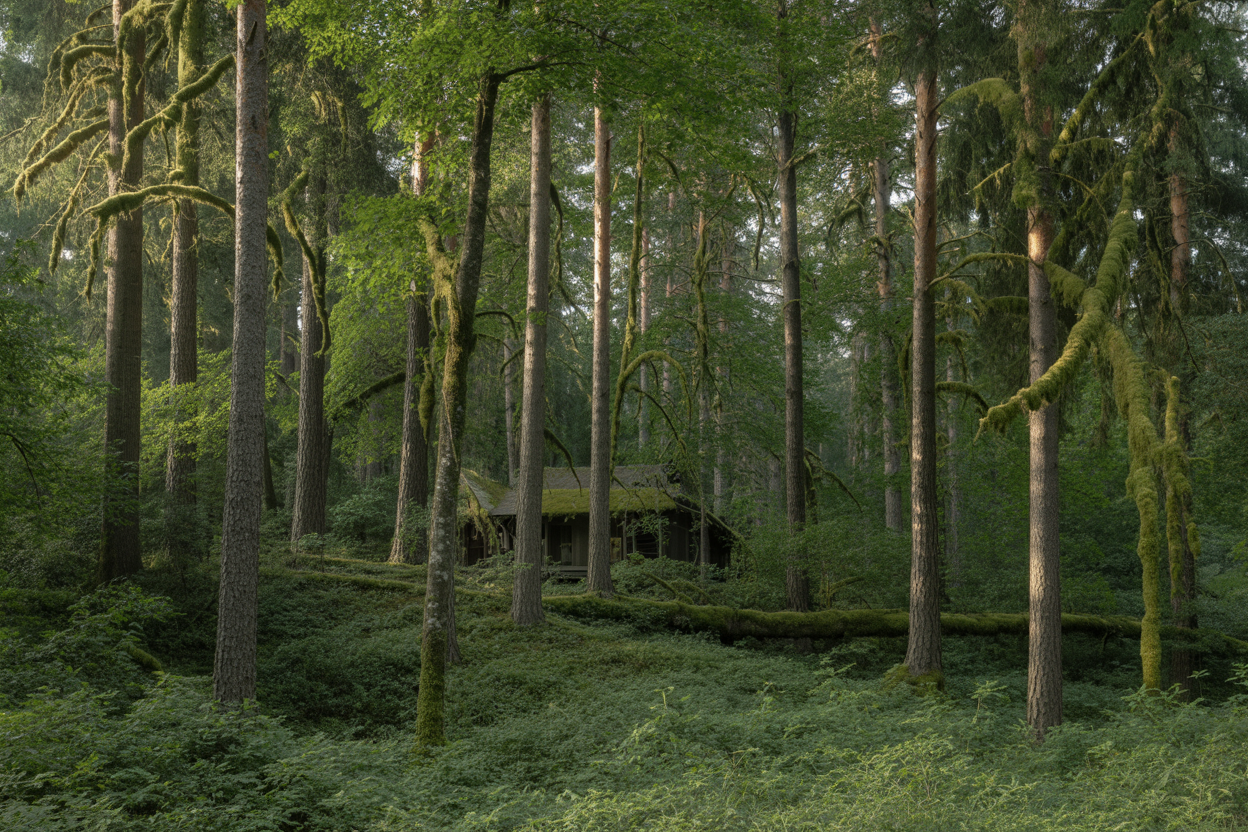
You’ll find some of the most authentic digital detox experiences in remote forest cabins where connectivity simply doesn’t exist by design. These rustic retreats sit deep within national forests and protected wilderness areas, miles from the nearest cell tower. Your phone becomes nothing more than a camera and flashlight when you’re surrounded by towering pines and ancient oaks.
Many cabin owners have made deliberate choices to keep their properties disconnected. You won’t find Ethernet cables, satellite dishes, or even landlines in these spaces. Instead, you’ll discover oil lamps, wood-burning stoves, and the gentle crackle of a fireplace as your evening entertainment. The Olympic Peninsula in Washington offers dozens of these off-grid cabins, where the dense forest canopy naturally blocks most signals anyway.
Your days here revolve around the sun’s schedule. You’ll wake with dawn filtering through the trees and wind down as darkness settles over the forest floor. Without screens demanding your attention, you’ll rediscover simple pleasures: reading by candlelight, cooking over an open fire, and listening to the symphony of nocturnal wildlife just outside your door.
Tree House Accommodations That Encourage Mindfulness
Elevated accommodations take your digital detox to new heights – literally. Treehouse rentals across the Pacific Northwest and Appalachian regions offer a unique perspective on disconnected living. Perched 20 to 40 feet above ground, these structures put you directly into the forest canopy where WiFi signals can’t reach.
Your tree house experience centers around mindful observation. You’ll watch squirrels navigate branch highways, observe bird migration patterns, and witness the forest’s daily rhythm from your elevated vantage point. The gentle sway of your accommodation with the wind creates a meditative environment that naturally slows your thoughts and breathing.
Popular destinations include Costa Rica’s cloud forests and the redwood groves of Northern California. Your tree house typically features basic amenities – a comfortable bed, composting toilet, and rainwater collection system – but absolutely no digital infrastructure. You’ll fall asleep to rustling leaves and wake to morning bird songs, creating a natural circadian rhythm that technology often disrupts.
Eco-Lodges That Champion Sustainable Digital-Free Living
Environmentally conscious forest lodges combine your digital detox with sustainable living practices. These properties operate completely off-grid using solar panels, wind power, and hydroelectric systems generated by nearby streams. You’ll experience how comfortable life can be without constant connectivity while learning about renewable energy and conservation.
Your accommodation focuses on harmony with the surrounding ecosystem. Solar showers provide warm water heated naturally throughout the day, while meals come from on-site gardens and local foraging. You’ll participate in daily activities such as tending vegetable plots, collecting eggs from free-range chickens, and preparing meals in wood-fired ovens.
These lodges often sit within old-growth forests where centuries-old trees create natural barriers to cell signals. You’ll find locations in the Cascade Mountains, Great Smoky Mountains, and remote areas of Maine and Vermont. Your experience includes guided forest walks, wildlife tracking, and traditional craft workshops – all activities that engage your hands and mind without requiring digital devices.
Many eco-lodges offer communal dining and shared spaces that encourage face-to-face conversations among guests. You’ll discover that meaningful connections happen naturally when screens aren’t competing for your attention.
What to Expect During Your WiFi-Free Adventure

Initial Withdrawal Symptoms and How to Overcome Them
Your first few hours without digital connectivity might feel unsettling. You’ll probably reach for your phone dozens of times, only to remember it’s either dead or completely useless. This phantom vibration syndrome is real – your brain will trick you into thinking you’re getting notifications when you’re not.
The urge to check social media, emails, or news updates can feel overwhelming at first. Your mind might race with worries about missing important messages or falling behind on work. These feelings are completely normal and typically peak within the first 24-48 hours.
To ease this transition, bring along physical books, journals, or magazines you’ve been meaning to read. Pack a deck of cards, travel-sized board games, or art supplies to keep your hands and mind busy. Start each day with gentle activities like stretching, meditation, or nature walks to establish new routines that don’t involve screens.
Stay hydrated and get plenty of sleep – your brain needs extra rest as it adjusts to this new rhythm. If anxiety creeps in, remind yourself that true emergencies are rare, and someone will find a way to reach you if absolutely necessary. Focus on the present moment and the unique experience you’re creating for yourself.
Rediscovering Analog Activities and Hobbies
Without the constant pull of digital entertainment, you’ll naturally gravitate toward activities you may have forgotten you enjoyed. Your hands will remember the satisfaction of writing with pen and paper, sketching landscapes, or crafting simple objects from materials around you.
You might find yourself genuinely interested in reading again – not just skimming articles, but diving deep into stories and ideas. Many digital detox travelers discover they can finish entire books in a few days when there’s nothing competing for their attention.
Physical activities become more appealing too. You’ll probably take longer walks, swim more laps, or explore hiking trails with genuine curiosity rather than rushing to document everything for social media. Simple pleasures like watching sunsets, listening to birds, or observing cloud formations become surprisingly engaging.
Creative pursuits that require patience and focus start to feel rewarding again. You might try your hand at watercolor painting, learn basic knots and rope work, practice photography with disposable cameras, or even attempt simple cooking techniques with local ingredients. These analog skills give you a sense of accomplishment that digital achievements often can’t match.
Enhanced Creativity and Problem-Solving Abilities
Your brain operates differently when it’s not constantly processing digital information. Without the fragmented attention that comes from notifications and multitasking, your mind gets space to wander and make unexpected connections. You’ll notice this shift usually happens around day three or four of your digital detox.
Creative solutions to everyday problems start flowing more naturally. Maybe you’ll figure out a clever way to organize your backpack, devise a new morning routine, or come up with interesting conversation starters. Your brain, no longer relying on quick Google searches for answers, begins working through challenges independently.
Many travelers report experiencing “shower thoughts” more frequently – those sudden insights and ideas that pop up when your mind is relaxed and unfocused. You might find yourself solving work problems you’ve been stuck on for weeks, or getting excited about new project ideas for when you return home.
The absence of constant visual stimulation from screens also sharpens your observation skills. You’ll start noticing details in your environment that you would normally miss – interesting architectural features, subtle changes in weather, or the way light moves throughout the day.
Deeper Connections with Travel Companions and Locals
Without phones, conversations become more meaningful and genuine. You’ll make eye contact more naturally and listen more attentively to others. These face-to-face interactions feel richer and more memorable than typical surface-level exchanges.
If you’re traveling with companions, you’ll likely rediscover what you genuinely enjoy about their company beyond shared memes and digital inside jokes. You might spend hours talking about dreams, fears, childhood memories, or philosophical questions you rarely discuss in your regular, distracted daily life.
Interactions with local people become more authentic, too. Instead of quickly snapping photos and moving on, you’ll engage in actual conversations. You might learn about local customs, hear personal stories, or even pick up a few words in the local language. These connections often lead to unexpected invitations or recommendations you’d never find online.
Shared meals become events rather than background activities. Without devices at the table, you’ll actually taste your food, engage in deeper discussions, and create memories that feel more substantial. The simple act of being fully present with others can transform ordinary moments into treasured experiences.
Essential Preparation Tips for a Successful Digital Detox Trip
Inform Work and Family About Your Temporary Disconnection
Your digital detox success hinges on setting clear boundaries before you disappear off the grid. Start planning your communication strategy at least two weeks before departure. Send detailed emails to your colleagues outlining your exact unavailability dates and designate a reliable point person to handle urgent matters. You’ll want to update your email auto-responder with specific dates and emergency contact information if absolutely necessary.
Don’t leave your family guessing about your whereabouts. Share your travel itinerary, accommodation details, and estimated return date with trusted family members. If you’re traveling to remote locations, provide them with the nearest town or landmark for reference. Consider establishing one check-in method for true emergencies – perhaps a landline at your accommodation or a designated family member who can reach you through the retreat center.
Update all your social media accounts with temporary “offline” messages. This prevents friends from worrying when you suddenly stop responding to messages and posts. You might even want to temporarily deactivate certain apps or change your phone settings to airplane mode once you arrive at your destination.
Pack Analog Alternatives for Entertainment and Navigation
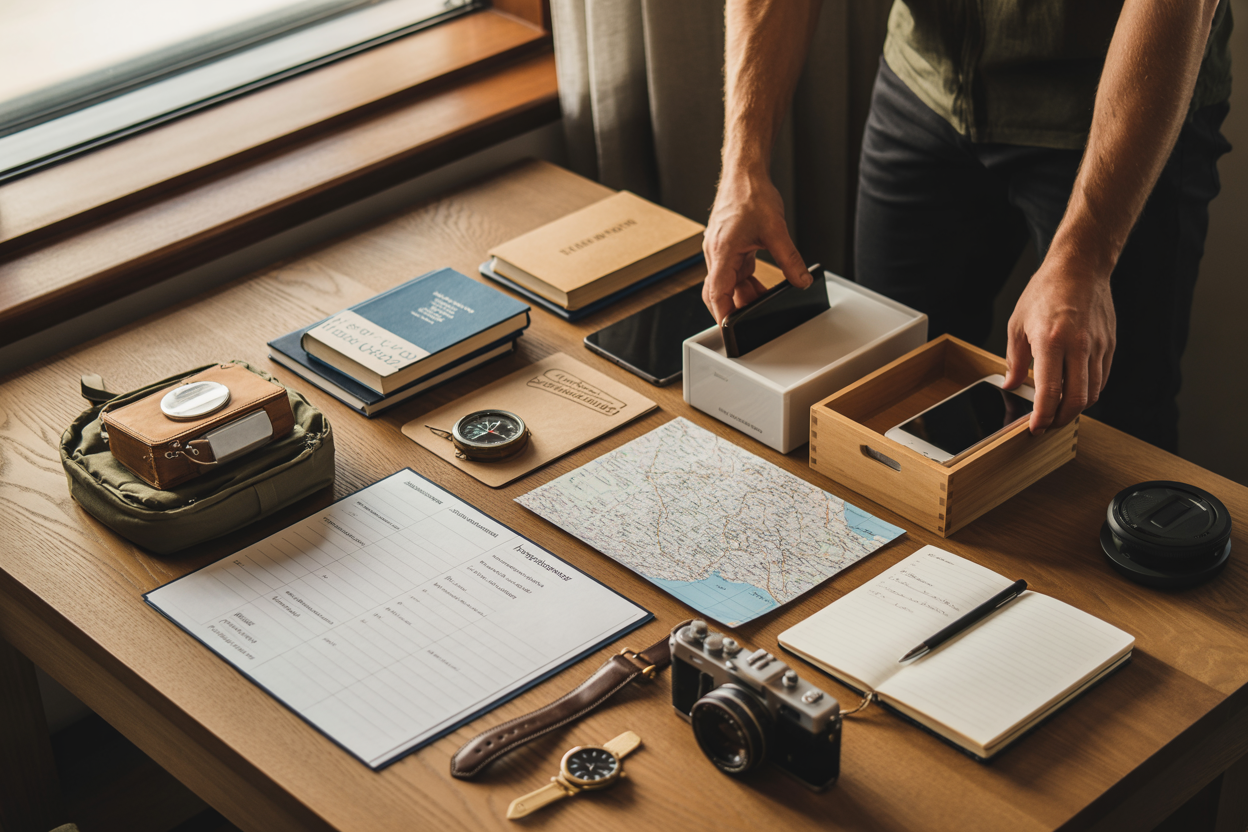
Your smartphone won’t be your trusty companion during this adventure, so you need reliable backup plans. Invest in a high-quality paper map of your destination area and learn how to read it properly before you leave. Physical atlases and guidebooks become invaluable resources when GPS fails you. Pack a traditional compass and take a quick tutorial on basic navigation skills – you’ll feel more confident exploring without digital assistance.
Entertainment takes on a completely different meaning without screens. Bring several paperback books you’ve been meaning to read, along with a quality journal and multiple pens for writing. Pack a deck of cards, travel-sized board games, or puzzle books for group activities or solo entertainment during quiet moments.
Don’t forget practical analog tools that replace digital conveniences:
- Traditional camera with extra film or batteries
- Mechanical alarm clock to replace your phone’s wake-up function
- Physical notebook for jotting down important information
- Printed reservation confirmations and important documents
- Cash in small bills since card readers might not work everywhere
- Flashlight with extra batteries instead of your phone’s flashlight
Set Realistic Expectations for Your Unplugged Experience
Your digital detox journey won’t be all zen moments and perfect sunsets – and that’s completely normal. Expect to feel genuine anxiety during the first 24-48 hours as your brain adjusts to the absence of constant stimulation. You might find yourself reaching for your phone out of habit or feeling phantom vibrations in your pocket. These reactions are natural responses to breaking a deeply ingrained behavioral pattern.
Prepare for practical challenges that digital tools usually solve effortlessly. Simple tasks like finding a restaurant, getting directions, or checking the weather will require more time and effort. You’ll need to ask locals for recommendations, rely on printed materials, or simply embrace spontaneity when plans don’t work out perfectly.
Your relationship with time will shift dramatically without constant notifications and digital distractions. Days might feel longer initially, but you’ll likely discover a more natural rhythm that aligns with daylight hours and your body’s internal clock. Some people experience incredible creative breakthroughs during digital detoxes, while others simply enjoy the peace of mind that comes with being unreachable.
Set small, achievable goals for your trip rather than expecting dramatic life changes. Maybe you want to read two books, learn basic meditation, or simply sleep eight hours every night without checking your phone first thing in the morning. Remember that every person’s detox experience is unique, so avoid comparing your journey to others’ highlight reels you might have seen online.
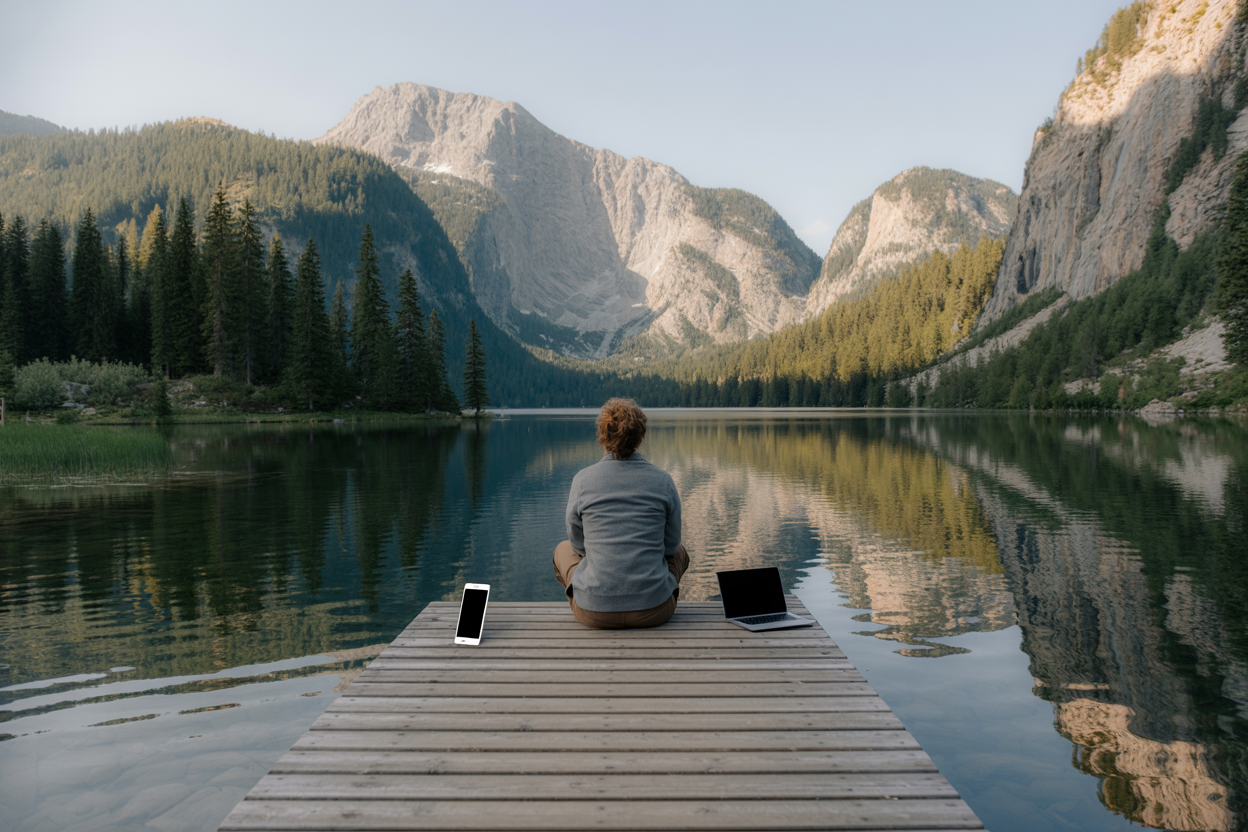
When you’re feeling overwhelmed by constant notifications and screen time, these remote destinations offer the perfect opportunity to reset your relationship with technology. Mountain retreats, secluded islands, desert sanctuaries, and forest hideaways all provide natural barriers that make digital disconnection not just possible, but inevitable. These places force you to slow down, reconnect with nature, and rediscover simple pleasures you might have forgotten.
Taking a digital detox trip requires some planning, but the mental clarity and physical relaxation you’ll gain make it worth every effort. Pack the essentials, prepare your loved ones for your temporary absence, and embrace the initial discomfort that comes with being offline. Your mind and body will thank you for giving them this rare chance to truly rest and recharge away from the digital noise of everyday life.
For more soulful stories and mindful living insights, explore The Zen Blog — your space for travel reflections, wellness tips, and everyday calm.
✨ Subscribe to The Zen Journal for mindful travel tips, yoga flows, and wellness inspiration delivered weekly ✨