
Body Love vs. Body Shame: The Ultimate Battle
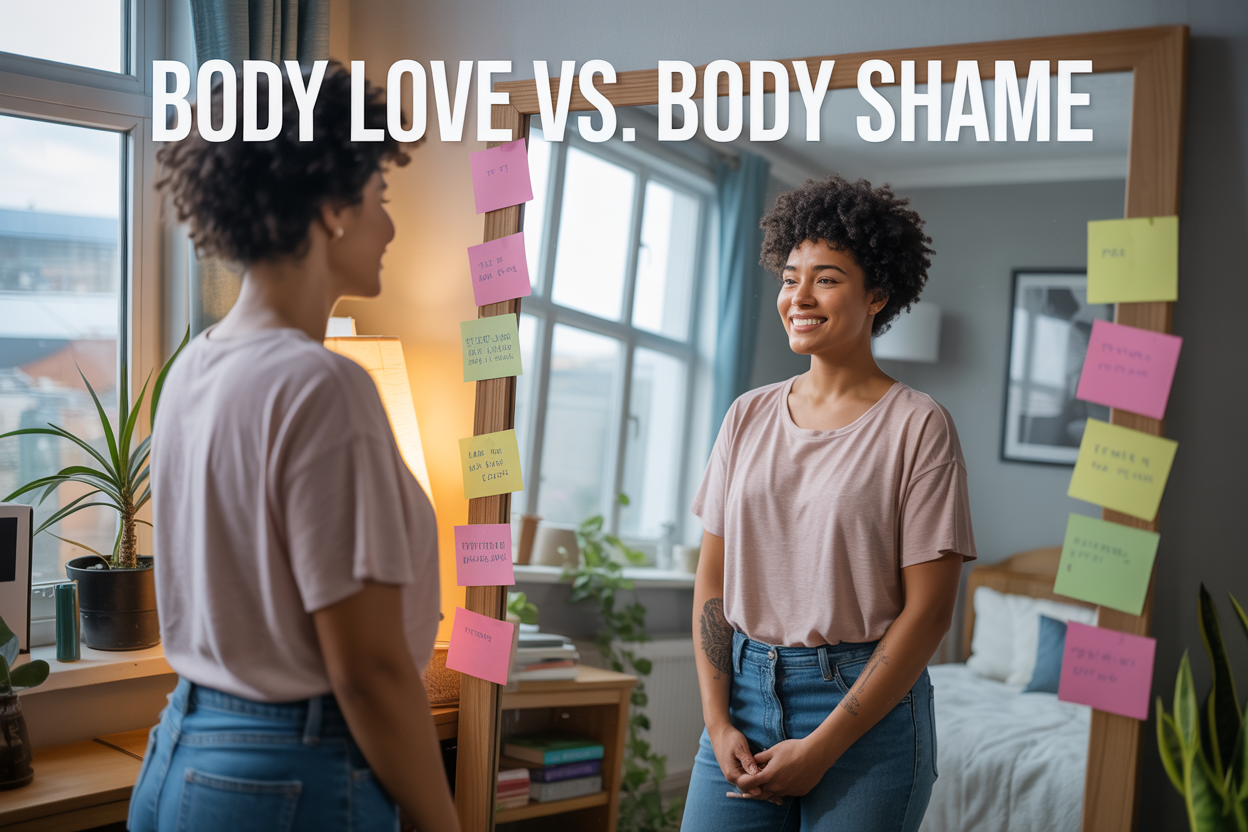
Every day, you face a choice between loving your body or letting shame take control. This internal struggle affects millions of people who battle negative self-talk, comparison, and the pressure to meet impossible beauty standards.
This guide is for you if you’re tired of feeling at war with your reflection, exhausted by constant self-criticism, or ready to break free from the cycle of body shame that’s been holding you back from living fully.
You’ll discover how body shame secretly sabotages your mental health, relationships, and daily confidence. We’ll explore the proven science behind body love and why self-acceptance isn’t just feel-good advice—it’s backed by real research. Most importantly, you’ll learn practical strategies to flip your inner critic into your biggest cheerleader and build lasting habits that support genuine body appreciation, even when setbacks happen.
Your relationship with your body doesn’t have to be a battlefield. Let’s change that story together.
Understanding Body Shame’s Destructive Impact on Your Life

Recognize the Hidden Mental Health Consequences
Your mind bears the heaviest burden when body shame takes hold. You might not realize how deeply this internal criticism affects your mental well-being, but the consequences run far deeper than surface-level insecurities.
Body shame creates a breeding ground for anxiety and depression. When you constantly judge your appearance, your brain gets stuck in a negative feedback loop that colors every aspect of your daily experience. You find yourself avoiding social situations, declining invitations, and missing out on life’s precious moments because you’re convinced others are judging you as harshly as you judge yourself.
Your self-esteem takes a devastating hit when body shame becomes your default mindset. You start defining your worth solely by how you look, rather than who you are as a person. This warped thinking pattern makes you hyper-focused on perceived flaws while completely ignoring your exceptional qualities, talents, and accomplishments.
The mental exhaustion from constant self-monitoring and criticism drains your energy reserves. You spend countless hours obsessing over your appearance, analyzing photos, and comparing yourself to others. This mental preoccupation leaves little room for creativity, personal growth, or meaningful pursuits that could actually bring you joy and fulfillment.
Your decision-making abilities suffer when body shame clouds your judgment. You might pass up career opportunities, romantic relationships, or new experiences because you feel unworthy or believe your appearance disqualifies you from success and happiness.
Identify Physical Health Effects of Chronic Self-Criticism
Your body responds to emotional stress in tangible ways, and chronic body shame creates a cascade of physical health problems you might not connect to your self-critical thoughts.
Stress hormones like cortisol flood your system when you’re constantly battling negative self-talk about your appearance. These elevated hormone levels wreak havoc on your immune system, making you more susceptible to illnesses and infections. You might notice you’re getting sick more often or taking longer to recover from minor ailments.
Your sleep patterns suffer significantly when body shame occupies your thoughts. You lie awake at night replaying harsh self-judgments or worrying about how others perceive you. This sleep deprivation affects every system in your body, from your metabolism to your cognitive function.
Digestive issues often emerge as a direct result of chronic stress from body shame. You might experience stomach pain, irregular bowel movements, or changes in appetite. Some people develop disordered eating patterns as they try to control their appearance, which further compounds digestive problems.
Your cardiovascular system takes a hit from the constant stress response. Elevated blood pressure, increased heart rate, and muscle tension become your body’s normal state. You might notice headaches, back pain, or general aches with no apparent cause.
Chronic inflammation increases throughout your body when you’re stuck in patterns of self-criticism. This inflammation contributes to premature aging, joint pain, and increased risk of chronic diseases. Your body is literally wearing down from the inside out due to the stress of hating what you see in the mirror.
Understand How Body Shame Sabotages Your Relationships
Your relationships suffer tremendously when body shame becomes the lens through which you view yourself and interact with others. The ripple effects touch every connection in your life, from romantic partnerships to friendships and family relationships.
You project your insecurities onto others, assuming they’re judging your appearance as critically as you judge yourself. This assumption creates barriers to intimacy and authentic connection. You might withdraw from social gatherings, decline photos with loved ones, or avoid physical affection because you’re convinced your body is somehow offensive or unacceptable.
Your partner witnesses your self-critical comments and may feel helpless or frustrated when trying to reassure you. When you constantly put yourself down, it becomes exhausting for them to counter your negative self-talk repeatedly. Your body shame can even make them question their own judgment or feel like their love and attraction aren’t enough to help you feel worthy.
| Relationship Impact | How Body Shame Manifests |
|---|---|
| Romantic Intimacy | Missing networking events, avoiding presentations, and limiting career growth |
| Friendships | Declining social events, comparing appearances, feeling inadequate |
| Family Dynamics | Rejecting compliments, avoiding family photos, and modeling a poor self-image |
| Professional Networks | Missing networking events, avoiding presentations, limiting career growth |
Your children or younger family members absorb your relationship with your body like sponges. When you speak negatively about your appearance or constantly diet and critique yourself, you’re teaching them that self-worth comes from physical appearance. This modeling effect perpetuates cycles of body shame across generations.
You miss out on genuine connections because you’re too focused on managing how others perceive your body. Instead of being present in conversations and relationships, you’re mentally monitoring your posture, your outfit, or how you look from different angles. This self-consciousness prevents you from showing up authentically and forming the deep, meaningful relationships your soul craves.
Discover the Science Behind Body Love and Self-Acceptance

Learn How Positive Body Image Boosts Your Confidence
When you develop a healthy relationship with your body, your confidence levels soar. Research consistently shows that people with positive body image experience higher self-esteem and feel more comfortable taking on challenges in both personal and professional settings.
Your brain actually rewires itself when you practice body acceptance. Neuroimaging studies reveal that positive self-perception activates the same reward centers associated with other confidence-building activities. This creates a powerful feedback loop in which feeling good about your body translates into feeling capable in different areas of your life.
You’ll notice this confidence boost in everyday situations. Maybe you’ll speak up more in meetings, try new activities you’ve been avoiding, or feel more at ease in social situations. When you’re not constantly worried about how your body looks or what others might think, you free up mental energy to focus on what really matters to you.
The ripple effect extends beyond just feeling good. Studies tracking people over time show that those with positive body image are more likely to pursue their goals, maintain healthier relationships, and take better care of themselves overall. Your body becomes an ally rather than an obstacle in achieving what you want in life.
Understand the Neurological Benefits of Self-Compassion
Your brain responds dramatically differently when you treat yourself with kindness versus criticism. Neuroscientists have discovered that self-compassion literally changes your brain structure and function, supporting better mental health and resilience.
When you practice self-compassion toward your body, you activate your parasympathetic nervous system – the part responsible for rest, healing, and emotional regulation. This is the opposite of what happens during self-criticism, which triggers your stress response and floods your system with cortisol.
Brain scans show that people who regularly practice self-compassion have:
- Increased gray matter in areas associated with emotional regulation
- Stronger connections between the prefrontal cortex and limbic system
- Reduced activity in the amygdala during stressful situations
- Enhanced production of oxytocin and serotonin
You can actually train your brain to default to self-compassion. Each time you choose gentle self-talk over harsh criticism, you’re strengthening neural pathways that make kindness your automatic response. This neuroplasticity means your brain becomes more resilient to negative thoughts about your body over time.
The benefits compound daily. Your improved emotional regulation helps you make better decisions about food, exercise, and self-care. You bounce back faster from setbacks and maintain a more stable mood throughout challenges.
Explore Research on Body Neutrality vs Body Positivity
Body positivity and body neutrality offer different approaches to healing your relationship with your body, and understanding both can help you find what works best for your journey.
Body positivity encourages you to love and celebrate your body actively. The research shows this approach works well for many people, particularly those who’ve experienced mild to moderate body dissatisfaction. Studies indicate that body-positive practices, such as affirmations and gratitude exercises, can increase life satisfaction and reduce anxiety.
However, researchers have identified some limitations. For people with severe body dysmorphia or eating disorders, jumping straight to body love can feel overwhelming or inauthentic. This is where body neutrality shines.
Body neutrality focuses on what your body does rather than how it looks. Instead of saying “I love my thighs,” you might think “My legs carry me through my day.” Research shows this approach can be particularly practical for:
- People recovering from eating disorders
- Those with chronic illness or disability
- Anyone who finds body positivity feels forced
| Body Positivity | Body Neutrality |
|---|---|
| Active appreciation and love | Functional appreciation |
| Focus on beauty and acceptance | Focus on capability and purpose |
| “I love my body” | “I love my body.” |
| Can feel overwhelming initially | Often feels more accessible |
Many experts now recommend a flexible approach where you move between both strategies depending on your current mental state and circumstances.
Recognize the Connection Between Body Love and Overall Wellness
Your relationship with your body directly impacts every aspect of your health and well-being. When researchers track people’s body image alongside their overall wellness markers, the connections are striking and consistent across multiple studies.
People with a positive body image show measurable improvements in physical health. They’re more likely to engage in regular physical activity – not from a place of punishment or trying to “fix” their bodies, but because movement feels good. This intrinsic motivation leads to more sustainable exercise habits compared to those driven by body shame.
Your mental health benefits enormously from body acceptance. Studies show that people with positive body image experience:
- Lower rates of depression and anxiety
- Better stress management skills
- Improved sleep quality
- Higher life satisfaction scores
- Stronger social connections
The relationship works both ways. When you take care of your mental health through therapy, stress management, or mindfulness practices, your body image often improves naturally. This creates an upward spiral where each positive change supports the others.
Your eating behaviors also shift when you develop body love. Research consistently shows that people with positive body image have more intuitive eating patterns, better nutritional choices, and lower rates of disordered eating. They listen to their body’s hunger and fullness cues rather than following restrictive diet rules.
Even your immune system responds to how you treat your body. Chronic body shame creates ongoing stress that suppresses immune function, while body acceptance promotes the relaxed state your immune system needs to work optimally.
Transform Negative Self-Talk Into Empowering Inner Dialogue

Master Techniques to Challenge Critical Thoughts
Your inner critic can be relentless, but you have the power to question its authority. When that harsh voice pipes up with “You look terrible today,” pause and examine the evidence. Ask yourself: “Is this thought actually true, or is it just my insecurity talking?” Most of the time, you’ll discover your inner critic is spinning fiction.
Try the reality check method: Write down the critical thought, then list three pieces of evidence that support it and three that contradict it. You’ll often find the contradictory evidence outweighs the criticism. For example, if you think “I’m completely out of shape,” counter it with “I walked 8,000 steps yesterday, I chose a healthy lunch, and I have more energy than last month.”
Another powerful technique is thought reframing. Instead of “My stomach looks awful,” try “My body is strong and capable of amazing things.” You’re not lying to yourself – you’re choosing to focus on truth rather than distortion. Practice the best friend test: Would you speak to your closest friend the way you talk to yourself? If not, it’s time to change that inner dialogue.
When critical thoughts arise, challenge them with curiosity rather than acceptance. Question their validity, examine their usefulness, and remember that thoughts are not facts – they’re mental events you can observe and redirect.
Develop Daily Affirmation Practices That Actually Work
Generic affirmations like “I love my body” often fall flat because they feel disconnected from your reality. Instead, create evidence-based affirmations that acknowledge your body’s actual capabilities and achievements. Try “My legs carried me through that challenging workout” or “My arms gave the best hugs today.”
Timing matters for maximum impact. Practice affirmations during natural transition moments, such as while brushing your teeth, applying moisturizer, or getting dressed. These daily activities become triggers that remind you to speak kindly to yourself. You’re building a habit that sticks because it’s tied to something you already do consistently.
Make your affirmations specific and personal. Instead of borrowing someone else’s words, craft statements that resonate with your unique journey. If you’re working on appreciating your hands, try “These hands create beautiful things” or “My hands show love through touch.” The more personal and specific, the more powerful the impact.
Body-part gratitude works wonders, too. Each day, thank a different part of your body for its function rather than focusing on appearance. Thank your feet for stability, your heart for its steady rhythm, or your eyes for letting you see loved ones’ faces. This shifts your focus from criticism to appreciation and builds a foundation of genuine body respect.
Create Boundaries Against External Body Criticism
You can’t control what others say, but you absolutely control how you respond to body criticism. Start by identifying your triggers – certain people, situations, or comments that typically derail your body confidence. Once you know your triggers, you can prepare protective responses.
Develop your boundary scripts in advance. When someone makes an unwelcome comment about your appearance, try responses like “I don’t discuss my body with others” or “That’s not up for discussion.” Keep these phrases short, clear, and non-negotiable. You don’t owe anyone explanations or justifications about your body choices.
Curate your environment ruthlessly. Unfollow social media accounts that make you feel worse about your body, even if they’re popular or belong to friends. Replace them with accounts that promote body diversity and self-acceptance. Your mental space is precious – protect it like you would your home.
Set boundaries for conversations with family and friends who habitually comment on bodies. Let them know that body talk is off-limits in your presence. Say something like “I’ve decided not to engage in conversations about weight or appearance anymore. Can we talk about something else?” Most people will respect clear boundaries when you communicate them directly.
Remember that you’re not responsible for managing other people’s discomfort with your boundary-setting. Some people might push back when you refuse to engage in body criticism, but that’s their issue to work through, not yours to solve.
Build Sustainable Habits for Long-Term Body Appreciation

Design a Social Media Environment That Supports Body Love
Your social media feeds have incredible power over your self-perception. Right now, your phone probably shows you endless streams of filtered photos and “perfect” bodies that make you feel inadequate. Time to change that.
Start by unfollowing accounts that consistently make you feel worse about yourself. You know the ones – they post nothing but thinspo content, extreme before-and-after photos, or unrealistic fitness transformations. Replace them with body-positive influencers who showcase diverse body types, celebrate functional fitness, and share authentic, unfiltered content.
Follow accounts that align with your values: plus-size models, body-neutral advocates, intuitive eating coaches, and people who look like you. Seek out content creators who discuss the reality behind social media – the posed angles, the lighting tricks, the editing apps.
Use your engagement strategically. When you like and comment on body-positive posts, the algorithm learns what you want to see. Stop engaging with content that triggers comparison or shame, even if you’re hate-scrolling.
Consider creating your own positive content. Share photos that celebrate what your body can do rather than just how it looks. Post about your workouts because they felt amazing, not because you’re trying to “fix” something.
Set boundaries with your consumption. Maybe that means no social media before breakfast or turning off notifications from fitness apps that send shame-based messages.
Cultivate Movement Practices Based on Joy, Not Punishment
Exercise shouldn’t feel like penance for eating that slice of pizza. When you shift from punishment-based movement to joy-based activity, everything changes – your relationship with your body, your consistency, and your overall well-being.
Start by exploring different types of movement without any agenda beyond curiosity. Try dancing in your living room, hiking local trails, swimming at a community pool, or joining a beginner’s rock climbing class. Notice what makes you smile during the activity, not just what burns the most calories.
Pay attention to how different movements make you feel during and after. Some people find peace in yoga flows, while others feel energized by strength training or lose themselves in the rhythm of running. Your body will tell you what it craves if you listen.
Ditch the “no pain, no gain” mentality. Sustainable movement should challenge you appropriately, but it shouldn’t leave you dreading your next workout. If you consistently avoid specific exercises, ask yourself why. Maybe it’s time to try something completely different.
Focus on what your body can do rather than how it looks while doing it. Celebrate lifting heavier weights, running longer distances, or simply feeling stronger in your daily activities. These functional improvements often matter more than any aesthetic changes.
Create movement rituals that support your mental health, too. Maybe it’s morning stretches that help you start the day centered, or evening walks that allow you to decompress from work stress.
Nourish Your Body With Intuitive Eating Principles
Intuitive eating asks you to trust your body’s wisdom about food – something diet culture has trained you to ignore. This approach helps you rebuild a healthy relationship with eating by honoring your hunger, respecting your fullness, and finding satisfaction in meals.
Start by tuning into your hunger cues throughout the day. What does hunger actually feel like in your body? Is it a growling stomach, low energy, or difficulty concentrating? Many people have ignored these signals for so long that they need to relearn them.
Give yourself unconditional permission to eat all foods. This doesn’t mean eating cake for every meal, but it means removing the moral judgment from food choices. When you stop labeling foods as “good” or “bad,” you reduce the shame and guilt that often lead to overeating or restrictive behaviors.
Practice eating with attention and intention. Put away your phone during meals and focus on the taste, texture, and satisfaction factor of your food. Notice when you’re comfortably full – not stuffed, but satisfied.
Challenge food rules that don’t serve you. Maybe you’ve been told never to eat after 7 PM or that carbs are evil. Question where these rules came from and whether they actually improve your well-being or create stress.
Remember that nutrition is essential, but it’s just one aspect of your relationship with food. Honor your cravings, celebrate cultural food traditions, and make eating pleasurable rather than just functional.
Surround Yourself With Body-Positive Community Support
The people around you significantly influence how you feel about your body. If your friends constantly complain about their appearance, engage in diet talk, or make comments about your body, it’s time to set some boundaries or expand your circle.
Look for communities that celebrate body diversity. This might be online groups focused on body acceptance, local fitness classes that welcome all abilities, or hobby groups where appearance isn’t the focus at all. Many cities have body-positive book clubs, hiking groups, or creative workshops.
Practice having conversations that don’t center on appearance. Instead of complimenting friends on weight loss, try acknowledging their energy, accomplishments, or how they’re showing up in the world. Redirect diet talk toward discussions about how foods make you feel rather than their caloric content.
If family members consistently make harmful comments about bodies, prepare responses in advance. You might say, “I’m not comfortable discussing weight” or “I’d rather talk about how I’m feeling in my body.” You don’t owe anyone explanations about your body choices.
Find professional support when needed. Therapists who specialize in body image, registered dietitians who practice from a Health at Every Size approach, or support groups for eating disorder recovery can provide crucial guidance on your journey.
Create accountability partnerships with friends who share similar values. Check in regularly about your body appreciation goals, celebrate non-scale victories together, and support each other through challenging moments.
Practice Gratitude for Your Body’s Daily Functions
Your body works tirelessly for you every single day, performing countless functions you probably take for granted. Shifting your focus from how your body looks to appreciating what it does can transform your relationship with yourself.
Start each morning by acknowledging something your body accomplished while you slept – it repaired tissues, consolidated memories, regulated temperature, and filtered toxins. Your heart beats approximately 25,000 times without you thinking about it once.
Throughout the day, pause to appreciate your senses. Notice how your eyes adjust to different lighting, how your nose detects the aroma of coffee, or how your skin feels the warmth of sunlight. These everyday miracles deserve recognition.
Thank your body for its strength and resilience. Maybe your legs carried you up three flights of stairs, your arms helped you hug someone you love, or your immune system fought off that cold your coworker had. Your body is constantly working to keep you healthy and functional.
Acknowledge your body’s ability to heal. Think about paper cuts that disappear, bruises that fade, or muscles that recover after exercise. Your body has an incredible capacity for repair and regeneration.
Keep a daily body-gratitude journal, writing down three things your body did for you that day. This practice helps retrain your brain to notice your body’s capabilities rather than focusing solely on its appearance.
Remember that your body’s worth isn’t dependent on its performance either. Even on days when you’re sick, injured, or struggling, your body deserves appreciation simply for housing your spirit and allowing you to experience life.
Navigate Setbacks and Maintain Your Body Love Journey

Recognize Normal Fluctuations in Body Acceptance
Your body love journey isn’t going to be a straight line upward. Some days you’ll look in the mirror and feel completely at peace with yourself, while others might bring back those familiar pangs of criticism and doubt. This rollercoaster is entirely usual and doesn’t mean you’re failing or sliding backward.
Think of body acceptance like your mood – it naturally ebbs and flows based on countless factors. Your menstrual cycle, stress levels, sleep quality, social media consumption, or even the lighting in your bathroom can influence how you perceive your body on any given day. You might feel confident in your favorite outfit one morning, then struggle with the same outfit the next morning.
These fluctuations don’t erase your progress. Instead of panicking when you have a rough body image day, remind yourself that this is part of being human. Your worth hasn’t changed, and your journey toward self-acceptance remains valid. Keep a mental note of your patterns – do certain times of the month or specific situations trigger more negative thoughts? Understanding these patterns helps you prepare and respond with compassion rather than surprise.
Remember that healing isn’t linear. You’re not broken when you have setbacks; you’re simply experiencing the natural rhythm of growth and self-discovery.
Develop Strategies for Handling Triggering Situations
Certain situations will test your body’s love resolve, and having a game plan makes all the difference. Social media scrolling often tops the list of triggers. When you find yourself comparing your body to filtered, edited images, step away from your phone immediately. Set specific times for social media use and curate your feeds ruthlessly – unfollow accounts that make you feel inadequate and seek out body-positive content creators instead.
Shopping for clothes presents another common challenge. Before heading out, eat a good meal and wear something that makes you feel comfortable. Bring a supportive friend if possible, and remember that sizing varies dramatically between brands and styles. If nothing fits well that day, it’s about the clothes, not your body.
Family gatherings or social events where people comment on appearance require different tactics. Prepare standard responses for unwanted comments about your weight or looks: “I’m focusing on health, not numbers,” or simply “Thanks, but I’d rather not discuss my body.” Practice these phrases beforehand so they come naturally when needed.
Create physical barriers too. Keep a list on your phone of activities that boost your mood – calling a friend, taking a walk, listening to your favorite playlist. When triggering situations arise, you’ll have immediate alternatives ready rather than spiraling into negative self-talk.
Create Your Personal Body Love Recovery Toolkit
Building a personalized toolkit gives you concrete resources to draw from during challenging moments. Your toolkit should include both immediate comfort measures and longer-term support strategies tailored to your lifestyle and personality.
Start with your emotional support network. Identify three trusted friends or family members who understand your body love journey and can offer encouragement when you’re struggling. Share your goals with them and let them know how they can best support you – whether that’s listening without giving advice, sending encouraging texts, or simply being available for a coffee date when you need to talk.
| Toolkit Category | Examples | When to Use |
|---|---|---|
| Immediate Comfort | Favorite playlist, cozy blanket, herbal tea | During acute negative thoughts |
| Physical Movement | Gentle yoga, nature walk, dancing | When feeling disconnected from body |
| Mental Reframes | Gratitude list, affirmations, journal prompts | For persistent negative self-talk |
| Professional Support | Therapist contact, body-positive books, apps | For ongoing maintenance and growth |
Stock your physical environment with reminders of your worth. Place sticky notes with affirmations where you’ll see them regularly – your bathroom mirror, car dashboard, or laptop. Create a photo album on your phone filled with images that make you smile, whether they’re pictures of you looking happy, nature scenes, or inspirational quotes.
Develop a collection of go-to activities that reconnect you with your body in positive ways. This might include gentle stretching, applying moisturizer mindfully, taking a warm bath, or preparing a nourishing meal. The key is choosing activities that help you appreciate what your body does for you rather than focusing on how it looks.
Keep professional resources handy, too. Save contact information for therapists specializing in body image, bookmark helpful websites, and download apps that support mental health and self-acceptance. Having these resources readily available removes barriers when you need extra support during difficult periods.
For more soulful stories and mindful living insights, explore The Zen Blog — your space for travel reflections, wellness tips, and everyday calm.

Your relationship with your body doesn’t have to be a battlefield. You’ve learned how body shame silently sabotages your confidence, relationships, and overall well-being, while body love opens doors to genuine self-acceptance and inner peace. The science shows that rewiring your brain for positivity is absolutely possible – you can replace those harsh inner-critic voices with compassionate, empowering thoughts that lift you rather than tear you down.
Building lasting body appreciation takes daily practice, but you now have the tools to create sustainable habits that stick. Remember that setbacks are part of the journey, not failures that define you. Every time you choose self-compassion over self-criticism, you’re winning this ultimate battle. Start small today – catch one negative thought and flip it into something kinder. Your future self will thank you for choosing love over shame, one moment at a time.
✨ Looking for more ways to bring calm into your routine? Visit my YOGA BLOG for accessible practices and soulful guidance designed to support mindful living.
✨ Join The Zen Journal community — get fresh yoga and wellness insights straight to your inbox ✨