
Yoga for Runners: Pre & Post-Race Sequences to Prevent Injury

Running puts your body through intense, repetitive motions that can lead to tight muscles, strength imbalances, and overuse injuries. Yoga for runners offers targeted stretches and strengthening exercises that address these specific challenges, helping you perform better and stay injury-free.
This guide is designed for dedicated runners at any level – from weekend warriors training for their first 5K to experienced marathoners looking to optimize their performance. You’ll discover practical yoga sequences that fit seamlessly into your training routine.
We’ll walk you through pre-race sequences that activate key muscle groups and prepare your body for optimal performance. You’ll also learn post-race recovery sequences that help your muscles bounce back faster and reduce soreness. Finally, we’ll show you how to target the most common problem areas runners face, including tight hip flexors, weak glutes, and restricted ankle mobility.
These aren’t complicated hour-long sessions – they’re focused, efficient sequences you can do anywhere to support your running goals.
Why Runners Need Yoga for Optimal Performance and Injury Prevention
Common Running Injuries Caused by Muscle Imbalances and Tightness
Your body wasn’t designed to pound pavement mile after mile without consequence. When you run repeatedly in the same motion pattern, certain muscles become overdeveloped while others weaken, creating a recipe for injury. Your hip flexors and calves tighten from repetitive forward motion, while your glutes and deep core muscles often become lazy and underactive.
This imbalance shows up as some of the most common running injuries you’ve probably heard about or experienced firsthand. IT band syndrome develops when your outer thigh becomes tight and inflamed from compensating for weak hips. Plantar fasciitis strikes when your calves are so tight that they pull on the connective tissue in your feet. Runner’s knee occurs when your quadriceps overpower your weak glutes, causing your kneecap to track improperly.
Your hamstrings, constantly contracting to propel you forward, become chronically shortened and prone to strains. Meanwhile, your thoracic spine rounds forward from the repetitive motion, creating neck and shoulder tension that radiates down your entire kinetic chain. These aren’t just minor aches – they’re your body’s warning signals that something needs to change before a small problem becomes a major setback.
How Yoga Addresses Flexibility, Strength, and Body Awareness Gaps
Yoga works like a reset button for your running-adapted body. Where running creates tightness, yoga brings length. Where running creates weakness, yoga builds balanced strength. Most importantly, yoga teaches you to move with intention and awareness rather than just powering through.
Your tight hip flexors get the deep stretch they desperately need in poses like low lunge and pigeon. These poses target the exact muscles that running shortens, helping restore your natural range of motion. At the same time, poses like warrior III and tree pose fire up your often-neglected glutes and stabilizing muscles, creating the balanced strength your body craves.
Yoga’s emphasis on breath awareness transforms how you handle physical stress. When you learn to breathe deeply through challenging poses, you’re training your nervous system to stay calm under pressure – a skill that directly transfers to those tough moments in your runs when your body wants to tense up.
The mindful movement patterns in yoga also improve your proprioception – your body’s ability to sense where it is in space. This enhanced awareness helps you maintain better running form, especially when fatigue sets in. You’ll notice subtle changes in your gait before they become problematic, allowing you to make adjustments that prevent injury.
Scientific Evidence Supporting Yoga’s Benefits for Runners
Research consistently backs up what many runners discover through experience – yoga makes you a better, more resilient runner. A study published in the International Journal of Yoga found that runners who added yoga to their training improved their flexibility by 35% and increased their running economy by 6% in just 10 weeks.
Your VO2 max – a key indicator of cardiovascular fitness – also benefits from yoga practice. Research shows that regular yoga practitioners demonstrate improved oxygen utilization and better heart rate recovery compared to those who only do cardiovascular exercise. This means you can run harder with less perceived effort.
Balance and stability measurements show dramatic improvements in runners who practice yoga regularly. One study followed recreational runners for 12 weeks and found that those who incorporated yoga reduced their injury rate by 43% compared with a control group. The yoga practitioners also reported better sleep quality and lower levels of perceived stress.
Your running economy – how efficiently you use oxygen at a given pace – improves significantly with yoga practice. Scientists attribute this to better posture, enhanced breathing patterns, and improved muscular coordination. When your body moves more efficiently, each step requires less energy, allowing you to run faster or longer with the same effort.
Pre-Race Yoga Sequences to Prime Your Body for Success
Dynamic warm-up poses to activate key running muscles
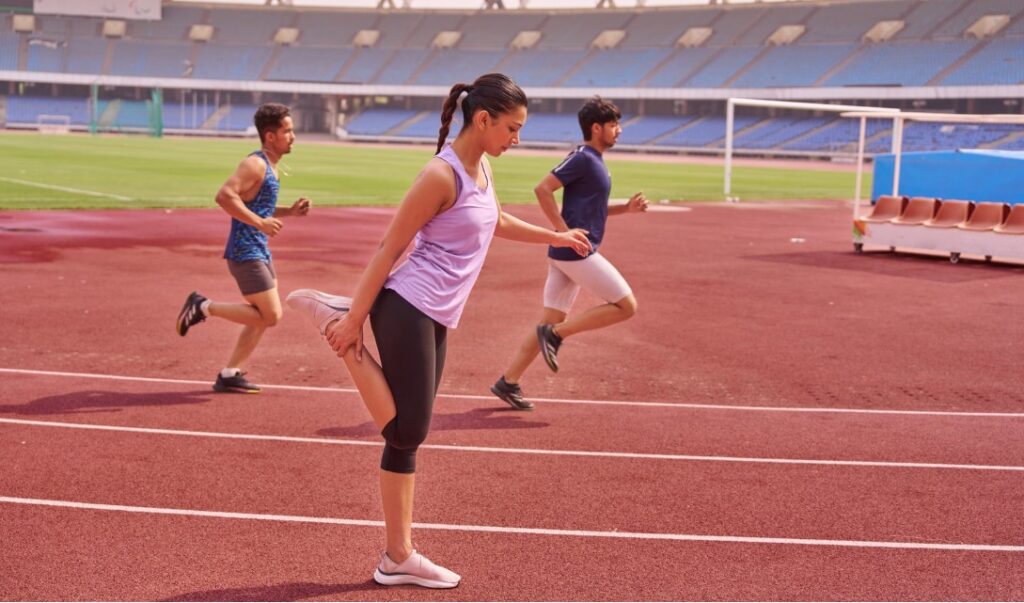
Your running muscles need to wake up before they can perform at their best. Start with Cat-Cow stretches to get your spine moving and warm up your core. Get on your hands and knees, arch your back while lifting your head (cow), then round your spine toward the ceiling (cat). Do this 8-10 times with smooth, controlled movements.
Move into leg swings to activate your hip flexors and glutes. Hold onto a wall or sturdy object and swing one leg forward and back 10 times, then side to side. Switch legs and repeat. Your hip joints will start to loosen up, and your stabilizing muscles will begin firing.
Walking lunges are your best friend for activating your quads, glutes, and calves while improving coordination. Take a large step forward, drop your back knee toward the ground, then push through your front heel to step into the next lunge. Keep your torso upright and engaged throughout the movement.
Finish with high knees and butt kicks for 30 seconds each. These running-specific movements prepare your neuromuscular system for the repetitive motion patterns you’ll use during your race.
Hip opening stretches to improve stride efficiency
Tight hips are your worst enemy for efficient running form. Your hip flexors, often shortened from sitting and daily activities, need special attention before you hit the pavement.
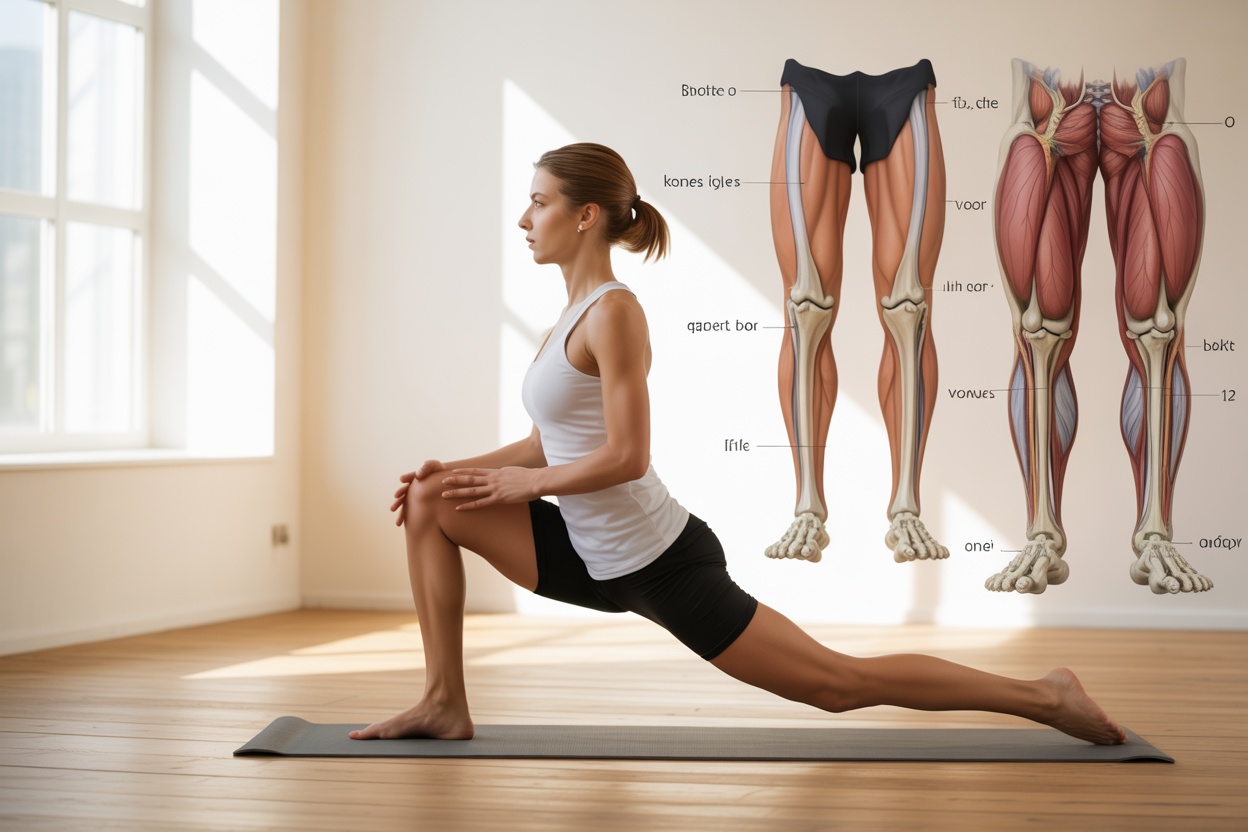
Low lunge is perfect for targeting your hip flexors. Step your right foot forward into a deep lunge, drop your left knee to the ground, and sink your hips down and forward. You should feel a deep stretch through the front of your left hip. Hold for 45-60 seconds, then switch sides.
The 90/90 hip stretch targets multiple hip muscles simultaneously. Sit on the ground with your right leg bent at 90 degrees in front of you and your left leg bent at 90 degrees to your side. Lean forward over your front leg to deepen the stretch in your hip flexors and external rotators. This position might feel awkward at first, but it’s incredibly effective for opening up restricted hip mobility.
Pigeon pose releases deep tension in your hip external rotators and IT band. From a tabletop position, bring your right knee forward and place it behind your right wrist. Extend your left leg straight back and lower down onto your forearms or all the way to the ground if you can.
Your hips should feel noticeably more open and mobile after this sequence, allowing for a longer, more efficient stride during your run.
Spinal mobility exercises for better posture and breathing
Your spine’s ability to rotate, extend, and flex directly impacts your running posture and breathing capacity. When your thoracic spine is stiff, you compensate with your lower back and neck, leading to poor form and restricted breathing.
Thoracic spine rotations are essential for maintaining good upper body mechanics. Get into a tabletop position, place your right hand behind your head, and rotate your right elbow up toward the ceiling while following it with your eyes. Your spine should twist through the middle and upper sections, not your lower back. Do 8-10 rotations in each direction.
The camel pose opens your chest and counteracts the forward-head posture many runners develop. Kneel on your shins, place your hands on your lower ribs, and gradually arch backward while pushing your hips forward. Keep your head in a neutral position and breathe deeply into your chest.
Spinal waves help create fluid movement throughout your entire spine. Start in child’s pose, then slowly roll up vertebra by vertebra into cobra pose, then reverse the movement back to child’s pose. These flowing movement patterns support the natural rotation and extension that occur during running.
These exercises ensure your ribcage can fully expand with each breath and that your spine maintains its natural curves throughout your race.
Balance poses to enhance proprioception and stability
Your proprioception – your body’s ability to sense where it is in space – directly affects your running efficiency and injury prevention. Single-leg balance challenges train the small stabilizing muscles around your ankles, knees, and hips that keep you upright and moving efficiently.
Tree pose builds foundational balance while strengthening your standing leg. Stand on your left foot and place your right foot on your inner left thigh (never on the side of your knee). Focus on a fixed point ahead of you and engage your core. Hold for 30-45 seconds, then switch legs. If you’re wobbly, start by placing your toe on the ground for light support.
Warrior III takes balance training to the next level by adding a dynamic component that mimics the single-leg stance phase of running. From standing, hinge at your hips and lift your right leg behind you. Your torso and lifted leg should form a straight line parallel to the ground. This pose strengthens your glutes and hamstrings while challenging your balance system.
The single-leg deadlift combines balance with functional strength training. Stand on your left leg, hinge forward at your hips while reaching toward the ground with your right hand, and lift your right leg behind you for counterbalance. This movement trains the same hip stability patterns you use when running.
Practice these poses regularly, and you’ll notice improved stability during uneven terrain runs and better overall running economy as your stabilizing muscles work more efficiently.
Post-Race Recovery Sequences to Accelerate Healing
Gentle Stretches to Release Tight Calves and Hamstrings
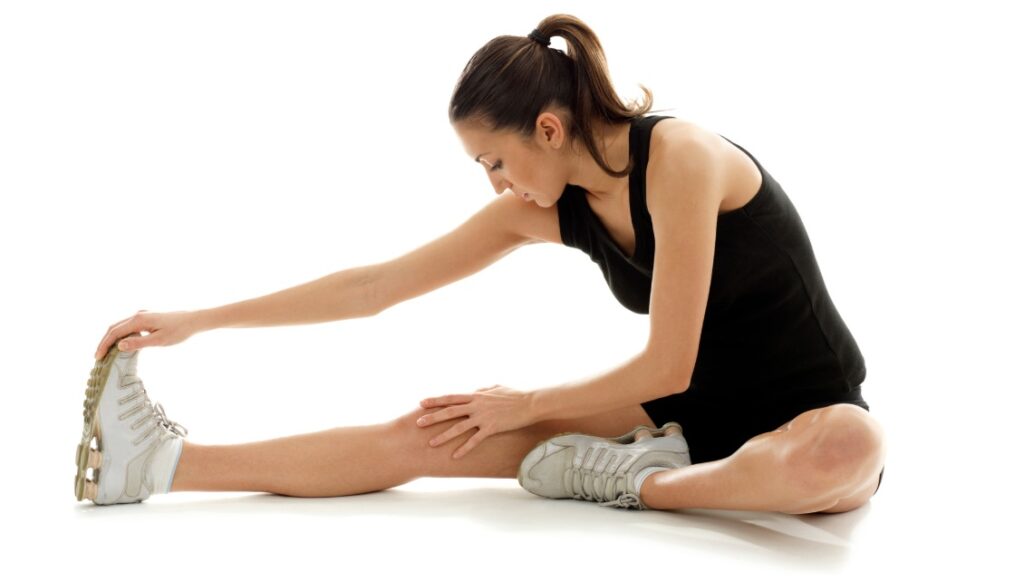
Your calves and hamstrings take a beating during races, and they’re screaming for relief. Start with a simple standing forward fold, letting your arms hang heavy while your hamstrings gradually release. Hold this for 60-90 seconds, breathing deeply and allowing gravity to do the work.
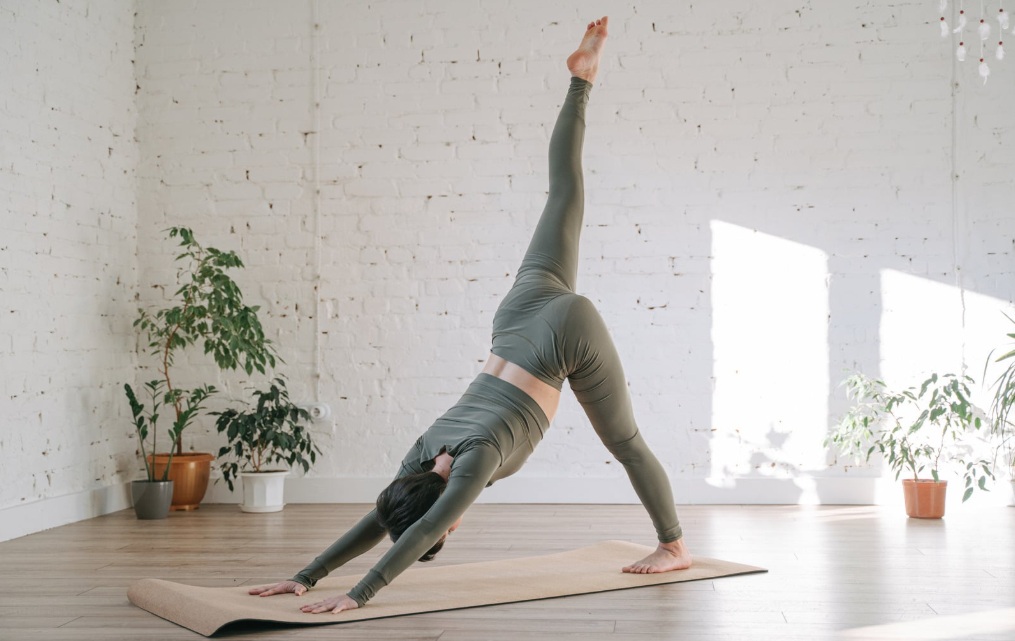
Move into downward-facing dog, pedaling your feet to give each calf individual attention. Press one heel down while keeping the other lifted, then switch. This dynamic movement helps break up tension patterns that build during repetitive running motions.
The seated forward fold becomes your best friend post-race. Sit with legs extended, reaching forward from your hips rather than rounding your back. You don’t need to touch your toes – just find that sweet spot where you feel a good stretch without pain. Stay here for 2-3 minutes, letting your breath soften the tight spots.
Try the supine hamstring stretch using a yoga strap or towel. Lying on your back, loop the strap around one foot and gently draw your leg toward you. Keep your opposite leg grounded and your pelvis neutral. This position takes pressure off your lower back while effectively targeting those stubborn hamstrings.
Restorative Poses for Deep Muscle Relaxation
Restorative yoga is where the real magic happens for recovery. Your nervous system needs to shift from a heightened, racing state to rest-and-digest mode, and these poses help create that transition beautifully.
Legs-up-the-wall pose is non-negotiable after your race. Find a wall, lie on your back, and extend your legs up against it. This gentle inversion helps reduce swelling in your legs and feet while calming your entire system. Stay here for 10-15 minutes, placing a bolster or pillow under your lower back if needed.
Supported child’s pose with a bolster between your knees creates space in your hips while providing that cocoon-like feeling your body craves. Rest your forehead on the bolster and let your arms relax completely. This pose gently stretches your back muscles while giving your mind permission to fully let go.
The supported bridge pose works wonders for tight hip flexors and sore backs. Place a yoga block or pillow under your sacrum and let your body weight settle into the support. Your hip flexors get a passive stretch while your back muscles can finally release the tension they’ve been holding.
Finish with savasana, but make it extra special by placing a bolster under your knees and an eye pillow over your eyes. This setup reduces strain on your lower back and signals to your nervous system that it’s time for deep restoration.
Hip Flexor and IT Band Releases to Prevent Chronic Tightness
Your hip flexors work overtime during running, and without proper release, they’ll pull on your lower back, creating compensation patterns throughout your body. The low lunge with a quad stretch addresses both hip flexor tightness and quad tension simultaneously.
Step your right foot forward into a lunge, lower your back knee to the ground, then reach back to grab your left foot. This creates a deep stretch through your hip flexor and quadriceps. Hold for 90 seconds on each side, breathing into any areas of resistance.
The figure-four stretch targets your glutes and outer hips, which support your IT band. Lying on your back, cross your right ankle over your left thigh and thread your hands behind your left leg. Draw your left thigh toward your chest while keeping your right knee pointing away from you.
Pigeon pose variations give you the deepest hip release possible. Start in a supported version with a bolster under your front thigh if the traditional pose feels too intense. Your hip flexors, glutes, and deep rotators all get attention here. Don’t force the stretch – let time and breath create the opening.
The IT band needs indirect release since it’s tough connective tissue that doesn’t respond well to aggressive stretching. Use a supine spinal twist to create space along your entire side body. Lie on your back, draw your right knee toward your chest, then cross it over to your left side while keeping your right shoulder grounded.
Thread-the-needle pose works beautifully for IT band release, too. From hands and knees, thread your right arm under your left, lowering your right shoulder to the ground. This creates a gentle twist that releases tension along your side body and outer hip.
Target Problem Areas: Yoga Solutions for Runner-Specific Issues
Ankle Mobility Exercises to Prevent Shin Splints
Your ankles take a beating during every run, and when they’re tight or immobile, your shins pay the price. Shin splints often develop when your ankles can’t move through their full range of motion, forcing other muscles to compensate. You need to work on both ankle flexibility and strength to keep those painful shin splints at bay.
Start with ankle circles in both directions – 10 slow, controlled rotations each way. Then move into calf raises, where you rise onto your toes and slowly lower down, feeling the stretch through your Achilles tendon. For deeper mobility work, try the wall ankle stretch: place your hands against a wall, step back about 3 feet with one foot, and lean forward while keeping your back heel planted. You should feel a strong stretch through your calf and ankle.
The downward-dog-to-forward-fold flow works wonders for your entire posterior chain. From downward dog, pedal your feet by bending one knee while straightening the other, alternating for 30 seconds. This movement loosens tight calves and improves ankle dorsiflexion – the upward movement your foot needs during the landing phase of running.
Don’t forget about resistance band exercises for your ankles. Loop a band around your forefoot and practice pointing, flexing, and moving your foot side to side against the resistance. This builds the small stabilizing muscles that keep your ankles strong and injury-free.
Glute Activation Poses to Combat Dead Butt Syndrome
Dead butt syndrome sounds funny, but it’s no joke for runners. When your glutes shut down from sitting too much or from repetitive running motions, your hamstrings and lower back pick up the slack, leading to pain and inefficient running form. You need to wake those glutes up before they become a liability.
The bridge pose is your best friend for glute activation. Lie on your back with knees bent, squeeze your glutes, and lift your hips toward the ceiling. Hold for 5 seconds, then lower slowly. Make it harder by lifting one leg at a time or placing a resistance band around your thighs. You should feel your glutes working, not your hamstrings or lower back doing the heavy lifting.
Clamshells target your gluteus medius, the muscle responsible for hip stability during running. Lie on your side with knees bent, keep your feet together, and lift your top knee while squeezing your outer glute. If this feels too easy, add a resistance band around your thighs or hold the top position for longer.
The warrior III pose challenges your glutes while improving balance and proprioception. Stand on one leg, hinge forward at the hips, and extend your other leg behind you until your body forms a straight line from head to toe. Your standing leg’s glute has to work overtime to keep you stable and aligned.
Fire hydrants might look silly, but they’re incredibly effective for glute activation. Start on hands and knees, keep your knee bent at 90 degrees, and lift one leg out to the side like a dog at a fire hydrant. Focus on using your glute, not momentum, to create the movement.
Core Strengthening Sequences for Better Running Form
Your core is your body’s powerhouse during running, transferring energy between your upper and lower body while maintaining proper posture and alignment. When your core is weak, you lose efficiency and increase your risk of injury throughout your entire kinetic chain.
Plank variations should be your go-to core strengtheners. Start with a basic plank, holding for 30-60 seconds while maintaining a straight line from head to heels. Progress to side planks to target your obliques, which help prevent excessive rotation during running. Add movement with plank-to-downward-dog flows, transitioning between the two positions while keeping your core engaged.
Dead bug exercises teach your core to stabilize while your limbs move independently – exactly what happens when you run. Lie on your back with arms reaching toward the ceiling and knees bent at 90 degrees. Slowly extend your opposite arm and leg while keeping your lower back pressed to the floor. Return to the starting position and switch sides.
Russian twists with your feet elevated challenge your rotational stability. Sit with knees bent, lean back slightly, and twist your torso from side to side while keeping your chest open and spine long. Add weight or increase speed as you get stronger.
The bird dog exercise mimics the opposite arm-leg coordination pattern of running while challenging your deep core stabilizers. Start on hands and knees, then extend the opposite arm and leg while keeping your hips square and your spine neutral. Hold for 5-10 seconds before switching sides.
Shoulder and Neck Releases for Upper Body Tension
You might think running only involves your legs, but your upper body works hard too, and tension in your shoulders and neck can throw off your entire running form. When you’re tight up top, you waste energy and create compensation patterns that can lead to injury down the line.
Eagle arms provide an intense stretch for tight shoulders and the upper back. Wrap your arms around yourself like you’re giving yourself a hug, then lift your elbows and reach your fingertips toward the ceiling. Feel the stretch between your shoulder blades where tension loves to hide.
Neck rolls and gentle stretches release built-up tension from forward head posture and stressed breathing patterns. Slowly roll your head in circles, then hold gentle stretches to each side, forward, and back. Don’t force anything – let gravity and time do the work.
The thread-the-needle pose targets your thoracic spine and shoulders simultaneously. Start on hands and knees, then reach one arm under your body and across to the opposite side, letting your shoulder and temple rest on the ground. This twist feels amazing after long runs that compress your spine.
Chest-opening stretches counteract the forward shoulder posture that develops from running and daily life. Try doorway stretches by placing your forearm against a doorframe and stepping forward, or by lying on a foam roller lengthwise and letting your arms fall open to the sides.
Cat-cow movements mobilize your entire spine while releasing tension throughout your back and neck. Move slowly between rounding your spine toward the ceiling and arching it toward the floor, coordinating the movement with your breath for maximum relaxation and mobility benefits.
Creating Your Personal Yoga-Running Routine
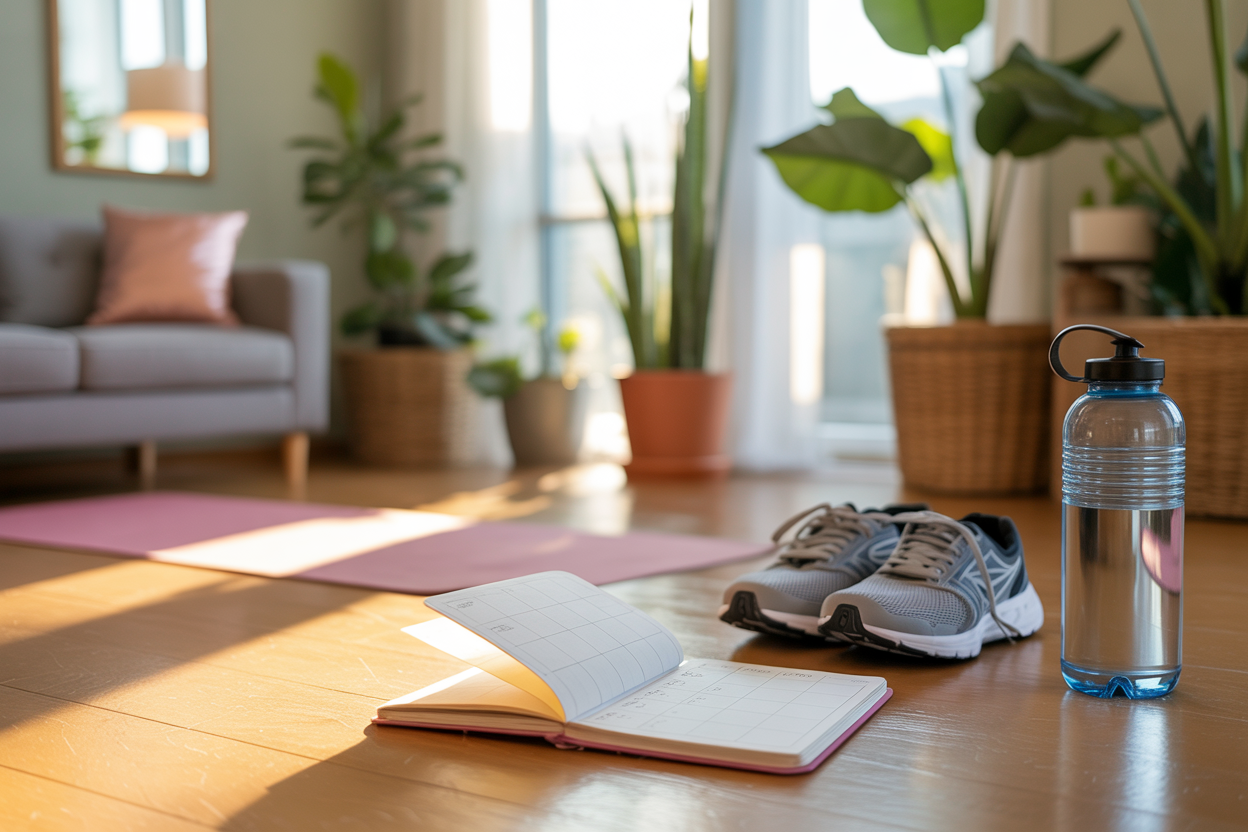
How to time yoga sessions around your training schedule
Your training schedule doesn’t have to compete with your yoga practice—they should work together like dance partners. On heavy training days, keep your yoga sessions short and focused, around 10-15 minutes of gentle stretching and mobility work. Save longer, more intense yoga sessions for your rest days when your body can fully absorb the benefits without adding stress to already fatigued muscles.
Morning runners benefit from a brief 5-10 minute activation sequence before heading out. Think gentle sun salutations, hip circles, and dynamic stretches that wake up your joints. Evening runners should flip this approach—use yoga as your cool-down ritual, spending 15-20 minutes in restorative poses that help your nervous system shift into recovery mode.
During peak training weeks, resist the urge to push through challenging yoga poses. Your body is already working overtime to adapt to increased mileage. Stick to gentle, supportive sequences that enhance recovery rather than challenge your limits. Remember, yoga isn’t another workout to conquer—it’s your body’s maintenance program.
Adapting sequences based on race distance and intensity
Different race distances demand different approaches to your yoga practice. Sprint and 5K runners need explosive power and quick recovery, so your sequences should emphasize hip mobility, ankle stability, and thoracic spine rotation. Focus on poses like low lunges with twists, warrior III for single-leg stability, and plenty of calf stretches.
Marathon and ultra-distance runners face entirely different challenges. Your yoga practice should address endurance-related issues: tight hip flexors from prolonged forward motion, rounded shoulders from arm-swing fatigue, and compressed spine from hours of impact. Dedicate extra time to poses like pigeon, camel pose for chest opening, and gentle backbends to counteract the forward posture of running.
| Race Distance | Key Focus Areas | Recommended Sequence Length |
|---|---|---|
| 5K-10K | Power, speed, quick recovery | 10-15 minutes |
| Half Marathon | Balance of power and endurance | 15-20 minutes |
| Marathon+ | Deep restoration, posture correction | 20-30 minutes |
Trail runners need sequences that address lateral movement and adaptations to uneven terrain. Include poses that work your ankles from multiple angles, strengthen your core for stability, and open your IT bands. Road runners can focus more on repetitive motion patterns and forward-plane movement compensation.
Essential props and equipment for on-the-go practice
You don’t need a fully equipped yoga studio to maintain your practice while traveling to races or training in different locations. A quality travel yoga mat is your foundation—look for one that folds rather than rolls for easier packing and provides adequate cushioning for floor poses.
Two tennis balls in a sock create an excellent makeshift massage roller for your feet, calves, and back. They’re TSA-friendly and take up minimal space in luggage. A resistance band serves double duty as both a stretching aid and a strength training tool. Use it for assisted hamstring stretches, shoulder mobility, and activation exercises.
Your minimal travel kit should include:
- Foldable yoga mat (3-4mm thickness)
- Tennis balls (2) in a sock
- Resistance band (medium resistance)
- Yoga block (foam for lighter weight)
- Small towel for grip and sweat
Hotel rooms and small spaces require adaptable sequences. Master wall-supported poses, such as legs-up-the-wall for recovery, wall-supported forward folds, and doorway chest stretches. These poses require zero floor space and work perfectly in cramped quarters.
Download offline yoga apps or create video playlists before traveling. Wi-Fi isn’t always reliable, and having your go-to sequences available offline keeps your routine consistent, no matter where your running adventures take you.
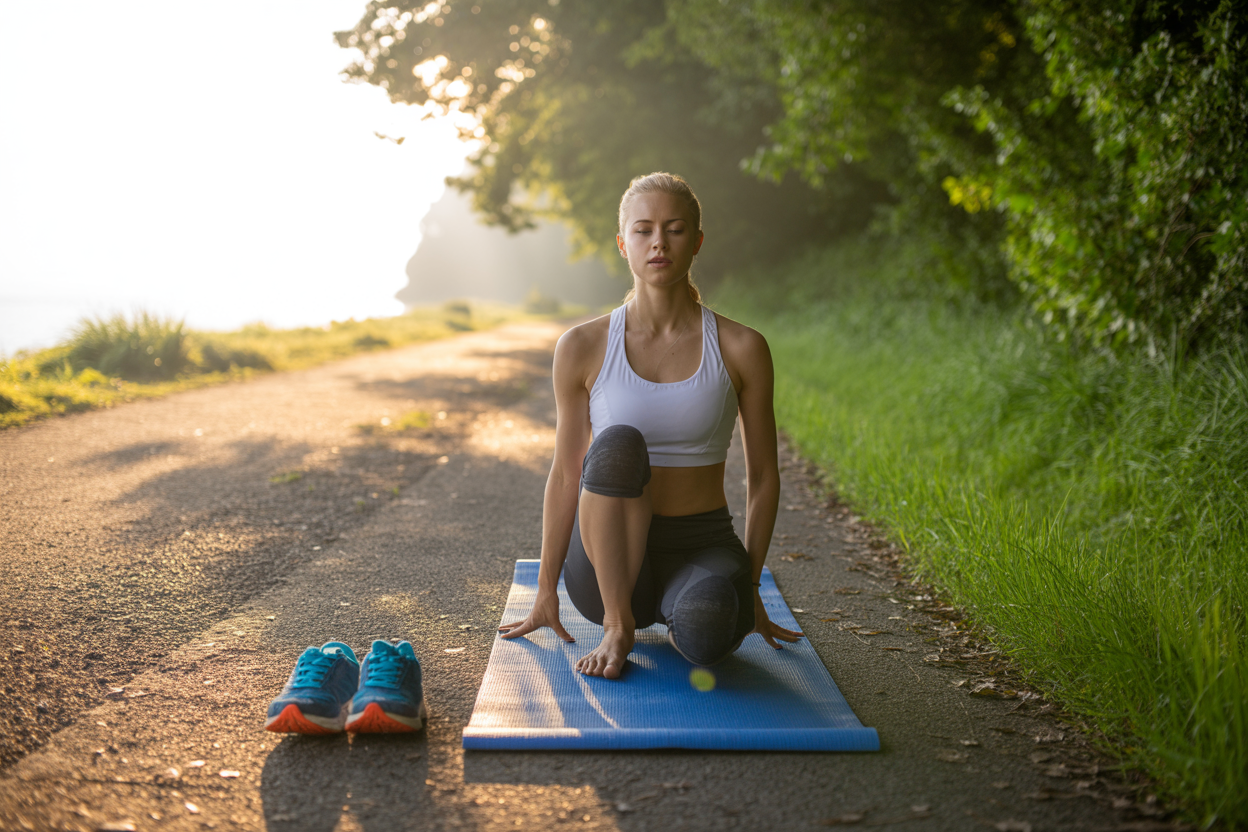
Your running performance doesn’t have to be held back by tight muscles, nagging injuries, or slow recovery times. By incorporating targeted yoga sequences into your training routine, you’re giving your body the tools it needs to run stronger, recover faster, and stay injury-free. The pre-race flows prepare your muscles for the demands ahead, while post-race sequences help your body bounce back quicker than ever.
Starting your yoga-running journey doesn’t require perfection or hours of practice. Pick one or two sequences that speak to your biggest needs right now, and build from there. Your body will thank you with better runs, fewer aches, and the confidence that comes from taking control of your athletic wellness. The mat is waiting – your next personal best might just start there.