
Walking Meditation in Urban Spaces: Finding Zen on London’s Busiest Streets
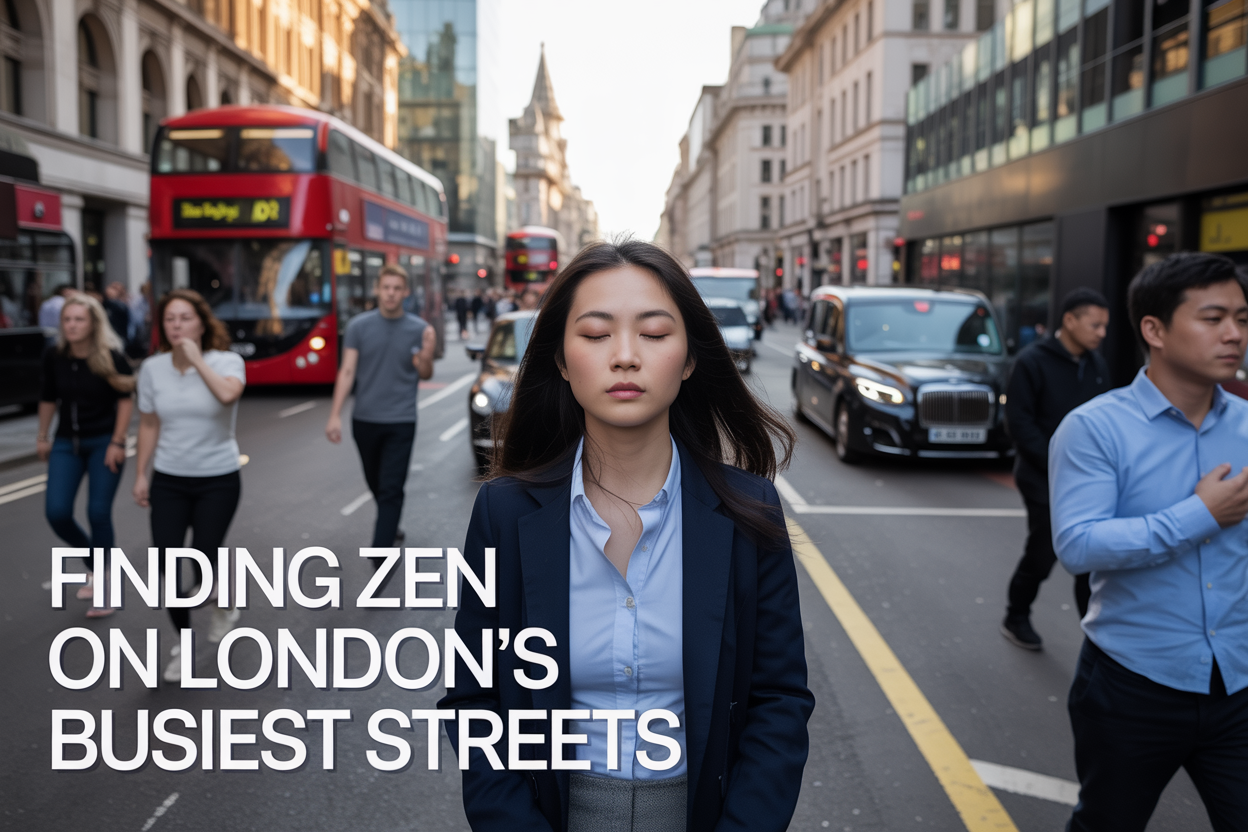
You’re rushing through London’s packed streets, earbuds in, mind racing about deadlines and to-do lists. But what if those same chaotic city blocks could become your pathway to peace? Walking meditation in urban spaces transforms London’s busiest streets into opportunities for mindfulness, turning your daily commute into a practice that grounds you amid the urban chaos.
This guide is for busy Londoners, commuters, and city dwellers who want to find calm without adding another appointment to their packed schedules. You don’t need a quiet park or meditation center – just the streets you already walk every day.
You’ll learn how to master essential walking meditation techniques that work even on Oxford Street during rush hour. We’ll explore how to navigate London’s most challenging environments, from crowded tube platforms to noisy construction zones. You’ll also discover practical strategies for building a sustainable urban walking meditation routine that fits seamlessly into your existing schedule, helping you stay centered no matter what the city throws your way.
Transform Your Daily Commute into a Mindful Practice
Reframe busy streets as meditation opportunities
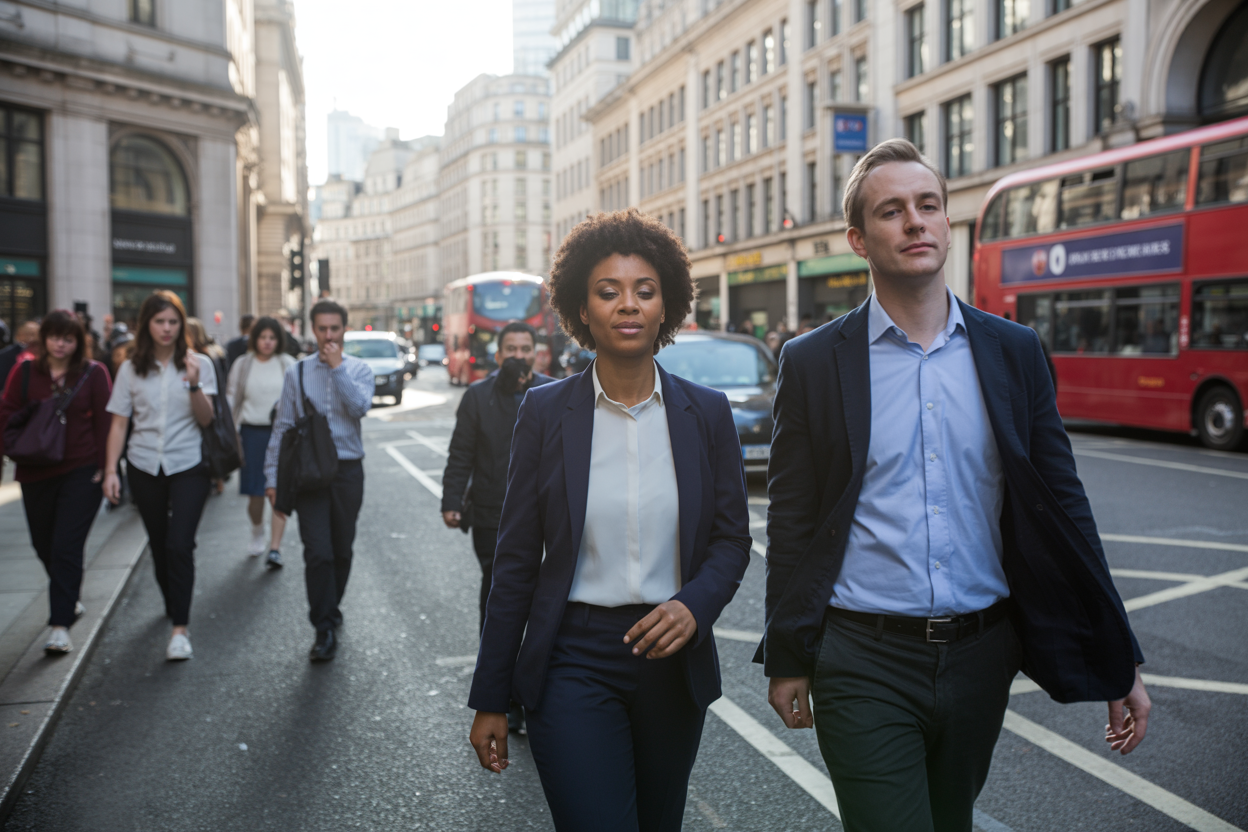
Your usual reaction to crowded pavements and honking traffic probably involves stress hormones and tight shoulders. But what if you could flip this script entirely? Those bustling London streets aren’t meditation obstacles—they’re your practice ground. The key lies in shifting your perspective from seeing chaos as disruption to viewing it as the perfect backdrop for mindfulness.
Start by recognizing that meditation doesn’t require silence or stillness. The ancient Buddhist tradition includes walking meditation precisely because movement and environmental sounds can deepen your awareness. When you’re navigating Oxford Street during rush hour, you’re not enduring a necessary evil—you’re engaging with one of the richest sensory environments available for mindfulness practice.
Your brain naturally wants to categorize street noise as “bad” and peaceful settings as “good” for meditation. Challenge this assumption. The rumble of buses, chatter of passersby, and even construction sounds become part of your meditation landscape rather than distractions from it. This reframing transforms every city walk into an opportunity to strengthen your focus and presence.
Shift from destination-focused to journey-focused mindset
You’ve probably spent years treating your commute as dead time—something to endure while getting from point A to point B. This destination obsession robs you of hundreds of potential meditation moments each week. Your journey becomes purely functional: checking your phone, planning your day, or mentally rehearsing upcoming meetings.
Breaking this pattern requires intentional mental rewiring. Before stepping outside, remind yourself that the walk itself is your primary activity, not just a means of transportation. Your destination will still be there, but now your attention stays anchored in the present moment of movement, breath, and sensation.
Practice this mindset shift by setting a simple intention: “This walk is my meditation time.” You’re not walking to meditate later—you’re already meditating. This subtle change in perspective transforms routine trips into purposeful practices. Your pace might naturally slow down as you become less focused on arrival times and more interested in the quality of each step.
Use crowd noise as natural white noise for focus
City sounds create an unexpected advantage for meditation practitioners. Unlike the varied sounds of suburban environments—a dog barking here, a car door slamming there—urban soundscapes provide a consistent auditory backdrop. This steady hum acts like natural white noise, helping your mind settle into a state of focused awareness.
Train yourself to hear London’s street symphony as a unified sound rather than individual components that demand attention. The collective noise of traffic, conversations, and city life blends into a supportive backdrop for your walking practice. Your mind learns to rest within this soundscape rather than constantly reacting to each separate noise.
When particularly loud sounds arise—a motorcycle accelerating or construction work—use them as mindfulness bells. Instead of tensing up or feeling annoyed, let these moments remind you to check in with your breath and bodily sensations. You’re turning urban unpredictability into cues for meditation.
Convert waiting times into mini-meditation sessions
Your city walks naturally include pauses: traffic lights, crowded tube entrances, or slow-moving pedestrian crossings. Most people experience these moments as frustrations or opportunities to check their phones. You can transform them into valuable meditation micro-sessions.
When you reach a red light, resist the urge to fidget or zone out. Instead, use these 30-60 seconds for focused breathing or body awareness. Feel your feet on the ground, notice your posture, or simply follow three complete breaths. These brief practices accumulate throughout your day, creating a foundation of mindfulness.
Waiting for trains offers slightly longer opportunities. Rather than scrolling through news or messages, try a quick body scan or loving-kindness practice. Send goodwill to fellow commuters or simply observe the quality of your mental state without judgment. You’re not wasting time—you’re cultivating presence amid the natural rhythms of urban life.
Master Essential Walking Meditation Techniques for City Life
Synchronize breathing with the natural walking rhythm
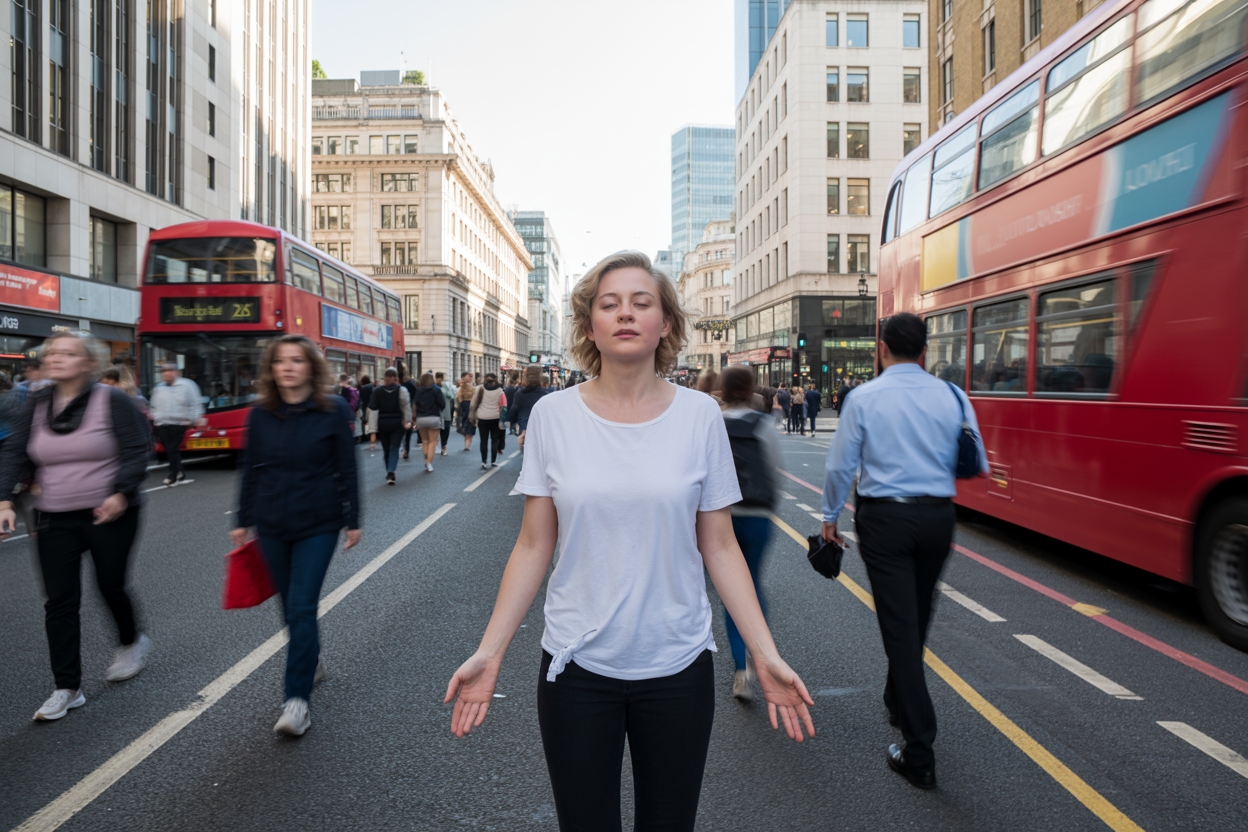
Your breathing and walking patterns already want to work together – you just need to let them. Start by walking at your normal pace without forcing anything. Notice how many steps you naturally take during one inhale, then count your exhale steps. Most people find a comfortable 2:2 or 3:3 ratio works well on city streets.
Once you’ve found your natural rhythm, stick with it for at least a full block. When traffic lights interrupt your flow, use the waiting time to reset. Take three deep breaths while standing, then resume your synchronized pattern when you start walking again.
City walking often requires pace changes – speeding up for crosswalks or slowing down in crowded areas. When this happens, adjust your breath count rather than fighting it. If you need to walk faster, try a 2:2 pattern. For slower sections, extend to 4:4 or even 5:5 counts.
Your breath becomes an anchor that keeps you present, even when London’s chaos tries to pull your attention elsewhere. Practice counting silently: “In, two, three, out, two, three” as your feet hit the pavement.
Practice grounding techniques on concrete surfaces
Concrete might seem like the enemy of grounding, but you can connect with the earth even through layers of urban infrastructure. Focus on the sensation of each footstep as it makes contact with the pavement. Feel the slight vibration that travels up through your legs with every step.
Try the “root visualization” technique while walking down Oxford Street or through Canary Wharf. Imagine roots extending from your feet through the concrete, through the underground systems, down into London’s clay soil. This mental connection helps you feel stable and centered, even surrounded by towering buildings and rushing crowds.
Pay attention to different surface textures as you walk. Notice how your feet respond to smooth pavement versus textured crosswalk surfaces, or the subtle bounce of walking over Underground tunnels. These variations become anchoring points for your attention.
The “heavy feet” technique works particularly well in urban settings. With each step, imagine your feet are slightly magnetic, drawing you gently toward the ground. This helps counteract the scattered, “floating” feeling that busy city energy can create in your mind and body.
Develop laser-sharp focus amidst distractions
Urban meditation isn’t about blocking out London’s soundtrack – it’s about training your attention like a spotlight that you can direct at will. Choose one focal point before you start walking: your breath, your footsteps, or even the rhythm of your arms swinging.
When a siren wails, construction noise erupts, or someone shouts nearby, acknowledge the distraction without judgment. Think “hearing” or “sound” and gently guide your attention back to your chosen focus. This builds your mental muscle for sustained concentration.
Practice the “expansion and contraction” technique. Start by focusing narrowly on just your breathing. After a few blocks, expand your awareness to include your whole body as it moves through space. Then contract back to just your feet touching the ground. This flexibility strengthens your ability to control the zoom level of your attention.
Use London’s predictable distractions as training opportunities. Tourist crowds near Big Ben, rush hour at London Bridge, weekend shoppers on Regent Street – each environment offers specific challenges that sharpen different aspects of your focus. The busier the street, the stronger your concentration becomes when you practice consistently.
Navigate London’s Most Challenging Urban Environments

Find Calm Along the Thames Path During Rush Hour
You might think the Thames Path during rush hour is the last place to find peace, but this bustling riverside walkway offers unique opportunities for walking meditation. The rhythmic sound of water lapping against the embankment creates a natural soundtrack that grounds you in the present moment. Start your practice by focusing on the river’s consistent flow while pedestrians surge around you like urban tides.
Position yourself slightly to the left side of the path to avoid the heaviest foot traffic. Match your breathing to the gentle movement of the water rather than the frantic pace of commuters. When cyclists ring their bells or joggers brush past, use these interruptions as mindfulness cues rather than distractions. Each sound becomes an anchor point, drawing you back to awareness of your body moving through space.
The views across to the South Bank provide excellent focal points for soft-gaze meditation. Choose a landmark, such as St. Paul’s Cathedral or the London Eye, and let your eyes rest on it while maintaining peripheral awareness of your steps. Your walking rhythm naturally slows as you absorb the expansive river vista, creating a buffer between you and the morning rush energy.
Practice Mindfulness in Busy Shopping Districts Like Oxford Street
Oxford Street transforms into a meditation laboratory when you shift your perspective from destination to journey. The key lies in embracing the chaos rather than fighting it. Begin your mindful walk at either end of the street, letting the natural flow of shoppers carry you while remaining conscious of each footstep.
Use the shop window displays as meditation objects. Instead of rushing past, pause briefly at each storefront and practice present-moment awareness. Notice the colors, textures, and arrangements without judgment or desire to purchase. This practice trains your mind to observe without attachment, a core principle of walking meditation.
The crowd density on Oxford Street actually serves as an excellent teacher for spatial awareness. You’ll develop heightened sensitivity to the energy and movement patterns around you. Notice how your body naturally adjusts its pace and direction in response to other pedestrians. This unconscious dance becomes conscious when you apply mindful attention to it.
Create micro-meditations at bus stops and street corners. Use these natural pause points to take three conscious breaths and reset your awareness before continuing. The constant stream of red buses provides visual rhythm markers, helping you maintain steady attention as you navigate through the retail maze.
Discover Hidden Pockets of Tranquility in Covent Garden
Covent Garden rewards the mindful explorer with surprising sanctuaries tucked between its bustling piazzas. St. Paul’s Church, known as the Actor’s Church, offers a peaceful courtyard that most tourists overlook. You can practice walking meditation in this quiet garden space, using the surrounding historic architecture as focal points for contemplative awareness.
The covered market areas provide acoustic meditation opportunities. Listen to the layered sounds of street performers, conversation, and footsteps creating an urban symphony. Practice discerning individual sound streams within the collective noise. This auditory mindfulness exercise strengthens your ability to maintain focus amid sensory complexity.
Neal’s Yard presents a colorful oasis where you can practice walking meditation on cobblestones. The uneven surface demands present-moment attention, naturally grounding you in physical sensations. The vibrant building facades provide visual anchors to help you stay aware as you move slowly around the small square.
The quieter side streets, like Floral Street and King Street, contain stretches perfect for contemplative walking. These passages connect the main tourist areas but see less foot traffic, giving you space to establish a meditative rhythm before re-entering busier zones. Use these transitions mindfully, preparing your awareness for changing environments.
Transform Tube Station Walks into Meditation Corridors
Underground passages become moving meditation halls when you approach them with the right mindset. The consistent lighting and linear pathways in stations like King’s Cross and Liverpool Street create ideal conditions for walking meditation practice. Focus on the sensation of your feet contacting the smooth floors while maintaining awareness of the enclosed space around you.
Escalators offer unique opportunities for meditation during your underground journey. Stand mindfully on the right side, feeling your body being carried upward or downward while maintaining breath awareness. The mechanical rhythm becomes a meditation timer, marking steady intervals for returning attention to the present moment.
The tile patterns on platform walls serve as visual aids for meditation. Many stations feature repetitive geometric designs that support focused attention. Use these patterns to practice soft-gaze meditation while waiting for trains, then carry this heightened awareness into your walking practice as you move through connecting tunnels.
Platform waiting areas become opportunities for standing meditation before transitioning to walking practice. Feel your feet firmly planted on the platform as you observe the energy of arriving and departing passengers. This stationary awareness enhances your sensitivity when you begin walking toward your exit, creating seamless meditation continuity throughout your underground journey.
Use Hyde Park Corners as Urban Retreat Spaces
Hyde Park’s corner entrances provide perfect transition zones where urban energy gradually softens into park serenity. Speaker’s Corner offers particularly rich meditation territory, where you can practice walking meditation while observing public discourse without engaging mentally. The contrast between heated debates and your inner calm creates powerful conditions for awareness-building.
The northeast corner near Marble Arch features tree-lined pathways that naturally slow your pace and deepen your breath. Use the mature plane trees as walking meditation markers, pausing briefly at each trunk to reconnect with your breathing before continuing. The dappled light filtering through leaves creates shifting patterns that enhance visual mindfulness.
Around the Wellington Arch area, you can practice transitional meditation as you move from the traffic chaos of Hyde Park Corner roundabout into the relative quiet of the park’s southeastern entrance. This dramatic environmental shift teaches your nervous system to adapt consciously to changing surroundings while maintaining meditative awareness.
The western corners near Lancaster Gate offer longer stretches of path alongside the Serpentine. Here you can develop a sustained walking meditation practice, using the lake’s surface reflections and waterfowl as gentle focal points that keep your attention anchored in present-moment awareness as your body moves rhythmically along the park’s edge.
Overcome Common City Meditation Obstacles
Block out traffic noise without losing awareness
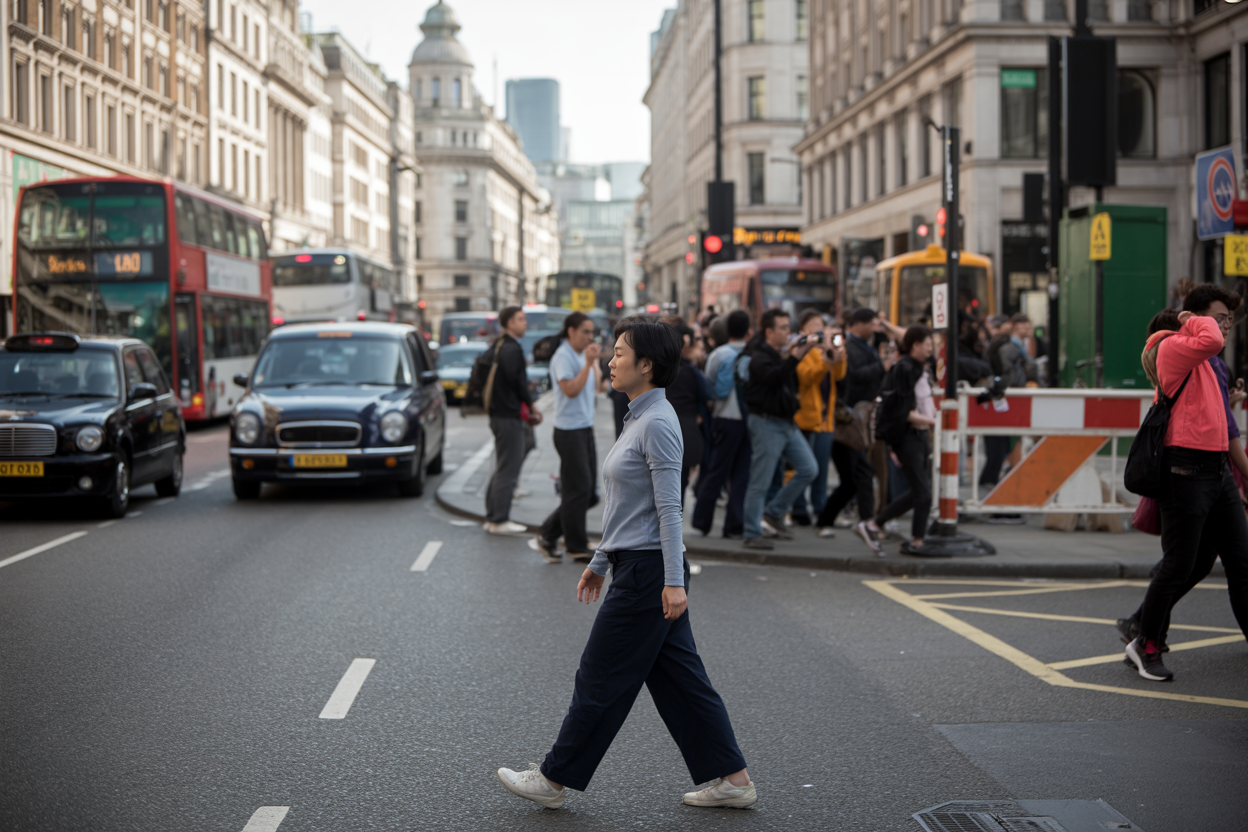
You can transform London’s constant traffic hum into your meditation anchor rather than fighting against it. Instead of trying to silence the buses, taxis, and motorcycles around you, treat the ambient noise as white noise that helps ground you in the present moment. Focus on the rhythm of your footsteps while letting traffic sounds wash over you without judgment.
Practice the “layered listening” technique: identify three distinct sound layers as you walk. The immediate layer includes your breathing and footsteps, the middle layer captures nearby conversations and footsteps of other pedestrians, and the background layer encompasses the broader urban symphony of traffic, construction, and city life. This approach keeps you alert to your surroundings while maintaining your meditative focus.
When particularly loud sounds, like sirens or honking horns, break through, acknowledge them mentally with phrases like “hearing” or “sound arising” before gently returning your attention to your walking rhythm. This prevents you from being startled while maintaining your mindful state.
Handle interruptions from pedestrians and cyclists
Urban walking meditation means sharing space with hundreds of other people, each with their own agenda and pace. When someone bumps into you or cuts across your path, use these moments as opportunities to practice patience and compassion rather than letting them derail your meditation.
Develop your peripheral awareness so you can anticipate pedestrian traffic patterns without losing focus on your internal experience. Notice the natural flow of foot traffic and adjust your pace accordingly, treating each navigation decision as part of your mindful practice.
Create mental responses for common interruptions:
- Tourist asking for directions: Pause your meditation, offer help with kindness, then consciously resume your practice
- Aggressive cyclists: Step aside mindfully, using the movement as an opportunity to feel your body in space
- Street performers or vendors: Acknowledge them with appreciation while maintaining your walking rhythm
- Construction barriers: View route changes as chances to practice adaptability and present-moment awareness
Remember that these interruptions aren’t obstacles to your meditation—they’re part of the urban meditation experience that helps you develop equanimity in real-world conditions.
Maintain focus despite visual overstimulation
London’s streets assault your visual system with advertising billboards, flashing lights, colorful shop fronts, and constant movement. Instead of closing your eyes or staring at the ground, learn to soften your gaze and practice “wide-angle vision.”
Adopt a gentle, unfocused gaze that takes in your peripheral vision without fixating on any single visual element. This technique, borrowed from martial arts, helps you stay aware of your environment while avoiding visual overwhelm. Look ahead at a 45-degree downward angle, focusing roughly 10-15 feet in front of you.
When bright advertisements or digital displays catch your attention, notice them without getting pulled into their content. Practice the “mental noting” technique by silently labeling distractions: “seeing colors,” “noticing movement,” or simply “visual.” This acknowledgment helps you let go of the grip of visual stimulation.
Use architectural elements as meditation aids. The rhythm of lampposts, the pattern of building facades, or the repetition of street markings can become focal points that support rather than distract from your practice. Transform London’s visual chaos into a meditation tool by finding patterns and rhythms within the apparent disorder.
Deal with time pressure and rushing crowds
The pressure to keep pace with London’s fast-moving crowds can make walking meditation feel impossible, but you can maintain mindfulness even when external circumstances demand speed. The key lies in adjusting your meditation technique rather than abandoning it entirely.
During rush hour or when you’re genuinely late, practice “speed meditation” by focusing intensely on the physical sensations of faster walking. Feel your heart rate increase, notice your breathing change, and stay present with the energy of movement. This transforms necessary hurrying into conscious, mindful action rather than mindless rushing.
When caught in dense crowds like those at Oxford Circus or London Bridge Station, shift your focus to the collective energy around you. Notice the shared human experience of movement and purpose. Practice loving-kindness by silently sending good wishes to the people around you: “May you reach your destination safely” or “May you find peace in your day.”
Create time buffers in your schedule specifically for walking meditation. Leave 10-15 minutes earlier than necessary so you can maintain a mindful pace without anxiety about being late. This small adjustment transforms your relationship with urban travel from stressed rushing to intentional practice.
Use waiting times at traffic lights or pedestrian crossings as micro-meditation moments. These natural pauses in city movement offer perfect opportunities for a few conscious breaths or body awareness checks, helping you reset your mindful intention before continuing your journey.
Build a Sustainable Urban Walking Meditation Routine

Start with 5-minute practices during lunch breaks
Your lunch break offers the perfect testing ground for urban walking meditation. Step away from your desk, grab your jacket, and head outside for just five minutes. You’ll discover that even this brief window can shift your entire afternoon energy.
Choose a simple route around your office building or nearby park. Walk at half your normal pace, focusing on the sensation of your feet touching the pavement. Notice how your breathing naturally adjusts to this slower rhythm. When traffic noise or construction sounds intrude, acknowledge them without judgment and return your attention to your steps.
Start by counting your breaths for the first minute, then shift to feeling the weight distribution across your feet. By minute three, expand your awareness to include sounds around you without letting them pull you into mental chatter. The final two minutes can focus on the physical sensations of air moving across your skin or the gentle swing of your arms.
Don’t worry about achieving perfect calm on day one. Your mind will wander, and that’s completely normal. The practice lies in noticing when you’ve drifted and gently bringing your attention back to the present moment. After just one week of consistent five-minute sessions, you’ll notice improved afternoon focus and reduced stress levels.
Create consistent routes that support daily practice
Establishing regular routes removes decision fatigue from your meditation practice. Map out three different paths of varying lengths: a quick 10-minute circuit for busy days, a 20-minute moderate route for standard practice, and a 30-minute extended path for deeper sessions.
Your short route might circle your neighborhood block or traverse a nearby commercial street. Focus on familiar landmarks as anchor points for your attention. The flower shop entrance, the red postbox, or that distinctive Victorian doorway can serve as gentle reminders to return to mindful awareness when your thoughts scatter.
For your moderate route, consider incorporating a mix of environments. Start on a quieter residential street, move through a small park or garden square, then finish along a moderately busy commercial area. This variety trains your mind to maintain equanimity across different urban stimuli.
Your extended route should include at least one genuinely peaceful space – perhaps a cemetery, churchyard, or riverside path. This gives your nervous system time to settle deeply before re-entering more stimulating environments. Mark these routes in your phone’s map app and give them descriptive names like “Morning Calm Circuit” or “Lunch Reset Loop.”
Having predetermined routes means you can start walking immediately without mental preparation, allowing your practice to flow more naturally into your daily rhythm.
Track progress using smartphone apps and journals
Recording your walking meditation journey keeps you motivated and reveals patterns you might otherwise miss. Combine digital tracking with handwritten reflections for the most comprehensive approach.
Apps like Insight Timer or Headspace offer walking meditation timers with gentle bell reminders. Set these to chime softly every few minutes, prompting you to check in with your breath or posture. Some apps track your meditation streaks, providing gentle motivation to maintain consistency.
Your smartphone’s built-in health app automatically records your walking pace and distance. You’ll notice your meditation walks naturally slow down as your practice deepens, creating a measurable indicator of progress. Screenshot your weekly walking data to include in your practice journal.
Keep a simple pocket notebook for post-walk observations. Rate your mental clarity from 1-10, note any physical sensations that stood out, and record one thing you noticed about your urban environment that you’d previously overlooked. Did you hear birds singing above the traffic? Notice interesting architectural details? Spot new street art?
| Week | Average Pace | Clarity Rating | Key Insight |
|---|---|---|---|
| 1 | 3.2 mph | 4/10 | Traffic sounds less jarring |
| 2 | 2.8 mph | 6/10 | Body tension releasing faster |
| 3 | 2.5 mph | 7/10 | Can maintain focus through crowds |
This simple tracking system reveals your growing ability to find peace within urban chaos, encouraging you to continue developing this valuable life skill.
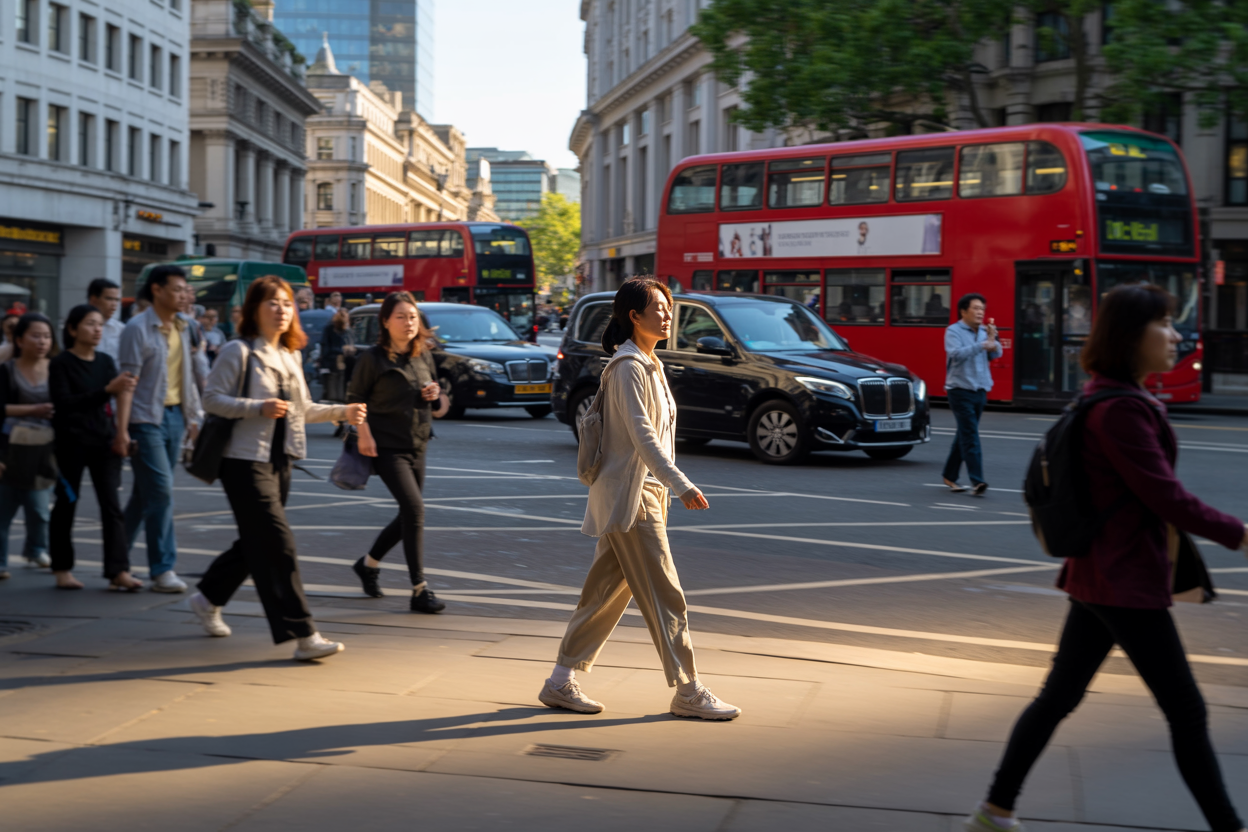
You don’t need to escape to a quiet forest or mountain retreat to find your center – London’s bustling streets can become your meditation sanctuary. By weaving walking meditation into your daily commute and city strolls, you’re turning ordinary moments into opportunities for mindfulness. The techniques you’ve learned here will help you stay grounded, whether you’re dodging crowds in Piccadilly Circus or walking along the Thames.
Start small with just five minutes of mindful walking tomorrow, and gradually build your practice as you become more comfortable with the urban sounds and distractions around you. Your stress levels will drop, your focus will sharpen, and you’ll discover a new way to connect with both yourself and the vibrant city you call home. London’s energy doesn’t have to overwhelm you – it can actually fuel your meditation practice once you know how to work with it instead of against it.
✨ Looking for more ways to bring calm into your routine? Visit my YOGA BLOG for accessible practices and soulful guidance designed to support mindful living.
✨ Join The Zen Journal community — get fresh yoga and wellness insights straight to your inbox ✨