
The Art of Stillness by Pico Iyer – Why Doing Nothing Is Actually Revolutionary
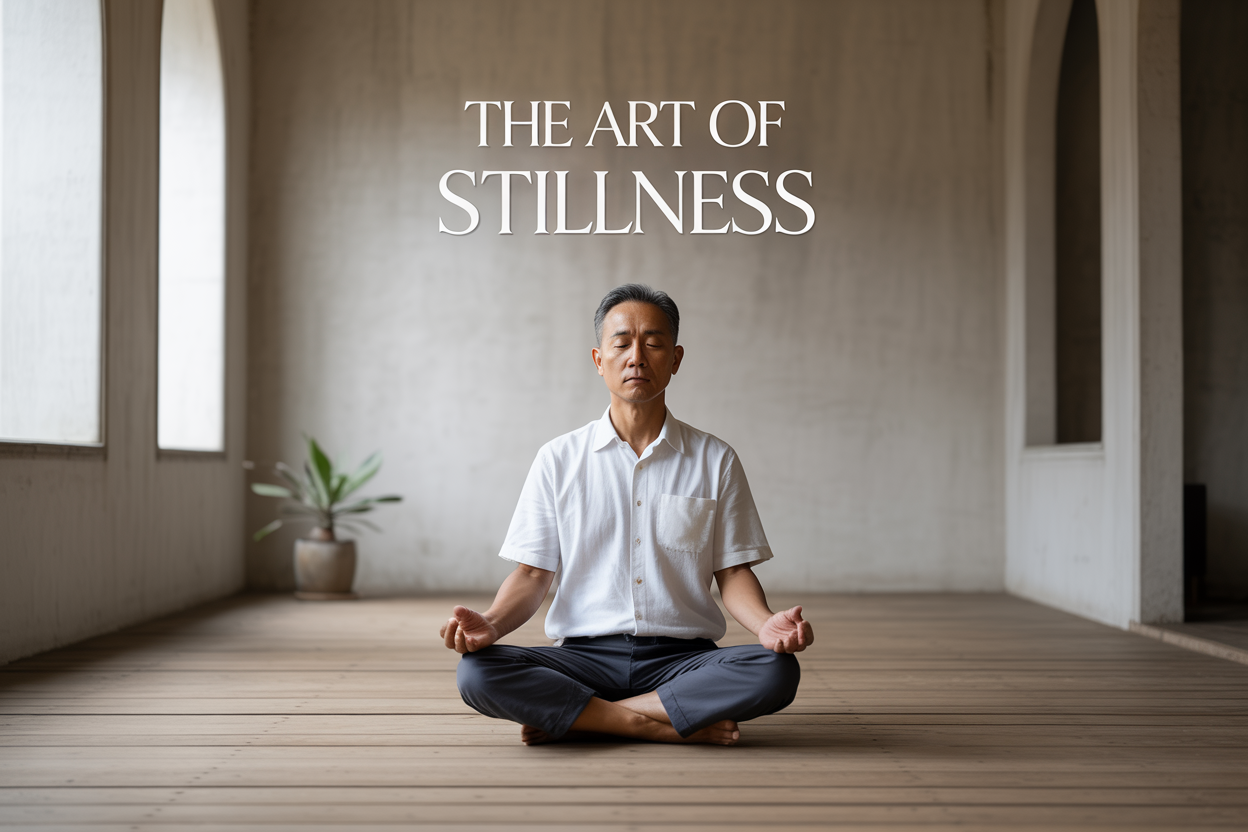
Your phone buzzes every thirty seconds, your calendar overflows with back-to-back meetings, and you’ve forgotten what silence actually sounds like. Sound familiar? You’re not alone in this constant hustle culture that glorifies busyness as a badge of honor.
This guide is for you if you’re tired of the endless rush and ready to discover why doing absolutely nothing might be the most radical thing you can do right now.
Pico Iyer’s “The Art of Stillness” flips everything you’ve been told about productivity on its head. While everyone else chases the next big thing, Iyer argues that your real power lies in stepping back, sitting still, and simply being present. His philosophy isn’t just feel-good fluff – it’s a genuine rebellion against a world that profits from keeping you distracted and overwhelmed.
You’ll discover how ancient wisdom translates into modern solutions for your overstimulated mind, plus practical ways to make stillness your secret weapon in daily life. We’ll explore why doing nothing is actually doing everything that matters, and how you can start this quiet revolution today without changing your entire lifestyle.
Ready to learn why the most successful people swear by doing less, not more?
🎥 Prefer an audio‑style experience? Watch and listen to the full review here.
SHORT VIDEO reflection on The Art of Stillness by Pico Iyer
📘 Grab Your Copy on Amazon and Start Reading
Understanding Pico Iyer’s Revolutionary Philosophy on Stillness
Breaking the Myth That Constant Motion Equals Productivity
You’ve probably fallen into the trap of believing that being busy means being valuable. Your calendar overflows with meetings, your phone buzzes with notifications, and you wear exhaustion like a badge of honor. But Pico Iyer challenges this entire framework with a radical proposition: your worth isn’t measured by your motion.
When you examine the most groundbreaking innovations and profound insights throughout history, they rarely emerged from frantic activity. Instead, they bloomed in moments of quiet contemplation. Think about Einstein’s theory of relativity, conceived during leisurely walks, or Lin-Manuel Miranda’s “Hamilton,” born from reading a biography on vacation. Your brain needs space to make connections, and constant motion prevents this creative process.
You might resist this idea because society has programmed you to equate stillness with laziness. Your corporate culture celebrates employees who answer emails at midnight and take calls during vacation. But this mythology crumbles when you look at actual results. The most productive individuals aren’t the busiest—they’re the ones who know when to stop, reflect, and choose their next move deliberately.
Your smartphone compounds this problem by making motion feel mandatory. Every notification demands immediate attention, and every social media update creates a false sense of urgency. Yet your most important decisions—about relationships, career, purpose—require the kind of deep thinking that only emerges when you step off the hamster wheel.
Discovering How Stillness Differs From Laziness or Inactivity
You need to understand that Iyer’s stillness isn’t about collapsing on your couch for Netflix marathons. True stillness is intensely alive—it’s your mind operating at its highest capacity without external interference. When you practice genuine stillness, you’re not escaping responsibility; you’re preparing to meet it more effectively.
Laziness involves avoiding what you should be doing. Stillness involves choosing not to do what everyone else thinks you should be doing. The difference lies in intention and awareness. When you’re being lazy, you’re unconscious, reactive, and often feeling guilty. When you embrace stillness, you’re making a conscious choice to create space for insight and clarity.
Your body might appear inactive during stillness, but your inner world is incredibly dynamic. You’re processing experiences, integrating learning, and allowing your subconscious to work on problems your conscious mind couldn’t solve. This isn’t the mindless scrolling through social media that masquerades as relaxation—it’s purposeful non-doing.
Consider how athletes understand this principle. Your muscles grow during rest, not during the workout itself. Similarly, your creativity and wisdom develop in the spaces between activities. Professional athletes schedule recovery as seriously as they schedule training. Your mental and emotional well-being deserves the same consideration.
Recognizing Stillness as an Active Choice in a Hyperconnected World
You live in an era where making space for stillness requires conscious rebellion against your environment. Every app, every notification, every cultural message pushes you toward constant engagement. Choosing stillness becomes a radical act of self-determination—you’re declaring that your inner life matters more than external demands for your attention.
Your hyperconnected world offers unprecedented opportunities, but it also fragments your attention in ways unimaginable to previous generations. You can video chat with someone on another continent while simultaneously checking email and browsing news—but this multitasking comes at the cost of depth and presence.
When you choose stillness, you’re not being anti-technology or anti-progress. You’re being pro-human. You’re acknowledging that your consciousness needs protection from the constant assault of information and stimulation. This choice requires courage because it means saying no to things that seem important but aren’t truly essential.
Your stillness practice becomes a form of resistance against a culture that profits from your distraction. Social media companies, advertisers, and even employers benefit when you remain perpetually available and reactive. By claiming time and space for stillness, you’re reclaiming your agency and your ability to think for yourself.
The most revolutionary aspect of stillness in your current context isn’t what you do—it’s what you don’t do. You don’t immediately respond to every message. You don’t fill every quiet moment with stimulation. You don’t mistake being busy for being important. Instead, you create islands of calm in an ocean of chaos, and from these islands, you can see clearly enough to navigate your life with wisdom rather than mere reaction.
The Hidden Power of Doing Nothing in Modern Society
Escaping the tyranny of endless notifications and distractions
Your phone buzzes every ninety seconds. Your laptop pings with new emails. Social media feeds refresh endlessly, demanding your attention like needy children. You’ve become a slave to digital noise, and breaking free requires the radical act of choosing silence over stimulation.
When you deliberately step away from the constant stream of notifications, something remarkable happens. Your nervous system begins to calm. The frantic energy that keeps you checking your phone compulsively starts to dissipate. You realize how much mental bandwidth those tiny interruptions consume throughout your day.
This isn’t about becoming a digital hermit. It’s about reclaiming your right to exist without being constantly available to everyone and everything. You can start small—put your phone in airplane mode for thirty minutes, close unnecessary browser tabs, or create specific times when you’re completely offline. These moments of digital fasting become pockets of freedom where your thoughts can finally breathe.
Reclaiming mental clarity through deliberate inaction
Your mind operates like a snow globe that never stops shaking. Thoughts, worries, and mental chatter swirl constantly, making it impossible to see clearly. Stillness is the pause that lets everything settle, revealing the clarity that has always been there beneath the chaos.
When you consciously choose to do nothing, you’re not being lazy—you’re giving your overworked mind permission to process and organize. Think of it as defragmenting your mental hard drive. All those scattered thoughts and half-processed experiences finally get sorted and filed properly.
This deliberate inaction sharpens your decision-making abilities. Without the constant input of new information, your mind can finally evaluate what’s already there. You begin to recognize patterns in your thinking, identifying which thoughts serve you and which ones drain your energy. The mental fog lifts, and you see your life with startling clarity.
Building resilience against burnout and overwhelm
Your culture glorifies being busy until it breaks you. The constant pressure to produce, achieve, and optimize every moment of your existence creates a perfect storm for burnout. Stillness becomes your secret weapon against this modern epidemic.
Regular periods of doing nothing act as a pressure-release valve for your overloaded system. Instead of pushing through exhaustion until you crash, you learn to recognize when your reserves are running low. You build in recovery time before you need it urgently.
This proactive approach to rest creates genuine resilience. You’re no longer running on empty, hoping you can make it to the weekend. Instead, you develop a sustainable rhythm that honors both your productivity and your humanity. Your nervous system learns to trust that rest is coming, which paradoxically allows you to engage more fully when action is required.
Cultivating deeper self-awareness through quiet moments
In the absence of external noise, you finally hear your own voice. The constant distractions of modern life drown out your inner wisdom, but stillness creates space for authentic self-reflection. You begin to understand what truly matters to you versus what you’ve been told should matter.
These quiet moments reveal patterns in your emotional responses, help you identify your genuine values, and clarify your deepest desires. Without the influence of social media comparisons or societal expectations, you can explore who you really are beneath all the roles you play.
This self-awareness becomes transformative. You stop reacting automatically to every stimulus and start responding from a place of conscious choice. Your relationships improve because you understand your own triggers and boundaries. Your career decisions become more aligned with your authentic self rather than external pressures.
📘 Grab Your Copy on Amazon and Start Reading
Ancient Wisdom Meets Contemporary Challenges
Learning from meditation traditions across cultures
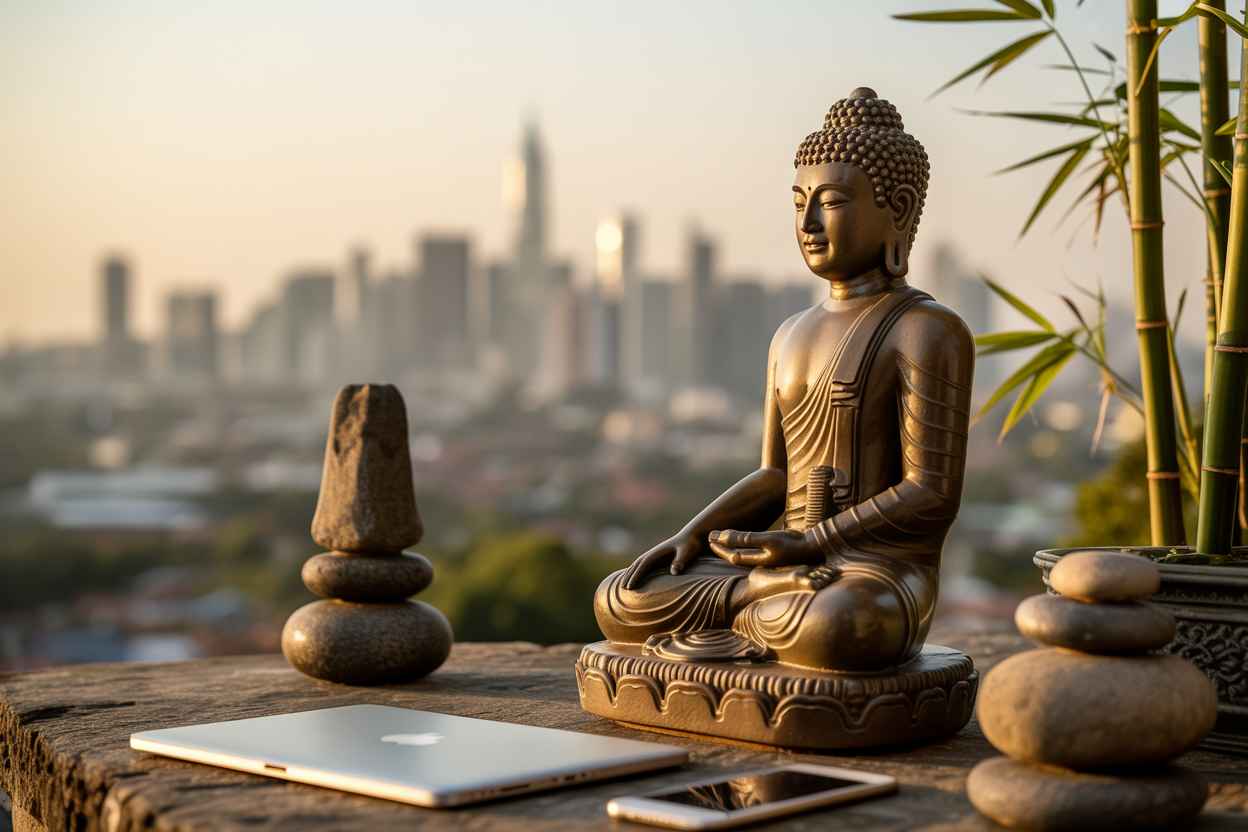
You can trace the threads of stillness through every major spiritual tradition across the globe. Buddhist monks in Tibet have perfected the art of mindful sitting for over 2,500 years, teaching you that your mind’s constant chatter isn’t your master. Japanese Zen practitioners show you how to find profound peace in the simple act of breathing, while Sufi mystics from the Middle East demonstrate how stillness can become a form of divine connection through their whirling meditations.
Your journey into stillness doesn’t require you to pick just one path. Hindu traditions offer you pranayama breathing techniques that calm your nervous system in minutes, while Christian contemplative practices like Lectio Divina teach you to find sacred silence in everyday moments. Indigenous cultures worldwide have always understood what you’re just rediscovering – that sitting quietly with nature isn’t lazy, it’s essential medicine for your soul.
Each tradition offers you unique tools: Tibetan meditation gives you visualization techniques to anchor your wandering mind, while Taoist practices show you how to cultivate wu wei – effortless action that flows from deep inner stillness. The beauty lies in how these ancient practices don’t contradict each other; they complement your modern need for mental clarity and emotional balance.
Adapting timeless practices for digital age stressors
Your smartphone buzzes every few minutes, your laptop demands constant attention, and your brain feels like it’s running dozens of browser tabs simultaneously. The meditation masters of old never faced notification anxiety or Zoom fatigue, yet their wisdom remains surprisingly relevant for your hyperconnected life.
You can transform your daily digital overwhelm into opportunities for micro-meditations. When your phone pings, instead of immediately reaching for it, you can use that sound as a mindfulness bell – a reminder to take three conscious breaths before responding. Ancient walking meditation practices adapt perfectly to your commute; you can practice mindful awareness whether you’re walking to your car or standing in line at the coffee shop.
Your screen time doesn’t have to be the enemy of stillness. You can create digital boundaries that honor ancient wisdom: designating the first hour after waking as phone-free time, practicing the old tradition of the Sabbath by unplugging for specific hours each week, or using meditation apps that guide you back to the silence sages have cherished for millennia.
The key insight from traditional practices is that you don’t need perfect conditions to find stillness. Medieval monks found peace in noisy monasteries, and you can find your center in busy airports or cramped apartments.
Finding a balance between Eastern philosophy and Western productivity
Your Western mind loves goals, timelines, and measurable results, while Eastern wisdom invites you to simply be present without agenda. This apparent contradiction actually creates a powerful synergy when you learn to navigate both worlds skillfully.
You don’t have to abandon your drive for achievement to embrace stillness. Instead, you can use contemplative practices to enhance your productivity. Regular meditation sharpens your focus, reduces decision fatigue, and actually makes you more efficient at work. When you approach your daily tasks from a place of inner calm rather than frantic urgency, you often accomplish more with less stress.
Eastern philosophy teaches you about non-attachment – the ability to work toward goals without being enslaved by outcomes. This doesn’t mean you become passive or unmotivated. Rather, you discover how to pour your energy into your efforts while holding lightly to results. Your performance often improves when you’re not desperately clinging to specific outcomes.
| Eastern Approach | Western Integration | Daily Application |
|---|---|---|
| Present-moment awareness | Focused work sessions | Single-tasking with mindful attention |
| Non-attachment | Stress-free goal pursuit | Working hard while accepting outcomes |
| Wu wei (effortless action) | Flow states | Finding rhythm in routine tasks |
| Beginner’s mind | Creative problem-solving | Approaching challenges with curiosity |
You can honor your cultural conditioning while adopting wisdom from other traditions. This means setting intentions rather than rigid goals, measuring progress through inner peace as well as external achievements, and recognizing that your worth isn’t determined by your productivity levels.
Practical Benefits of Embracing Stillness
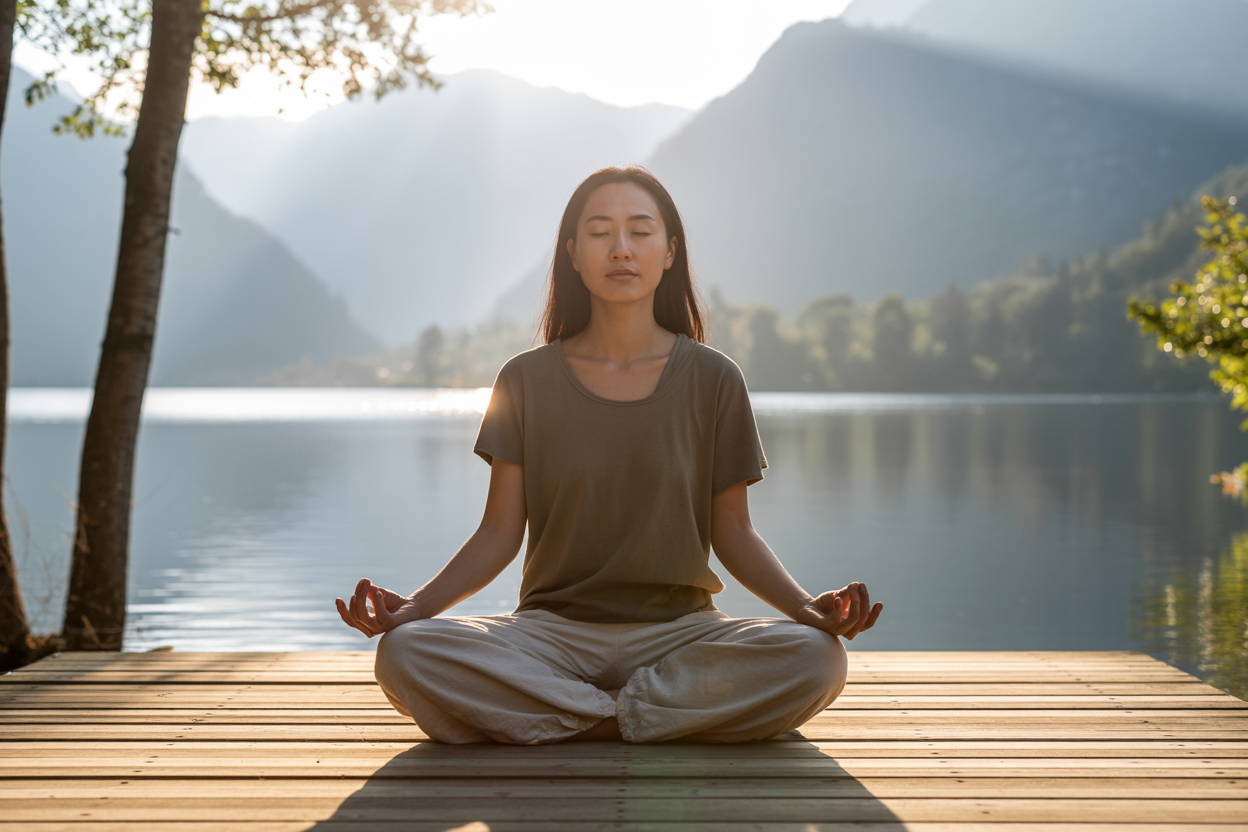
Enhancing creativity through mental space and silence
Your brain craves empty space to make unexpected connections. When you constantly fill every moment with noise, notifications, and activities, you’re essentially putting your mind in a creative straightjacket. Stillness creates the mental breathing room where your best ideas actually emerge.
Think about your most brilliant insights – they probably didn’t come while you were frantically scrolling through social media or rushing between meetings. They surfaced during quiet moments: in the shower, on a walk, or right before sleep. Your creative mind needs silence to process, synthesize, and generate new possibilities.
When you practice stillness regularly, you’re training your brain to notice subtle patterns and connections it would otherwise miss. The constant mental chatter that fills most of your day drowns out the whispered insights that could transform your work, relationships, or personal projects.
Research shows that periods of unstimulated quiet time activate your brain’s default mode network – the same neural pathways responsible for innovative thinking and problem-solving. You’re literally rewiring your brain for enhanced creativity by doing absolutely nothing.
Improving decision-making by slowing down thought processes
Your snap judgments aren’t always your wisest ones. When you’re constantly reacting to the next urgent thing, you’re operating from a place of mental stress that clouds your ability to see clearly.
Stillness gives you the gift of perspective. Instead of making decisions based on immediate emotions or external pressure, you can step back and consider the bigger picture. You begin to recognize the difference between what feels urgent and what’s actually important.
During quiet moments, your mind naturally processes information more thoroughly. You begin to notice patterns in your choices and their outcomes. This self-awareness becomes your compass for better decision-making moving forward.
The pause that stillness provides isn’t procrastination – it’s strategic thinking. You’re allowing your subconscious mind to weigh options and consider consequences that your rushed, surface-level thinking might miss entirely.
Strengthening relationships through present-moment awareness
Your relationships suffer when your mind is everywhere except with the person in front of you. How many conversations have you had where you were physically present but mentally planning tomorrow’s tasks or replaying yesterday’s problems?
Stillness teaches you the art of genuine presence. When you practice being fully here, you bring that quality into your interactions with others. People feel the difference immediately. They sense when you’re truly listening rather than just waiting for your turn to talk.
This deeper presence transforms your relationships in unexpected ways. You start picking up on subtle emotional cues you used to miss. You respond with more empathy and less reactivity. Your conversations become richer, more meaningful, and more connected.
Your loved ones don’t need you to be perfect – they need you to be present. Stillness gives you the capacity to show up authentically in your relationships rather than distracted, stressed, or emotionally unavailable.
Boosting physical health by reducing chronic stress
Your body keeps score of every rushed moment, every anxious thought, and every stress-filled day. Chronic stress doesn’t just affect your mood – it wreaks havoc on your immune system, cardiovascular health, and overall physical well-being.
Stillness acts as a reset button for your nervous system. When you regularly practice quiet moments, you’re activating your parasympathetic nervous system – your body’s natural relaxation response. This shift reduces cortisol levels, lowers blood pressure, and gives your body the chance to repair and rejuvenate.
Regular stillness practice has been linked to improved sleep quality, better digestion, and enhanced immune function. Your body literally heals better when it’s not constantly flooded with stress hormones.
You might notice that after practicing stillness consistently, you have more energy, fewer headaches, and better physical resilience. Your body starts working with you instead of against you because you’re finally giving it the rest and restoration it desperately needs.
Developing emotional intelligence through inner reflection
Most people are strangers to their own emotional landscapes. You might recognize when you’re angry or sad, but do you understand the deeper patterns and triggers behind those emotions?
Stillness creates space for emotional self-awareness. When you sit quietly with your thoughts and feelings without trying to fix, change, or judge them, you begin to develop a more nuanced relationship with your inner world.
This isn’t about becoming emotionally numb or detached. It’s about developing the emotional maturity to respond rather than react. You begin to recognize your emotional patterns before they hijack your behavior or relationships.
Through regular inner reflection, you develop emotional resilience. You stop being pushed around by every feeling that arises because you understand that emotions are temporary visitors, not permanent residents. This emotional intelligence becomes your superpower in both personal and professional relationships.
📘 Grab Your Copy on Amazon and Start Reading
Implementing Stillness as a Daily Revolutionary Act
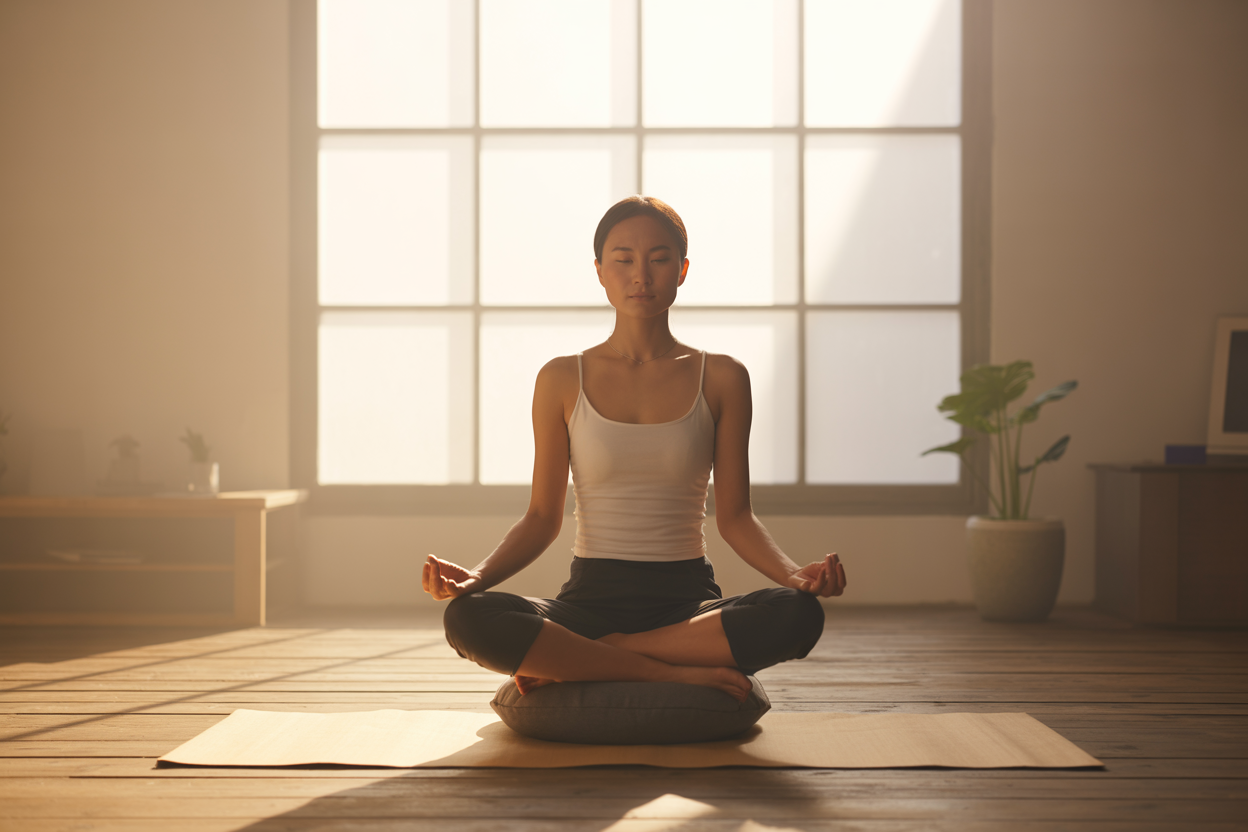
Creating Sacred Spaces Free from Digital Interference
Your phone doesn’t belong in every room of your house. Start by designating one area as completely digital-free—no screens, no notifications, no electronic hum. This could be a corner of your bedroom, a chair by the window, or even just a cushion on the floor. The key is consistency: this space exists solely for stillness.
You’ll be amazed at how your nervous system responds to a truly quiet environment. Remove charging cables, put devices in another room, and let your eyes rest on something natural—a plant, artwork, or simply empty space. Your brain craves these moments of sensory simplicity more than you realize.
Make this space inviting. Add a soft blanket, good lighting, or whatever makes you want to sit there. The goal isn’t to create Instagram-worthy aesthetics; it’s to craft an environment where your mind naturally settles. When your sacred space feels welcoming, you’ll find yourself drawn there during stressful moments.
Establishing Micro-Moments of Stillness Throughout Busy Days
You don’t need hour-long meditation sessions to experience the power of stillness. Three conscious breaths between meetings can shift your entire day. Before opening your laptop, pause. Before picking up your phone, pause. Before rushing to the next task, pause.
These micro-moments add up faster than you think. While your coffee brews, instead of scrolling through the news, simply stand and breathe. Feel your feet on the ground. Notice the sound of the coffee maker. These thirty-second practices become anchors throughout your day.
Set gentle reminders on your phone—not more notifications, but invitations to return to yourself. When the reminder appears, take three deep breaths. Check in with your body. Ask yourself how you’re feeling right now. These small check-ins prevent the day from sweeping you away entirely.
Your commute offers perfect opportunities for micro-stillness. Whether you’re driving or taking public transport, you can practice presence. Focus on your breath at red lights, or watch the scenery without thinking about your destination. Transform routine transitions into moments of calm.
Transforming Waiting Periods into Opportunities for Presence
Stop seeing waiting as wasted time. Every line you stand in, every appointment delay, every traffic jam becomes a gift when you shift your perspective. Instead of reaching for your phone, use these moments to reconnect with yourself.
When you’re stuck in traffic, notice how tightly you grip the steering wheel. Relax your shoulders. Take five deep breaths. The traffic isn’t changing, but your experience of it completely transforms. You arrive at your destination calmer, not more stressed.
Waiting rooms become meditation halls when you approach them differently. Sit with your back straight, hands relaxed in your lap. Watch your thoughts without engaging them. Listen to the sounds around you without judgment. Twenty minutes of unexpected stillness can reset your entire nervous system.
Even waiting for elevators or standing in grocery lines offers micro-opportunities for presence. Feel your feet on the ground. Notice your posture. Breathe consciously. These small practices accumulate into a deeper sense of calm throughout your day.
Building Sustainable Habits That Prioritize Inner Peace Over External Achievements
Your calendar reflects your values, even when you don’t realize it. Look at your schedule right now—how much time is dedicated to doing versus being? You need to actively protect time for stillness, or it simply won’t happen.
Start small but be consistent. Five minutes of morning stillness beats an hour-long session you’ll abandon after a week. Choose a time that works with your natural rhythm—maybe right after waking up, during lunch, or before bed. The timing matters less than the consistency.
Track your stillness practice like you would track exercise or water intake. Note how you feel before and after these moments. You’ll start noticing patterns: days with stillness feel more manageable, decisions come easier, and stress doesn’t accumulate as quickly.
Create accountability that doesn’t depend on external pressure. Tell a friend about your stillness practice, or keep a simple journal to note when you practice. The goal isn’t perfection—it’s building a sustainable relationship with inner quiet that enhances rather than complicates your life.
Your definition of productivity needs updating. Stillness isn’t time away from achievement; it’s what makes meaningful achievement possible. When you stop measuring every moment by output, you discover that periods of doing nothing actually fuel your most important work.
📘 Grab Your Copy on Amazon and Start Reading
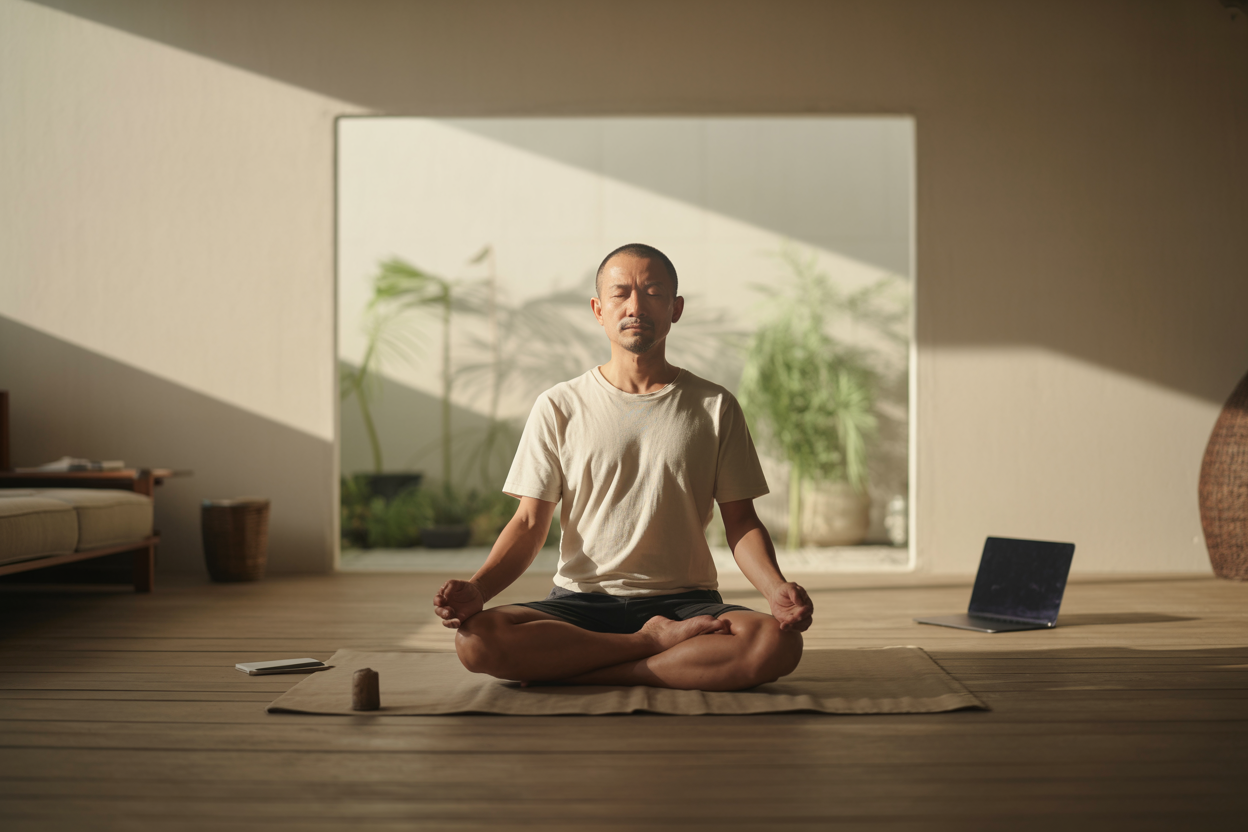
Your busy life doesn’t have to define you. Pico Iyer shows us that stepping away from the constant noise and embracing stillness isn’t lazy—it’s actually the most rebellious thing you can do in today’s world. When you choose to slow down, you’re pushing back against a culture that demands you stay busy, productive, and always connected. This ancient practice of doing nothing provides clarity, reduces stress, and helps you identify what truly matters to you.
The real revolution starts when you make stillness part of your daily routine. You don’t need to book expensive retreats or completely change your lifestyle. Start small—spend five minutes in silence each morning, put your phone away during meals, or take a walk without any destination in mind. These simple acts of stillness will transform how you see yourself and the world around you. Your future self will thank you for choosing to be present rather than just busy.
Discover more reflections in our 📚Book Corner, and explore inspiring reads under 🛍️Zen Essentials for mindful living.
Subscribe to The Zen Journal for soulful book reviews, mindful travel stories, and wellness inspiration delivered weekly.