
Yin Yoga: The Slow Practice That Rewires Your Nervous System
Your racing thoughts won’t quiet down. Your shoulders feel like they’re permanently glued to your ears. You’ve tried high-intensity workouts, but they leave you feeling more wired than relaxed.
Yin Yoga: The Slow Practice That Rewires Your Nervous System might be exactly what you need.
This gentle practice is perfect for stressed-out professionals, anxious overthinkers, and anyone who feels stuck in fight-or-flight mode. Unlike fast-paced yoga styles, yin yoga asks you to hold poses for 3-5 minutes, giving your body time to release tension you didn’t even know you were carrying.
You’ll discover how yin yoga actually changes your nervous system at a cellular level, shifting you from chronic stress to deep calm. We’ll also explore the surprising physical benefits of slowing down – from improved flexibility to better sleep. Finally, you’ll learn simple poses you can start tonight to begin rewiring your stress response.
Ready to trade your frantic pace for something that actually works? Let’s dive into why slower might be exactly what your nervous system has been craving.
Understanding Yin Yoga’s Unique Approach to Mind-Body Wellness
Key principles that differentiate Yin from other yoga styles
When you practice Yin yoga, you’re stepping into a completely different world from your typical Vinyasa flow or hot yoga class. The fundamental shift happens in your approach to effort and time. While other yoga styles focus on building strength and heat through dynamic movement, Yin asks you to surrender into poses and stay there.
Your muscles take a backseat in Yin practice. Instead of engaging and contracting them as you would in Warrior III or Chaturanga, you deliberately relax your muscles to access deeper layers of tissue. This passive approach means you’re using props like bolsters, blocks, and blankets to support your body rather than fighting gravity.
The timing of the event changes everything about how your body responds. Where you might hold a pose for 30 seconds to 2 minutes in other practices, Yin demands patience as you settle into positions for extended periods. This isn’t about pushing through discomfort or achieving the “perfect” alignment—it’s about finding your appropriate edge and breathing through whatever arises.
How passive poses target deep connective tissues
Your body contains layers of fascia, ligaments, and joint capsules that are rarely addressed in active forms of exercise. These tissues are like plastic—they respond better to gentle, sustained pressure than quick, forceful movements. When you sink into a Yin pose, you’re creating the perfect conditions for these deeper structures to release and reorganize.
Think of your fascia as a web that connects every part of your body. Years of sitting, stress, and repetitive movements create restrictions in this network. The passive nature of Yin poses allows you to apply gentle traction to these areas without triggering your body’s protective responses. Your nervous system learns it’s safe to let go.
The magic happens in the spaces between your bones—your joints. Active stretching primarily targets muscles, but the long holds in Yin yoga create space in your hip capsules, spine, and other joints that have become compressed over time. This decompression often leads to an increased range of motion that feels almost effortless.
The science behind holding poses for 3-7 minutes
Your body operates on different timelines, and the 3-7 minute hold time isn’t arbitrary—it’s based on how your tissues actually change. In the first minute of a pose, your muscles are still trying to protect you. They gradually begin to release as your nervous system realizes there’s no immediate threat.
Around the 2-3 minute mark, something interesting happens in your fascia. This connective tissue starts to exhibit what scientists call “creep”—a gradual lengthening under sustained, gentle pressure. This is completely different from the elastic response you get from quick stretches, which snap back to their original length.
Your parasympathetic nervous system also needs time to activate. The first few minutes might feel intense or uncomfortable as your body processes the sensation. But as you breathe through this phase, your rest-and-digest response kicks in, flooding your system with calming neurotransmitters. This is why many people feel deeply relaxed or even sleepy after Yin practice.
Why stillness creates profound internal transformation
Stillness is where the real work happens, though it might not look like work from the outside. When you hold a pose without fidgeting or adjusting, you’re training your nervous system to be with whatever arises—physical sensations, emotions, or wandering thoughts.
Your modern life rarely offers opportunities for sustained attention. You’re constantly moving, doing, and stimulating your system. Yin yoga creates space for your body to process and integrate experiences stored in your tissues. Many practitioners report unexpected emotional releases during long holds, as the body finally has permission to let go of what it’s been carrying.
The stillness also rewires your relationship with discomfort. Instead of immediately moving away from challenging sensations, you learn to breathe into them and observe how they change. This skill translates far beyond your yoga mat, helping you respond to life’s difficulties with greater equanimity and less reactivity.
The Nervous System Connection: How Slow Movement Creates Deep Change
Activating the parasympathetic nervous system through sustained holds
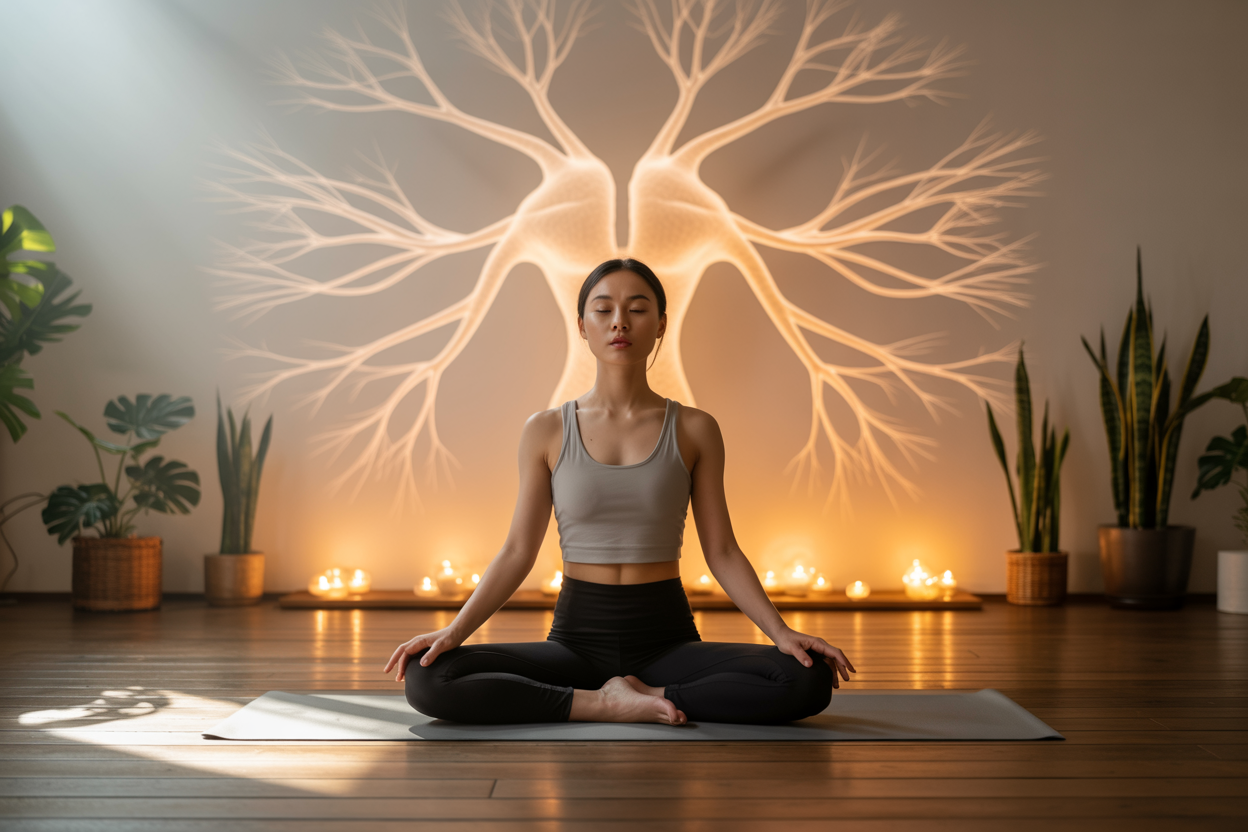
When you settle into a yin pose and hold it for three to five minutes, something magical happens beneath the surface. Your body begins to shift from its default state of alertness into what scientists call the parasympathetic nervous system—your rest-and-digest mode. This isn’t just relaxation; it’s a complete rewiring of your internal operating system.
The sustained holds in yin yoga create the perfect conditions for this shift. As you breathe into a pose like Child’s Pose or Supported Fish, your heart rate naturally slows down. Your blood pressure drops. Your digestive system kicks back into gear. These aren’t just feel-good benefits—they’re measurable physiological changes that happen when you give your nervous system permission to downshift.
Your vagus nerve, the longest cranial nerve in your body, becomes your best friend during these long holds. This nerve acts like a highway between your brain and your major organs, and when it’s activated through slow, mindful movement, it sends signals throughout your body that it’s safe to relax and repair.
Breaking patterns of chronic stress and fight-or-flight responses
Your nervous system doesn’t know the difference between a charging tiger and a demanding email from your boss. Both trigger the same fight-or-flight response, flooding your body with stress hormones like cortisol and adrenaline. Over time, this constant state of high alert becomes your new normal, leaving you wired and exhausted.
Yin yoga acts as a circuit breaker for these ingrained stress patterns. When you hold poses for extended periods, you’re essentially training your nervous system to find calm in stillness. Your body learns that not every sensation requires an immediate reaction. That tight hip in Pigeon Pose? Instead of tensing up or backing away, you learn to breathe through the discomfort and find ease within the challenge.
This practice teaches you to recognize the early warning signs of stress activation—the shallow breathing, the tight shoulders, the clenched jaw. Once you can spot these patterns, you can interrupt them before they spiral into full-blown anxiety or overwhelm.
Creating new neural pathways through mindful awareness
Your brain is remarkably plastic, constantly forming new neural pathways in response to your experiences and behaviors. Every time you practice yin yoga with mindful awareness, you’re literally rewiring your brain for greater calm and resilience.
During those long holds, you have the opportunity to observe your thoughts without getting caught up in them. You might notice your mind creating stories about the sensation in your hip or worrying about tomorrow’s meeting. Instead of following these mental rabbit holes, you learn to acknowledge the thoughts and gently return your attention to your breath or the sensations in your body.
This practice of mindful awareness strengthens the prefrontal cortex—the part of your brain responsible for executive function and emotional regulation. At the same time, it helps calm the amygdala, your brain’s alarm system. The more you practice this mindful observation, the stronger these neural pathways become, making it easier to access calm and clarity in your daily life.
The role of breath in nervous system regulation
Your breath is the most powerful tool you have for influencing your nervous system, and yin yoga teaches you how to use it masterfully. Unlike the controlled breathing techniques found in other yoga styles, yin yoga invites you to find your natural rhythm and use it as an anchor for awareness.
When you first settle into a pose, your breath might be shallow and quick—a reflection of your nervous system’s state. As you soften into the posture, your breathing naturally deepens and slows. This isn’t something you force; it’s something you allow. Each exhale sends a message to your vagus nerve that you’re safe, triggering a cascade of relaxation responses throughout your body.
The beauty of breath awareness in yin yoga is its simplicity. You’re not counting breaths or following complex patterns. Instead, you’re learning to trust your body’s innate wisdom. When discomfort arises in a pose, you breathe into it. When your mind starts racing, you return to your breath. This practice builds a deep trust in your body’s ability to self-regulate and find balance.
Physical Benefits That Transform Your Body from Within
Increased flexibility in joints and fascia
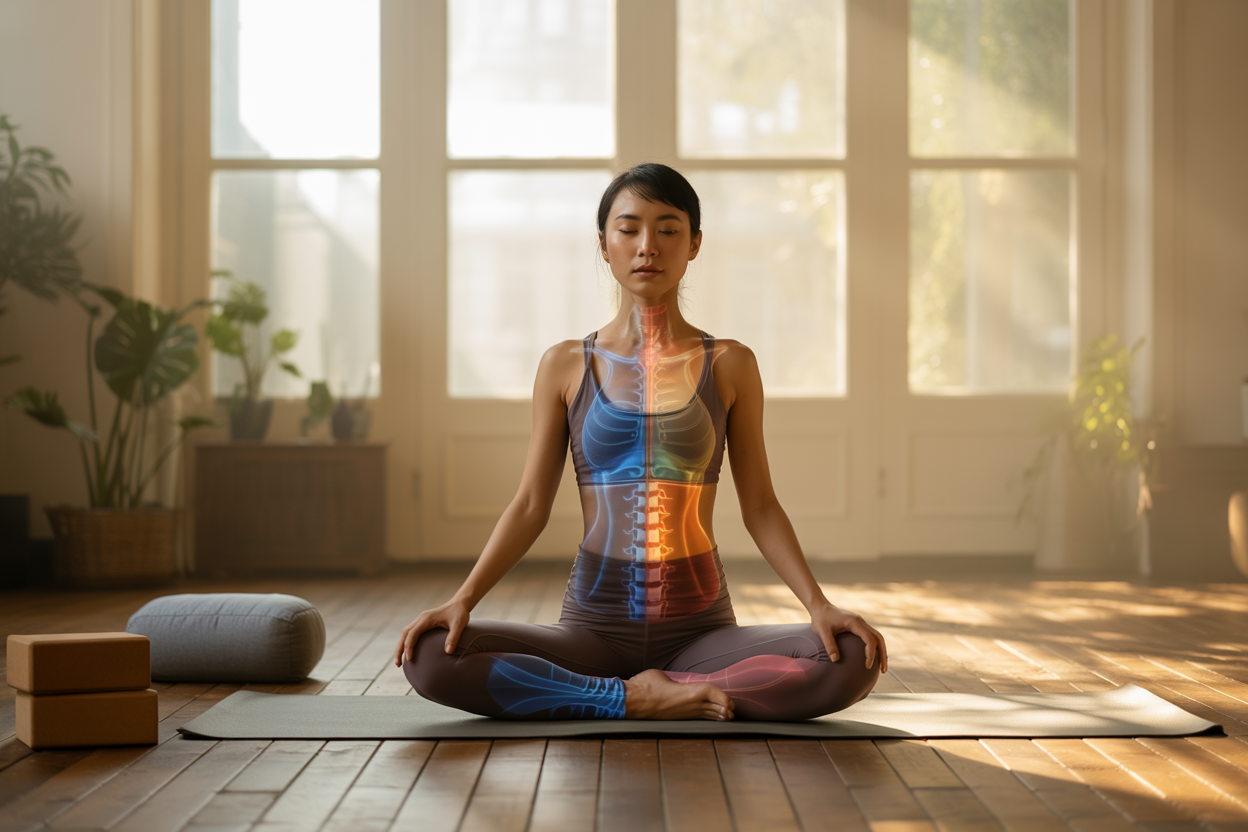
Your joints weren’t designed to be stiff and creaky, yet daily life often leaves them feeling exactly that way. Yin yoga works differently from dynamic movement practices by targeting your deeper connective tissues through sustained, gentle pressure. When you hold poses for three to five minutes, you’re essentially giving your fascia—the web-like tissue that wraps around muscles and organs—time to soften and release.
Your hip joints, in particular, benefit enormously from this approach. Those tight spots around your pelvis that make getting out of bed feel like a challenge? They respond beautifully to long-held poses like Dragon or Butterfly. You’re not forcing anything; instead, you’re allowing your body’s natural elasticity to resurface.
The magic happens because you’re working with your body’s natural healing timeline. Quick stretches barely scratch the surface, but when you settle into a pose and breathe through the initial resistance, your tissues begin to reorganize themselves at a cellular level.
Improved circulation and lymphatic drainage
Your circulatory system gets a gentle but powerful boost during yin practice. Unlike vigorous exercise that pumps blood through rapid movement, yin yoga creates circulation through compression and release. When you fold forward in poses like Child’s Pose or Caterpillar, you’re gently squeezing internal organs and tissues, encouraging fresh blood flow when you release.
Your lymphatic system—your body’s garbage disposal—particularly loves this slow, methodical approach. Since lymph doesn’t have a heart to pump it around as blood does, it relies on muscle contractions and body positioning to move toxins out. The gentle pressure and release patterns in yin poses create exactly the right conditions for optimal lymphatic flow.
You’ll notice this improved circulation in unexpected ways: warmer hands and feet, better sleep quality, and that healthy glow that comes from efficient waste removal. Your body becomes better at delivering nutrients where they’re needed and clearing out what doesn’t serve you.
Enhanced spinal mobility and posture alignment
Your spine craves variety, yet most of us spend our days in the same forward-folded position—whether hunched over computers or curved around steering wheels. Yin yoga offers your spine the full range of motion it’s been missing through targeted backbends, twists, and lateral stretches.
When you practice poses like Sphinx or Seal, you’re gently coaxing your thoracic spine out of its habitual forward curve. Your body remembers how to create natural extension, which translates into better posture throughout your day. The sustained nature of these poses allows your spinal muscles to relax deeply while your vertebrae find new spacing.
Twisting poses work wonders for your spinal rotation, an often-neglected movement pattern that keeps your back healthy and pain-free. As you breathe into these poses over several minutes, you’re not just stretching—you’re teaching your spine to move freely again.
Reduced inflammation and muscle tension
Your nervous system holds onto stress in fascinating ways, often manifesting as chronic muscle tension and low-grade inflammation throughout your body. Yin yoga addresses both issues by activating your parasympathetic nervous system—your body’s rest-and-digest mode that naturally reduces inflammatory responses.
When you hold poses like Supported Fish or Legs Up the Wall, you’re sending clear signals to your brain that it’s safe to release defensive muscle patterns. Your jaw unclenches, your shoulders drop away from your ears, and those knots in your back begin to dissolve.
The anti-inflammatory effects extend beyond muscle tissue. Research shows that gentle, sustained stretching can reduce inflammatory markers in your bloodstream. Your body starts producing fewer stress hormones and more healing compounds, creating an internal environment that supports recovery rather than breakdown.
You might find that nagging aches you’ve carried for months begin to fade, not through force or manipulation, but through consistent, patient practice that allows your body to remember its natural state of ease.
Mental and Emotional Rewards of Consistent Practice
Developing Patience and Emotional Resilience
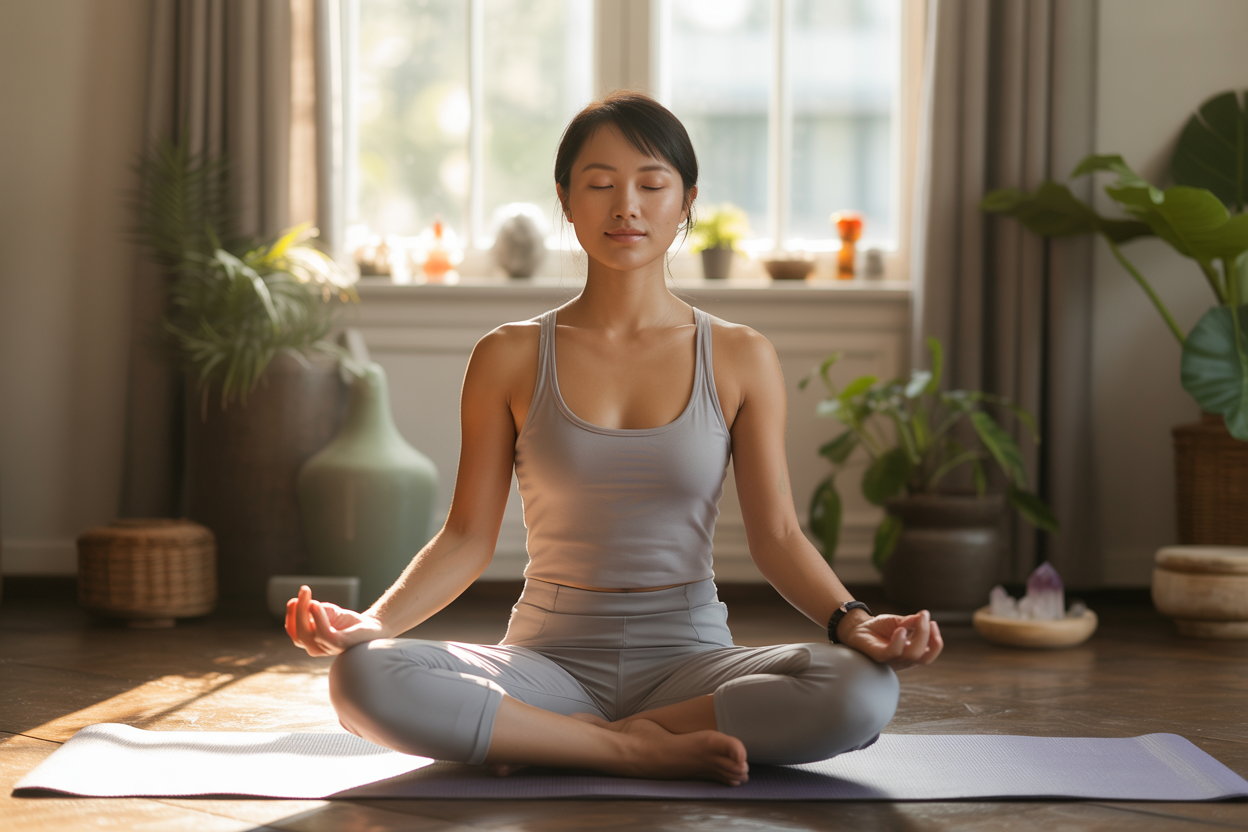
When you hold a yin pose for five minutes, your mind will likely protest within the first thirty seconds. Your body might ache, your thoughts may race, and every fiber of your being wants to move. But here’s where the magic happens – you learn to sit with discomfort instead of running from it. This practice becomes your training ground for real-life challenges. When stress hits at work or relationships get complicated, you’ll find yourself drawing on that same steady breath and calm presence you cultivated on your mat.
Your emotional resilience grows stronger each time you choose to stay present with difficult sensations rather than escaping into distraction. You discover that feelings, like physical sensations, have a natural rhythm of rising and falling when you give them space to exist without judgment.
Cultivating Present-Moment Awareness and Mindfulness
Yin yoga strips away the complexity of flowing sequences and challenging poses, leaving you with nowhere to hide but the present moment. You can’t muscle through a five-minute dragon pose or mentally check out during a long-held seated forward fold. Your attention naturally turns inward, creating space for genuine mindfulness to emerge.
You’ll notice subtle shifts in your breathing, the quality of your thoughts, and how your body responds to stillness. This heightened awareness doesn’t stay confined to your yoga mat – it follows you into daily life. You become more attuned to your emotional states before they spiral, more conscious of your breathing during stressful moments, and more capable of finding pockets of peace throughout your day.
Processing Stored Emotions and Trauma Through Gentle Release
Your body holds memories in ways your conscious mind often can’t access. Hip openers might bring unexpected tears, heart-opening poses could trigger feelings of vulnerability, and deep twists might unlock emotions you didn’t know you were carrying. This isn’t something to fear – it’s your body’s natural wisdom at work.
Yin poses create a safe container for emotional release because they’re held long enough for your nervous system to feel secure and your defenses to soften. You’re not forcing anything; you’re simply creating space for whatever needs to surface. Many practitioners report feeling lighter, more integrated, or emotionally clearer after sessions in which emotions arose and flowed naturally.
Building Capacity for Stillness in a Fast-Paced World
In a culture that glorifies busyness, your ability to be still becomes a radical act of self-care. Yin yoga trains you to find comfort in slowness and meaning in quiet moments. You learn that rest isn’t laziness and that pausing doesn’t equal weakness.
This capacity for stillness becomes a superpower in your daily life. You can sit in traffic without your stress levels spiking. You can enjoy quiet evenings at home without feeling the need to fill every moment with activity. You discover that some of your best ideas and clearest insights come not from doing more, but from creating space for them to emerge naturally.
Improved Sleep Quality and Stress Management
Your nervous system learns to shift from fight-or-flight mode into rest-and-digest mode through regular yin practice. The long holds and gentle nature of the poses activate your parasympathetic nervous system, teaching your body how to truly relax. This skill carries over into bedtime, where you’re better able to quiet your mind and release physical tension.
You’ll likely find yourself sleeping more deeply and waking more refreshed. The stress that used to accumulate throughout your day has new pathways for release. Your body remembers the sensation of deep relaxation from your practice, making it easier to access that state when you need it most.
Getting Started: Essential Poses and Practice Guidelines
Beginner-friendly sequences for immediate benefits
Starting your yin yoga journey doesn’t require complex poses or years of experience. Your first sequence should focus on three fundamental positions that target major areas of tension. Begin with Child’s Pose to ground yourself and signal to your nervous system that it’s time to slow down. Hold this for 3-5 minutes, allowing your breath to naturally deepen.
Next, move into Butterfly Pose, sitting with the soles of your feet together and gently folding forward. This hip opener simultaneously releases stored emotions and physical tension. Your final pose should be Legs-up-the-Wall, which reverses blood flow and activates your parasympathetic nervous system within minutes.
Hold each pose for 3-7 minutes, breathing deeply and resisting the urge to fidget or adjust constantly. Your body needs time to surrender to each position. If you’re feeling ambitious, add Sphinx Pose for a gentle heart opener or Twisted Roots for spinal mobility. Remember, you’re not trying to achieve perfect alignment – you’re creating space for your fascia to release and your mind to quiet.
Proper use of props for comfort and alignment
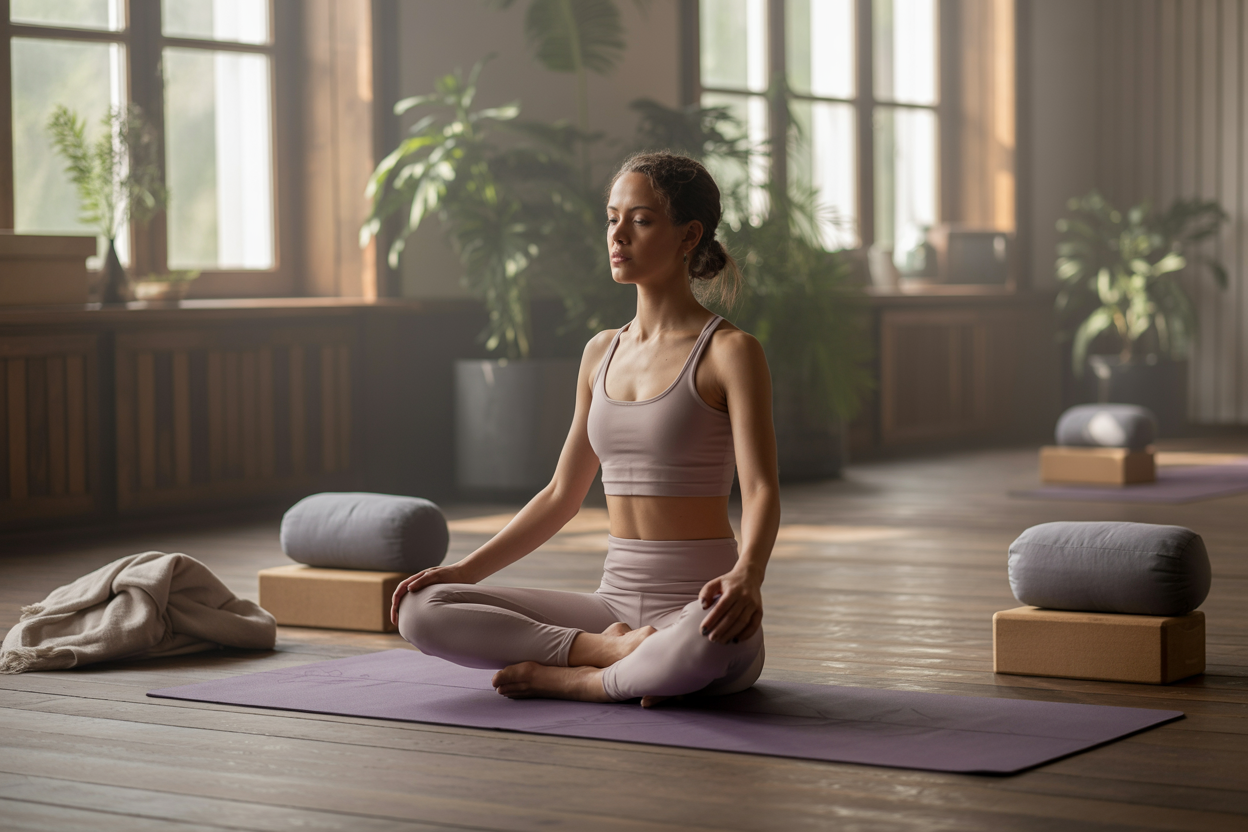
Props aren’t crutches in yin yoga – they’re essential tools that help you find your edge without strain. Your prop arsenal should include bolsters, blocks, blankets, and pillows. Think of them as supports that allow you to stay in poses longer without fighting your body’s natural resistance.
| Prop | Primary Use | Common Poses |
|---|---|---|
| Bolster | Support under knees, chest, or head | Child’s Pose, Heart Bench, Supported Fish |
| Blocks | Elevate hips or support limbs | Butterfly, Pigeon, Twisted Roots |
| Blankets | Warmth and weighted comfort | All poses for temperature regulation |
| Pillows | Softer support for sensitive areas | Under knees, between legs, head support |
In Butterfly Pose, place a bolster on your shins and rest your forehead on it rather than forcing yourself toward the floor. For Pigeon Pose, slide a block or pillow under your front hip to prevent tilting and protect your knee. Your props should eliminate any sharp pain or trembling – if you’re struggling to stay still, add more support.
Don’t feel like you need expensive yoga props either. Couch cushions, firm pillows, and folded towels work perfectly well. The goal is comfort that allows you to hold poses without your muscles working overtime to keep you there.
How to modify poses for different body types and limitations
Your body is unique, and your yin practice should reflect that reality. If you have tight hamstrings, sitting cross-legged might feel impossible – and that’s completely normal. Sit on a block or pillow to elevate your hips, which instantly makes hip flexion easier and more sustainable.
For those with knee issues, avoid deep hip openers like Pigeon until you build more mobility. Instead, practice the Figure-Four Pose lying on your back, which gives you complete control over the intensity. You can pull your legs closer or let them relax away from your body as needed.
If you’re dealing with lower back sensitivity, skip deep forward folds and focus on gentle backbends and twists instead. Supported Fish Pose with a bolster under your shoulder blades offers the benefits of heart-opening without strain. Always bend your knees in forward folds to protect your spine.
Pregnancy requires special attention – avoid any pose where you lie on your belly after the first trimester, and use extra props for support in seated poses. Your center of gravity is shifting, so props become even more important for stability and comfort.
Remember, backing off or using more props isn’t failing – it’s listening to your body’s wisdom and creating the conditions for deep release.
Creating the ideal environment for your practice
Your practice space directly impacts your ability to surrender and go inward. Choose a quiet area where you won’t be interrupted for at least 45 minutes. Turn off your phone or put it in airplane mode – this time belongs entirely to you.
Temperature matters more in yin than in dynamic yoga styles. Since you’re not generating heat through movement, keep your space slightly warmer than usual or have blankets nearby. Your muscles need warmth to release effectively, and nothing disrupts meditation like shivering.
Lighting should be soft and dim. Harsh overhead lighting keeps your nervous system on alert when you’re trying to activate rest-and-digest mode. Candles, salt lamps, or dimmed side lighting create the perfect ambiance for introspection.
Consider adding gentle background music or nature sounds, but avoid anything with lyrics or sudden tempo changes. Your soundtrack should fade into the background, supporting your practice without demanding attention. Some practitioners prefer complete silence, which is equally valid.
Keep a water bottle nearby, but resist the urge to sip constantly during poses. Your focus should remain inward rather than on external needs. Have a journal accessible after your practice – you might be surprised by the insights that surface during those long holds.
Create a small ritual to begin each session. Light a candle, set an intention, or simply take three conscious breaths. These consistent cues help your mind recognize that it’s time to shift into a different state of being.
Your journey with yin yoga doesn’t have to be perfect or complicated. You’ve learned how this gentle practice works its magic on your nervous system, shifting you from stress mode into deep healing. The long-held poses give your fascia time to release, your joints space to open, and your mind permission to slow down. You’re not just stretching – you’re rewiring your body’s stress response and creating lasting changes that ripple through every area of your life.
Start simple with just a few basic poses, and hold each for 3-5 minutes. Your body will guide you as you build your practice, and you’ll soon notice the mental clarity, emotional balance, and physical relief that come with regular yin sessions. The beauty of this practice is that it meets you wherever you are today, offering exactly what you need to heal from the inside out.
For more soulful stories and mindful living insights, explore The Zen Blog — your space for travel reflections, wellness tips, and everyday calm.
✨ Join The Zen Journal community — get fresh yoga and wellness insights straight to your inbox ✨