
How to Sync Your Breath with Every Yoga Movement
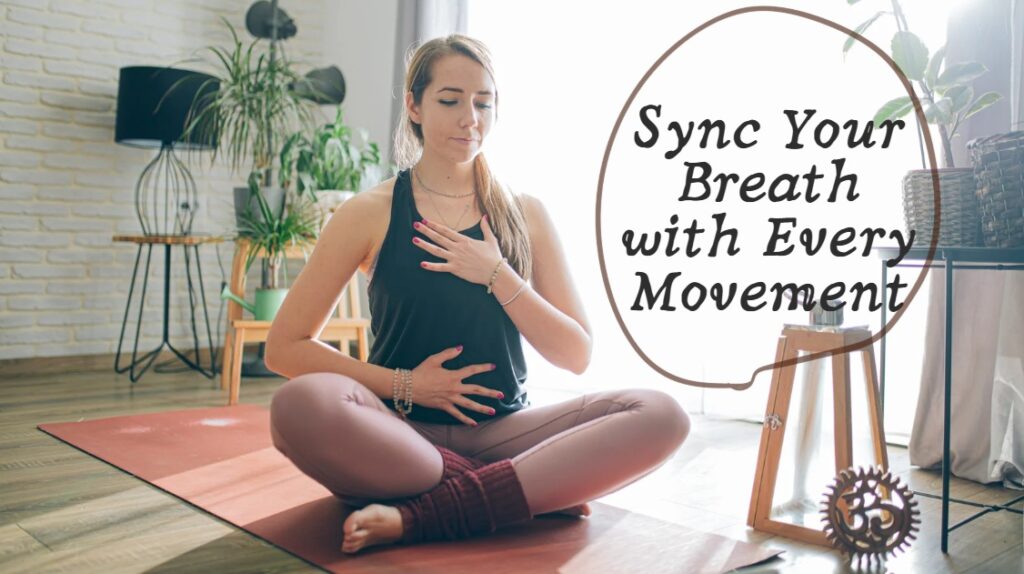
Matching your breath with every yoga movement transforms your practice from a simple workout into a moving meditation. This guide is for yoga practitioners at any level who want to deepen their practice through proper yoga breathing techniques and breath-awareness practices.
When you sync your breath with movement, you’ll discover a flow that feels natural and sustainable. Your poses become smoother, your mind stays focused, and your body moves with intention rather than force.
We’ll start by exploring the foundation of breath-movement connection and why it matters for your practice. You’ll learn essential pranayama for beginners and master the basic yoga breathing exercises that form the backbone of mindful breathing yoga.
Then we’ll dive into practical application, showing you how to synchronize breath movement yoga in fundamental poses and popular sequences. Finally, we’ll tackle the most common obstacles you might face when developing breath movement coordination, giving you tools to overcome frustration and build confidence in your vinyasa breathing techniques.
Understanding the Foundation of Breath-Movement Connection
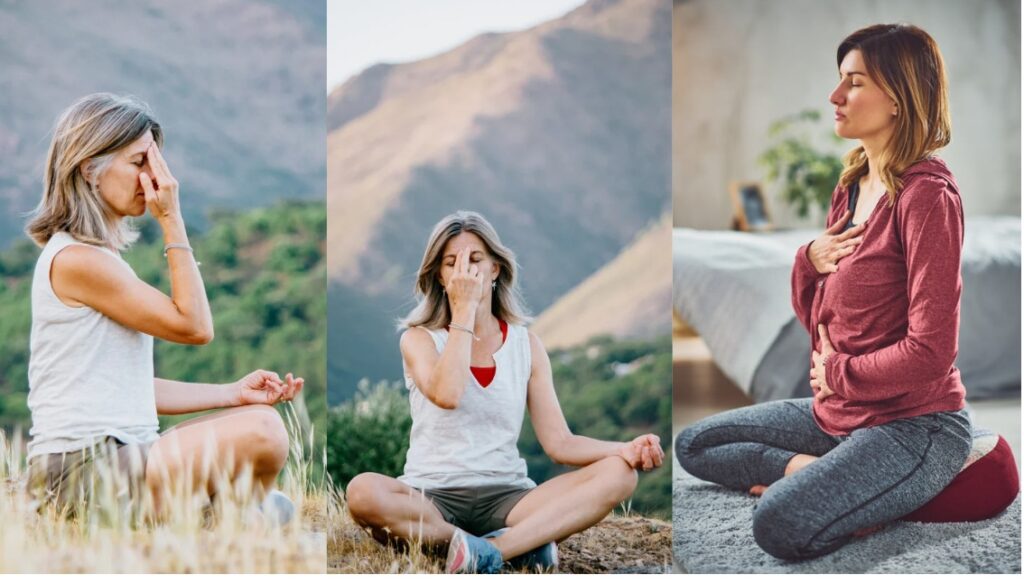
Discover the ancient principles of pranayama in yoga practice.
Pranayama, often called the fourth limb of yoga, literally means “life force extension” in Sanskrit. When you practice pranayama for beginners, you’re tapping into a system refined over thousands of years. Ancient yogis understood that your breath is the bridge between your physical body and your mind, and they developed specific yoga breathing techniques to harness this connection.
The word breaks down into “prana” (life energy) and “yama” (restraint or control), but don’t think of this as restricting your breath. Instead, you’re learning to intentionally direct and expand your life force. Traditional pranayama includes techniques like Ujjayi (victorious breath), Nadi Shodhana (alternate nostril breathing), and Kapalabhati (skull-shining breath). Each method serves a different purpose in your yoga breathing exercises routine.
Your breath naturally carries rhythms and patterns that mirror your emotional and physical states. When you’re stressed, your breathing becomes shallow and rapid. When you’re calm, it deepens and slows. Pranayama teaches you to influence these patterns consciously, creating a feedback loop in which controlled breathing promotes inner balance and focus during your practice.
Learn why coordinating breath with movement enhances your practice
Breath awareness yoga transforms your practice from mere physical exercise into a moving meditation. When you synchronize breath with movement in yoga, you create an internal rhythm that guides every pose transition. This coordination helps you move with intention rather than rushing through sequences.
Your nervous system responds dramatically to mindful breathing yoga practices. Deep, controlled breathing activates your parasympathetic nervous system, which promotes relaxation and healing. This physiological response reduces cortisol levels, lowers blood pressure, and enhances your body’s recovery from physical exertion during challenging poses.
Movement without breath coordination often leads to tension and strain. When you breathe consciously during yoga, you supply your muscles with the oxygen they need while releasing carbon dioxide efficiently. This improved gas exchange enhances your endurance and flexibility, allowing you to hold poses longer and safely move deeper into stretches.
The mental benefits are equally profound. Coordinated breathing keeps your mind anchored in the present moment, preventing it from wandering to daily stresses or future concerns. This focused attention improves your body awareness, helping you notice subtle alignment cues and avoid injury.
Identify common breathing mistakes that limit your yoga progress
Holding your breath during challenging poses is probably the most frequent mistake you’ll encounter in your breath control yoga practice. When a pose feels difficult, your instinct might be to tense up and stop breathing altogether. This creates unnecessary tension throughout your body and actually makes the pose harder to maintain.
Breathing too rapidly or shallowly limits the effectiveness of your yoga flow breathing. Quick, chest-based breathing keeps your nervous system in a state of alertness rather than the calm focus that deeper breathing promotes. You’ll notice this pattern especially in faster-paced classes where you might feel rushed to keep up with the instructor’s cues.
Another common issue is breathing out of sync with movement transitions. Many practitioners inhale when they should exhale and vice versa. For example, you should typically exhale while folding forward or twisting, as these movements naturally compress your torso and support the outward flow of breath.
Forcing your breath into unnatural patterns can create more problems than benefits. Your breathing should feel smooth and sustainable throughout your practice. If you find yourself gasping for air or feeling lightheaded, you’re likely pushing too hard. Remember that developing strong vinyasa breathing techniques takes time and patience.
Neglecting the pause between breaths is another missed opportunity. Those brief moments of stillness between your inhale and exhale are spaces for deeper awareness and integration. Use these natural pauses to check in with your body and refine your alignment.
Master Basic Breathing Techniques for Yoga Flow
Perfect the ujjayi breath for sustained energy throughout practice
You’ll recognize ujjayi breathing by its distinctive ocean-like sound created when you gently constrict your throat while breathing through your nose. This yoga breathing technique becomes your anchor during challenging poses and flowing sequences, providing steady energy and mental focus.
Start by sitting comfortably with your spine straight. Breathe in through your nose while creating a soft constriction at the back of your throat – imagine fogging a mirror with your mouth closed. Inhale to produce a gentle “ahh” sound that resonates in your chest. Your exhale follows the same pattern, creating a smooth, audible breath that sounds like ocean waves.
Practice ujjayi for five to ten minutes daily before moving into your yoga flow. You’ll notice how this pranayama for beginners naturally slows your heart rate and calms your nervous system. During your practice, maintain this breath even when poses become challenging – it’s your lifeline to staying present and energized.
Develop diaphragmatic breathing for deeper oxygen flow
Your diaphragm is a dome-shaped muscle that sits below your lungs, and learning to breathe from this area transforms your entire yoga practice. Unlike shallow chest breathing, diaphragmatic breathing allows for maximum oxygen exchange and activates your body’s relaxation response.
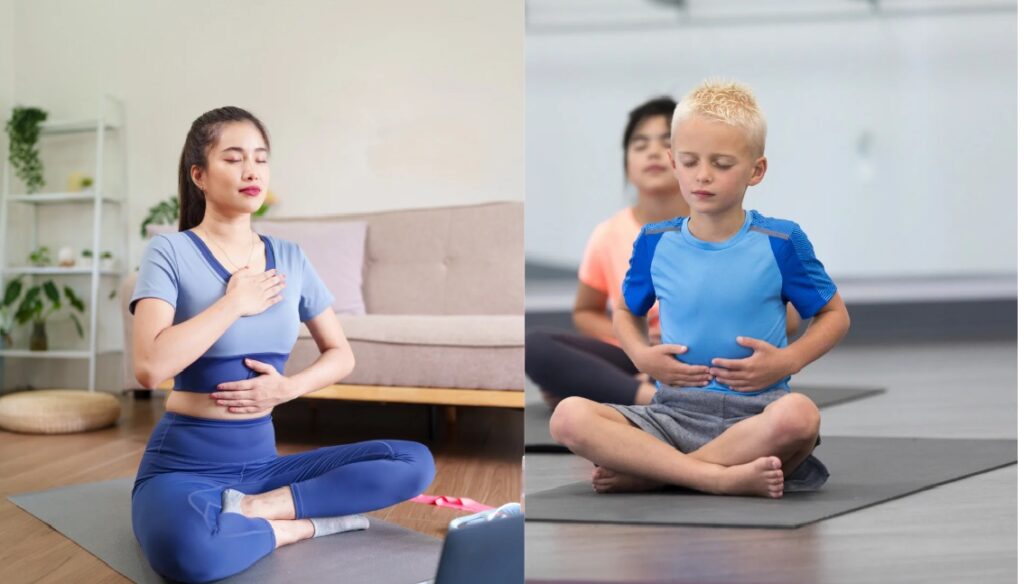
Place one hand on your chest and another on your belly. As you inhale, focus on expanding your lower ribs and belly outward while keeping your chest relatively still. Your bottom hand should rise while your top hand remains steady. This breath awareness yoga technique ensures you’re engaging your diaphragm correctly.
Practice this breathing pattern for several minutes each day, gradually increasing the duration of your inhales and exhales. You’ll find that diaphragmatic breathing naturally supports longer, more controlled movements in your yoga flow breathing sessions. This foundational technique prepares your respiratory system for the demands of synchronized movement and breath.
Practice breath retention techniques for improved focus
Breath retention, or kumbhaka, sharpens your mental concentration and builds respiratory strength. Start with gentle holds after your inhale or exhale – never force or strain your breath. Begin with a simple pattern: inhale for four counts, hold for two counts, exhale for four counts.
Your retention should feel comfortable and sustainable. If you feel any anxiety or strain, immediately return to natural breathing. Gradually work up to longer holds as your capacity increases, always prioritizing comfort over duration.
These yoga breathing exercises train your mind to stay focused during challenging poses and transitions. When you can control your breath retention, you develop the mental discipline needed to coordinate your breath movements throughout your practice.
Establish a natural breathing rhythm before adding movement
Before attempting any vinyasa breathing techniques, spend time discovering your natural breathing pattern. Sit quietly and observe your breath without trying to change it. Notice the length of your inhales compared to your exhales, any natural pauses between breaths, and where you feel the breath most prominently in your body.
Your natural rhythm becomes the foundation for all breath control yoga practice. Some people naturally breathe faster, others slower – there’s no right or wrong pattern. Once you understand your baseline, you can begin refining and extending your breath to match yoga movements.
Start each practice session with three to five minutes of conscious breathing before moving into poses. This mindful-breathing yoga preparation helps you maintain awareness of your breath throughout your practice, making the transition to synchronized movement feel effortless and intuitive.
Synchronize Breath with Fundamental Yoga Movements
Coordinate inhales with opening and expanding movements
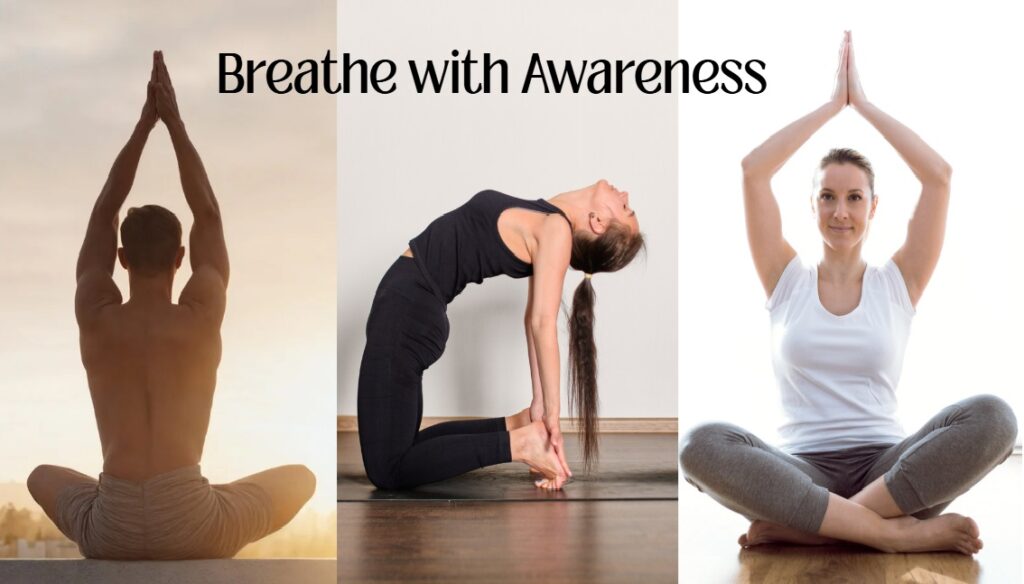
Your breath naturally wants to expand as your body opens, so let this organic connection guide your yoga flow breathing. When you raise your arms overhead in Mountain Pose, breathe in deeply as your ribcage widens and your chest lifts. This creates space for your lungs to fill while supporting the upward energy of the movement.
During backbends like Camel Pose or Upward Facing Dog, your inhale becomes your best friend. As you arch your spine and open your heart center, draw a slow, deep breath through your nose. This breath awareness yoga technique helps protect your lower back while creating the lift you need through your chest. Your inhale literally inflates your torso, giving you more space and stability in these challenging positions.
Side stretches also pair beautifully with inhalation. When you reach your right arm overhead in Extended Side Angle, breathe in as you lengthen through your fingertips. The inhale supports the expansion through your side body and prevents you from collapsing into the stretch.
| Opening Movement | Breath Pattern | Key Benefits |
|---|---|---|
| Arms overhead | Inhale slowly | Creates space, supports lift |
| Backbends | Deep inhale | Protects the spine, opens the chest |
| Side stretches | Gentle inhale | Maintains length, prevents collapse |
Time exhales with folding and contracting postures
Your exhale becomes your pathway deeper into contracting movements, creating a natural, synchronized breath movement yoga pattern that enhances your practice. When you fold forward in Uttanasana, let your out-breath guide you down. The exhale softens your muscles and allows gravity to do the work, rather than forcing your way into the pose.
In twisting postures like Revolved Triangle, your exhale helps you spiral deeper into the rotation. Start your twist on neutral breath, then use each exhale to deepen the turn gently. This breath control yoga practice prevents strain and creates space between your vertebrae as you move.
Hip-opening poses like Pigeon Pose respond beautifully to exhales. As you settle into the stretch, each out-breath helps release tension in your hip flexors and external rotators. Your body naturally wants to soften and surrender on the exhale, making it the perfect time to ease deeper into these intense stretches.
Child’s Pose exemplifies this breath-movement coordination perfectly. As you lower your hips toward your heels and extend your arms forward, exhale completely. This pranayama for beginners technique helps calm your nervous system while supporting the inward, grounding energy of the posture.
Maintain steady breath during static holds and balancing poses.
Balancing poses test your ability to keep your breath steady when your body wants to hold tension. In Tree Pose or Warrior III, your breathing pattern directly affects your stability. When you have your breath or breathe erratically, you create unnecessary tension that throws off your balance. Instead, establish a rhythm of slow, even breaths that anchor your mind and body.
Your breath becomes your focal point in challenging arm balances like Crow Pose. Rather than gripping and straining, breathe steadily through your nose. This mindful breathing yoga approach keeps oxygen flowing to your muscles while preventing the panic response that often leads to falling out of poses.
During static holds like Plank Pose or Chair Pose, resist the urge to shallow breathe or hold your breath entirely. These vinyasa breathing techniques require you to maintain complete, deep breaths even when your muscles are working hard. Count your breaths – aim for five to eight steady cycles in each pose.
Wall sits and other strengthening holds become more manageable when you focus on your breath rhythm. Instead of counting seconds, count breaths. This yoga breathing exercises approach shifts your attention from the discomfort to your breath awareness, making challenging poses more sustainable and meditative.
Remember that your breath quality reflects your mental state. Choppy, irregular breathing signals tension and resistance, while smooth, consistent breathing indicates you’re working within your limits while staying present and focused.
Apply Breath-Movement Coordination to Popular Yoga Sequences
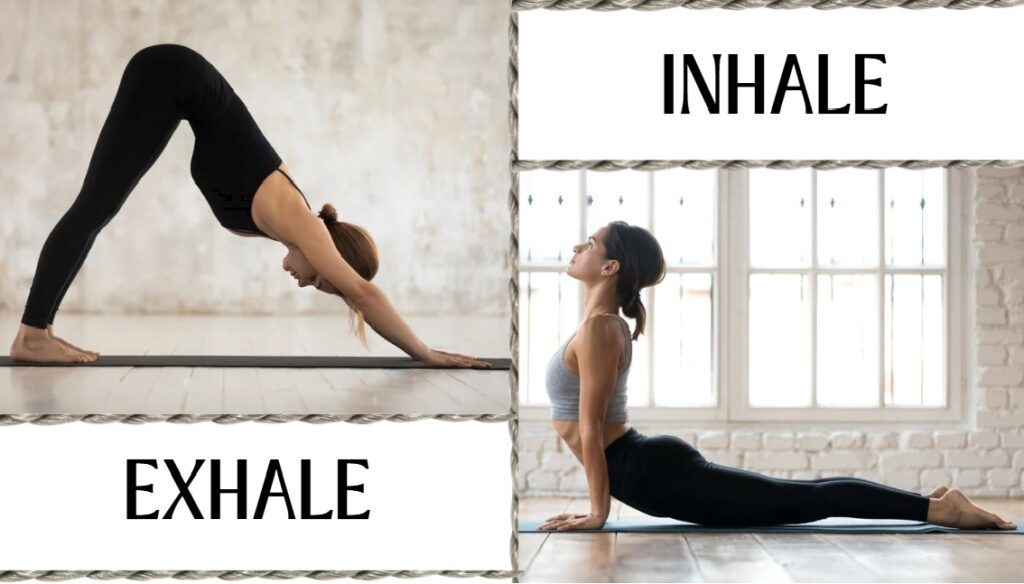
Flow seamlessly through sun salutations with proper breath timing.
Your sun salutation practice becomes graceful poetry when you master the rhythm between breath and movement. Start with one breath per movement to maintain a steady pace that allows your body to warm up naturally. As you raise your arms in mountain pose, take a deep inhale, filling your lungs. When you fold forward into uttanasana, exhale slowly, letting gravity help you release tension.
The key to mastering vinyasa breathing techniques lies in maintaining consistent breath length throughout your sequence. Each inhale should last about 4-5 seconds, matching your exhale duration. This creates a meditative flow that transforms your practice from mere physical exercise into moving meditation. Your breath-awareness yoga skills will deepen as you resist the urge to hold your breath during challenging transitions, such as chaturanga.
Practice this timing pattern: inhale to lift halfway up, exhale through chaturanga, inhale to upward dog, and exhale into downward dog. Your breathing should never feel forced or strained. If you’re gasping for air, slow down your movements to match your natural breathing capacity.
Enhance vinyasa transitions using intentional breathing patterns
Smooth vinyasa transitions depend on your ability to coordinate breath movement throughout challenging sequences. Your exhales should power you through demanding poses like chaturanga, while inhales lift you into heart-opening positions. This breath-control yoga practice generates internal heat and maintains energy flow between poses.
Focus on extending your exhales during lowering movements and deepening inhales during lifting actions. When transitioning from warrior III to standing split, use your exhale to engage your core and maintain balance. Your breath becomes the invisible thread connecting each pose to the next.
Create consistency by establishing your breathing pattern before beginning any sequence. Count your breaths: four counts in, four counts out, adjusting the rhythm based on your energy level that day. Advanced practitioners can experiment with longer breath counts, but beginners should prioritize steady, comfortable breathing over complex timing patterns.
Strengthen your practice with breath-synchronized warrior sequences
Warrior sequences offer perfect opportunities to develop strength through breath movement coordination. Hold warrior I for five complete breaths, using each inhale to lift your chest, and each exhale to ground through your legs. This static practice builds the foundation for dynamic warrior flows.
When flowing between warrior poses, your breath timing becomes crucial for maintaining power and stability. Inhale to transition from warrior I to warrior III, using the breath expansion to create lightness in your front leg—Exhale as you lower into warrior II, channeling your breath energy downward for stability.
Your yoga breathing exercises should intensify during challenging holds, such as side angle pose or reverse warrior pose. Instead of holding your breath under strain, breathe more deeply and slowly. This teaches your nervous system to stay calm during physical challenges, building both physical and mental resilience.
Deepen backbends and forward folds through mindful breathing
Backbends and forward folds respond beautifully to intentional breathing patterns that support your spine’s natural movement. For backbends like camel or wheel pose, use your inhales to create space between vertebrae and lift your heart. Your exhales should engage your core muscles, protecting your lower back from compression.
In forward folds, reverse this pattern. Inhale to lengthen your spine before folding, then exhale to deepen the fold gradually. Never force yourself deeper on an inhale – this works against your body’s natural folding mechanics. Your mindful breathing yoga approach should honor your spine’s need for space and time.
Practice preparatory breathing before entering intense poses. Take three deep breaths in child’s pose before attempting the wheel, visualizing your spine creating space with each inhale. This mental preparation, combined with breath awareness, sets you up for safer, more effective backbends and forward folds.
Balance challenging poses using breath as your anchor
Your breath becomes your most reliable balance tool when physical stability feels impossible. In poses like tree pose or dancer’s pose, focus more on maintaining steady breathing than on perfect alignment. When your breath stays calm and consistent, your body naturally finds its center.
Use your exhales as reset buttons during wobbly moments. If you start to fall out of the crow pose, take a controlled exhale and engage your core more deeply, rather than panicking and holding your breath. This breath control yoga practice trains your nervous system to stay calm under pressure.
Develop your balance through pranayama, focusing on beginner techniques like three-part breathing while in standing poses. Breathe into your belly, ribs, then chest while holding warrior III. This complex breathing pattern challenges your concentration while improving your proprioception and stability. Your balance will improve dramatically when you stop fighting wobbles and start breathing through them instead.
Overcome Common Challenges in Breath-Movement Synchronization
Prevent breath-holding during challenging poses.
Your breath becomes your anchor when challenging poses test your limits. The moment you feel strain or discomfort, your instinct kicks in to hold your breath – but this actually makes everything more complicated. When you hold your breath during challenging poses, you create unnecessary tension throughout your body and reduce oxygen flow to working muscles.
Start by recognizing the early warning signs: tightness in your jaw, shoulders creeping toward your ears, or that telltale pause in your breathing rhythm. The second you notice these signals, consciously return to your breath. Even if your breathing becomes shallow or rapid, keep it moving rather than stopping it completely.
Practice the “breath before pose” approach. Before entering any challenging position, take three deep breaths to prepare your nervous system. As you move into the pose, maintain a steady exhale pattern – this helps release tension and keeps your mind focused on something other than the difficulty of the position.
If you catch yourself holding your breath mid-pose, don’t panic. Exhale whatever air you’re having, then resume your usual breathing pattern. Sometimes, slightly modifying your pose can help restore your breath flow. Remember, your breathing is more important than achieving the “perfect” shape of any pose.
Adjust breathing pace when transitioning between slow and dynamic movements.
Switching between different movement speeds challenges your breath control yoga practice in unique ways. You might find yourself perfectly synced during slow, steady flows, only to lose coordination when the sequence picks up pace or suddenly slows down.
During slow transitions, your breathing naturally deepens and lengthens. Let it happen, but maintain conscious control. Count your breaths to establish rhythm: try four counts for inhales and four for exhales during slower movements. This gives you a framework to work within while allowing natural breath depth.
When moving into dynamic sequences, resist the urge to speed up your breathing dramatically. Instead, keep your breath steady and strong, even if movements accelerate. Your breath should feel powerful and controlled, not rushed or panicked. Think of your breathing as the constant drumbeat that keeps the entire sequence grounded.
The real skill lies in smooth transitions between these paces. As you shift from slow to fast movements, gradually adjust your breathing rhythm over 2-3 breaths rather than making abrupt changes. This prevents the jarring feeling of losing synchronization and helps maintain your breath awareness throughout the entire practice.
Practice tempo changes outside of complete sequences first. Move through simple poses like cat-cow at different speeds while maintaining steady breathing to build this skill.
Maintain breath awareness during physically demanding sequences
Physical intensity often hijacks your attention, pulling you out of your breath and into pure survival mode. Your heart rate climbs, muscles burn, and suddenly you’re breathing however your body demands rather than with intention and awareness.
The key lies in training your attention to split between physical sensation and breath observation. Start by practicing breath awareness yoga during moderately challenging sequences before attempting it during your most demanding flows. Build your capacity gradually, just as you build physical strength.
Create mental checkpoints throughout demanding sequences. Every few poses, ask yourself: “Where is my breath right now?” Don’t judge what you find – observe and adjust if needed. These micro-moments of awareness prevent you from drifting into unconscious breathing patterns.
Use your exhales strategically during intense sequences. Strong, purposeful exhales help release tension and give your mind something concrete to focus on when everything feels overwhelming. Many practitioners find that emphasizing the exhale more than the inhale during challenging flows helps maintain both awareness and control.
When sequences become so demanding that breath awareness feels impossible, slow down your movements slightly. It’s better to move a bit slower with conscious breathing than to power through with no awareness. Your yoga breathing techniques should support your practice, not disappear when you need them most.
Recover quickly when you lose the breath-movement connection
Everyone loses their breath-movement coordination sometimes – even experienced practitioners. The difference lies in how quickly you can recognize the disconnection and restore synchronization without derailing your entire practice.
First, acknowledge the moment without frustration. Getting upset about losing connection only makes recovery more complicated and creates additional mental tension. Instead, view these moments as opportunities to practice reconnection skills.
Your fastest recovery tool is the reset breath: stop whatever movement you’re doing and take one complete, conscious breath cycle. This breaks the pattern of disconnected movement and gives you a clean slate to start fresh. Don’t worry about staying with the instructor or maintaining the flow – your breath connection matters more than keeping up.
After your reset breath, restart with the simplest breath-movement pattern you know. This might mean stepping back to basic poses or slowing down significantly. Once you reestablish that fundamental connection, gradually build back to more complex movements.
Keep a recovery mantra ready: “Breath first, then movement.” Repeat this internally when you notice a disconnection. This simple phrase reminds you of your priorities and helps restore proper sequencing between breathing and moving.
Practice recovery scenarios during less challenging parts of your practice. Deliberately let your breath and movement fall out of sync, then practice getting back in rhythm. This builds confidence and makes real recovery situations feel more manageable.
For more soulful stories and mindful living insights, explore The Zen Blog — your space for travel reflections, wellness tips, and everyday calm.
Your breath is the bridge between your mind and body during yoga practice. When you sync your breathing with each movement, you transform a simple physical exercise into a moving meditation that brings more profound awareness and connection to your practice.
Start with the basics and be patient with yourself as you learn to coordinate breath and movement. Even experienced yogis sometimes find themselves holding their breath during challenging poses. Remember that every breath you take mindfully on your mat builds a stronger foundation for both your physical practice and mental clarity. Your yoga journey becomes richer when you let your breath guide each transition and hold, creating a flowing dance between your inner rhythm and outer expression.
✨ Join The Zen Journal community — get fresh yoga and wellness insights straight to your inbox ✨